Starting childcare often brings a mix of excitement, guilt, and uncertainty for parents. You want to find a place where your child feels safe, valued, and genuinely understood.
The early years lay the critical foundation for lifelong learning, shaping how children connect with others and view themselves. High-quality early childhood education provides the rich, play-based experiences children need to build confidence and resilience.
Educators help children develop cognitive and social skills through predictable routines and supportive relationships. This guide explores the signs of a high-quality preschool programme in Queensland, offering clarity to help you choose the best environment for your family.
Understanding the National Quality Framework
Many parents feel overwhelmed by the acronyms and regulatory terms used in early learning centres. Navigating these standards can feel like learning a completely new language.
Australia uses the National Quality Framework (NQF) to ensure early childhood education consistently supports children’s growth and wellbeing. This system provides a national benchmark for safety, educational programmes, and educator qualifications.
From a developmental perspective, these standards exist because consistent, high-quality environments directly correlate with better emotional and cognitive outcomes for young learners. You can read more about this framework on the ACECQA National Quality Framework page.
For your family, this means you can rely on a structured system to evaluate how well a centre meets your child’s developmental needs.
The Seven Key Quality Areas of the NQS
When touring a centre, parents often wonder exactly what they should be looking for beyond a clean room and friendly faces. Breaking down the National Quality Standard (NQS) into its seven areas makes it much easier to evaluate a service.
The NQS assesses services across seven distinct quality areas that directly impact a child’s daily experience. This comprehensive approach ensures that children receive holistic support across every aspect of their early education.
According to early childhood experts, each of these seven areas works together to create a nurturing environment that promotes school readiness and emotional wellbeing.
Here is how these seven areas look in a practical preschool setting.
1. Educational Programme and Practice
Parents love seeing their children bring home artwork, but often wonder what actual learning is taking place. It is natural to want assurance that your child is developing the skills they need for the future.
Children often learn more effectively through play because emotional engagement and curiosity strengthen memory, communication, and problem-solving development. A high-quality programme uses play-based learning to naturally guide children toward important developmental milestones.
Educators intentionally design activities that capture children’s current interests while subtly introducing new cognitive challenges.
This means your child will build essential school readiness skills, like early literacy and numeracy, while simply feeling like they are having fun.
2. Children’s Health and Safety
Leaving your child in someone else’s care requires an immense amount of trust in the centre’s safety protocols. Parents naturally prioritise their child’s physical safety and emotional security above all else.
Young children need to feel physically and emotionally secure before they can confidently explore and learn. Robust safety measures and hygiene practices prevent illness and ensure children can play freely without unnecessary risks.
Expert educators integrate health and safety seamlessly into daily routines, teaching children how to care for their own wellbeing.
Practically, this looks like educators guiding children to wash hands, make healthy food choices, and navigate play equipment safely.
3. Physical Environment
Walking into a loud, cluttered room can instantly make both parents and children feel stressed and overstimulated. The physical space plays a massive role in how a child experiences their day.
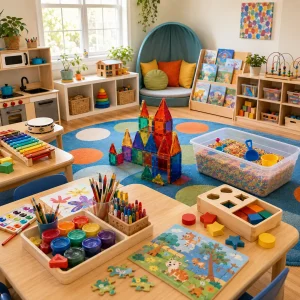
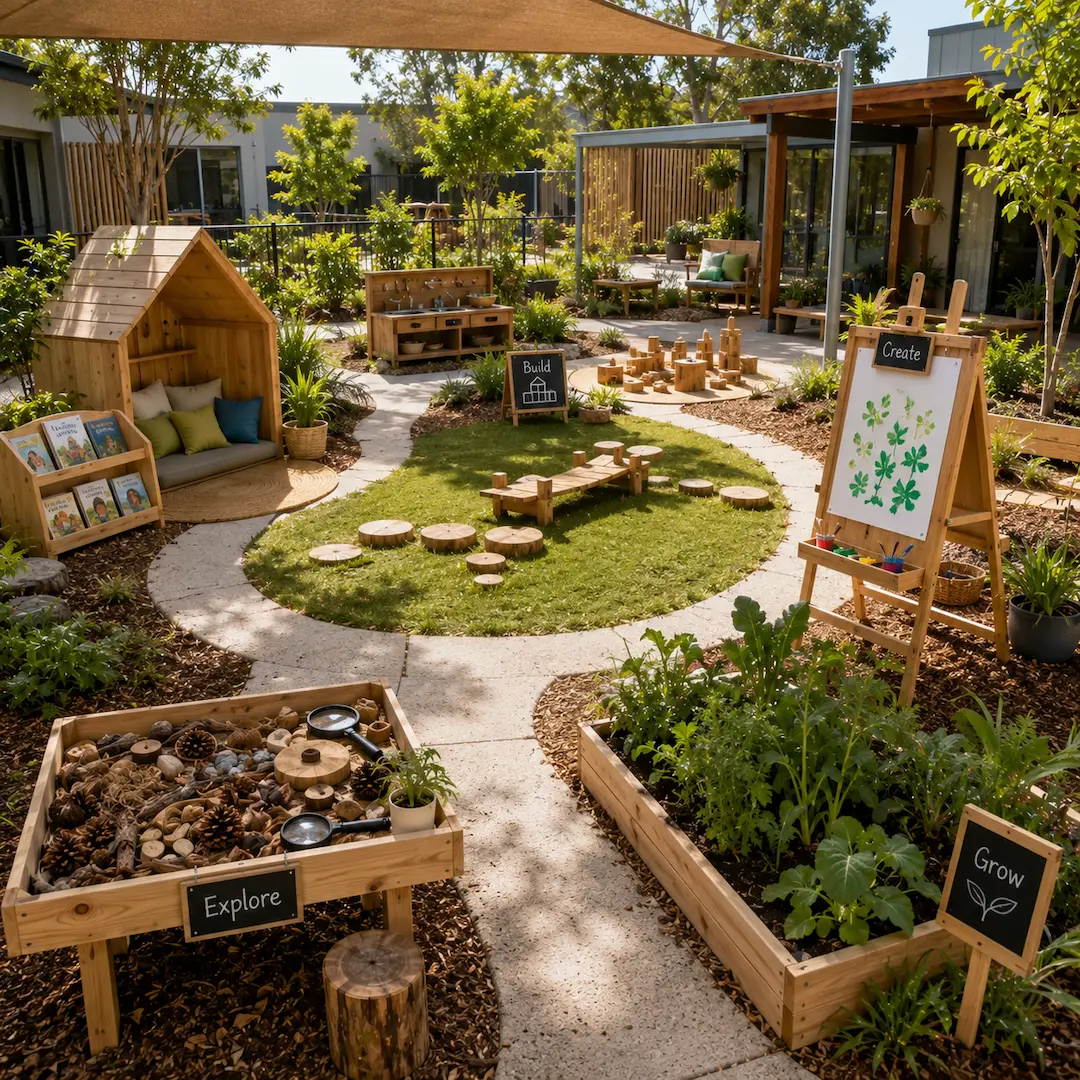
Children regulate their emotions much better in calm, thoughtfully designed spaces that offer both active play areas and quiet retreats. Access to natural materials and outdoor environments stimulates sensory development and encourages imaginative exploration.
The physical environment acts as a “third teacher,” gently guiding children’s behaviour and interactions through its layout and resources.
When you visit a high-quality centre, you will notice accessible resources, welcoming outdoor spaces, and quiet corners for children who need rest.
4. Staffing Arrangements
Families often notice when staff turnover is high, as it disrupts the comforting routines their children rely on. Building a bond with a familiar educator is deeply reassuring for a young child.
Children form secure attachments when they have consistent, positive interactions with the same qualified educators over time. These strong attachments lower children’s stress hormones, freeing up their cognitive energy for learning and socializing.
Skilled educators bring emotional intelligence and pedagogical knowledge to their roles, tailoring their approach to each unique child.
You will see this in action when educators greet your child warmly by name and know exactly how to comfort them during drop-off.
5. Relationships with Children
It is entirely normal to worry about whether your child will feel lonely or misunderstood in a busy preschool room. Parents want educators to see and celebrate their child’s unique personality.
Responsive relationships help children build a strong sense of identity and the social skills needed to navigate peer interactions. When educators actively listen and respond to children, they model the empathy and respect children need to develop healthy friendships.
Experts know that emotional wellbeing is the foundation of all early learning; a child who feels valued will confidently take on new challenges.
In a quality programme, you will observe educators getting down to the child’s eye level, validating their feelings, and guiding them through conflicts peacefully.
6. Collaborative Partnerships with Families and Communities
Parents sometimes feel disconnected from their child’s day, wondering what happens between drop-off and pick-up. A strong connection between home and the centre bridges this gap and builds mutual trust.
Children experience greater emotional stability when they see their parents and educators communicating openly and respectfully. When early learning services actively involve families, they can better align their care with the child’s home routines and cultural background.
Educators view parents as a child’s first and most important teachers, seeking their insights to inform the educational programme. To understand how community partnerships support early learning, visit the Queensland Government Early Childhood portal.
This partnership means you will receive regular, meaningful updates about your child’s growth and have opportunities to share your family’s traditions.
7. Governance and Leadership
It might seem like management structures do not affect your child, but poor centre leadership quickly trickles down to the classroom. Parents thrive in environments where communication is clear and policies are transparent.
A well-led centre supports its educators, leading to lower staff turnover and a more joyful, focused learning environment for children. Effective governance ensures that the centre continually reflects on its practices and strives for ongoing improvement.
Strong leadership creates a culture of continuous professional development, ensuring educators use the most current, evidence-based teaching strategies.
For families, this results in a smoothly run centre where issues are addressed promptly and parents always feel heard and respected.
How Preschools Are Assessed and Rated
Understanding how to read a centre’s rating can help alleviate the anxiety of choosing the right service. Families often seek objective reassurance that a centre meets high national standards.
The government assesses early learning services and awards them a rating based on the seven quality areas of the NQS. Assessors observe the centre’s practices, review their documentation, and look closely at the relationships between educators and children.
These ratings give families a reliable, transparent way to evaluate the quality of education and care a centre provides. You can explore how these assessments are conducted on the ACECQA Assessments page.
Ratings range from “Working Towards” to “Meeting” and “Exceeding” the National Quality Standard. When a centre is rated “Meeting” or “Exceeding,” it means they consistently provide a highly supportive, enriching environment for your child.
Practical Considerations for Queensland Families
Every family has a unique schedule and set of values, making the search for the perfect preschool deeply personal. What works perfectly for a neighbour might not suit your child’s specific temperament or your family’s routine.
Children thrive when the values and routines of their early learning centre closely align with those they experience at home. Transitioning to a new environment is much smoother when the centre’s approach to emotional support mirrors your own parenting style.
Educators understand that practical factors, like location, flexible hours, and communication styles, heavily influence a family’s overall wellbeing. You can find excellent resources on choosing care on the Starting Blocks choosing care guide.
As you tour local options, look for a space that genuinely feels right. At Children’s Choice, we understand these practical considerations and work closely with families to ensure our play-based programme fits seamlessly into your life.
Supporting Your Child’s Journey
Finding the right preschool is a significant milestone that sets the tone for your child’s future educational journey. By understanding the National Quality Standard, you can look past the surface and evaluate the true quality of a centre.
High-quality programmes focus on emotional wellbeing, strong relationships, and play-based learning to build lasting confidence. Keep these seven quality areas in mind as you tour centres, ask questions, and observe the educators in action.
When you know what to look for, you can make a choice that brings peace of mind to you and joy to your child.
Book a tour to explore how our nurturing environment supports children through every stage of early learning.
FAQs
What should I look for in a preschool’s learning program?
A high-quality preschool prioritises play-based learning, encouraging curiosity and creativity while supporting key developmental milestones like problem-solving, communication, and social skills.
How do I know if the educators are qualified?
Look for preschools with educators who hold early childhood education qualifications and are experienced in nurturing emotional wellbeing and fostering a safe, supportive environment.
Why is emotional wellbeing important in preschool?
Supporting emotional wellbeing helps children build confidence, develop resilience, and form positive relationships, all of which are essential for their overall growth and school readiness.
What safety measures should a preschool have in place?
High-quality preschools implement robust safety protocols, such as secure entrances, regular facility checks, qualified first-aid staff, and clear emergency procedures to ensure children are safe at all times.
How does the preschool involve parents in their child’s learning?
A trusted preschool maintains open communication with parents by providing regular updates, progress reports, and opportunities to engage in the child’s learning experiences.
What role does play-based learning play in my child’s development?
Play-based learning fosters a love for discovery and growth by blending education with fun, promoting literacy, numeracy, problem-solving, and teamwork in an engaging way.
How do I know if a preschool is a good fit for my family?
Ask about the center’s values, visit the facility, and observe how educators interact with children. Positive reviews and recommendations from other families are also valuable indicators of quality.