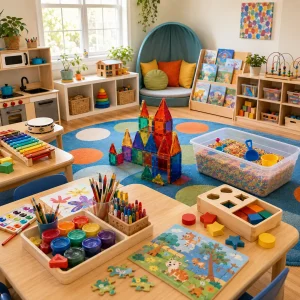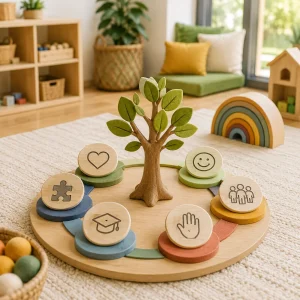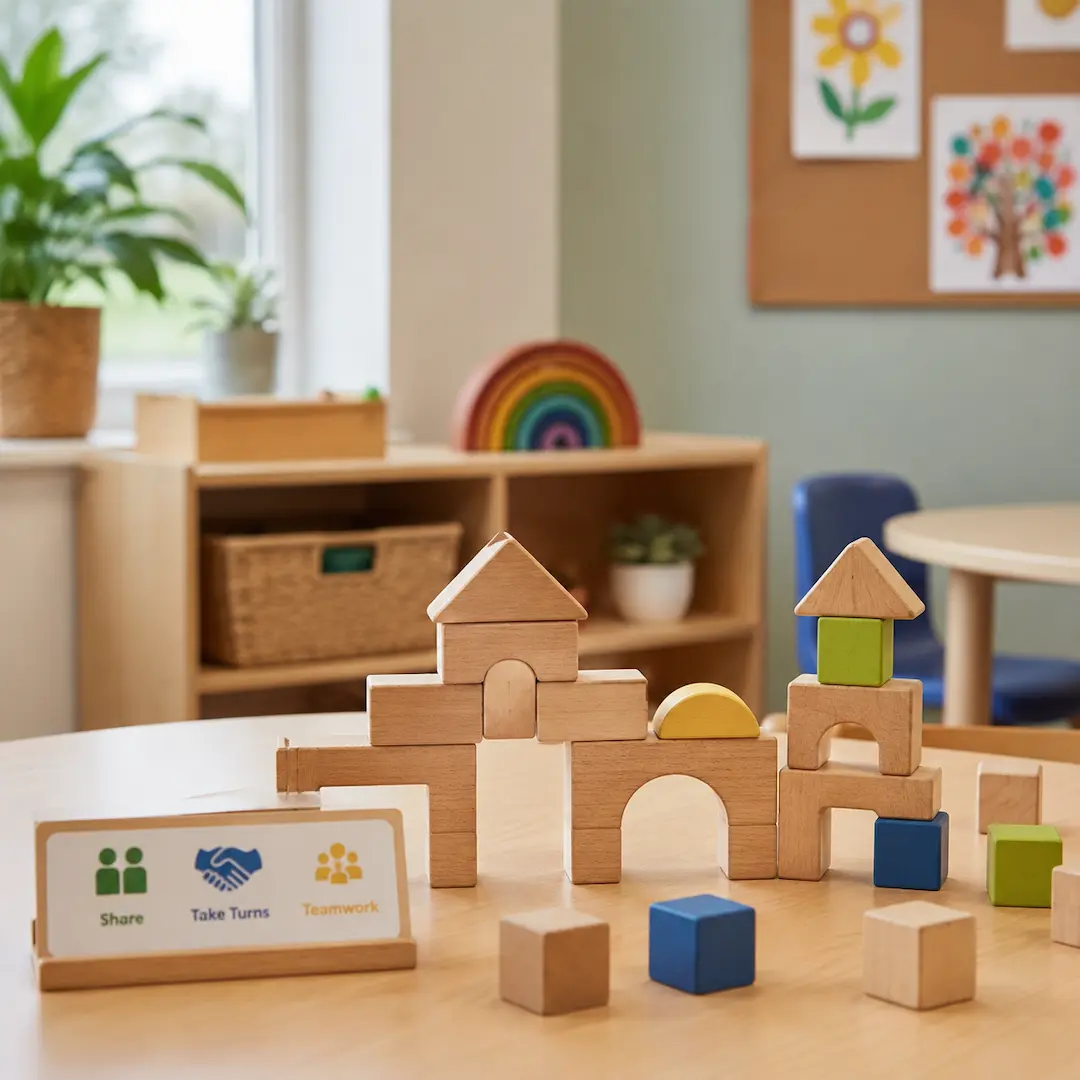
Have you ever watched a group of children trying to build a castle out of blocks? At first, they might be building their own separate towers side-by-side. But eventually, something magical happens. One child holds a block steady while another places a bridge across the top. They start talking, negotiating, and working towards a shared vision. This moment,where “me” becomes “we”,is the essence of cooperative learning.
For many parents, seeing their little ones navigate friendships and teamwork can be both heartwarming and a little nerve-wracking. We want them to make friends, but we also worry about conflict and sharing. It is helpful to remember that learning to work together is a skill that develops over time. At Children’s Choice, we see these interactions as vital stepping stones. Children’s Choice provides safe, nurturing childcare and play-based early learning that supports children’s development and school readiness, and cooperative learning is a huge part of that journey.
What is Cooperative Learning?
In the world of early childhood development, play is often categorized into different stages. You might notice toddlers engaging in “parallel play,” where they play near other children but not with them. As children grow and their social skills mature, typically around the ages of four or five, they enter the stage known as cooperative play.
Cooperative learning is when children come together to solve a problem, work on a project, or achieve a common goal. Unlike competitive games where there is a winner and a loser, cooperative learning is about collaboration. It requires children to assign roles, follow rules, and communicate effectively. It is the difference between two children drawing separate pictures at the same table and two children working together to paint a giant mural on a single sheet of paper.
The Benefits of Learning Together
When children engage in cooperative play, they are doing much more than just having fun. They are actively building a toolkit of skills that will serve them well throughout their schooling and into adulthood.
Social Skills Development
The most obvious benefit is the growth of social skills. To play cooperatively, children must learn to take turns, share resources, and respect the ideas of others. It teaches them that their actions affect the group. They learn to be patient when a friend is taking a turn and to offer encouragement when a peer is struggling.
Communication and Problem-Solving
Cooperative play is a constant conversation. Children must use language to explain their ideas (“Put the red block there”) and listen to the ideas of others (“No, let’s use the blue one”). When disagreements arise,which they naturally will,children have the opportunity to practice conflict resolution in a safe environment. They learn to negotiate and find compromises that keep the game going.
Cognitive Development
Working in a group challenges a child’s thinking. They are exposed to different perspectives and ways of solving problems that they might not have thought of on their own. This exchange of ideas stimulates critical thinking and creativity. For example, if a group is building a fort and the roof keeps collapsing, they must brainstorm together to figure out why and how to fix it.
Emotional Development
Being part of a team fosters a sense of belonging. When children contribute to a group goal, it boosts their self-esteem and confidence. They also develop empathy as they learn to read the emotions of their peers,understanding that knocking over someone’s tower might make them sad, and helping to rebuild it can make them feel better.
Implementing Cooperative Learning in the Classroom
At a high-quality childcare centre, cooperative learning doesn’t just happen by accident. Educators intentionally design environments and activities to foster these connections.
Small Group Activities
Educators often organize children into small groups for specific activities. Small groups are less overwhelming than whole-class activities and ensure that every child has a chance to participate and be heard. This setting allows children to focus on their interactions without too many distractions.
Creating Mixed-Ability Groups
Often, educators will group children with different strengths together. A child who is a strong verbal communicator might be paired with a child who has great spatial awareness. This allows children to learn from one another. The verbal child can help narrate the play, while the other child can lead the building or physical aspects of the activity.
Setting Clear Goals
For cooperative learning to work, the children need a shared purpose. Educators help set the scene by defining a clear goal, such as “Let’s see if we can build a tower taller than the chair” or “Let’s work together to clean up the puzzle corner.” These shared objectives give the children a reason to collaborate.
Cooperative Learning Activities
There are countless ways to encourage teamwork through play. Here are a few examples of activities you might see in an early learning setting:
- Dramatic Play: The “home corner” or a pretend “restaurant” are classic examples. Children naturally assign roles,one is the chef, one is the waiter, and one is the customer. They must cooperate to keep the story moving.
- Group Art Projects: Instead of individual drawings, children might work on a large canvas together, or create a collage where everyone contributes different pieces to make a whole picture.
- Parachute Games: Using a large parachute, children must move in sync to lift it up and down or keep a ball bouncing in the middle. This requires physical coordination and teamwork.
- Construction Challenges: Building a city out of recycled boxes or constructing a complex train track requires planning and negotiation.
- Gardening: Planting a veggie patch is a wonderful long-term cooperative project. Children work together to dig, plant, water, and eventually harvest.
The Role of Play in Early Childhood
It is important to view play as the primary vehicle for learning in the early years. Play is not a break from learning; it is how learning happens. Through play, children test theories, explore boundaries, and make sense of the world around them.
When play is cooperative, it adds a layer of social complexity that is essential for development. It prepares children for the classroom environment of primary school, where they will be expected to work in groups, listen to instructions, and respect their classmates. By supporting play-based learning, we are supporting the development of the whole child,socially, emotionally, and academically.
How Children’s Choice Supports Cooperative Learning
At Children’s Choice, we believe that relationships are at the heart of learning. Our programmes are designed to foster connection, encouraging children to view themselves as valuable members of a community.
Our educators act as “guides on the side” rather than directors. They observe children’s play and step in gently when needed to facilitate problem-solving or offer a new idea that extends the collaboration. We provide open-ended resources, like loose parts, blocks, and sensory materials, that naturally invite children to play together and combine their imaginations. By creating a safe, nurturing environment, we ensure that even the quietest children feel supported to join in and share their voice within the group.
Addressing Common Misconceptions
There are often misunderstandings about what play-based and cooperative learning actually look like.
- “It just looks like chaos.” While a room full of playing children can be noisy, it is often a “productive hum.” If you look closer, you will see structure, negotiation, and deep concentration.
- “The teachers aren’t teaching.” In a cooperative learning environment, the teaching is subtle but powerful. Educators are constantly assessing skills, modeling language, and setting up provocations that challenge the children’s thinking.
- “My child needs to learn academics, not just play.” Research consistently shows that play-based learning builds the strongest foundation for academic success. The social and executive function skills learned through cooperative play, like attention regulation and following instructions, are prerequisites for reading, writing, and math.
Building Bright Futures Through Connection
The journey from “mine” to “ours” is one of the most significant milestones in early childhood. Cooperative learning helps children understand that they are part of a larger world and that working together can lead to amazing results.
By prioritizing play and fostering a supportive community, we give children the space to practice these essential life skills. Whether they are building a spaceship out of cardboard boxes or negotiating the rules of a tag game, they are learning how to be a friend, a leader, and a team player. At Children’s Choice, we are privileged to witness these moments of connection every day, knowing that we are helping to build the foundation for a lifetime of successful learning and relationships.
Frequently Asked Questions
What age should I expect my child to start playing cooperatively with others?
Every child develops at their own unique pace, so there is no single “right” time. Generally, children begin to move from playing side-by-side (parallel play) to playing together around the age of four. However, the foundations for this are laid much earlier. You might see younger toddlers offering a toy to a friend or enjoying simple back-and-forth games. It is a gradual process, and patience is key as they learn to navigate these new social dynamics.
How do I choose the best childcare centre in Raceview for social skills?
When looking for the best childcare centre Raceview has to offer for social development, observe the interactions in the room. Look for a centre where educators are actively facilitating play rather than just supervising it. Watch how the children interact,are they encouraged to solve minor conflicts themselves with guidance? A high-quality centre will have ample space for group activities and a philosophy that prioritizes relationship-building and emotional regulation alongside academic readiness.
How does Children’s Choice encourage shy or quiet children to join in group play?
At Children’s Choice, we respect that some children prefer to observe before jumping in. We never force participation. Instead, our educators build a secure attachment with the child first, helping them feel safe. We might set up a small, quiet activity with just one other gentle peer to help build confidence. We also use “parallel play” as a bridge, allowing the child to be near the group without the pressure to interact until they are ready.
What makes a leading childcare centre in Raceview stand out for school readiness?
A leading childcare centre Raceview families trust for school readiness understands that “readiness” is about more than writing letters. It is about confidence, independence, and social skills. Top centres in this area focus on cooperative learning because they know that the ability to listen, work in a team, and manage emotions are the skills primary school teachers value most. They provide a balance of child-led play and intentional teaching moments that spark curiosity and a love for learning.
Does Children’s Choice use technology to support cooperative learning?
Children’s Choice believes in using technology intentionally to enhance learning, not replace active play. When used, technology is treated as a tool for collaboration rather than a solitary activity. For example, a small group of children might use a tablet together to research a bug they found in the garden or to take photos of their block tower. This encourages them to huddle together, discuss what they see, and make decisions as a team, keeping the focus on interaction and discovery.