Parents in Ipswich are increasingly recognizing the transformative impact of quality early learning programs on their children’s development. Far beyond simple childcare, these programs lay the foundation for lifelong success by nurturing young minds during their most critical developmental years. Understanding the comprehensive benefits of early learning helps parents make informed decisions about their children’s education.
What is Early Learning
Early learning refers to the structured educational experiences designed for children from birth to age five. Unlike traditional childcare that focuses primarily on supervision and basic care, early learning programs at a leading childcare centre in Ipswich integrate purposeful educational activities that support all aspects of child development.
These programs are based on developmental science and early childhood pedagogy. They recognize that the first five years of life are when brain development is most rapid, with neural connections forming at an extraordinary rate. Quality early learning programs capitalize on this critical window by providing enriching experiences that stimulate cognitive, social, emotional, physical, and language development.
Modern early learning programs follow approved frameworks such as the Early Years Learning Framework (EYLF), which guides educators in creating meaningful learning opportunities through play, intentional teaching, and responsive relationships. These programs are delivered by qualified early childhood educators who understand child development and create environments where children can explore, discover, and learn at their own pace.
The approach is holistic, addressing the whole child rather than focusing narrowly on academic skills. While literacy and numeracy concepts are introduced, they’re woven naturally into play-based activities alongside social skills, creativity, physical development, and emotional intelligence.
Cognitive Benefits of Early Learning
Brain Development and Neural Pathways
The cognitive benefits of early learning programs are profound and long-lasting. During early childhood, children’s brains form over one million neural connections every second. Quality educational experiences during this period strengthen these connections, creating robust pathways for future learning.
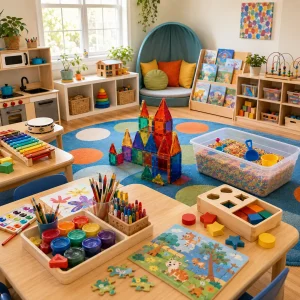
Leading childcare centres in Ipswich design activities that challenge children’s thinking, problem-solving, and reasoning skills. Puzzles, sorting games, building blocks, and age-appropriate STEM activities encourage children to think critically and approach challenges creatively.
Research consistently shows that children who attend quality early learning programs demonstrate stronger cognitive skills, including better memory, attention span, and information processing abilities. These foundational skills support all future academic learning.
Language and Literacy Development
Early learning programs immerse children in language-rich environments. Through conversations with educators, storytelling, songs, rhymes, and book reading, children rapidly expand their vocabulary and language comprehension.
Educators at quality centres engage children in meaningful conversations throughout the day, asking open-ended questions that encourage thinking and verbal expression. This continuous language exposure is particularly beneficial for children from homes where English may not be the primary language.
Pre-literacy skills developed in early learning programs include phonological awareness (understanding sounds in words), print awareness (recognizing that written symbols carry meaning), and narrative skills (understanding story structure). These skills are strong predictors of later reading success.
Mathematical Thinking
Early mathematics goes far beyond counting. Quality programs introduce concepts like patterns, shapes, measurement, sorting, and spatial relationships through hands-on activities and everyday experiences.
Children might sort objects by color and size, build towers while learning about height and stability, or set the table while practicing one-to-one correspondence. These concrete experiences build mathematical thinking that supports formal mathematics education in school.
Social Benefits of Early Learning Programs
Peer Interaction and Social Skills
One of the most valuable aspects of early learning programs is the opportunity for children to interact with peers. These social experiences teach essential life skills that cannot be learned in isolation.
Children learn to share, take turns, cooperate, negotiate, and resolve conflicts, all crucial social competencies. A leading childcare centre in Ipswich provides guided opportunities for these interactions, with educators modeling positive social behaviors and supporting children as they navigate social situations.
Group activities teach children about teamwork and collaboration. They learn that different people have different perspectives and preferences, developing empathy and understanding for others.
Emotional Regulation and Self-Control
Quality early learning programs support children’s emotional development by creating emotionally safe environments where feelings are acknowledged and validated. Educators help children identify, express, and manage their emotions appropriately.
Children learn self-regulation skills, the ability to control impulses, manage frustration, and adapt to changing circumstances. These skills are fundamental to school readiness and future success in all life areas.
Through consistent routines, clear expectations, and supportive guidance, children develop self-confidence and independence. They learn that they’re capable individuals who can solve problems and make choices.
Cultural Awareness and Diversity
Ipswich’s diverse community is reflected in quality childcare centres, where children interact with peers from various cultural backgrounds. This exposure builds cultural competence and appreciation for diversity from an early age.
Early learning programs celebrate cultural differences through multicultural books, foods, music, and celebrations, helping children understand and respect people from all backgrounds.
Why Ipswich Parents Prefer Structured Programs
Parents in Ipswich are increasingly choosing structured early learning programs over informal childcare arrangements for several compelling reasons.
School Readiness
Ipswich parents recognize that structured programs prepare children for the transition to school. Children who attend quality early learning programs typically adapt more easily to school routines, expectations, and learning environments.
They’re familiar with group settings, following instructions, participating in structured activities, and interacting with various adults beyond family members. This familiarity reduces anxiety and supports a smoother kindergarten transition.
Working Family Support
For Ipswich’s working families, quality childcare centres provide reliable, professional care that allows parents to pursue careers with confidence. Knowing their children are in safe, educational environments reduces parental stress and guilt.
Modern centres offer flexible hours, nutritious meals, and comprehensive programs that address all aspects of child development, providing working parents with peace of mind.
Professional Expertise
Parents value the expertise that qualified early childhood educators bring. These professionals understand developmental milestones, can identify potential developmental delays early, and know how to support each child’s individual learning journey.
Best childcare centres in Ipswich maintain ongoing communication with parents, sharing observations about children’s progress and providing guidance on supporting development at home.
Long-Term Impact on Children
Academic Achievement
The benefits of early learning extend far beyond the preschool years. Extensive research demonstrates that children who attend quality early learning programs show better academic outcomes throughout their schooling.
They’re more likely to achieve grade-level reading and mathematics proficiency, less likely to require special education services, and more likely to complete secondary education. The early investment in learning creates a positive trajectory that continues for years.
Social and Emotional Outcomes
The social and emotional skills developed in early learning programs contribute to better life outcomes in numerous areas. Children with strong social-emotional skills have healthier relationships, better mental health, and greater resilience when facing challenges.
They develop positive attitudes toward learning and education, seeing themselves as capable learners who can master new skills. This growth mindset serves them throughout life.
Economic Benefits
From a broader perspective, investment in early learning programs yields significant economic returns. Children who attend quality programs are more likely to be employed, earn higher incomes, and less likely to require social services as adults.
For families, the immediate economic benefit is the ability for parents to work, knowing their children are receiving quality care and education.
Frequently Asked Questions
What are early learning programs in Ipswich?
Early learning programs in Ipswich provide structured, play-based education for children aged 0–5, supporting cognitive and social growth.
Why are early learning programs important for child development?
Early learning strengthens brain development, builds language skills, and improves social behaviour during the most critical early years.
How do early learning programs improve school readiness?
Children gain routines, communication skills, and confidence, helping them transition smoothly into school environments.
What skills do children develop in early learning programs?
Children develop language, problem-solving, emotional control, social interaction, and early maths skills through guided play.
Why do parents choose structured childcare in Ipswich?
Parents prefer structured programs for professional care, school readiness, and balanced development in safe, supportive environments.
Conclusion
The benefits of early learning programs in Ipswich are comprehensive and far-reaching, supporting children’s immediate development while laying foundations for lifelong success. From cognitive and language development to social skills and emotional intelligence, quality early learning addresses all aspects of child development during the critical early years.
Parents seeking the best start for their children should prioritize finding a leading childcare centre in Ipswich that offers evidence-based early learning programs delivered by qualified, passionate educators. The investment in quality early education is one of the most valuable gifts parents can give their children, setting them on a path toward reaching their full potential.