When your little one wakes up with a sniffle or a warm forehead, it can be a stressful moment for any parent. Balancing work commitments with your child’s health is one of the toughest juggling acts families face. However, understanding the “why” and “how” behind daycare sick policies can make these moments a little easier to navigate.
These policies aren’t just rules to follow; they are essential frameworks designed to keep every child safe, healthy, and ready to learn. At Children’s Choice, we believe that a safe, nurturing environment is the foundation of quality childcare. By working together on health guidelines, we ensure that our centres remain vibrant spaces where children can thrive, play, and grow without the constant interruption of preventable illnesses.

What is a Daycare Sick Policy?
A daycare sick policy is a clear set of guidelines that outlines when a child should stay home due to illness and when they can safely return to care. It serves as a mutual agreement between the childcare provider and the family to prioritize the wellbeing of the entire community.
The purpose of this policy is twofold: to ensure that a sick child gets the rest and recovery they need in the comfort of their own home, and to minimize the spread of germs to other children and educators. Whether you are looking for the best childcare centre Raceview has to offer or a trusted provider elsewhere, a robust sick policy is a hallmark of a high-quality early learning environment. It provides clarity for parents so they aren’t left guessing whether a runny nose is “just allergies” or something that requires a sick day.
Why Daycare Sick Policies are Important
It might feel inconvenient when you have to call into work, but strict adherence to sick policies is actually a protective measure for your own family. Here is why these guidelines are so vital:
Preventing the Spread of Illness
Children in group settings interact closely, sharing toys, holding hands, and playing side-by-side. This natural social interaction means germs travel fast. A strong policy acts as a “circuit breaker,” stopping contagious bugs before they sweep through a classroom.
Maintaining a Healthy Environment
We want children to focus on play-based learning and social development, not fighting off viruses. A healthy environment supports better engagement and happier children.
Protecting Staff from Illness
Educators are the heart of any childcare centre. When staff members get sick, it disrupts the consistency of care that children rely on. Keeping sick children home helps protect the teachers who nurture them every day.
Reducing Disruptions
While one sick day is difficult, a centre-wide outbreak of the flu or gastro can be much worse for everyone. By staying home for minor illnesses, we prevent larger disruptions that could close rooms or affect many families at once.
Common Illnesses Covered by Sick Policies
Most childcare centres in Australia follow guidelines based on advice from public health authorities. Here are the most common scenarios you will encounter:
Fever
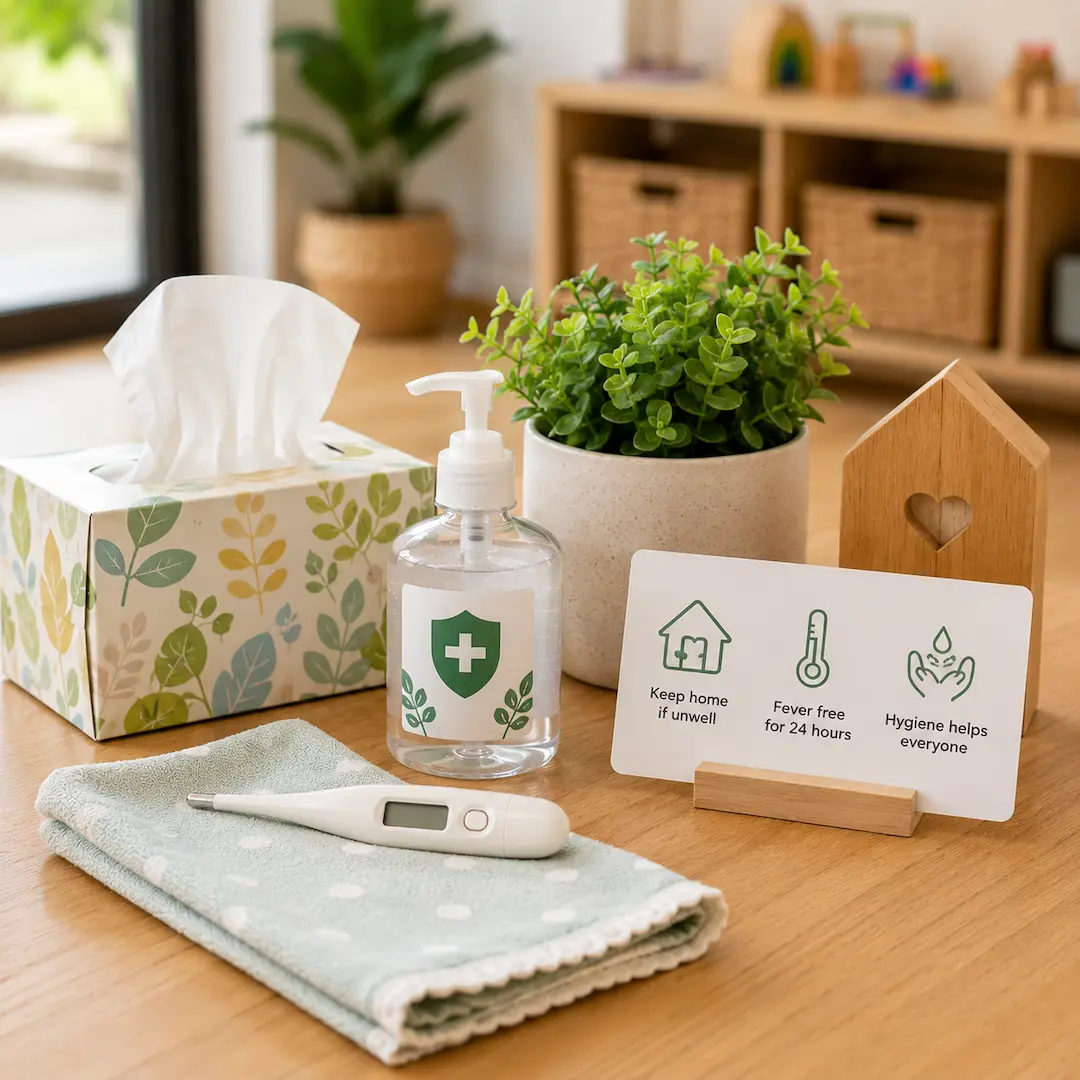
Generally, a temperature of 38°C or higher is considered a fever. Children usually need to stay home until they have been fever-free for 24 hours without the help of fever-reducing medication like Panadol or Nurofen. This ensures the infection has passed and the child has enough energy to participate in the day’s activities.
Vomiting and Diarrhea
Gastrointestinal illnesses are highly contagious. Policies typically require a child to be excluded from care until 24 to 48 hours have passed since their last episode of vomiting or loose bowel movement. This strict timeframe is crucial because these bugs can linger on surfaces and spread rapidly.
Contagious Illnesses
Specific conditions require specific exclusion periods:
- Pink Eye (Conjunctivitis): Usually requires exclusion until discharge has ceased or treatment has begun.
- Hand, Foot, and Mouth Disease: Children generally stay home until all blisters have dried.
- Respiratory Viruses (including COVID-19): Exclusion depends on current health advice, but generally applies while symptoms are acute.

Children’s Choice Approach to Health and Safety
At Children’s Choice, we view health and safety as a partnership. Our specific sick policy guidelines are designed to be transparent and fair, ensuring that every family understands exactly what is expected.
We go beyond just exclusion policies. We implement rigorous cleaning schedules, teach children proper hand-washing techniques as part of their daily routine, and maintain well-ventilated learning spaces. Whether you are visiting a leading childcare centre Raceview location or one of our other centres, you will see these high standards in action. We believe that by being proactive, we support children’s development and school readiness by keeping them healthy enough to learn.
Creating a Daycare Sick Policy
If you are a parent reviewing a handbook, or simply interested in what makes a policy effective, there are essential elements that should always be included. A comprehensive policy protects the provider, the staff, and the families.
An effective policy includes:
- Clear Definitions: Specific symptoms that require exclusion (e.g., “green runny nose” vs. “clear runny nose”).
- Communication Channels: How and when parents must notify the centre.
- Medication Procedures: Strict protocols on how medication is administered if a child is recovering but not contagious.
- Return-to-Care Criteria: Clear rules on whether a doctor’s certificate is required.
Parents searching for the best childcare centre Raceview has available should always ask to see the sick policy during a tour. It demonstrates the centre’s commitment to professional standards and child safety.
Communication and Enforcement
Open communication is key to making these policies work. At Children’s Choice, we strive to communicate our policies compassionately. We understand the pressure parents are under, and we don’t send children home lightly.
Strategies for consistent enforcement include:
- Regular Reminders: Sending seasonal reminders during flu season helps keep health top-of-mind.
- Health Checks: Conducting gentle health checks upon arrival can help catch symptoms early.
- Fairness: Applying the rules equally to all families ensures that no one feels singled out and the standard of care remains high for everyone.
Children’s Choice: Your Partner in Safe, Nurturing Childcare
Navigating illnesses is just one part of the parenting journey, but you don’t have to do it alone. By understanding and respecting sick policies, we create a community of care that looks out for everyone. At Children’s Choice, we are committed to providing safe, nurturing childcare and play-based early learning that supports children’s development and school readiness. Together, we can keep our centres happy, healthy, and full of learning.

FAQs About Daycare Sick Policies
What if my child has a runny nose but seems fine?
This is a common question! If the discharge is clear and the child is happy, active, and eating well, they can usually attend. However, if the mucus is thick, green, or yellow, or if it is accompanied by lethargy or a fever, it is best to keep them home to monitor for infection.
Can Children’s Choice administer antibiotics?
Yes, in many cases. If your child has been prescribed antibiotics for a non-contagious condition (or has passed the exclusion period for a contagious one), we can administer medication. You will need to complete a medication authorization form, and the medication must be in its original packaging with the pharmacy label attached.
Do I always need a doctor’s certificate to return?
Not always, but it depends on the illness. For general colds or 24-hour fevers, a certificate usually isn’t necessary. However, for contagious conditions requiring antibiotics or specific exclusion periods (like Hand, Foot, and Mouth), Children’s Choice may request a clearance letter from a GP to ensure it is safe for the child to return to the leading childcare centre Raceview families trust.
Why is the exclusion period for gastro so long?
Gastroenteritis (tummy bugs) is incredibly infectious. Even if a child feels better, they can still shed the virus for some time after symptoms stop. The 24-to-48-hour rule is the gold standard in childcare to prevent a single case from turning into a centre-wide outbreak.
What happens if my child gets sick during the day?
If a child becomes unwell while in our care, we will comfort them and separate them gently from other children to prevent spread. We will contact you immediately to arrange pick-up. We aim to keep your child as comfortable and reassured as possible until you arrive.