Watching your child grow is one of the most rewarding parts of parenthood. From that first social smile to their first steps, every milestone feels like a victory. However, alongside these physical changes, there is an incredible amount of growth happening inside their minds. This internal growth is known as cognitive development, and it lays the foundation for how your child perceives, thinks about, and interacts with the world.
At Children’s Choice, we understand that every parent wants to give their little one the best start in life. Understanding how your child’s brain develops can help you support them through these critical early years. Whether you are navigating the “terrible twos” or preparing for the transition to school, knowing what is happening behind those bright eyes can make the journey smoother and more joyful. Children’s Choice provides safe, nurturing childcare and play-based early learning that supports children’s development and school readiness, acting as your partner in fostering these essential life skills.
What is Cognitive Development?
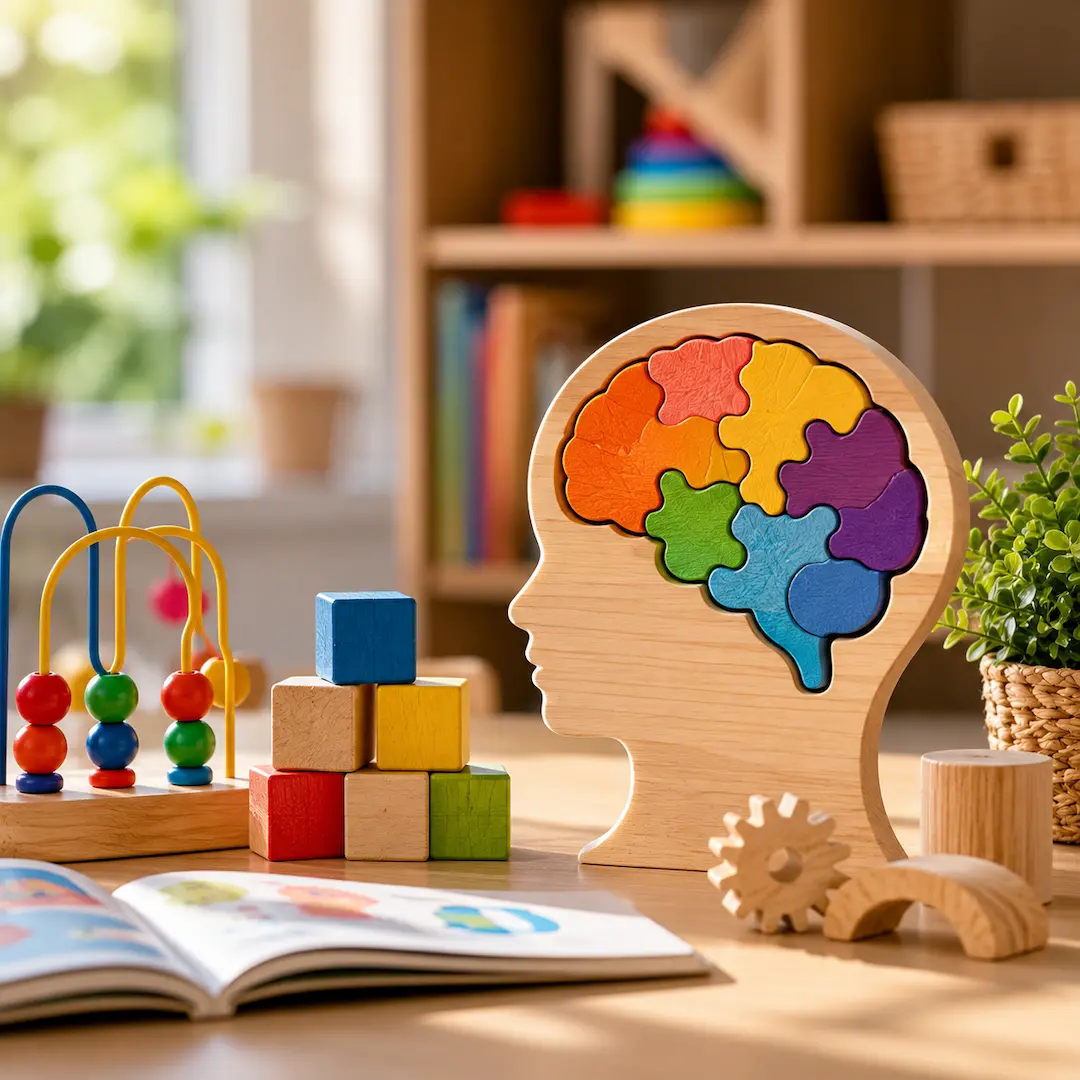
Cognitive development refers to the way a child’s brain processes information. It is not just about intelligence or academic potential; it encompasses the development of knowledge, skills, problem-solving abilities, and dispositions, which help children think about and understand the world around them.
When early childhood educators and paediatricians talk about cognitive development, they are looking at how a child learns to:
- Think and reason.
- Solve problems.
- Make decisions.
- Pay attention and remember information.
It is a gradual process where children build upon what they already know to understand more complex ideas.
Stages of Cognitive Development (Piaget’s Theory)
One of the most widely accepted frameworks for understanding this process is Jean Piaget’s Theory of Cognitive Development. Piaget suggested that children move through four distinct stages of mental development. Understanding these can help you set realistic expectations for your child’s behaviour and learning.
Sensorimotor Stage (Birth to 2 Years)
In this stage, babies learn about the world through their senses and actions (moving and manipulating objects). They learn that objects continue to exist even when they cannot be seen (object permanence) and begin to understand cause and effect.
Preoperational Stage (2 to 7 Years)
This is a crucial stage for early learning. Children begin to think symbolically and learn to use words and pictures to represent objects. They tend to be egocentric, meaning they struggle to see things from the perspective of others. Their thinking is intuitive rather than logical.
Concrete Operational Stage (7 to 11 Years)
During these years, children begin to think logically about concrete events. They begin to understand the concept of conservation (that the amount of liquid in a short, wide cup is equal to that in a tall, skinny glass). Their thinking becomes more organized and rational.
Formal Operational Stage (12 Years and Up)
Adolescents begin to think abstractly and reason about hypothetical problems. They begin to think more about moral, philosophical, ethical, social, and political issues that require theoretical and abstract reasoning.
Key Domains of Early Childhood Development
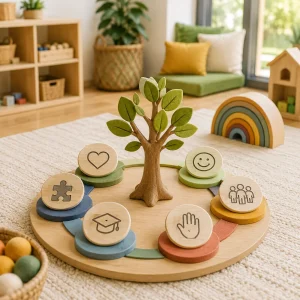
While cognitive development is vital, it doesn’t happen in isolation. It is deeply interconnected with other domains of development. A holistic approach to childcare,like the one we practice at Children’s Choice,nurtures all these areas simultaneously.
- Physical: This includes the development of the senses, as well as gross motor skills (large movements like running) and fine motor skills (small movements like holding a pencil).
- Cognitive: As discussed, this involves processing information, memory, and reasoning.
- Communicative: This covers the ability to understand language (receptive) and express thoughts and feelings (expressive).
- Socioemotional: This involves learning to interact with others, regulate emotions, and develop a sense of self.
- Adaptive: These are self-care skills, such as dressing, eating independently, and toileting.
Cognitive Development Milestones by Age
While every child develops at their own unique pace, there are general milestones that serve as a helpful guide for what to expect.
0–12 Months
- 0-3 months: Focuses on moving objects and faces; anticipates routines (like feeding).
- 3-6 months: Imitates facial expressions; reaches for toys; reacts to familiar sounds.
- 6-9 months: Differentiates between animate (living) and inanimate objects; curiosity about how things work.
- 9-12 months: Enjoys looking at picture books; begins to understand “object permanence” (looking for hidden toys).
1–2 Years
Toddlers at this age are explorers. They begin to recognize themselves in mirrors and understand the difference between “me” and “you.” They start to imitate adult actions (like pretending to talk on the phone) and can follow simple, one-step instructions.
2–3 Years
This is often called the age of independence. Children begin to sort objects by shape and colour. They can complete simple puzzles and engage in make-believe play, which is a significant leap in cognitive ability.
3–4 Years
Preschoolers become analytical. They start asking “why” constantly. They can sort things into more complex categories, understand the concept of time (morning vs. night), and their attention span increases.
4–5 Years
As they prepare for school, children can count objects, draw basic shapes, and name colours. They start to understand more abstract concepts like “same” and “different” and can draw pictures that depict a story.
Children’s Choice and Cognitive Development
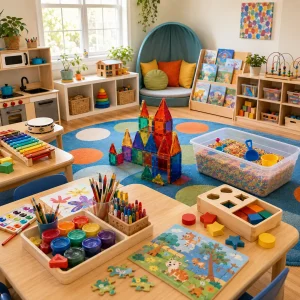
At Children’s Choice, we believe that children learn best when they feel safe, secure, and happy. Our curriculum is built around play-based learning, which is widely recognised as the most effective way for young children to develop cognitive skills.
Play allows children to hypothesise, experiment, discover, and solve problems in a low-pressure environment. Whether they are building a tower of blocks (physics and maths), playing house (social and symbolic thinking), or mixing paints (science and creativity), they are actively constructing their own understanding of the world. Our educators provide a supportive environment where curiosity is encouraged, helping to spark a lifelong love of learning.
Why is Cognitive Development Important?
Fostering cognitive development in the early years is about more than just intelligence; it builds the architecture of the brain. Strong cognitive skills are the foundation for:
- Academic Success: Reading, writing, and mathematics rely on the ability to process and organize information.
- Emotional Resilience: Understanding how the world works helps children manage their expectations and emotions.
- Lifelong Learning: Curiosity and critical thinking skills developed now will serve them well into adulthood.
Choosing a Leading Childcare Centre in Raceview
Choosing the right environment for your child is one of the biggest decisions you will make. When parents search for a leading childcare centre Raceview families recommend, or a leading childcare centre Raceview community trusts, they are often looking for centres that prioritize holistic development.
High-quality centres are defined by qualified educators who understand the nuances of Piaget’s stages and how to scaffold a child’s learning. They offer rich, stimulating environments that invite exploration. Whether you are in Raceview, or looking for the Best childcare centre Ipswich has to offer, look for a service that values play-based learning. These centres understand that “playing” is actually “learning” in its purest form.
Nurturing Cognitive Growth with Children’s Choice
Understanding cognitive development allows you to appreciate the incredible work your child’s brain is doing every day. It shifts the perspective from simply “watching them grow” to actively participating in their learning journey. At Children’s Choice, we are honoured to be part of that journey. By providing a safe, nurturing environment rich in play-based learning opportunities, we help children build the confidence and cognitive skills they need for school and beyond.
FAQs about Cognitive Development
What are the main areas of child development?
The five main areas are physical (motor skills), cognitive (thinking and problem-solving), communicative (language), socioemotional (relationships and feelings), and adaptive (self-care). All these domains are interconnected and influence each other as your child grows.
How can Children’s Choice support my child’s cognitive growth?
Children’s Choice supports growth through play-based learning programs tailored to each developmental stage. Our educators create stimulating environments that encourage problem-solving, curiosity, and exploration, ensuring your child builds the critical thinking skills needed for school readiness.
What are the four stages of cognitive development?
Jean Piaget identified four stages: the Sensorimotor stage (birth to 2 years) focused on senses; the Preoperational stage (2 to 7 years) involving symbolic thought; the Concrete Operational stage (7 to 11 years) for logical thought; and the Formal Operational stage (12+ years) for abstract reasoning.
How do I know if my child is on track with their cognitive milestones?
While all children develop at different rates, tracking milestones against general age guides can help. If your child struggles with age-appropriate tasks or seems to regress, consult your GP. Educators at a leading childcare centre Raceview can also provide observations.
What activities can I do at home to boost cognitive development?
Read together daily to build language and imagination. Encourage open-ended play with blocks or simple household items. Play memory games, sing songs with actions, and ask your child open-ended questions like “What do you think will happen next?” to stimulate critical thinking.