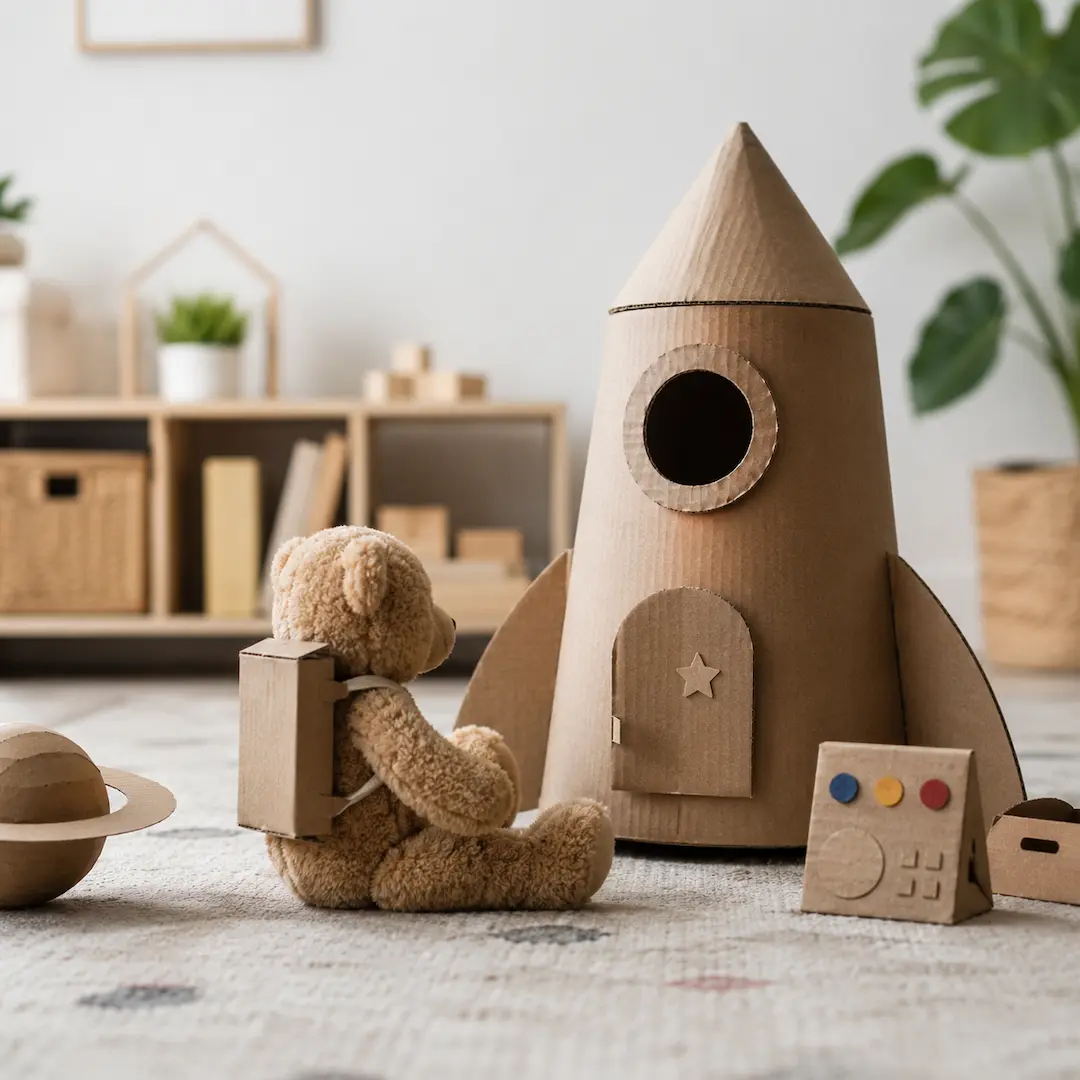
Watching a child transform a cardboard box into a spaceship or a stick into a magic wand is one of the joys of parenting. But did you know that this simple act of make-believe is doing much more than just passing the time? It is actually hard work for their growing brains. Pretend play is a critical component of early childhood development, laying the groundwork for social skills, emotional intelligence, and cognitive growth.
At Children’s Choice, we understand that play is the primary way children make sense of the world. While it might look like just fun and games, imaginative play helps children navigate complex emotions, solve problems, and build the confidence they need for school and beyond. By understanding the science behind the fun, we can better support our little ones as they explore, create, and learn.
What is Pretend Play?
Pretend play,often called imaginative play, dramatic play, or make-believe,occurs when children use objects, actions, or ideas to represent other things. It is the moment a toddler picks up a banana and uses it as a telephone, or when a group of preschoolers decides the floor is lava.
Unlike functional play, which involves using toys for their intended purpose (like rolling a car or stacking blocks), pretend play requires abstract thinking. A child must hold an image in their mind and project it onto the world around them. This type of play usually begins around 18 months of age and becomes increasingly complex as children grow, moving from simple solo acts to elaborate group scenarios with rules and roles.
It is a unique aspect of human development that allows children to step outside of reality and experiment with different perspectives. Whether they are pretending to be a parent, a doctor, or a superhero, they are actively rehearsing for life.
Benefits of Pretend Play
The benefits of make-believe extend far beyond the playground. Research shows that engaging in imaginative play supports development across several key areas.
Creativity and Imagination
When children role-play, they are exercising their creative muscles. They learn to generate new ideas, think outside the box, and create narratives. This ability to visualize scenarios that don’t yet exist is the foundation of innovation and creative thinking in adulthood. By creating their own worlds, they learn that they have the power to shape their environment and their stories.
Social and Emotional Development
Have you ever watched children playing “house” or “shops”? You will notice they are constantly negotiating. “You be the baby, and I’ll be the mum.” “No, I want to be the puppy!” Through these interactions, children practice cooperation, turn-taking, and empathy. They learn to understand perspectives different from their own, which builds emotional intelligence. It also provides a safe space to process big emotions; a child might act out a scary visit to the dentist to make it feel more manageable.
Language Development
Pretend play is a language powerhouse. When children engage in dramatic play, they often use higher-level language than they do in normal conversation. They experiment with new vocabulary (like “stethoscope” while playing doctor) and practice sentence structures. Narrating their actions and negotiating plot twists with peers significantly boosts their communication skills.
Problem-Solving Skills
In the world of make-believe, problems arise constantly. The “castle” might fall down, or the “soup” might be too hot. Children must think on their feet to find solutions. This cognitive flexibility,the ability to adapt when things change,is a vital life skill. They learn to assess situations, try different approaches, and manage frustration when things don’t go to plan.
Physical Development
Imaginative play is often active. Dressing up in costumes requires fine motor skills (zipping, buttoning), while running from “monsters” or building forts supports gross motor development. Hand-eye coordination improves as they manipulate props, pour imaginary tea, or steer pretend vehicles.
How to Encourage Pretend Play
While pretend play comes naturally to most children, parents and caregivers can take steps to enrich the experience.
Create a Play-Friendly Environment
You don’t need expensive toys to spark imagination. In fact, open-ended materials often work best. A basket of “loose parts”,scarves, boxes, wooden spoons, and cushions,can become anything a child imagines. Designate a safe space where they are free to make a mess and explore without too many restrictions.
Model Imaginative Play
Sometimes, children need a little nudge to get started. You can model this by picking up a toy phone and having a “conversation,” or by sitting down for a cup of invisible tea. The goal isn’t to take over the play, but to offer ideas and then step back to let the child lead the narrative.
Introduce Incidental Learning
Use play to gently teach positive behaviors. If you are playing “restaurants,” you can practice using “please” and “thank you.” If you are playing with dolls, you can talk about gentle hands and caregiving. These moments of incidental learning are often more effective than direct instruction because the child is engaged and motivated.
Children’s Choice and Play-Based Learning
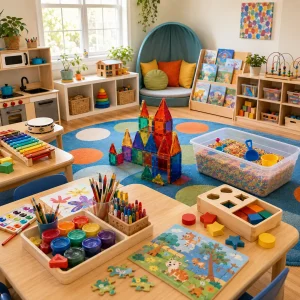
At Children’s Choice, we believe that children learn best when they are happy, engaged, and allowed to explore their interests. That is why pretend play is woven into the fabric of our daily curriculum. We provide rich environments filled with open-ended resources that invite children to create, imagine, and collaborate.
Whether you are looking for the Best childcare centre Raceview, our centres are designed to foster this crucial development. Our educators are trained to observe children’s play and scaffold their learning,stepping in to ask an open-ended question that extends their thinking, or providing a new prop that adds depth to their story.
For families seeking a Leading childcare centre Raceview , Children’s Choice offers a supportive community where your child’s imagination is valued. We know that by supporting play today, we are building the thinkers, communicators, and problem-solvers of tomorrow.
The Importance of Play at Children’s Choice
Pretend play is far more than a simple pastime; it is a complex learning process that shapes a child’s brain and prepares them for the future. From boosting vocabulary to teaching empathy, the benefits are profound and long-lasting. By encouraging make-believe at home and choosing a care environment that prioritizes play, you are giving your child the best possible start.
At Children’s Choice, we are committed to providing safe, nurturing childcare and play-based early learning that supports children’s development and school readiness. We invite you to see firsthand how our approach helps children thrive.
Frequently Asked Questions
What is pretend play and why is it important?
Pretend play helps children develop critical social, emotional, and cognitive skills. It allows them to practice problem-solving, explore different perspectives, and build language skills in a safe, low-pressure environment. It is a vital part of healthy brain development.
How can Children’s Choice help my child develop through pretend play?
At Children’s Choice, we provide purposefully designed environments and open-ended resources that spark imagination. Our educators are skilled in scaffolding play, meaning they support and extend your child’s ideas to deepen their learning and social interactions.
At what age should I introduce pretend play?
You can start introducing simple pretend actions around 12 to 18 months, such as pretending to drink from a cup. However, complex imaginative play typically blossoms between the ages of 2 and 5. Following your child’s lead is always the best approach.
What are some signs that my child needs help with pretend play?
If a child struggles to engage in make-believe, repeats the exact same play sequence without variation, or rarely uses objects to represent other things, they may need support. Our educators can help model play strategies to build their confidence.
How do I choose the best childcare centre Ipswich for my child’s play-based learning?
Look for a centre that prioritizes play in their philosophy. Ask to see their indoor and outdoor environments,are there open-ended materials? Do the children look engaged and happy? A great centre will be able to explain how their play-based program supports school readiness.