Have you ever watched your toddler insist on putting on their shoes in the exact same order every morning, or noticed your preschooler repeating the same song verse over and over again? As a parent, these moments can sometimes feel puzzling or even testing. However, in the world of early childhood development, these are actually signs of something wonderful happening in your child’s brain.
These intense phases of focus are known as “sensitive periods.” They are specific windows of time when your child is naturally primed to learn a new skill with ease and joy. Understanding these periods can transform the way you view your child’s behavior, turning moments of frustration into opportunities for incredible growth.
At Children’s Choice, we understand that these moments are fleeting but foundational. We are here to partner with you during these crucial years. Children’s Choice provides safe, nurturing childcare and play-based early learning that supports children’s development and school readiness. By recognizing these unique developmental windows, we can work together to help your child thrive.
What Are Montessori Sensitive Periods?
The concept of sensitive periods was developed by Dr. Maria Montessori. She observed that young children go through temporary, distinct phases where they are biologically ready to acquire specific traits or skills. Think of them as “windows of opportunity.” When the window is open, learning a particular skill, like language, movement, or social interaction, happens almost effortlessly and with great enthusiasm.
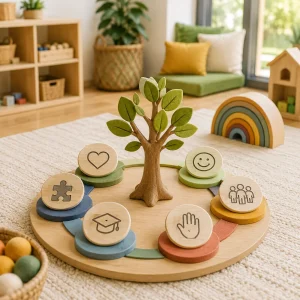
Once the window closes, the skill can still be learned, but it may require more conscious effort and instruction. The most critical sensitive periods occur between birth and age six. During these years, children move through five main categories of sensitivity: order, language, sensory skills, movement, and social skills.
The Main Montessori Sensitive Periods
To support your child effectively, it helps to know what to look for. Here is a breakdown of the key sensitive periods you will likely observe during the early years.
Order
This period typically runs from birth to around age five, peaking during the toddler years. During this time, children have an intense desire for consistency, routine, and structure.
You might notice your child becoming upset if a routine is changed or if objects are moved from their usual place. This isn’t just a preference; it is a developmental need. Children use external order to build their internal understanding of the world. Knowing where things belong and what happens next provides them with a sense of security and helps them organize their own minds.
Language
The sensitive period for language is one of the most profound, lasting from birth to age six.
- Spoken Language (Birth to 3 years): Babies and toddlers absorb vocabulary, grammar, and sentence structure simply by listening to those around them. They mimic sounds and movements of the mouth.
- Writing and Reading (3.5 to 5.5 years): As they grow, the interest often shifts to written language. You might see an explosion of interest in letters, tracing shapes, and eventually, reading words.
Sensory Skills
From birth to age five, children are refining their senses. They are fascinated by the qualities of objects,how things feel, taste, smell, sound, and look.
This is the time when children love activities that involve sorting or matching. They are learning to distinguish between differences in pitch, texture, colour, and weight. Sensorial exploration is the foundation for intellectual growth, as it helps children classify and categorize the environment around them.
Movement
Movement is essential for a child’s physical and cognitive growth.
- Gross and Fine Motor (Birth to 2.5 years): This phase involves major milestones like crawling, pulling up, walking, and grasping. The drive to move is irresistible.
- Refinement and Coordination (2.5 to 4.5 years): The focus shifts to control. Children begin to refine their movements, learning to use both hands together, hold a pencil with a pincer grip, and balance their bodies with greater precision.
Social Skills
Around the age of 2.5 to 5 years, children begin to look beyond themselves. They become interested in their peers and the group dynamic.
While younger children often engage in parallel play (playing next to, but not with, others), children in this sensitive period start to engage in cooperative play. They learn about empathy, manners, taking turns, and how their actions affect others. This is a crucial time for developing the soft skills that form the basis of future relationships.
How to Recognize Sensitive Periods
Recognizing a sensitive period often comes down to observation. The most telling sign is intense concentration. If you see your child repeating an activity over and over,like pouring water between cups or buttoning and unbuttoning a shirt,without getting bored, they are likely in a sensitive period.
You may also notice:
- Mimicking: Copying the actions or words of adults and peers.
- Compulsive behaviour: A strong, almost urgent need to complete a task or maintain a routine.
- Joy: A sense of satisfaction and happiness when they are engaged in the activity.
It is vital to respect these moments. Dr. Montessori emphasized the importance of the “uninterrupted work cycle.” When a child is deeply focused, their brain is working hard. Interrupting them can break that flow of learning. Whenever possible, allow them to finish their task to their own satisfaction.
Supporting Children During Sensitive Periods
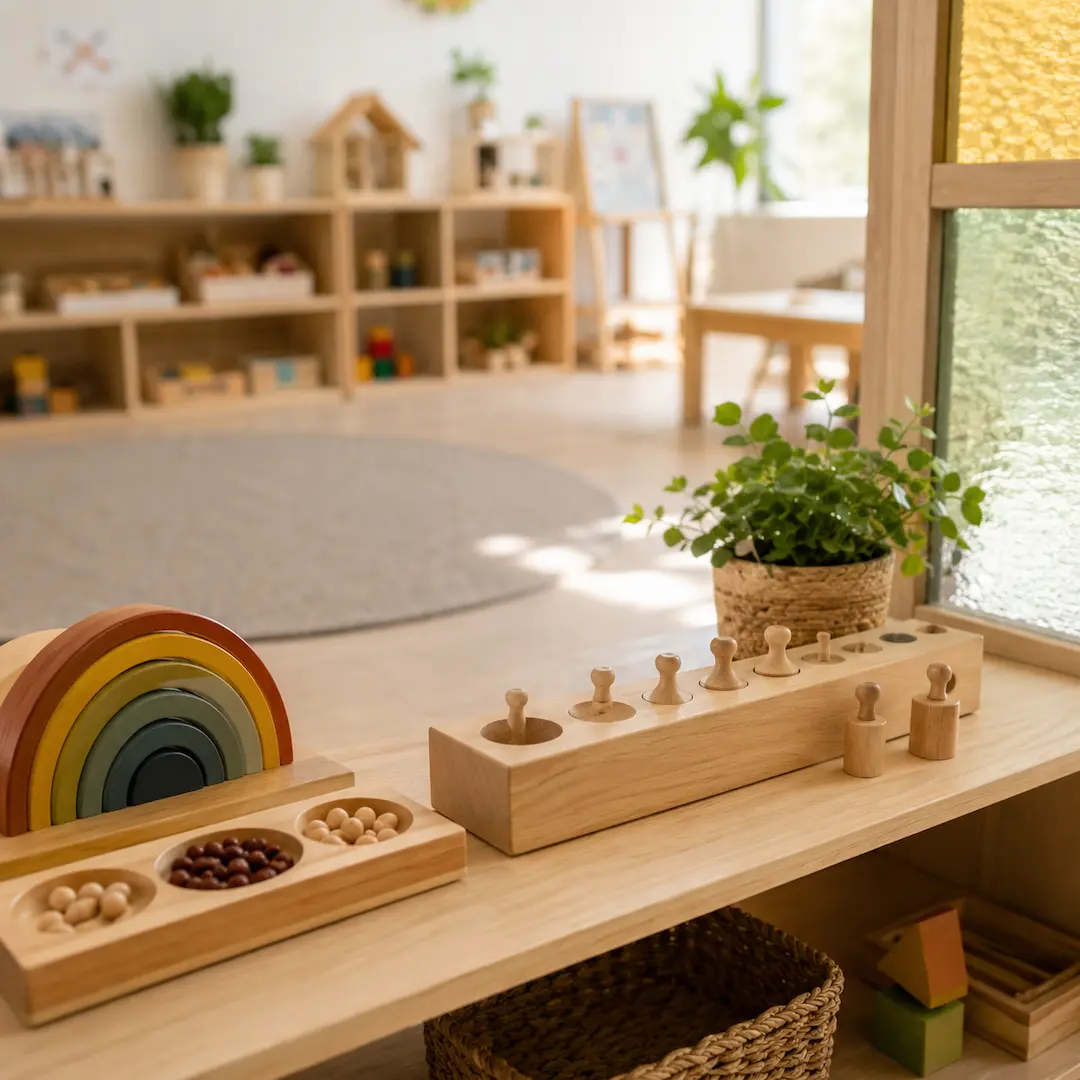
As parents and educators, our role is to prepare the environment and then step back. We want to provide the right tools and enough time for the child to explore.
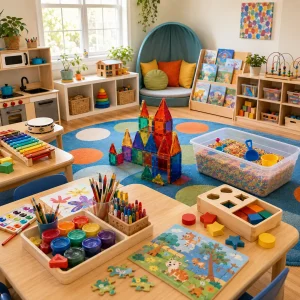
One of the best ways to support these periods is through “Practical Life” exercises. These are everyday tasks that children find fascinating, such as:
- Pouring and Spooning: Excellent for fine motor skills and hand-eye coordination.
- Dressing Frames: Learning to zip, button, or tie laces supports independence.
- Cleaning and Tidying: Satisfies the need for order and contributes to the community.
By providing child-sized tools and allowing them to help with real tasks, you nurture their fine motor skills, self-discipline, and respect for their environment.
Children’s Choice: Supporting Sensitive Periods
At Children’s Choice, our philosophy is deeply rooted in respecting the individual development of every child. We know that every child follows their own timeline, and our educators are trained to spot these sensitive periods as they emerge.
We support school readiness not by rushing children, but by providing a rich, play-based learning environment that aligns with their natural interests. Whether it is a quiet corner for a child focusing on reading or a dynamic outdoor space for a child mastering gross motor skills, our centres are designed to facilitate these “magic windows” of learning. We provide the nurturing care and the right stimuli to ensure that when a child is ready to learn, the opportunity is right there waiting for them.
Finding the Best Childcare Centre for Your Family
For parents in Australia, choosing a childcare provider is one of the biggest decisions you will make. You want a place that understands these developmental nuances. Finding the best childcare centre involves looking for educators who respect the child’s pace.
If you are looking for the best childcare centre Raceview has to offer, or perhaps a leading childcare centre Raceview, it is important to visit the service and ask how they handle individual learning interests. Do they allow for uninterrupted play? Do they have resources that cater to different developmental stages? Whether you are in Ipswich or surrounding suburbs, the right centre will be one that incorporates practices aligning with these sensitive periods, ensuring your child feels seen and supported.
Embracing Sensitive Periods at Children’s Choice
Understanding sensitive periods allows us to see the world through the child’s eyes. It explains why they do what they do and helps us respond with patience and purpose. These early years are a time of incredible transformation.
At Children’s Choice, we are honoured to be part of this journey with you. We provide the safe, nurturing environment and the play-based learning experiences that allow these sensitive periods to unfold naturally. If you are looking for a partner in your child’s early education, we encourage you to reach out and learn more about how we can support your family.
Frequently Asked Questions
What are sensitive periods and why do they matter?
Sensitive periods are temporary windows of opportunity in early childhood when a child is biologically primed to learn specific skills, such as language or movement, with ease. They are significant because learning happens naturally and joyfully during these times. At Children’s Choice, we design our programs to identify and support these crucial phases to maximize your child’s potential.
How can I recognize if my child is in a sensitive period?
You can usually spot a sensitive period by observing your child’s behavior. Look for intense concentration, a desire to repeat an action multiple times (like climbing the same steps or reading the same book), and a strong emotional reaction if a routine is interrupted. If your child seems obsessively interested in a specific activity, they are likely in a sensitive period for that skill.
What should I do if I suspect my child is in a sensitive period?
The best approach is to support their interest without taking over. Provide the materials they need and, most importantly, protect their focus. Try not to interrupt them when they are deeply engaged in an activity. If they are focused on order, try to maintain a consistent routine at home. If they are focused on movement, give them plenty of time for outdoor play.
How does Children’s Choice support these developmental stages?
Children’s Choice supports sensitive periods by offering a flexible, play-based curriculum that adapts to the needs of the children. Our educators are trained to observe each child and provide the right resources,whether that is sensory materials, language games, or social activities,at just the right time. We ensure the environment is safe and nurturing, allowing children the freedom to explore their interests deeply.
Can a sensitive period be missed?
Technically, yes, the window of “easy” learning closes. However, this does not mean the skill cannot be learned later. It simply means it may take more conscious effort and formal instruction. For example, learning a second language is effortless for a toddler but requires study for an adult. Supporting these periods while they are open helps build a strong foundation for lifelong learning.