When we think about preparing our little ones for “big school,” our minds often jump straight to academic milestones. Can they write their name? do they know the alphabet? Can they count to ten? It is natural for parents to want their children to be ahead of the curve, but in the rush to tick off academic boxes, we often overlook a set of skills that are even more critical for long-term success: emotional readiness.
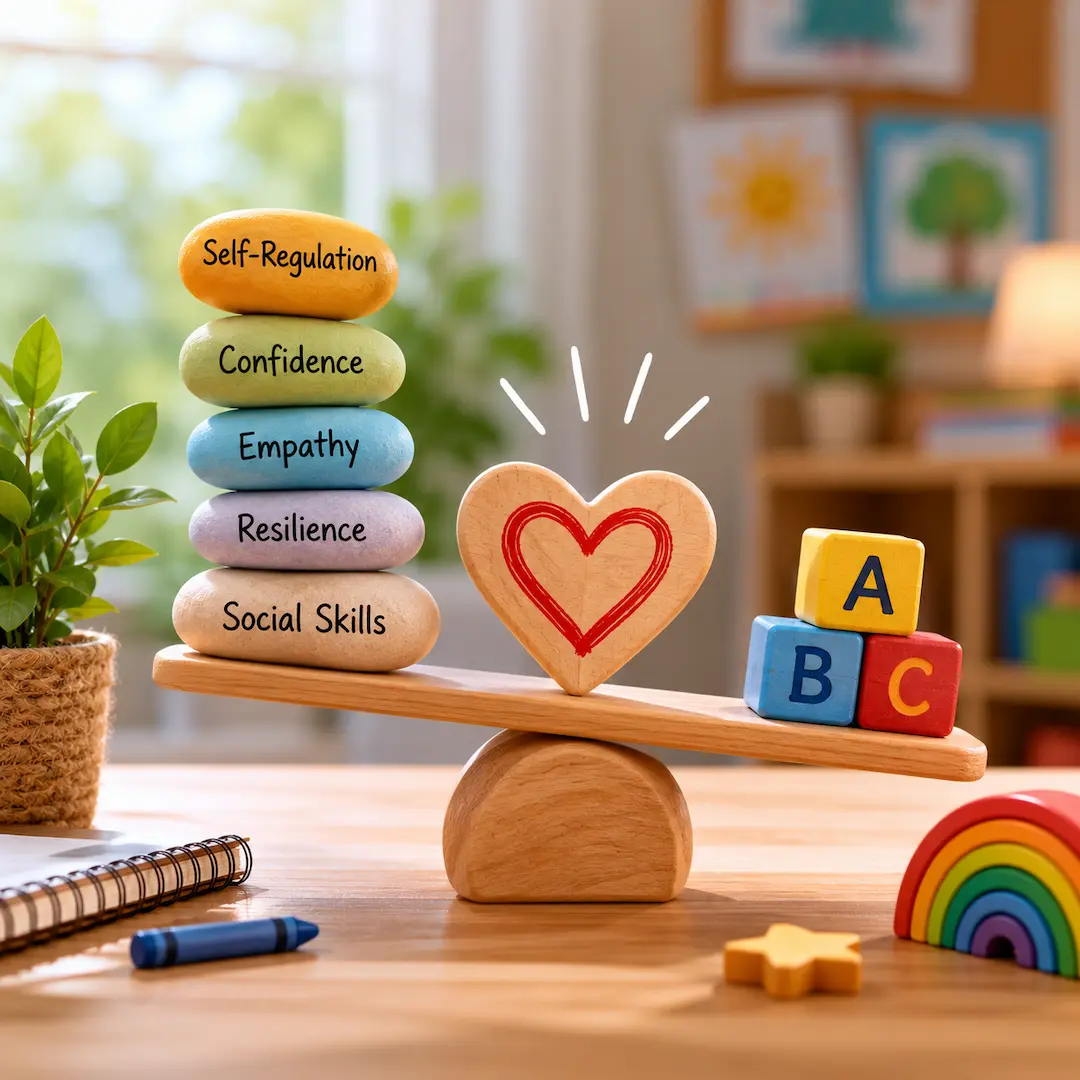
While the ABCs and 123s are certainly important, they are not the only,or even the most significant,indicators of how well a child will adapt to a classroom environment. Emotional readiness refers to a child’s ability to understand their feelings, manage their reactions, and interact positively with others. These skills form the bedrock upon which all future learning is built. Without a solid emotional foundation, even the brightest child may struggle to navigate the social and behavioral demands of school.
At Children’s Choice, we understand that early childhood is a pivotal time for developing the whole child. As a leading childcare provider in Australia, our philosophy goes beyond rote learning. We focus on nurturing the emotional and social confidence children need to thrive, ensuring they are not just ready for school, but ready for life.
Understanding Emotional Readiness
Emotional readiness isn’t about a child never crying or always being happy. Rather, it is about developing the tools to handle the ups and downs of daily life. It encompasses several key components, including self-awareness, self-regulation, empathy, and social skills. A child who is emotionally ready can identify when they are frustrated, calm themselves down before reacting, and understand that their friends have feelings too.
These skills are the silent engine behind successful social interaction and academic learning. When a child can regulate their emotions, they are better able to pay attention in class, follow instructions, and persist with difficult tasks. Conversely, a child who is overwhelmed by their feelings may find it difficult to focus, regardless of their intellectual potential. By prioritizing emotional growth, we set the stage for a positive attitude toward learning and healthy relationships with peers and teachers.
Why Feeling Good Matters More Than Looking Smart
It might surprise many parents to learn that a child’s ability to manage their emotions is often a better predictor of academic achievement than their early reading skills. Research into “executive function”, the mental processes that enable us to plan, focus attention, remember instructions, and juggle multiple tasks, shows that these capabilities are more predictive of academic success than IQ.
This is where Social-Emotional Learning (SEL) comes into play. SEL helps children learn how to manage their emotions, set positive goals, feel and show empathy for others, establish and maintain positive relationships, and make responsible decisions. In a classroom setting, this translates to a child who can share toys, cooperate in group activities, and navigate minor conflicts without a meltdown.
Effective Pre-K and early learning programs understand this distinction. Instead of narrowing their focus to academic drills, they emphasize social, emotional, and intellectual goals. They know that a child who feels safe, understood, and emotionally supported is a child whose brain is open and ready to learn.
How to Foster Emotional Readiness
Fostering emotional readiness doesn’t require flashcards or formal lessons. It happens in the quiet, everyday moments and through responsive relationships. The most powerful way to build these skills is through supportive interactions with caregivers and educators. When an adult responds calmly and kindly to a child’s distress, they model how to regulate emotions.
Creating a safe and nurturing environment is also essential. Children need to feel secure enough to explore their emotions without fear of judgment. This means allowing them to express anger, sadness, or frustration and helping them name those feelings. “I can see you are frustrated that the tower fell down,” is a simple phrase that validates a child’s experience and helps them build emotional vocabulary.
Play-based learning is another crucial vehicle for emotional development. Through play, children experiment with different roles, negotiate rules with friends, and learn to cope with not winning every game. Strategies for teaching emotional regulation can be woven into these activities, such as taking deep breaths when things get too exciting or using words to solve a problem instead of hands.
Parents looking for the best childcare centre Raceview has to offer will find that high-quality centres prioritize these interactions. Whether you are in a bustling city or a quiet suburb, the goal remains the same: to create a space where feelings are respected as much as thoughts. Similarly, families seeking a leading childcare centre Raceview trusts often look for educators who are trained to guide children through these complex emotional landscapes with patience and care.
Children’s Choice: Nurturing Growth and Resilience
At Children’s Choice, we weave emotional readiness into the fabric of our daily programs. We believe that a child’s heart must be engaged before their mind can be. Our educators are trained to recognize the subtle cues of emotional development and to support children through every triumph and challenge.
We incorporate specific activities designed to support this growth. From “emotion check-ins” during morning circles to quiet corners where children can go to self-regulate, our environments are designed with emotional intelligence in mind. We use storytime to discuss characters’ feelings and role-playing games to practice empathy and social problem-solving.
The impact of this approach is evident in the stories we hear from our community. Parents frequently tell us how their children have learned to articulate their feelings or resolve conflicts with siblings at home, crediting the supportive environment at Children’s Choice. These testimonials reinforce our belief that when we invest in emotional readiness, the academic results naturally follow.
Preparing Your Child for a Bright Future
The journey to school readiness is a marathon, not a sprint, and emotional readiness is the stamina that sees a child through to the finish line. While the alphabet and numbers are important tools, the ability to manage oneself and get along with others is the master key that unlocks every door of opportunity.
We encourage all parents to prioritize emotional development when considering their child’s early years. Look for care providers who value a hug as much as a completed worksheet. By choosing a partner like Children’s Choice, you are ensuring your child has the emotional resilience to tackle whatever the future holds. Every child has immense potential, and with the right emotional support, there is no limit to what they can achieve.
Frequently Asked Questions
Why is emotional readiness important for my child’s success in school?
Emotional readiness allows children to handle the social and behavioral demands of a classroom. It helps them focus, follow instructions, and interact positively with peers. Without these skills, even academically advanced children may struggle to adapt to the school environment.
How can I help my child develop emotional readiness at home?
You can support emotional growth by modeling calm behavior, validating your child’s feelings, and establishing consistent routines. Reading books about feelings and encouraging pretend play are also excellent ways to practice empathy and social skills in a safe environment.
What is social-emotional learning (SEL) and how does it benefit my child?
Social-emotional learning (SEL) is the process of developing self-awareness, self-control, and interpersonal skills. It benefits your child by teaching them how to manage emotions, resolve conflicts, and make responsible decisions, which are vital for both school and life success.
How does Children’s Choice incorporate emotional readiness into its programs?
Children’s Choice integrates emotional readiness through play-based learning and responsive caregiving. Our educators use activities like emotion check-ins and role-playing to help children identify and manage feelings, ensuring they build the resilience needed for school transition.
At what age should I start focusing on my child’s emotional development?
Emotional development begins at birth. Responsive interactions with infants build the foundation for security and trust. As toddlers grow, you can start teaching them to name emotions. Children’s Choice supports this development from the very first day in our care.