For many parents, the phrase “starting school” brings a mix of emotions. There is the pride of seeing your little one grow up, but also the natural worry about how they will cope with a new environment. Will they make friends? Will they be able to sit still? Will they miss home? These are questions every parent asks.
Transitions,whether from home to childcare, or childcare to “big school”,are significant milestones in a child’s life. While change can be daunting, it doesn’t have to be stressful. In fact, with the right support, these transitions can be exciting adventures that build confidence and resilience.
This is where high-quality childcare plays a pivotal role. At Children’s Choice, we believe that preparing for school isn’t just about learning ABCs; it’s about fostering emotional security, social skills, and a genuine love for learning. By providing safe, nurturing childcare and play-based early learning that supports children’s development and school readiness, we help turn potential anxiety into anticipation.
Let’s explore how a supportive childcare environment lays the groundwork for a smooth and enjoyable transition to school.
Understanding the Challenges of School Transitions
To help children adjust, we first need to understand what they are experiencing. For a young child, a transition represents a shift in their entire world. They are moving from a familiar environment where they know the rules and the people, to a place full of unknowns.
Emotional and Social Hurdles
Common emotional challenges include anxiety, fear of the unknown, and separation distress. A child might worry about who will help them with the bathroom, where they will eat lunch, or if their parent will come back. Socially, they face the pressure of navigating new peer groups and understanding new social hierarchies.
Addressing these challenges early is vital for a child’s overall well-being. When a child feels emotionally secure, their brain is primed for learning. Conversely, high levels of stress can block their ability to absorb new information and form positive relationships. Therefore, the goal isn’t just to get them to school, but to ensure they feel happy and confident once they arrive.
How Childcare Helps Make School Transitions Fun
High-quality early learning centres are designed to bridge the gap between the comfort of home and the structure of school. Here is how childcare turns the transition process into a positive experience.
Structured Environment and Routine
One of the biggest adjustments for children starting school is following a schedule. Childcare introduces this concept gently.
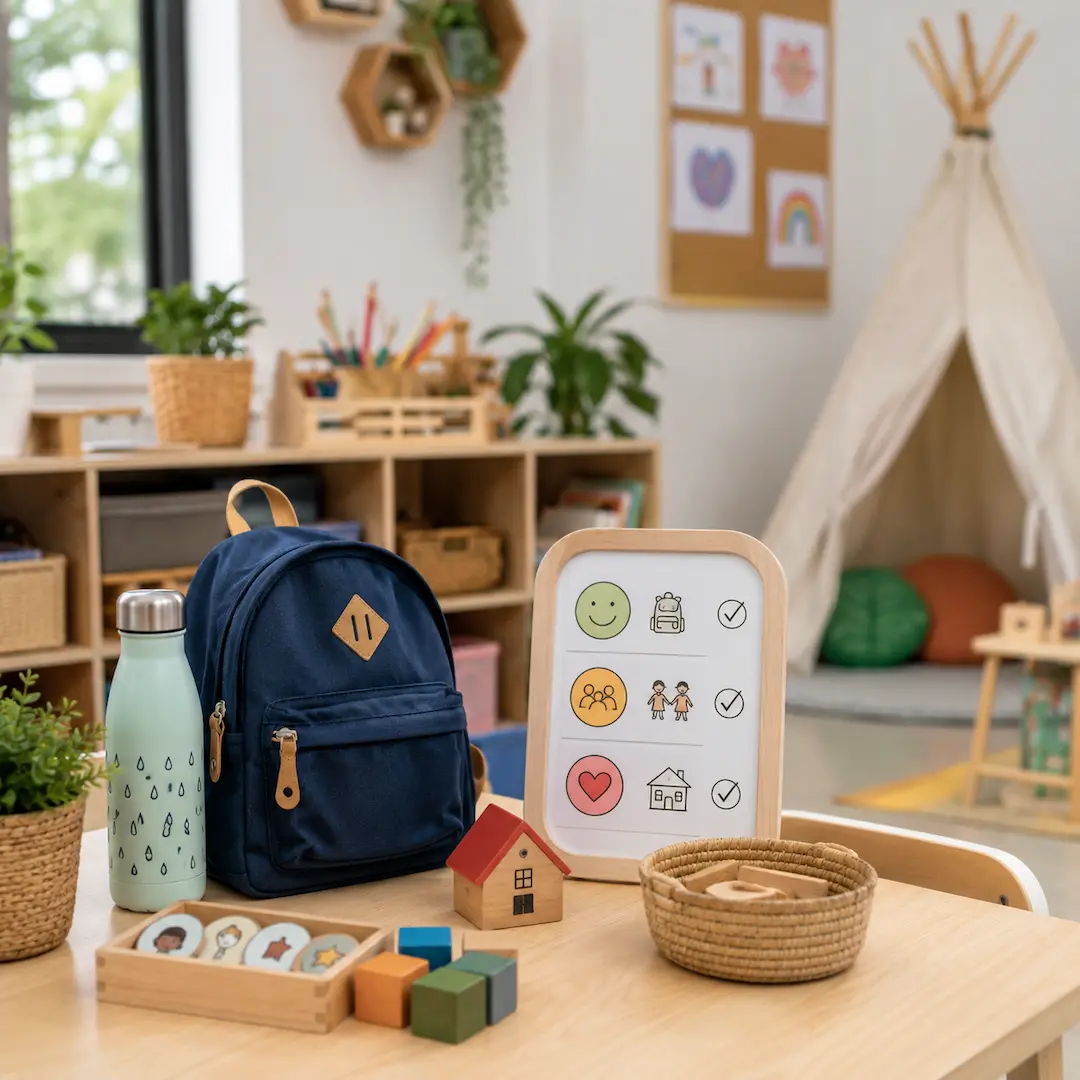
- Consistent Routines: Childcare provides a structured environment where days follow a predictable rhythm. Children learn that snacks happen after play, and rest time follows lunch. This predictability creates a sense of safety.
- Daily Habits: Routines like morning circle time, washing hands before meals, and clean-up time after activities teach children responsibility and time management. When these habits are ingrained early, the structure of a school day feels familiar rather than foreign.
Social-Emotional Development
School is a social environment. Childcare offers a safe space for children to practice the complex skills required to interact with others.
- Interaction and Growth: Through group activities, children learn to navigate friendships and communicate their needs. They learn that other children have feelings too.
- Key Soft Skills: In a supportive childcare setting, children learn to manage frustration when a tower falls down, take turns with a favourite toy, and show empathy when a friend is sad. Cooperation is a skill that is practiced daily, making the collaborative nature of a school classroom much easier to handle.
Play-Based Learning
At the heart of effective early years education is play. It is how children make sense of the world.
- Exploration and Problem-Solving: Play-based learning encourages children to ask questions, experiment, and solve problems creatively. It fosters a “growth mindset”, the belief that they can learn and improve.
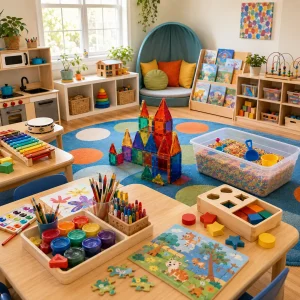
- Creative Tools: Access to pretend kitchens, building blocks, sensory tables, and musical instruments allows for creative exploration. This isn’t just “playing”; it’s building the cognitive flexibility and fine motor skills needed for writing and mathematics later on.
Children’s Choice: A Supportive Environment for School Readiness
At Children’s Choice, our philosophy centers on the whole child. We understand that school readiness is about more than just academic skills; it is about emotional resilience and social confidence.
Our approach is built on providing safe and nurturing childcare. We believe that when a child feels safe, they are free to explore. Our play-based early learning programs are carefully designed to support children’s development at their own pace. We don’t rush childhood; we enrich it.
Our dedicated teachers and staff are the backbone of this support. They are trained to recognise when a child needs a little extra encouragement or a comforting hug. By making each child feel valued and understood, we build the self-esteem necessary to tackle the big transition to school.
Practical Tips for Parents to Ease School Transitions
Parents are a child’s first and most important teachers. Here are some practical ways you can partner with your childcare provider to make transitions easier at home.
Establish Consistent Routines
Just like in childcare, consistency at home provides comfort.
- Morning Mastery: Try to keep wake-up times, breakfast, and getting-out-the-door routines consistent. This reduces morning chaos and starts the day on a calm note.
- Empowered Choices: Give your child a sense of control by offering limited choices. For example, “Would you like porridge or toast for breakfast?” This builds decision-making skills without overwhelming them.
Create Positive Associations
Frame the transition as an exciting step rather than a scary one.
- Music and Mood: Play your child’s favourite upbeat songs while getting ready in the morning. Music is a powerful mood regulator.
- Goodbye Rituals: Create a special goodbye ritual,a bear hug, a high-five, or a silly handshake. This provides a clear connection point before separation and reassures them that you will return.
Encourage Open Communication
Talk about their day, but keep it low-pressure.
- Specific Questions: Instead of a generic “How was your day?”, ask specific questions to encourage sharing. Try, “What was the funniest thing that happened today?” or “Did you play with the blocks or the sand?”
- Listening: Validate their feelings. If they say they felt sad, acknowledge it. “It’s okay to feel sad sometimes. I miss you too when we are apart.”
Balance Activities
School and childcare can be stimulating. Home should offer a chance to recharge.
- Active and Calm: Balance outdoor play to burn off energy with calm activities like reading or drawing to help them unwind.
- Connection Time: Carve out time for connection without agendas. Ten minutes of sitting on the floor playing with their favourite toy can do wonders for their emotional security.
Addressing Specific Local Needs in Ipswich
For families living in the Ipswich region, finding the right support network is crucial. Local childcare centres play a vital role in community connection.
If you are looking for the best childcare centre Raceview has to offer, it is important to visit and see the environment firsthand. A centre that integrates well with the local community helps children feel a sense of belonging.
Similarly, for families further south, finding a leading childcare centre Raceview trusts can make all the difference. Accessibility to quality care means less travel time for parents and more play time for children.
Whether you are searching for the best childcare centre Ipswich generally, or specific locations like Raceview, look for centres that prioritise that crucial blend of nurture and education.
Children’s Choice: Partnering in Your Child’s Journey
Transitions are a natural part of growing up. They mark the end of one chapter and the exciting beginning of another. By choosing a supportive early learning environment, you are giving your child the tools they need to navigate these changes with a smile.
At Children’s Choice, we are honoured to be part of that journey. We are committed to ensuring that every child leaves our care feeling resilient, capable, and ready to take on the world,one school day at a time.
Frequently Asked Questions
How does childcare help children adjust to school routines?
Childcare provides a structured environment with consistent routines, helping children develop predictability and adapt more easily to school schedules. By experiencing regular meal times, group activities, and rest periods, children learn what to expect from a day of learning, which removes much of the anxiety surrounding the “unknown” of a school day.
What social skills do children learn in childcare that help with school transitions?
In childcare, children learn essential social skills such as managing frustration, taking turns, empathy, and cooperation, which are crucial for successful school interactions. Children’s Choice educators guide these interactions gently, helping children navigate conflicts and build lasting friendships, ensuring they don’t feel isolated when they enter a larger school playground.
Is play-based learning effective for school preparation?
Yes, absolutely. Play-based learning encourages exploration, creativity, and problem-solving, which are foundational cognitive skills needed for academic success. Rather than rote memorization, play teaches children how to learn, fostering curiosity and a longer attention span that serves them well in a formal classroom setting.
How does Children’s Choice specifically support school readiness?
Children’s Choice integrates school readiness into everyday play. We focus on independence (like managing their own lunch box), emotional regulation, and pre-literacy and numeracy skills through games and storytelling. Our goal is to send children off to school feeling capable, confident, and excited about the next chapter.
What should I look for in a childcare centre in Raceview?
When looking for a leading childcare centre Raceview, look for a warm, welcoming atmosphere where educators engage genuinely with the children. Check if they offer a dedicated school readiness program and have strong links with local primary schools to facilitate a smooth handover.