Watching your child make their first friend is a milestone that warms every parent’s heart. It marks the beginning of their journey into the wider world, where they learn to navigate relationships, share experiences, and understand others. While many parents focus on academic readiness, like learning letters and numbers, social skills are equally vital for a child’s long-term success and happiness.
In the early years, children are naturally curious about the people around them. However, knowing how to interact, share, and communicate aren’t innate abilities; they are learned behaviors nurtured through practice and guidance. This is where a high-quality childcare environment plays a transformative role. At Children’s Choice, we provide safe, nurturing childcare and play-based early learning that supports children’s development and school readiness. By creating opportunities for interaction in a supportive setting, we help children build the confidence they need to thrive socially.
Why Social Skills Matter in Early Childhood
Social development is the foundation upon which many other skills are built. When children learn to interact positively with their peers and educators, they are doing much more than just “playing nice.” They are developing emotional intelligence, cognitive flexibility, and the ability to regulate their own behavior.
Research consistently shows that strong social skills in early childhood are linked to better outcomes later in life. A child who can express their needs, listen to others, and cooperate in a group is better equipped to handle the transition to school. These skills impact academic development because learning often requires collaboration and communication. Furthermore, the emotional benefits are profound; children with healthy social connections tend to be happier, more resilient, and less anxious in new situations.
How Childcare Environments Foster Social Skills
A quality childcare centre offers a unique meaningful social environment that is difficult to replicate at home. While siblings and playdates are wonderful, a childcare setting provides a consistent community where children interact with a diverse group of peers under the guidance of qualified educators.
The Balance of Structured and Unstructured Interaction
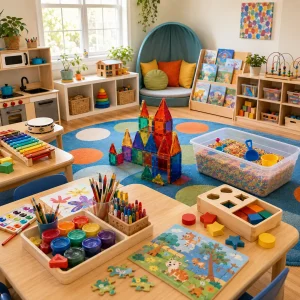
Childcare environments are designed to offer a balance of experiences. Unstructured play allows children to initiate interactions, choose their playmates, and navigate social nuances on their own terms. This might look like two toddlers deciding to build a block tower together or a group of preschoolers inventing a game of “shops.”
Structured activities, on the other hand, provide a framework for practicing specific social skills like turn-taking and following instructions. During group times or organized games, children learn to wait, listen to others, and participate as part of a team.
The Educator’s Role
Educators are the architects of these social experiences. They model respectful communication, empathy, and kindness. When conflicts arise,as they inevitably do among young children,educators don’t just solve the problem; they use it as a teaching moment. They help children identify their feelings (“I can see you are frustrated because you wanted the blue truck”) and guide them toward a solution (“How can we solve this so everyone gets a turn?”).
Guided Play: A Key Component of Social Skill Development
One of the most effective ways educators nurture social skills is through “guided play.” Unlike free play, where children have total autonomy, guided play involves adult support to extend learning while respecting the child’s agency.
Guided play acts as a bridge between direct instruction and free exploration. It allows children to explore concepts and relationships at their own pace but with a “scaffold” provided by the educator to help them reach the next level of understanding. For example, if children are playing in a pretend supermarket, an educator might step in as a customer. By asking questions like, “Excuse me, how much are these apples?” or “Oh no, I forgot my wallet, what should I do?”, the educator prompts the children to think critically and communicate socially without taking over the game.
This approach aligns with findings from educational settings like Chatsworth International School, where students set up their own supermarket. In that instance, the teacher guided the process, helping students brainstorm how to involve the community, but the children took ownership of the interactions. This scaffolding helps children practice complex social scripts in a safe, low-pressure environment.
The Role of Free Play in Social Development
While guidance is crucial, free play is equally important. It is the testing ground where children apply what they have learned. During free play, children have the autonomy to negotiate roles, establish rules for their games, and resolve minor disagreements without immediate adult intervention.
It is during these unscripted moments that children learn resilience. If a peer doesn’t want to play a certain way, a child must learn to adapt, compromise, or manage their disappointment. These experiences build the emotional muscle memory required for healthy relationships throughout life. At Children’s Choice, we ensure there is ample time for this self-directed exploration, allowing children to discover their own social style.
Building Confidence for School and Beyond
The ultimate goal of nurturing social skills in childcare is to prepare children for the future. School readiness isn’t just about holding a pencil or recognizing a name; it is about having the social confidence to walk into a classroom, greet a teacher, ask for help, and make a new friend.
Children who have practiced these skills in a supportive childcare environment approach school with a sense of capability. They understand the rhythm of a group environment and have a toolbox of social strategies to rely on. This foundation of social competence fosters a lifelong love of learning and connecting with others.
Children’s Choice: Partners in Your Child’s Social Growth
Choosing the right care for your family is a big decision. You want an environment that mirrors the warmth of home while offering the educational opportunities of a structured program. At Children’s Choice, we understand that social skills are the heart of early learning.
Our educators are dedicated to observing, guiding, and celebrating every social milestone, from the first shared toy to the first collaborative project. We believe that by nurturing these skills early, we are helping to raise a generation of kind, communicative, and confident individuals.
Frequently Asked Questions
How do you handle conflict between children?
Conflict is a natural part of social learning. At Children’s Choice, we view these moments as opportunities for growth. Our educators support children by acknowledging their feelings, helping them express their needs verbally, and guiding them to find a fair solution together. This builds problem-solving skills and empathy.
What if my child is shy or anxious socially?
Every child develops socially at their own pace. We create a gentle, supportive environment where shy children can observe before joining in. Our educators build strong, trusting relationships with each child, providing a “safe base” from which they can slowly explore social interactions when they feel ready.
Why is play-based learning better for social skills than strict lessons?
Play is the natural language of childhood. Through play, children are motivated to interact because it is fun and meaningful to them. Research shows that play-based learning allows children to practice complex social skills,like negotiation and cooperation,more effectively than passive instruction because they are actively engaged in the process.
Does Children’s Choice offer programs for school readiness?
Yes. Our programs are designed to support all aspects of school readiness, including social and emotional development. By fostering independence, resilience, and communication skills, we ensure children leave Children’s Choice feeling confident and prepared for their next educational step.
How can I support my child’s social skills at home?
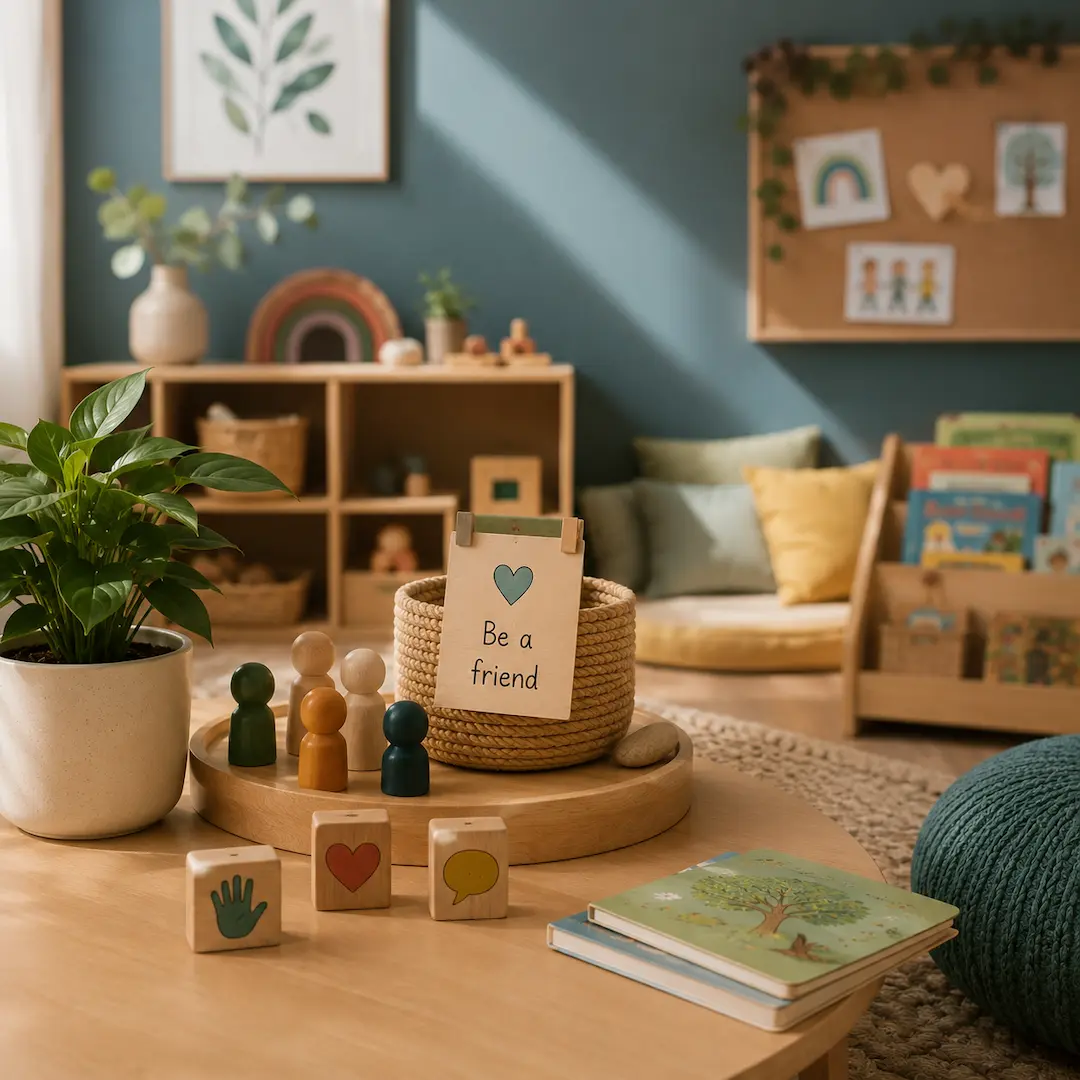
You can support your child by modeling positive social behavior, arranging playdates, and talking about feelings. Reading books about friendship and sharing is also a great way to start conversations about social situations. Consistent routines and open communication between home and childcare also help children feel secure.