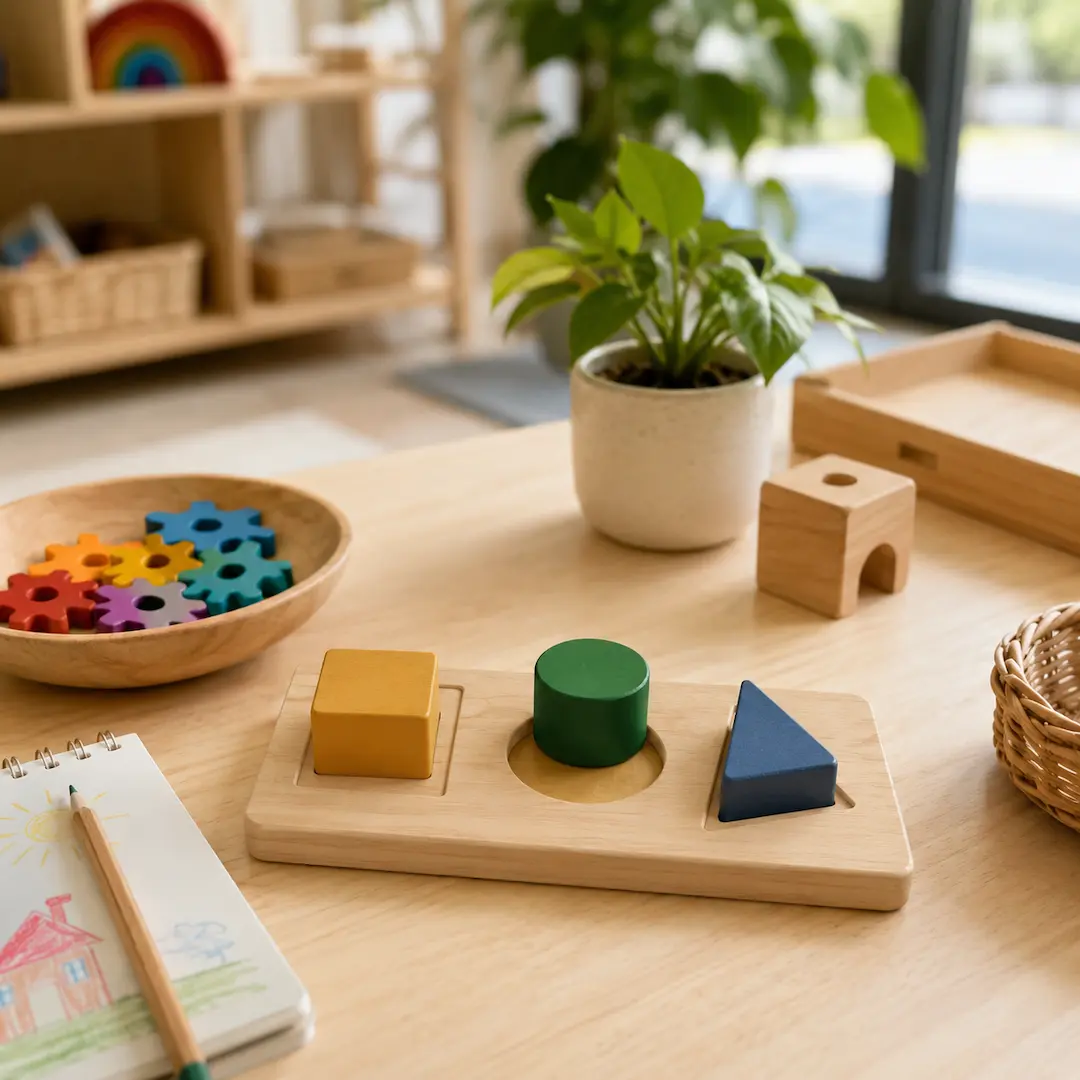
Have you ever watched a toddler try to fit a square peg into a round hole? It’s a moment of pure concentration. They push, they twist, and maybe they get a little frustrated. But then, they pause, look at the shape, and try a different angle. That moment,that tiny spark of realization,is problem-solving in action.
As parents, it’s natural to want to swoop in and fix things for our little ones. We want to open the tricky snack wrapper or finish the puzzle piece that just won’t fit. However, giving children the space to navigate these small hurdles is essential for their development. Problem-solving isn’t just about logic; it’s about resilience, creativity, and emotional regulation.
At Children’s Choice, we believe that every challenge a child faces during play is an opportunity for growth. Whether you are looking for the Best childcare centre raceview has to offer or a supportive environment elsewhere, understanding how to nurture these skills at home and in care is the first step toward building a confident, independent learner.
Why Problem-Solving Matters in Early Childhood
You might wonder why we focus so much on “solving problems” when children are so young. Isn’t childhood supposed to be carefree? Absolutely, but cognitive challenges are a natural part of play. When a child figures out how to balance a tower of blocks or negotiate a toy swap with a friend, they are building neural pathways that will serve them for life.
Problem-solving contributes significantly to cognitive growth. It encourages children to observe, analyze, and experiment. Beyond the brainpower involved, there is a huge emotional component. When a child succeeds after struggling with a task, their self-esteem skyrockets. They learn that they are capable and that making mistakes is just part of the learning process. This fosters independence, meaning they are less likely to rely on adults for every minor issue as they grow.
Play-Based Learning: A Foundation for Problem-Solving
In Australian early learning frameworks, play is the primary vehicle for learning. Play-based learning isn’t just “messing around”; it is a structured approach where children learn to make sense of their world.
When children play, they are constantly hypothesizing and testing. Here are a few activities that naturally boost critical thinking:
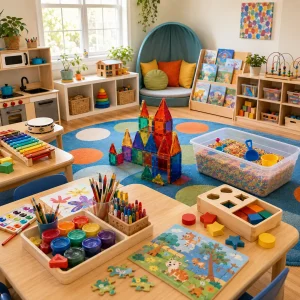
- Building Blocks: Construction play is fantastic for understanding cause and effect. “If I put the big block on top of the small one, it falls. What happens if I switch them?”
- Puzzles: Puzzles require spatial awareness and patience. They teach children to look for clues (like color or shape) to find a solution.
- Role-Playing: When children play “house” or “doctors,” they often encounter social conflicts. Deciding who gets to be the doctor or how to “fix” a sick teddy bear requires negotiation and creative thinking.
Real-Life Scenarios and Practical Application
While toys are wonderful tools, real life provides the richest curriculum. You can foster problem-solving skills during your ordinary daily routine without needing special equipment.
Incorporating real-life scenarios helps children see the relevance of what they are learning. For example, if you are baking together and run out of a specific ingredient, ask your child, “Oh no, we don’t have enough milk. What could we use instead?”
Everyday interactions are full of these moments. If a shoe is on the wrong foot, rather than just switching it for them, ask, “Does that feel comfortable? Why do you think it feels a bit funny?” These gentle prompts encourage them to assess the situation and come up with their own solution.
The Role of Educators and Classroom Management
Qualified educators are the backbone of a high-quality early learning environment. At centres like Children’s Choice, educators don’t just supervise; they facilitate thinking. They know exactly when to step in and support, and when to step back and let a child figure it out.
Effective classroom management creates a safe space for this exploration. A chaotic environment can be overwhelming, but a calm, organized space allows children to focus. Educators use strategies that focus on teaching rather than punishment. If a child acts out because they can’t get what they want, an educator might say, “I can see you are frustrated. You want the truck, but Jack is using it. What can we do while we wait?” This turns a behavioral issue into a problem-solving moment.
Group Work and Collaborative Problem-Solving
Humans are social creatures, and many of the problems we face in life involve other people. Integrating group work into early learning is crucial for developing collaborative skills.
When children work together on a project, like digging a big hole in the sandpit or painting a mural, they have to communicate. They learn that their way isn’t the only way. Collaborative problem-solving fosters empathy because children must listen to their peers’ ideas and feelings. It teaches teamwork, negotiation, and the joy of shared success.
Monitoring and Recognizing Development
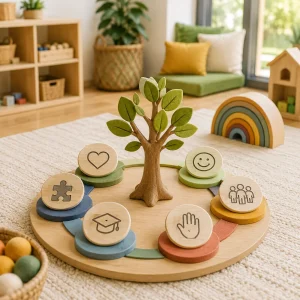
Every child develops at their own pace. Some might be logic whizzes who love puzzles, while others might be social butterflies who excel at resolving conflicts between friends.
Monitoring a child’s development is key to recognizing their unique capabilities. At home, simply observing your child can tell you a lot. Do they give up easily, or do they keep trying? Do they ask for help immediately, or do they try to fix it first?
Identifying areas for growth allows us to provide targeted support. If a child struggles with frustration, we can model calming strategies. If they struggle with logic, we can play more matching games. It’s about meeting them where they are and gently stretching their abilities.
Children’s Choice: Nurturing Problem-Solvers
At Children’s Choice, we are passionate about preparing children not just for school, but for life. Our curriculum is designed to integrate problem-solving into daily activities, from our sensory play stations to our outdoor exploration zones.
We provide safe, nurturing childcare and play-based early learning that supports children’s development and school readiness. Whether we are helping a toddler learn to put on their hat or guiding preschoolers through a complex group project, our goal is to build confident, critical thinkers. If you are looking for a Leading childcare centre raceview families trust, or a Leading childcare centre Raceview community members rely on, we are here to support your child’s journey.
Frequently Asked Questions (FAQs)
How does Children’s Choice incorporate problem-solving into its daily activities?
At Children’s Choice, we weave problem-solving into our play-based curriculum. Educators use “scaffolding” techniques, asking open-ended questions like “How can we make this tower stronger?” or “What do we need to do before we go outside?” We also set up environments that encourage exploration, such as loose-parts play areas where children must imagine and create their own structures, fostering both creativity and logic.
What types of activities are best for fostering problem-solving skills at home?
The best activities are often the simplest ones that require active engagement. Puzzles, shape sorters, and building blocks are excellent for logical thinking. For social problem-solving, imaginative play (like playing shop or restaurant) is highly effective. Additionally, involving children in household chores, like matching socks or setting the table, provides practical, low-pressure problem-solving opportunities.
My child gets frustrated easily when things go wrong. How can I help?
Frustration is a normal part of the learning process. Validate their feelings first by saying, “I can see this is tricky for you.” Then, encourage a “growth mindset” by praising their effort rather than the result. You can model problem-solving by talking through your own small challenges out loud, such as, “I can’t find my keys. I need to think about where I last saw them.” This shows them a calm path forward.
Why is play-based learning better for problem-solving than rote learning?
Rote learning relies on memorization, whereas play-based learning requires active thinking and adaptation. In play, the “rules” can change, and children must adjust their strategies in real-time. This flexibility is the core of critical thinking. Research shows that children who learn through play develop stronger neural connections related to planning and decision-making compared to those in strictly academic instruction at a young age.
How do I choose the Best childcare centre Ipswich has for my problem-solver?
Look for a centre that prioritizes process over product. When touring a centre, observe the educators: Are they giving children answers, or are they asking questions? Look for environments with open-ended resources (like blocks, sand, and water) rather than just electronic toys. A high-quality centre will have a clear philosophy on supporting child-led inquiry and resilience, ensuring your child becomes an independent thinker.
Why Choose Children’s Choice?
Fostering problem-solving skills is a journey that requires patience, observation, and a supportive environment. By encouraging curiosity and allowing children to navigate challenges, we give them the tools to succeed in an ever-changing world. At Children’s Choice, we are committed to partnering with families to raise resilient, capable, and happy children.