Have you ever noticed that your little one loves building blocks but drifts off during story time? Or perhaps they can sing every nursery rhyme perfectly but struggle to sit still for a puzzle? These aren’t just quirks of personality; they are early clues into your child’s unique learning preference.
Every child absorbs information differently. Some need to see it, some need to hear it, and others need to touch and do it. Understanding these preferences is a powerful tool for parents and educators. It allows us to present the world in a way that makes sense to them, reducing frustration and building a lifelong love of discovery.
At Children’s Choice, we believe that recognising these individual differences is key to nurturing a child’s development. By paying attention to how they interact with their environment, we can create safe, supportive spaces where they feel confident to explore.
Understanding Different Learning Styles
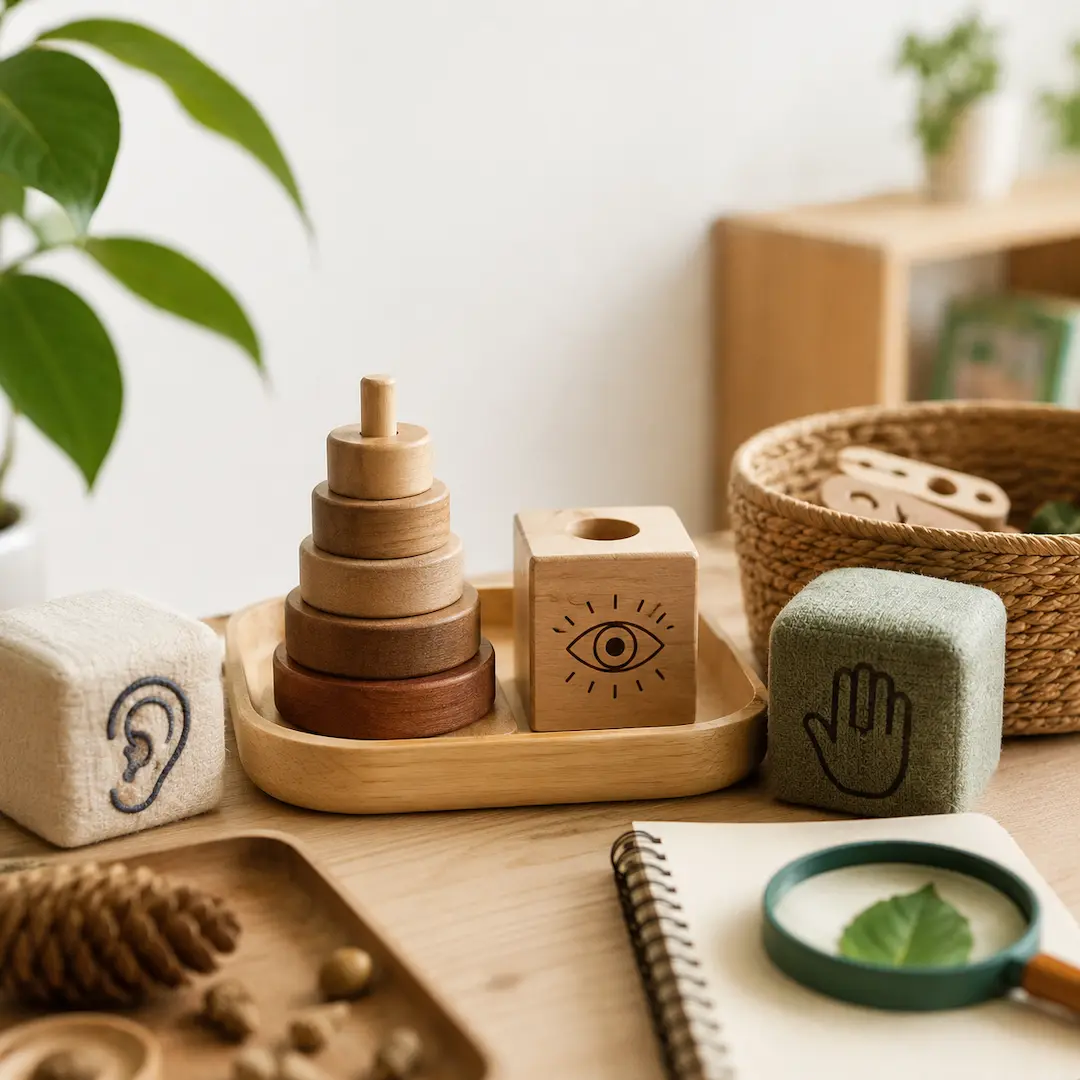
While every child is a unique mix of traits, educational experts generally identify four main learning styles. Identifying which one resonates with your child can help you support their growth at home.
Visual Learners
Visual learners process information best when they can see it. They are often observant and drawn to bright colours, pictures, and diagrams. You might notice your child prefers looking at the illustrations in a book rather than just listening to the story. They often have good spatial awareness and enjoy drawing or playing with puzzles. To support a visual learner, use charts, flashcards, and plenty of picture books. Show them how to do a task rather than just telling them.
Auditory Learners
These children learn by listening and speaking. They are often chatterboxes who enjoy talking to themselves, singing songs, and asking endless questions. An auditory learner might remember complex instructions simply by hearing them once. They thrive on music, rhymes, and audiobooks. Engaging them in conversation and encouraging them to repeat back what they have learned are effective ways to help them retain information.
Tactile Learners
Tactile learners need to get their hands dirty,literally. They learn through the sense of touch and prefer hands-on activities. These children often enjoy texture-based play, such as finger painting, playing with sand, or moulding clay. They may be the ones who need to touch everything in a shop. Supporting them involves providing plenty of manipulative toys, building blocks, and opportunities for art and craft where they can feel the materials.
Kinesthetic Learners
Kinesthetic learners are the movers and shakers. They learn through their whole body and struggle to sit still for long periods. They often excel at physical activities and learn best when they can move around while processing information. For example, they might count better while jumping or learn the alphabet by shaping letters with their bodies. Role-playing and outdoor exploration are fantastic ways to engage a kinesthetic learner.
The Role of Parenting Styles
Interestingly, the way we parent can influence how our children approach learning. Research suggests that the environment created at home plays a significant role in shaping a child’s educational preferences.
Permissive parenting, which allows for a great deal of freedom, often fosters kinesthetic or tactile learning styles. Children in these households are frequently encouraged to explore and discover on their own terms, leading to a “hands-on” approach to the world.
Authoritative parenting tends to balance freedom with clear expectations. This style can nurture a well-rounded learner who is comfortable with various methods. For example, a parent might read a story (auditory), look at the pictures together (visual), and then act out the scene (kinesthetic). This balanced approach encourages adaptability.
Authoritarian parenting, which often relies on high structure and rules, may encourage visual or auditory styles where the child focuses on listening to instructions or observing the correct way to perform a task quietly.
Regardless of your style, your belief in your ability to support your child,known as parental self-efficacy,is crucial. When parents feel confident in guiding their child, it creates a positive, cognitively stimulating environment where children feel safe to try new things and find the learning style that suits them best.
How Children’s Choice Supports Every Learner
At Children’s Choice, we understand that a “one size fits all” approach simply doesn’t work in early childhood education. Our philosophy focuses on play-based early learning that supports children’s development and school readiness by catering to all styles.
We integrate various teaching methods into our daily routines to ensure every child feels included and engaged.
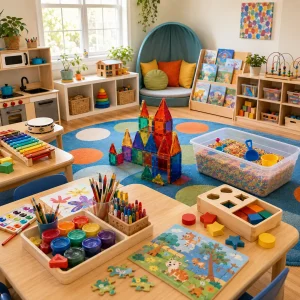
- For the Visual Learner: Our rooms are filled with visual aids, colourful displays, and books. We use visual schedules to help children understand the flow of the day.
- For the Auditory Learner: Group times feature songs, storytelling, and discussions. Our educators constantly engage children in conversation to expand their vocabulary and understanding.
- For the Tactile and Kinesthetic Learner: We provide extensive sensory play experiences, from sand and water troughs to garden exploration. Our open-plan indoor and outdoor spaces allow children the freedom to move, build, and actively explore their environment.
Adapting to Modern Families
We know that modern families are juggling more than ever before. Work schedules are rarely standard 9-to-5s, and family structures are diverse. Childcare centres today must adapt to these realities to provide the best support for the child.
This includes offering flexibility, such as extended hours, to reduce family stress. It also means using streamlined communication apps so you can see what your child is learning in real-time, whether that’s a photo of a painting they made or a video of them singing a new song.
Furthermore, we prioritise inclusive teaching practices. We recognise that cultural background and individual needs influence learning. By providing individualised support and celebrating diversity, we ensure that every child, regardless of their background or ability, has the opportunity to thrive.
Benefits of Identifying Learning Styles Early
Why does all this matter before a child even starts school? Identifying and supporting learning preferences early has profound benefits.
Firstly, it leads to enhanced learning outcomes. When a child is taught in a way that aligns with their natural preference, concepts click faster. They experience less frustration and more success.
Secondly, it allows for tailored educational experiences. Educators and parents can work together to provide the specific resources a child needs, whether that’s more outdoor time or a quiet reading nook.
Finally, it boosts engagement and motivation. A child who enjoys how they are learning is a child who wants to learn more. This intrinsic motivation is the foundation of lifelong learning and school readiness.
Leading Childcare Centre Raceview and Heritage Park
Finding a centre that genuinely understands and applies these principles is essential for families in our local communities. If you are looking for a leading childcare centre Raceview or a leading childcare centre Heritage Park, it is important to visit and see how the educators interact with the children.
At our Raceview and Heritage Park locations, the Children’s Choice teams are trained to observe and adapt to the children in their care. We don’t just supervise; we facilitate. If an educator notices a child struggling to understand a concept during story time, they might switch tactics and turn it into a physical game. This responsiveness is what sets high-quality early learning apart.
We are proud to serve families in these areas, providing a safe haven where children from Ipswich and surrounds can develop at their own pace.
Embracing Your Child’s Unique Journey
There is no “better” or “worse” learning style. Whether your child is a quiet observer or an energetic explorer, they have the potential to achieve wonderful things. Our role as parents and educators is not to change how they learn, but to provide the opportunities that allow their natural strengths to shine.
By recognising these preferences early, we validate their experience of the world. We tell them that who they are is enough. This builds the confidence and resilience they need for the transition to school and beyond.
At Children’s Choice, we are dedicated to partnering with you on this journey. Through safe, nurturing care and a commitment to child-centred learning, we help every child find their own path to success.
Frequently Asked Questions
How do I know which learning style my toddler has?
Observation is your best tool. Watch how they play when they are alone. Do they line up toys visually? do they sing to themselves? Do they constantly touch textures? Most toddlers are a mix of styles, but over time, you will likely see a preference emerge for how they best retain new skills.
Can a child’s learning style change as they grow?
Yes, learning preferences can be fluid. While a child may show a strong preference for kinesthetic learning in their toddler years, they may develop stronger visual or auditory skills as their brain develops and they enter formal schooling. Exposure to different teaching methods encourages adaptability.
Why is Children’s Choice considered a leading childcare centre in Heritage Park?
Children’s Choice is recognised for our commitment to individualised care. We focus on play-based learning that adapts to the specific needs of the children in our Heritage Park community. Our experienced educators create environments that cater to visual, auditory, and active learners equally.
What if my child struggles with the teaching style at school later on?
If your child has a strong preference that isn’t met in a standard classroom, advocacy is key. Share your observations with their teacher. At home, you can supplement their learning by translating homework into their preferred style,for example, turning a reading task into a role-play activity.
How does Children’s Choice Raceview support active children?
We know that many children learn best through movement. As a leading childcare centre Raceview families trust, we ensure our programs include ample outdoor play, music and movement sessions, and hands-on sensory activities. This ensures kinesthetic learners are engaged and absorbing information effectively.