Making choices is a fundamental part of life, yet it is a skill that we often take for granted as adults. For a young child, the world is vast and filled with new experiences, and the ability to make a decision, whether it is choosing which book to read or deciding who to play with,is a significant developmental milestone. These early choices are the first steps toward independence and self-assurance.
Nurturing this skill in the early years is crucial. When children feel empowered to make decisions in a safe and supportive environment, they build confidence in their own judgment. They learn to assess situations, understand preferences, and accept the consequences of their actions. This foundation of autonomy is essential not just for their time in childcare, but for their transition to school and life beyond.
At Children’s Choice, we understand that building confident decision-makers is a partnership between educators and families. Children’s Choice provides safe, nurturing childcare and play-based early learning that supports children’s development and school readiness. By creating an environment where children’s voices are heard and their choices are respected, we help them navigate their world with curiosity and confidence.
Why Confident Decision-Making Matters
The ability to make decisions is closely linked to a child’s overall development. When a child is encouraged to choose, they are engaging their cognitive skills. They are weighing options, predicting outcomes, and asserting their individuality. This process strengthens executive function skills, which are responsible for planning, focusing attention, and juggling multiple tasks.
In a social context, decision-making is equally vital. Children who are confident in their choices are often better at resolving conflicts and interacting with peers. For example, deciding to share a toy or choosing to join a group game requires social awareness and emotional regulation. These interactions lay the groundwork for empathy and cooperation.
Academically, these skills translate into a readiness to learn. A child who can decide which activity to engage with is demonstrating self-direction. This autonomy is highly beneficial when they enter a school environment, where they will be expected to manage their belongings, follow routines, and make independent learning choices.
The Building Blocks of Confident Decision-Makers
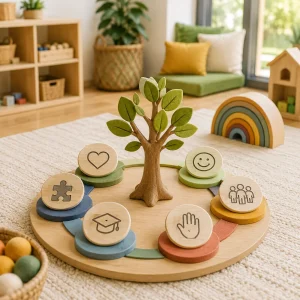
Confidence does not happen overnight; it is built upon several key developmental pillars. Problem-solving is one of the most significant building blocks. When a child encounters a challenge, such as a tower of blocks falling over, they must decide whether to build it again, change the design, or move on to a different activity. Supporting them through this thought process helps them view challenges as opportunities rather than failures.
Critical thinking is another essential element. This involves analysing information to form a judgment. Even simple questions like, “Do you want to wear your jumper outside?” encourage a child to think about the weather and their own physical comfort.
Self-esteem plays a massive role in this process. When a child makes a choice and sees it validated by the adults around them, their self-worth grows. They learn that their opinions matter and that they have agency over their environment. Conversely, if choices are always made for them, they may become reliant on others and lack the confidence to trust their instincts.
How Children’s Choice Nurtures Young Minds
At Children’s Choice, we integrate decision-making opportunities into the rhythm of every day. We believe that agency is not something you give a child occasionally; it is a constant presence in a high-quality learning environment. Our educators are trained to step back and allow children the space to lead their own learning journey, stepping in only to support and scaffold when necessary.
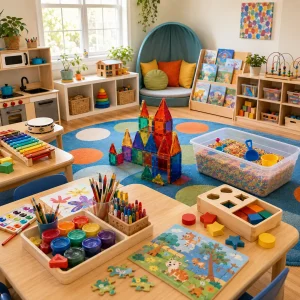
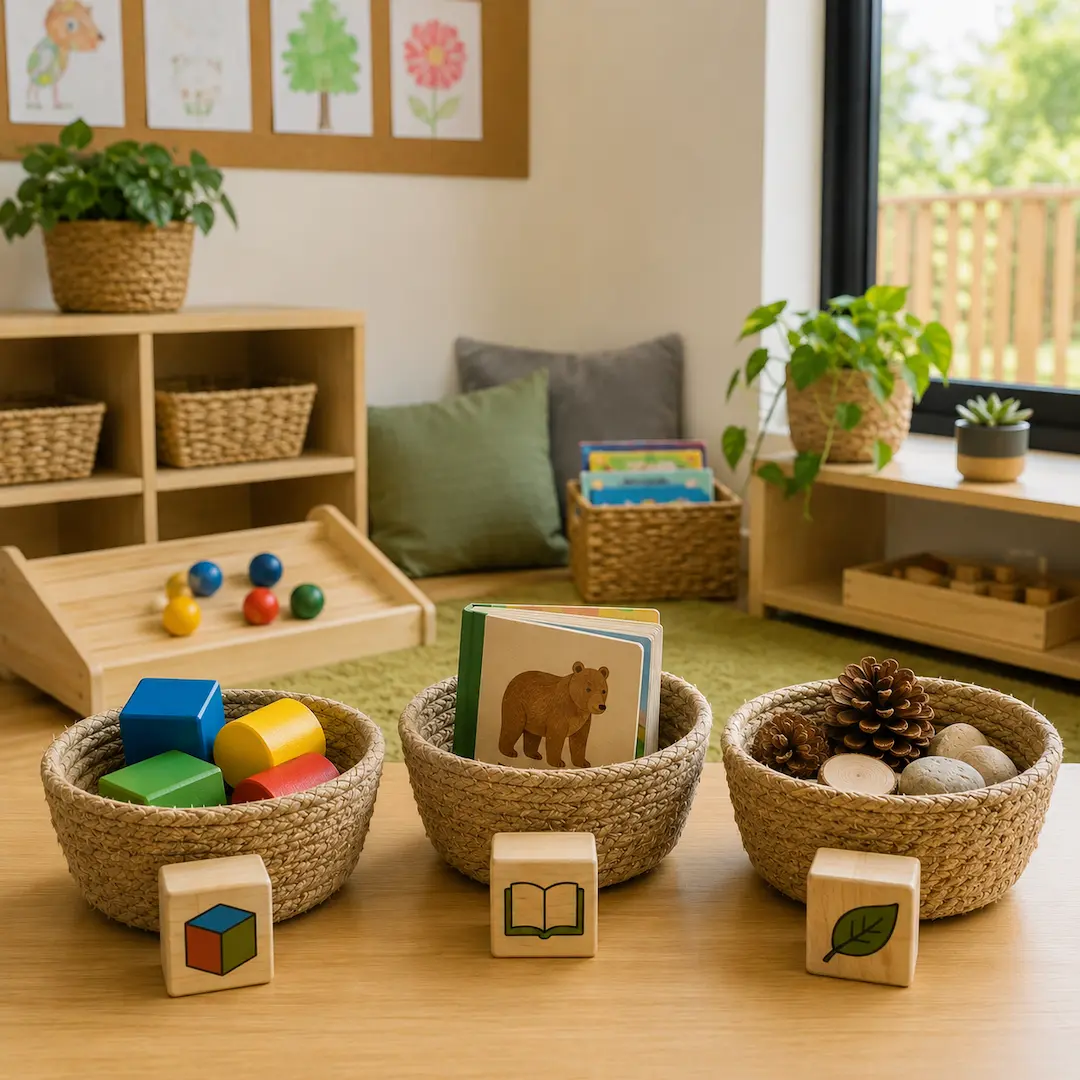
Our specific programs are designed to offer variety and choice. For instance, during free play sessions, resources are placed at the child’s level, allowing them to select materials that interest them. This might seem like a small detail, but it empowers the child to direct their own play. If you are searching for a leading childcare centre Raceview, you will find that our educators excel at facilitating these moments of independence without taking over.
We also involve children in routine decisions. This could be as simple as helping to choose a song for group time or deciding which fruit to eat for a snack. By validating these small choices, we show children that they are capable and respected members of our community.
The Role of Play-Based Learning
Play is the natural language of childhood, and it is the primary vehicle through which children learn to make decisions. In a play-based curriculum, children are constantly making choices: “Who will I be in this role-play?”, “What materials do I need to build this bridge?”, “Where should I hide during hide-and-seek?”
For example, in a dramatic play area set up as a grocery store, children decide on roles,shopper, cashier, or shelf stacker. They negotiate with peers, decide on prices for items, and solve problems if two people want to play the same role. These scenarios provide a safe “rehearsal” space for real-life decision-making.
Parents searching for the best childcare centre Ipswich often ask about how we balance structure with freedom. The answer lies in play. Through structured and unstructured play, children practice making choices in a low-stakes environment. If a block tower collapses because they chose the wrong foundation, they learn a lesson in physics and resilience without any real-world negative consequences.
Creating a Supportive Environment
Both educators and parents play a critical role in fostering an environment where decision-making can thrive. The key is to create a safe space where children feel supported enough to take risks. This involves offering “scaffolded” choices. Instead of asking an open-ended question like “What do you want to eat?”, which can be overwhelming, we might ask, “Would you like an apple or a banana?”
Feedback is also crucial. When a child makes a constructive choice, acknowledging it reinforces the behaviour. Phrases like, “I see you chose to put your hat on because it is sunny, that was a smart safety choice,” help connect the decision to the positive outcome.
Conversely, it is important to allow children to experience the natural consequences of minor decisions, provided they are safe. If a child chooses not to wear a jacket on a cool day, feeling slightly chilly teaches them more about dressing for the weather than a lecture ever could.
Addressing Challenges and Setbacks
It is natural for parents to want to protect their children from making “wrong” decisions. However, setbacks are an inevitable and valuable part of learning. A child might choose a game that turns out to be too difficult, or they might exclude a friend and then feel lonely.
When these challenges arise, our role is to help them navigate the emotions that follow. Instead of fixing the problem immediately, we can ask guiding questions: “How did that make you feel?” or “What could we do differently next time?” This helps children develop emotional resilience. They learn that making a mistake is not the end of the world; it is simply data for making a better decision in the future.
Strategies for turning failures into learning opportunities include modelling our own decision-making processes. Parents can say things like, “I chose this route, but there is a lot of traffic. Next time, I think I will check the map first.” This shows children that adults are learning and adapting too.
Empowering Future Leaders
Building confident decision-makers is about more than just getting through the day; it is about equipping children with the skills they need for a lifetime of navigating complex choices. By fostering these skills early, we help raise children who are resilient, thoughtful, and ready to take on the world.
Children’s Choice is committed to this mission. We provide the supportive backdrop children need to explore their agency. If you are looking for a partner in your child’s early education, we invite you to discover how our approach can support your family.
FAQs
How can I help my child make better decisions at home?
Start small by offering limited choices, such as “blue cup or red cup.” Narrate your own decision-making to model the process. Be patient and allow them time to choose without rushing. Validate their feelings if they regret a choice, helping them understand that mistakes are part of learning.
What are the signs of a confident decision-maker?
A confident decision-maker often expresses preferences clearly and engages in activities without constant reassurance. They may attempt to solve problems independently before asking for help. You might notice them negotiating with peers during play or explaining why they made a specific choice.
How does Children’s Choice integrate decision-making skills into its daily activities?
Children’s Choice integrates decision-making by offering a play-based curriculum where children select their activities and resources. Educators encourage children to resolve minor social conflicts and participate in routine choices, ensuring they feel their voice impacts their daily environment.
What is play-based learning and how does it help my child?
Play-based learning uses children’s natural motivation to play as a context for learning. It allows children to explore, experiment, and solve problems at their own pace. This approach develops critical thinking and social skills, as children constantly make choices about their play scenarios.
Are Children’s Choice childcare centers accredited and what are their educational qualifications?
Yes, Children’s Choice centres operate under the National Quality Framework. Our educators hold qualifications ranging from Certificates and Diplomas in Early Childhood Education and Care to Bachelor degrees for our Kindergarten teachers, ensuring high-quality, professional care.