Choosing a childcare centre can bring up a lot at once. You may feel excited for your child, nervous about the transition, and unsure how to weigh all the options in front of you. For many families, the real challenge is not just finding care. It is finding a place that feels like a good fit for your child and for the way you parent.
That fit matters more than many parents first realize. When your child moves between home and an early learning environment that shares similar values, routines, and expectations, the transition often feels smoother. Your child knows what to expect. You feel more confident. And the partnership between family and educators becomes much stronger.
In this guide, you will learn how to identify your parenting style, what to look for in a childcare centre, what questions to ask on a tour, and how to spot the signs of a high-quality setting that supports your child’s growth.
Understanding Your Parenting Style
Before you compare programs, fees, and locations, it helps to step back and look at your own parenting style. You do not need to fit neatly into one label. Still, understanding your approach can help you choose a childcare centre that feels right.
Some parents prefer clear structure and routine. Others value flexibility and child-led exploration. Some focus heavily on emotional coaching, while others place strong emphasis on independence and resilience. Most families use a mix of these approaches depending on the child, the day, and the situation.
What matters is knowing your non-negotiables.
For example, you may care deeply about:
- gentle guidance instead of harsh correction
- predictable nap and meal routines
- lots of outdoor play
- strong school readiness support
- warm, frequent communication
- an emphasis on social and emotional development
- a play-based learning model rather than rigid academics
When a childcare centre reflects these priorities, your child is more likely to feel secure. There is less confusion between home expectations and centre expectations. That consistency can support emotional regulation, confidence, and trust.
A Simple Way to Define What Matters Most
Before you book tours, write down your top priorities in plain terms. Ask yourself:
- How do we respond to big emotions at home?
- Do we prefer structured days or flexible routines?
- How important is outdoor play?
- What role should learning through play have each day?
- How much communication do we want from educators?
- What values do we want reinforced outside the home?
This exercise gives you a practical filter. Instead of choosing based on appearance alone, you can evaluate whether the centre’s daily approach aligns with your parenting style.
Why This Step Helps During Centre Tours
Tours can be overwhelming. Rooms are busy, staff are talking, and it is easy to get distracted by décor or marketing language. Knowing your parenting style keeps you focused on what actually matters.
You are not just asking, “Is this centre good?”
You are asking, “Is this childcare centre good for our family?”
That is a much better question.
Key Factors to Consider When Choosing a Childcare Centre
Once you understand your own priorities, the next step is to assess each centre in a practical way. A strong choice usually comes down to a mix of philosophy, quality, convenience, and trust.
Proximity, Accessibility, and Daily Routine
Location shapes your daily experience more than many parents expect. A centre may look wonderful on paper, but if getting there adds stress to every morning and afternoon, that strain can build quickly.
A childcare centre close to home or work can make drop-off easier and create a calmer rhythm for your child. It can also help if you need to pick up early due to illness, attend an event, or respond to an emergency.
When considering location, think about:
- drive time during peak traffic
- parking and safe access
- proximity to work or home
- backup support from grandparents or relatives nearby
- how the commute may affect your child’s energy and mood
A practical location does not replace quality, but it does support consistency. And consistency matters for young children.
Staff Qualifications, Ratios, and Relationships
People make the biggest difference in any early learning environment. Qualified educators matter, but so do warmth, stability, and the ability to build strong relationships with children.
Young children learn best when they feel safe. That sense of safety comes from predictable care and trusted adults. If educators know your child well, respond calmly, and create a secure environment, your child is more likely to settle, explore, and engage.
You should also look at staff-to-child ratios and broader quality standards. A helpful starting point is the National Quality Standard (NQS) via ACECQA, which outlines the benchmarks many families use to assess service quality.
As you evaluate a centre, pay attention to:
- educator qualifications and experience
- staff turnover and retention
- how educators speak to children
- whether they get down to the child’s level
- whether children seem calm, connected, and engaged
A highly polished centre can still feel impersonal. By contrast, a modest-looking space with caring, consistent educators may offer a much stronger experience.
Why Staff Stability Matters
Children build trust through repetition. Seeing the same familiar faces helps them feel grounded. If staff change often, it can interrupt attachment and make transitions harder.
That is why relationships are not a “nice extra.” They are central to quality childcare.
Curriculum and Educational Philosophy
A centre’s curriculum shapes what your child will experience each day. That includes how they play, solve problems, build friendships, and prepare for school.
Many families are drawn to play-based learning, and for good reason. Children learn deeply when they are curious, active, and emotionally engaged. Play supports language, memory, social skills, creativity, and self-regulation.
In Australia, many quality services use the Early Years Learning Framework (EYLF) by the Department of Education. This framework focuses on belonging, being, and becoming, which aligns well with child development in the early years.
When looking at curriculum, ask whether the centre offers:
- play-based learning experiences
- opportunities for creativity and problem-solving
- outdoor exploration
- age-appropriate school readiness support
- a balance between guided activities and child-led discovery
- support for social and emotional development
You may also notice different educational styles across centres. Some are highly structured. Others are more flexible and inquiry-based. Neither is automatically better. The key is whether the approach matches your parenting style and your child’s temperament.
What “School Readiness” Should Really Mean
School readiness is often misunderstood. It is not just about letters, numbers, or sitting still. A strong program also helps children build:
- confidence
- independence
- emotional resilience
- listening skills
- self-help routines
- the ability to work and play with others
That broader foundation usually serves children best.
Safety, Environment, and Wellbeing
Safety is about more than locked gates and sign-in procedures. A quality childcare centre should support physical safety, emotional security, and daily wellbeing.
When children feel safe, they take healthy risks. They try new things, make friends, ask for help, and recover more easily from challenges. That emotional safety is just as important as clean rooms and secure entrances.
Look closely at the physical environment. Is it calm, clean, and well-organised? Do the indoor and outdoor spaces invite exploration? Are resources age-appropriate and easy for children to access? Is there natural light? Do the rooms feel busy in a good way or chaotic in a stressful way?
You should also ask about health and safety procedures, including:
- illness policies
- allergy management
- medication handling
- sun safety
- sleep routines
- emergency procedures
- secure entry and pickup protocols
For another useful government resource, families can review the StartingBlocks.gov.au guide to choosing an early education and care service. It offers practical advice on what to look for during your search.
A Quick Reality Check
Do not focus only on whether a centre looks new. A beautiful environment helps, but emotional tone matters more. Calm children, responsive educators, and a well-run room often tell you more than furniture and branding.
Communication and Parental Partnership
For many parents, one of the hardest parts of childcare is being apart from their child. Good communication helps bridge that gap.
A strong childcare centre sees families as partners. Educators should want to know your child’s routines, interests, sensitivities, and strengths. In return, they should give you meaningful updates about your child’s day, progress, and wellbeing.
Look for centres that offer:
- clear communication during enrolment
- daily updates or learning summaries
- open conversations at drop-off and pickup
- orientation support for new families
- a respectful approach to parent concerns
- consistent discussion around goals, routines, and development
This partnership matters because children do best when the adults around them work together. If your child is toilet learning, adjusting sleep, managing separation anxiety, or building confidence, shared communication makes support more consistent.
In short, communication builds trust. And trust makes the whole experience better for everyone.
Cost, Subsidies, and Practicalities
Cost is a real part of the decision. Families want quality care, but they also need an option that works within their budget and schedule.
When comparing fees, look beyond the daily rate. Ask what is included, such as meals, nappies, sunscreen, incursions, or extracurricular programs. Also ask about late pickup fees, casual days, minimum attendance requirements, and holiday arrangements.
You should also check whether your family may qualify for financial support through the Child Care Subsidy (CCS) by Services Australia. This can make a major difference in affordability.
As you compare options, consider:
- full daily cost after subsidy
- operating hours
- flexibility for changing work schedules
- waitlist length
- available days
- extra fees and inclusions
A centre should be a strong philosophical fit, but it also needs to work in real life. If the logistics are unsustainable, the arrangement may become stressful over time.
Questions to Ask During Your Visit
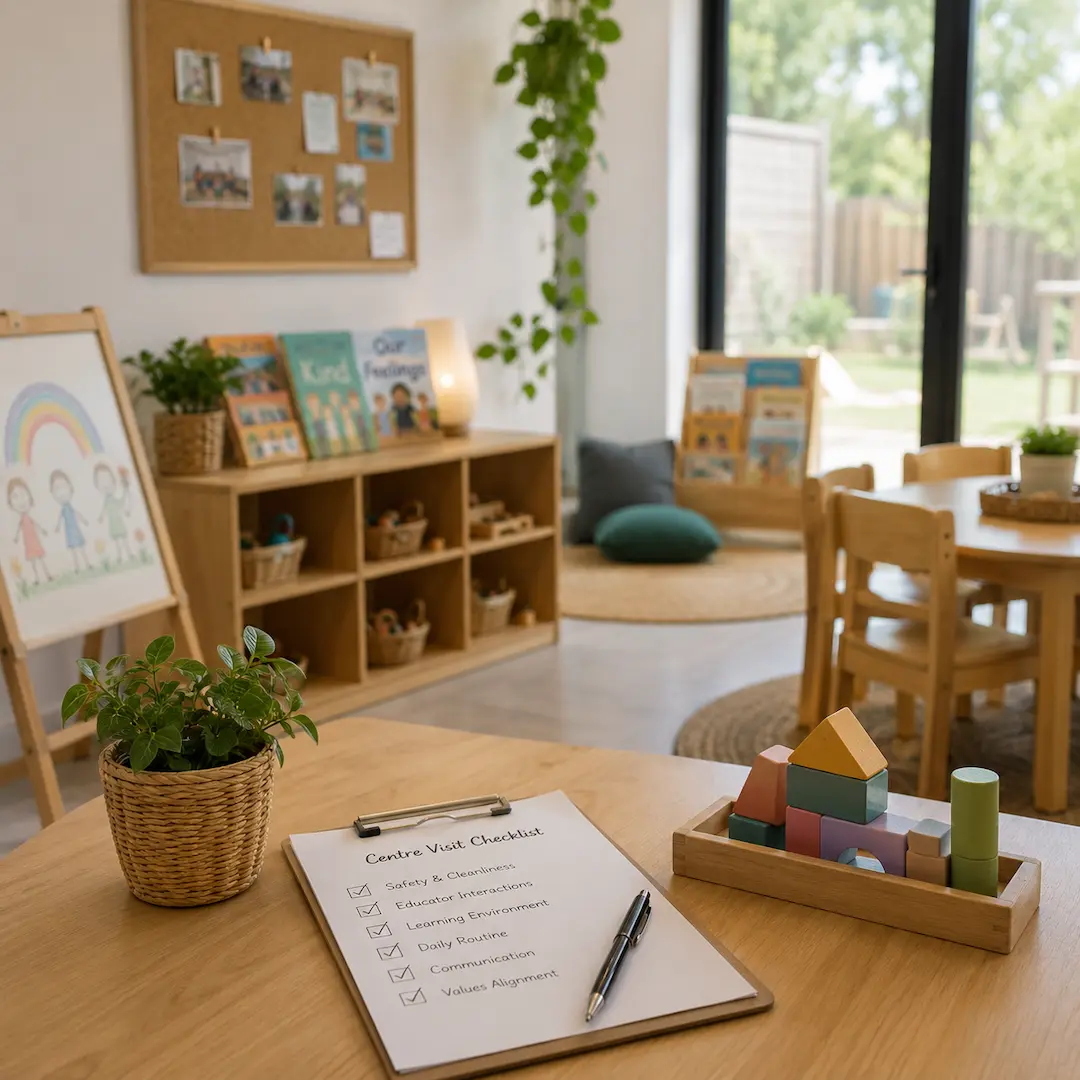
A centre tour is your chance to move past brochures and see how the service really operates. Going in with a clear list of questions can help you stay focused.
Here are useful questions to ask during your visit.
Questions About Relationships and Emotional Support
- How do educators help children settle into care?
- How do you support a child who is feeling overwhelmed or frustrated?
- How do you build trust with children who are shy or slow to warm up?
- How do you handle conflict between children?
Questions About Daily Routine
- What does a typical day look like?
- How flexible are sleep and meal routines for toddlers?
- How do you support children with different energy levels or needs?
- What happens if a child does not want to join a group activity?
Questions About Learning and Development
- How does your program support play-based learning?
- How do you plan experiences based on children’s interests?
- How do you encourage language, problem-solving, and independence?
- How does the program build emotional resilience and independence before kindergarten?
Questions About Communication
- How do you share updates with families?
- Will we receive daily reports or learning summaries?
- How do you handle parent concerns or feedback?
- How often do educators discuss a child’s development with families?
Questions About Staffing and Quality
- What are your educator qualifications?
- How long have your team members worked here?
- What is your staff turnover like?
- How do you maintain quality and consistency across rooms?
Questions About Safety and Health
- What are your illness and exclusion policies?
- How do you manage allergies and medications?
- What security measures are in place for drop-off and pickup?
- How are emergency situations handled?
You do not need to ask every question at once. Choose the ones that connect most strongly to your parenting style and your child’s needs.
Signs of a Quality Centre
When you walk into a childcare centre, trust both your observation and your instinct. You are looking for more than claims. You are looking for evidence.
Some of the strongest signs of quality are easy to spot.
Educators Are Warm, Calm, and Engaged
Notice how staff speak to children. Do they kneel down to make eye contact? Do they respond with patience? Do they sound respectful and calm, even when the room is busy?
That kind of interaction tells you a lot about the culture of the centre.
Children Seem Secure and Interested
No room will be perfectly quiet, and some children will always be having hard moments. That is normal. But overall, children should appear settled, engaged, and supported.
You want to see children exploring, playing, talking, and moving with confidence.
The Environment Feels Child-Centered
Look for displays at children’s eye level, accessible materials, inviting learning areas, and spaces that reflect children’s ideas and interests. These details show that the environment was created for children, not just for adults touring the centre.
Routines Feel organised Without Feeling Rigid
A quality early learning environment usually feels structured but not harsh. There is a clear flow to the day, yet children still have room for choice, movement, and connection.
Families Seem Welcome
Notice whether staff greet families warmly and communicate openly. A strong centre treats parents as part of the community.
This is one reason many families look for providers like Children’s Choice, where the environment, educator relationships, and daily routines are designed to help children feel a real sense of belonging.
Common Mistakes to Avoid When Choosing a Centre
Even thoughtful parents can feel pressured into a quick decision. Here are a few common mistakes to watch for:
- choosing based only on location
- focusing only on appearance
- forgetting to ask about staff turnover
- overlooking communication style
- assuming every “school readiness” program is the same
- not checking how well the centre fits your parenting style
- ignoring your own gut feeling during the tour
A centre can tick many boxes and still not feel right for your family. That matters.
Final Thoughts
Finding the right childcare centre takes time, but the effort is worth it. When a centre aligns with your parenting style, supports your child’s emotional wellbeing, and offers a safe, engaging early learning environment, the benefits can be felt every day.
Trust your observations, ask clear questions, and pay attention to how the centre makes you feel. A nurturing, well-matched setting can support your child’s confidence, learning, and sense of security from the start.
If you are exploring your options, visiting in person is often the best next step. Children’s Choice centres welcome families who want a warm, play-based learning environment where children can grow, connect, and thrive. Book a tour and see how the right fit can make all the difference.
FAQs
How do I determine my parenting style before choosing a childcare center?
Understanding your parenting style involves reflecting on your priorities, such as discipline, learning methods, nutrition, and emotional support. Identifying these values helps you select a childcare center aligned with your approach.
What are some red flags to look for in a childcare center?
Red flags include poor communication, high staff turnover, lack of safety measures, unclean facilities, or children appearing unhappy or disengaged.
How important are staff qualifications and training in selecting a childcare center?
Staff qualifications and training are crucial to ensure your child is cared for by knowledgeable and skilled professionals who can foster a safe and educational environment.
Should I involve my child in the decision-making process?
Yes, involving your child when possible can help you gauge their comfort level and how well they connect with the environment and staff during visits.
How can I evaluate the daily routine and curriculum of a childcare center?
Ask for a detailed outline of the center’s daily schedule and curriculum. Look for structured activities that align with your values, such as play-based learning or academic focus.
Can I trust online reviews when researching childcare centers?
Online reviews can be helpful but should be taken with a grain of caution. Combine them with personal visits and recommendations from other parents for a well-rounded perspective.
How often should I revisit or reassess my childcare choice?
It’s a good idea to periodically evaluate the childcare center by observing how your child is progressing and frequently communicating with staff about your child’s development and happiness.