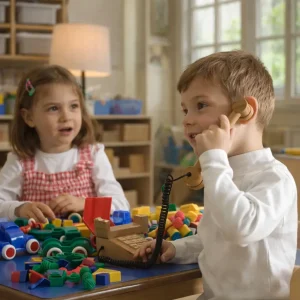
Have you ever noticed how much more comfortable you feel sharing your thoughts in a conversation with two or three friends compared to a room full of strangers? Children feel the exact same way. In the bustling world of early childhood education, we often focus on what children are learning, but how they are learning is just as important.
While large group activities have their place for building community spirit, there is a quiet power in small-group learning. When children learn in smaller clusters, the noise level drops, distractions fade, and genuine connections begin to form. At Children’s Choice, we believe that every child deserves to be seen, heard, and understood. Integrating small-group experiences into our play-based curriculum allows us to provide the safe, nurturing childcare that supports children’s development and school readiness.
But what exactly does small-group learning look like in a childcare setting, and why is it so beneficial for your little one’s development?
What is Small-Group Learning?
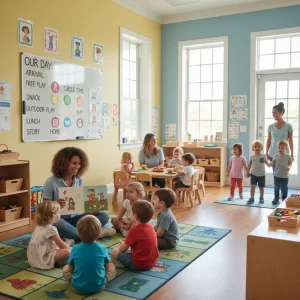
Small-group learning isn’t just about dividing a class into random sections. It is an intentional teaching strategy where children work in groups of three to eight, guided by an educator or facilitator.
In a traditional large-group setting, the teacher often has to manage the energy of the whole room, which can sometimes mean delivering a “one-size-fits-all” lesson. In contrast, small-group learning shifts the dynamic entirely. The educator becomes a facilitator, sitting with the children at their level, often literally on the floor or at a low table.
This approach transforms the learning environment from passive listening to active engagement. It creates a space where a child isn’t just one face in a crowd, but an active participant with a voice that matters.
The Benefits of Small-Group Learning
When class sizes are broken down into intimate groups, the benefits for early development are profound. It allows for a depth of interaction that simply isn’t possible in larger settings.
Personalized Attention and Reduced Learning Gaps
The most significant advantage of small-group learning is the ability for educators to tailor their interactions. In a small group, an educator can quickly identify if a child is struggling to hold a pencil or if another child is ready for a more complex challenge. This immediate feedback loop helps close learning gaps early, ensuring no child is left behind or left bored.
Enhanced Communication Skills
For many children, speaking up in front of a whole class can be intimidating. Small groups provide a “safe zone” for communication. Children who might be naturally shy or quiet are more likely to express their ideas, ask questions, and share stories when they only have a few peers watching. This builds their vocabulary and conversational skills in a low-pressure environment.
Improved Social and Emotional Development
Learning to navigate relationships is hard work for young children. In smaller groups, social interactions are more concentrated. Children must practice turn-taking, active listening, and patience. They learn to negotiate roles during play, who gets to be the doctor and who is the patient?, and they develop empathy by working closely with peers who might have different perspectives.
Increased Confidence and Reduced Anxiety
Large environments can sometimes be overstimulating, leading to anxiety or withdrawal. A small group offers a sense of security. When a child feels safe and connected to their educator and peers, their confidence grows. They become more willing to take risks, make mistakes, and try new things, which is the foundation of resilience.
Better Skill-Based Learning
Whether it is early literacy, numeracy, or problem-solving, skill-based learning thrives in small groups. Educators can introduce specific concepts, like counting blocks or identifying sounds, and guide the children through hands-on practice. The collaborative nature of the group means children also learn from each other, observing how their friends solve problems and mimicking successful strategies.
Children’s Choice and Small-Group Learning
At Children’s Choice, we don’t view small-group learning as a rigid academic exercise. Instead, it is seamlessly woven into our philosophy of play-based early learning. We understand that children learn best when they are engaged and having fun.
Our educators might gather a small group to explore a sensory bin, build a tower, or read a story. During these moments, we focus on high-quality interactions. For example, if a group is playing with water, the educator might introduce concepts of volume and floating, encouraging the children to predict what will happen next.
We also use these smaller settings to observe and document each child’s progress. This ensures that when we say we offer the best childcare centre Ipswich has to offer, we mean that we truly know every child in our care. We understand their interests, their strengths, and where they need a little extra encouragement. This tailored approach is key to preparing them for the transition to school.
Why Choose Small-Group Learning?
Choosing a centre that prioritizes small-group learning means choosing an environment where your child is an individual, not a number. It offers peace of mind for parents seeking quality childcare, knowing that their child is receiving focused attention in a nurturing atmosphere.
The benefits extend far beyond the classroom walls. The social skills, confidence, and ability to work in a team that children develop in these small groups are life skills they will carry with them forever.
If you are looking for a supportive environment where your child can thrive, we invite you to visit us. Seeing these interactions in action is the best way to understand the difference a small group makes.
The Future of Early Learning
As we look toward the future of education, the ability to collaborate and communicate will be just as important as reading and writing. Small-group learning is the training ground for these essential skills.
By prioritizing these intimate learning moments, we are not just teaching children facts; we are teaching them how to learn, how to listen, and how to work together. It prepares them not only for the classroom but for life. At Children’s Choice, we are proud to be at the forefront of this nurturing approach, helping every child step into their future with confidence.
Frequently Asked Questions
What is the ideal size for a small learning group?
In early childhood education, an ideal small group consists of three to eight children. This size is large enough to encourage diverse social interactions and teamwork, yet small enough to ensure every child receives personalized attention and feels safe to participate.
How does Children’s Choice support children with learning difficulties?
Small-group learning at Children’s Choice allows educators to closely observe and adapt to individual needs. For children with learning difficulties, this means we can modify activities, provide extra support, and create a calm environment that reduces overwhelm and fosters success.
How does Children’s Choice ensure the quality of small-group instruction?
Children’s Choice ensures quality by employing qualified, passionate educators trained in play-based learning. We maintain low educator-to-child ratios and continuously plan our curriculum to ensure small-group activities are purposeful, engaging, and developmentally appropriate for every child.
Why is this the leading childcare centre Heritage Park families recommend?
Families consider us the leading childcare centre Heritage Park has because of our commitment to relationship-based pedagogy. We use small groups to build deep connections between educators and children, ensuring every family feels supported and every child feels they belong.
Is this the best childcare centre Raceview offers for school readiness?
Many parents tell us we are the best childcare centre Raceview has for school prep because of our balanced approach. Our small-group activities mimic the collaborative work children will encounter in school, building their focus, social skills, and independence in a gentle, supportive way.