Mornings that start in a rush and bedtimes that end in tears are common in family life. For young children, though, those hard moments are not just “part of the day.” They can feel big, confusing, and stressful. The world is still new to them, and when each day feels unpredictable, it can be harder for them to stay calm, cooperate, and feel secure.
That is why calm daily routines matter so much. Predictable patterns help young children understand what comes next. That sense of order acts like a safety net. It supports emotional wellbeing, healthier sleep, smoother transitions, and more confidence in everyday tasks.
In this guide, you will learn:
- why consistent routines help young children feel safe
- how to build calmer mornings, mealtimes, playtimes, and bedtimes
- simple ways to keep routines flexible when real life gets messy
The Hidden Benefits of Consistency
A calm daily routine is not about making family life rigid. It is about giving young children a structure they can trust. Spontaneity can be fun, but young brains depend on predictability to feel safe.
When children know what is happening next, their nervous system can relax. Instead of spending energy trying to work out what is coming, they can focus on playing, learning, and connecting with you. This sense of emotional security often shows up in simple ways: fewer power struggles, easier transitions, and less stress around daily tasks.
Consistency also supports the body, not just emotions. Regular wake times, meals, active play, and bedtime help regulate a child’s internal body clock. That rhythm plays a big role in sleep quality, mood, physical growth, and attention. The Australian Government’s sleep and activity guidance can help parents understand what healthy daily patterns look like for young children: Department of Health and Aged Care.
Routines can also build responsibility over time. When children repeat the same steps each day, they begin to remember what comes next. A toddler may start putting shoes by the door. A preschooler may learn to wash hands before lunch or help pack a bag in the morning. These small repeated actions build confidence because children feel capable, not constantly corrected.
What this looks like in practice
A child with a familiar evening routine often moves from bath to pajamas to story time with less resistance than a child who is never sure what bedtime will involve. The difference is not luck. It is the comfort of knowing the pattern.
Try this step: pick one part of your day that often feels chaotic and make the order of events the same for a week.
Structuring a Peaceful Morning Routine
The morning routine often shapes the rest of the day. If the first hour feels rushed, children can carry that stress into drop-off, care, or preschool. A calm morning does not have to be perfect. It just needs to be predictable.
Start with a consistent wake-up time when possible. Young children do better when their body knows when to expect sleep and when to expect activity. From there, keep the sequence simple and repeatable: wake up, use the bathroom, get dressed, eat breakfast, brush teeth, and get ready to leave.
Practical steps for a calmer start
1. Prepare what you can the night before
Lay out clothes, pack bags, and decide on breakfast ahead of time. This reduces decisions when everyone is still waking up.
2. Keep the order the same
Children do not need a packed checklist. They need a familiar pattern. Repeating the same steps each morning helps them know what is expected.
3. Build in small moments of independence
Invite your child to put on socks, carry their water bottle, or choose between two breakfast options. These small choices support autonomy without creating overwhelm.
4. Protect the pace
If possible, leave a little buffer time. Young children move slowly because they are still learning each task. A few extra minutes can prevent the whole morning from feeling tense.
At Children’s Choice, we often see how much a predictable morning routine helps children settle into the day. Children who arrive after a calm, familiar start are usually more comfortable moving into the learning environment, connecting with educators, and joining their peers.
The broader early childhood evidence supports this focus on secure, predictable transitions and responsive learning environments. The Australian Government’s early childhood policy resources offer useful context for families and educators alike: Department of Education.
Creating Connection Through Mealtime Routines
Mealtime is about more than food. It is also one of the most reliable chances you have each day to slow down and reconnect.
Young children can find hunger hard to manage. When meals and snacks are irregular, blood sugar dips can make tiredness, frustration, and emotional outbursts more likely. A steady pattern of meals and snacks helps children feel physically regulated, which supports calmer behavior.
Just as important, regular mealtimes create emotional security. Sitting together, even for a short time, tells a child that this is a pause in the day where they belong. It does not need to look perfect. It simply needs to feel consistent.
Simple ways to make mealtimes calmer
- Serve meals and snacks at roughly similar times each day.
- Keep expectations realistic for your child’s age.
- Focus on connection, not control.
- Let your child practice small jobs like placing a spoon on the table or carrying a napkin.
- Use the time for simple conversation, not pressure.
What most people do vs. what works
What many families do is treat mealtime as another task to get through. What works better is treating it as a rhythm point in the day. Even one shared meal or snack can help anchor children and reduce stress.
For practical guidance on healthy eating patterns in early childhood, parents can explore Australian nutrition information through Eat for Health, a government resource that supports healthy food habits across life stages.
The Power of a Playtime Routine
Play is not a break from learning. For young children, play is how learning happens. It is how they test ideas, move their bodies, express feelings, and make sense of the world around them.
That is why a playtime routine matters. When play is built into the day, children have a regular outlet for energy, creativity, and emotional processing. This can reduce frustration and improve cooperation in other parts of the day.
A healthy routine usually includes both active play and quiet play. Outdoor movement helps children release energy and build physical skills. Quiet indoor play supports focus, imagination, and self-regulation. Both matter.
The Early Years Learning Framework places strong value on play-based learning because it supports identity, wellbeing, communication, and confidence. Families who want to understand this approach more deeply can read more through the Australian Government’s Early Years Learning Framework resources: Early Years Learning Framework.
A balanced playtime rhythm
A simple playtime routine might include:
- outdoor active play in the morning or late afternoon
- quiet play after lunch
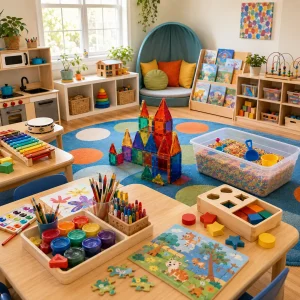
- open-ended materials like blocks, drawing tools, dress-ups, or puzzles
- enough unstructured time for children to lead the play themselves
Here is how it looks in practice
A child who has daily time to run, climb, build, pretend, and explore often finds it easier to sit for meals, participate in group settings, and settle at bedtime. Play helps them work through what their bodies and minds need.
Try this step: schedule one regular window each day for unhurried play, even if it is only 20 to 30 minutes to start.
Winding Down with a Bedtime Routine
Bedtime resistance often starts long before lights out. When children are overtired, overstimulated, or unsure what to expect, the end of the day can quickly unravel.
A bedtime routine works because it creates a clear signal: the day is ending, and rest is coming. That signal matters for the brain and body. Consistent sleep routines help support melatonin release, which is the hormone that helps us feel sleepy. Bright screens close to bedtime can interrupt that process, making it harder for children to settle.
A calming bedtime sequence
Most families do well with a short, repeated sequence such as:
- bath or wash
- pajamas
- teeth brushing
- a story or quiet book
- cuddle, chat, or song
- lights out
The key is not making the routine elaborate. The key is making it predictable. A calm sequence repeated each night helps children shift from activity into rest without feeling abrupt or stressful.
Tips that make bedtime easier
- Start winding down before your child is overtired.
- Keep lights soft and noise low.
- Avoid screens in the hour before bed when possible.
- Use the same few steps each night.
- Keep the tone calm, warm, and steady.
If bedtime is a struggle, do not try to fix everything at once. Choose one part of the routine to stabilize first, such as story time happening at the same time each night.
Practical Tips for Maintaining Your Routine
The best routines are strong enough to guide the day and flexible enough to survive real life. Illness, outings, appointments, poor sleep, and family events will interrupt even the best plan. That does not mean the routine is failing.
Think of your routine as a framework, not a rulebook. Children benefit most from the overall pattern, not from perfect timing. If lunch is later than usual or bedtime shifts after a family event, you can still return to the same sequence the next day.
Ways to make routines easier to keep
Involve your child
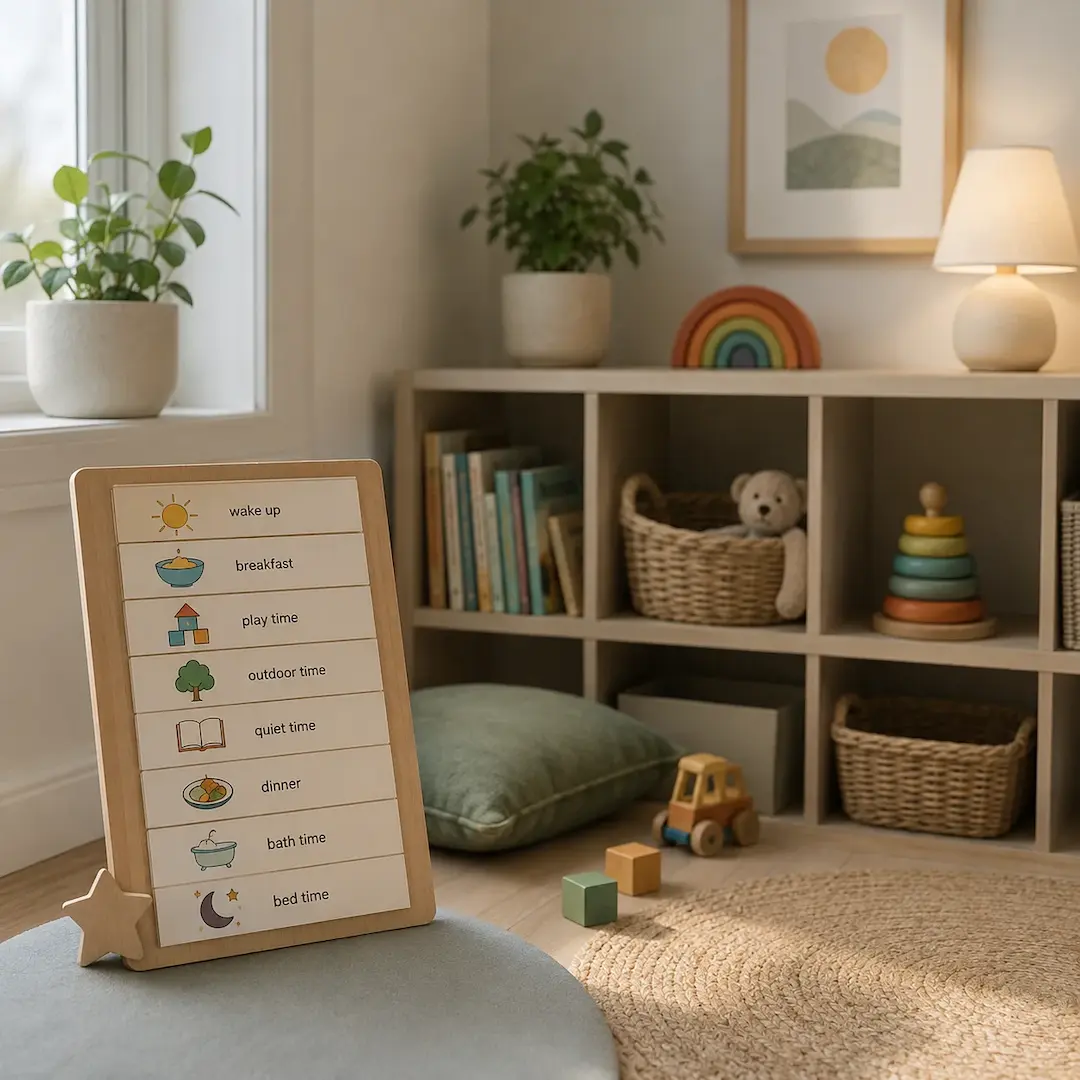
Young children are more likely to follow routines they can see and understand. Try a simple visual chart with pictures showing the order of tasks: breakfast, teeth, shoes, bag, and out the door.
Keep the routine age-appropriate
Do not overload the schedule. Too many steps can create frustration. Start with the essentials and build slowly.
Use gentle reminders
Short, calm prompts work better than repeated warnings. “After pajamas, we read our story” is clearer and calmer than “How many times do I have to tell you?”
Teach flexibility too
Routines should support resilience, not perfection. When plans change, name it simply: “Today is different, and that is okay. After dinner, we will still have bath and story.” This helps children learn that change can happen without feeling unsafe.
A simple framework for success
If you are trying to build calm daily routines for young children, start here:
- choose one part of the day to improve first
- keep the order of events the same
- repeat it consistently for one to two weeks
- use visual cues if helpful
- adjust gently instead of starting over
This approach is often more effective than trying to redesign the whole day at once.
Supporting Your Child’s Journey Forward
Calm daily routines give young children more than structure. They give them security, confidence, better sleep, steadier moods, and a stronger base for learning and relationships. Over time, those small repeated moments add up to real developmental support.
You do not need to change everything this week. Start small. Choose one routine, make it predictable, and let your child grow into it. If you would like to see how predictable rhythms, nurturing educators, and play-based learning come together in practice, explore Children’s Choice and discover how we support children through each stage of early development.
FAQs
Why are predictable routines important for young children?
Predictable routines provide a sense of security and stability for young children. They help children feel safe because they know what to expect, which reduces anxiety and aids in emotional regulation.
How can I start building a calm daily routine?
Start by introducing small, consistent steps in your day. Focus on one or two key times, such as morning or bedtime, and ensure those routines are predictable and easy to follow.
What should I do if my child resists routines?
It’s normal for children to resist change at first. Stay patient and consistent, and involve your child in the process by giving them choices or turning routines into fun activities.
How do routines support learning and development?
Routines help strengthen executive functioning skills, like organization and time management. They also foster independence and provide opportunities for children to build responsibility through repetition.
Can routines help during transitions?
Yes, routines make transitions smoother by giving children clear expectations. A predictable schedule can ease the shift from one activity to another, lowering stress for both the parent and the child.
Should routines be flexible?
While consistency is critical, routines should also allow for flexibility. Life can be unpredictable, and teaching children to adapt within the framework of a routine prepares them for variability in the real world.
How can play be incorporated into daily routines?
Play can be seamlessly integrated into routines by making tasks fun and engaging, such as singing a playful song during cleanup or turning a bedtime routine into a calming storytelling session.