We’ve all heard the phrase “eat the rainbow,” but for many families, getting toddlers to eat anything other than beige food can feel like a major victory. Navigating nutrition for young children can be tricky, yet introducing a variety of vibrant fruits and vegetables is one of the best ways to support their growing bodies.
At Children’s Choice, we believe that developing healthy habits starts early. Through our supportive environment, we encourage children to explore food with curiosity rather than pressure. Eating the rainbow isn’t just a catchy slogan; it’s a practical, engaging way to ensure your child gets the broad spectrum of nutrients they need for development, energy, and play.
Why “Eat the Rainbow” is Important for Kids
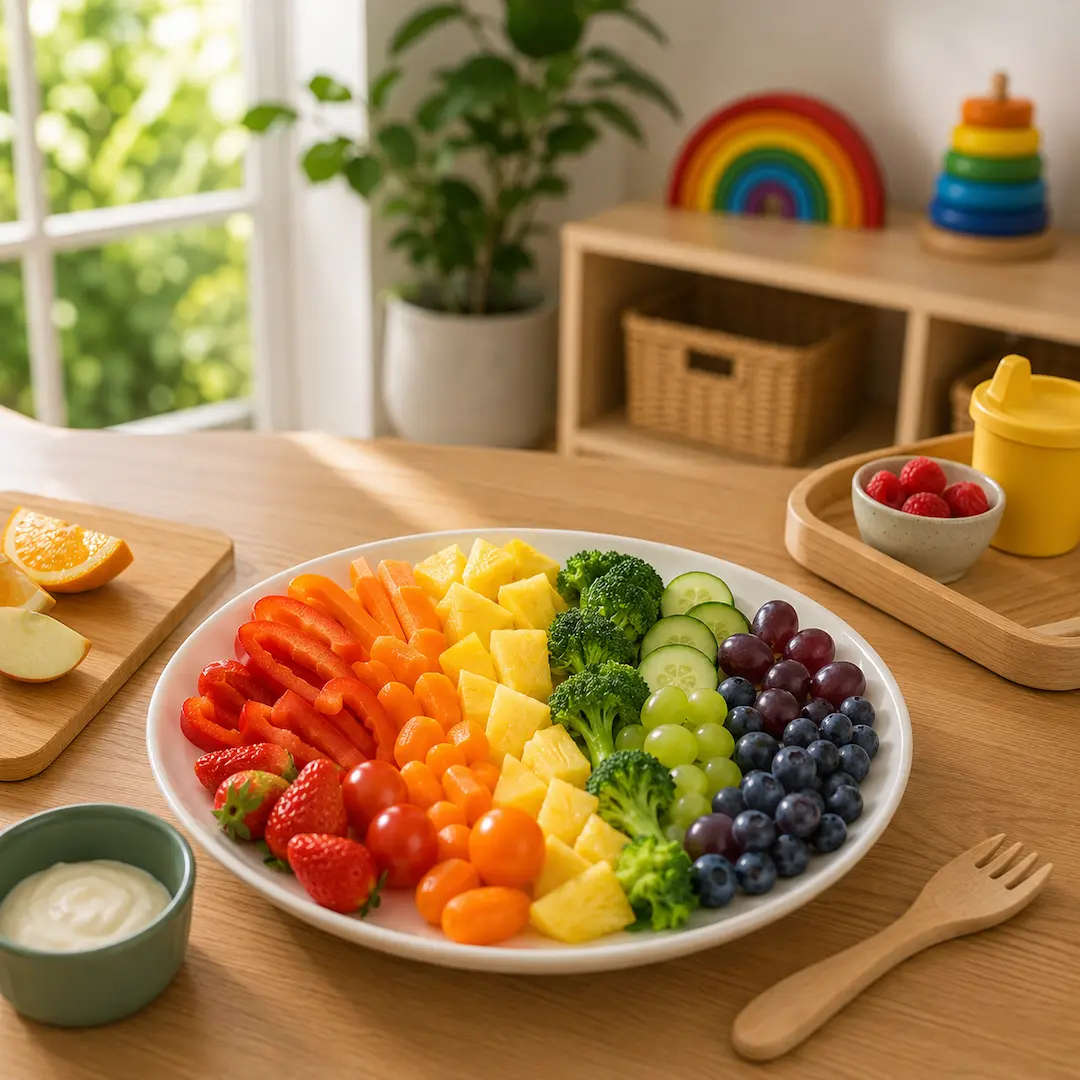
The concept of eating the rainbow is simple: different coloured fruits and vegetables contain different vitamins, minerals, and antioxidants. No single food provides everything a child needs, so variety is the key to a balanced diet. When children eat a mix of colours, they are naturally consuming a diverse range of nutrients that work together to keep them healthy.
The Australian Dietary Guidelines emphasise the importance of variety, particularly in the early years when rapid growth and brain development are occurring. By offering a colourful plate, you are supporting everything from your child’s eyesight and immune system to their bone strength and cognitive function. Plus, moving away from processed snacks toward fresh, whole foods helps establish a palate that appreciates natural flavours for life.

Benefits of Different Coloured Foods
Each colour group in nature’s palette acts like a unique superhero, offering specific health benefits. Here is a breakdown of what those bright colours are actually doing for your little one:
Red Foods
Red fruits and vegetables, such as tomatoes, watermelon, strawberries, and red capsicum, are often packed with lycopene and anthocyanins. These nutrients are powerful antioxidants that support heart health and memory function. Red foods are also linked to keeping cells healthy and protecting the body from illness.
Orange & Yellow Foods
Carrots, sweet potatoes, pumpkin, mangoes, and oranges are rich in beta-carotene, which the body converts into Vitamin A. This is crucial for maintaining healthy eyesight (helping them see in the dark!), supporting a robust immune system, and keeping skin healthy and glowing.
Green Foods
Green is often the hardest colour to sell to a toddler, but it’s one of the most important. Spinach, broccoli, peas, cucumber, and kiwi fruit are loaded with Vitamin K, folate, and fibre. These nutrients are essential for building strong bones, aiding digestion, and providing the lasting energy kids need for a full day of play.
Blue & Purple Foods
Blueberries, blackberries, purple grapes, and eggplant get their deep hues from anthocyanins. These powerful compounds are fantastic for brain health, helping with learning and memory. They also help fight inflammation and support a healthy heart.
White & Brown Foods
While they aren’t as bright, white and brown foods like cauliflower, bananas, mushrooms, and potatoes are still vital. They contain nutrients like potassium and allicin (found in garlic and onions) which support immunity, help maintain healthy cholesterol levels, and provide essential dietary fibre.
Tips to Encourage Kids to “Eat the Rainbow”
Knowing the benefits is one thing, but getting a three-year-old to eat broccoli is another challenge entirely. The goal is to make food fun and low-pressure. Here are some strategies to bring more colour to your table:
Make it Fun and Visual
Children are visual learners. Try presenting food in creative ways, arrange veggies into a smiley face, make fruit skewers that look like actual rainbows, or use cookie cutters to turn melon into stars. You can create a “rainbow chart” on the fridge and let your child place a sticker on the matching colour every time they try a new fruit or vegetable.
Involve Kids in Cooking and Preparing
Children are far more likely to eat food they have helped prepare. Let them wash the lettuce, snap the green beans, or mash the avocado. When they feel a sense of ownership over the meal, the fear of the unknown diminishes, and they become proud of what they have created.
Introduce New Foods Gradually
It can take many exposures before a child accepts a new food. If they reject a red capsicum today, don’t give up. Offer it again next week, perhaps prepared differently, roasted instead of raw, or blended into a sauce. Start small and pair new, colourful foods with safe, familiar favourites to make the plate look less intimidating.
Use the 6 Senses
Encourage your child to explore food using all their senses, not just taste. Ask questions: Is the apple crunchy or soft? Is the kiwi fuzzy or smooth? Does the orange smell sweet? This sensory play helps demystify vegetables and makes the experience about exploration rather than just “eating your greens.”
Children’s Choice and Healthy Eating Habits
At Children’s Choice, we understand that nutrition goes hand-in-hand with learning. A hungry or poorly nourished child struggles to concentrate, regulate their emotions, and engage in play. That is why we integrate healthy eating habits into our daily rhythms.
We view meal times as social learning opportunities. Our educators sit with the children, modelling healthy eating behaviours and discussing the colours and textures of the food on their plates. By incorporating discussions about nutrition into our play-based early learning approach, we normalise fresh food. Whether it’s pretending to run a fruit shop in the dramatic play corner or growing herbs in the garden, we create a nurturing environment where healthy food is celebrated, not forced.

Children’s Choice – Nurturing Healthy Habits
Fostering a love for nutritious food is a journey, not a race. By introducing the concept of “eating the rainbow” at home and knowing it is supported at your childcare centre, you are laying the foundation for a lifetime of wellness. At Children’s Choice, we are proud to partner with Australian families to provide the care, education, and nutrition children need to thrive.
Frequently Asked Questions
What does “eat the rainbow” mean?
“Eat the rainbow” is a simple way to remind children (and adults!) to eat a variety of colourful fruits and vegetables. Each colour represents different vitamins and minerals, so eating a mix ensures your child gets a wide range of nutrients needed for growth.
Why is it important for kids to eat a variety of colours?
Variety is essential because no single food contains every nutrient. For example, orange foods support eyesight, while red foods support heart health. Eating a variety ensures your child’s body gets everything it needs for strong bones, brain development, and a healthy immune system.
How can I make healthy eating fun for my child?
Turn healthy eating into a game. You can create “food art” on their plate, let them choose a new fruit at the supermarket, or start a sticker chart for every new colour they try. Involving them in simple cooking tasks also makes the process exciting and engaging.
What kind of healthy food options does Children’s Choice offer?
Children’s Choice prioritises nutrition by providing balanced meals and snacks that support energy and development. We focus on fresh, whole ingredients and offer a variety of textures and flavours to gently expand children’s palates in a social, supportive setting.
How can Children’s Choice help in my child’s nutrition?
Beyond providing nutritious meals, Children’s Choice educators role-model healthy eating during shared mealtimes. We use play-based learning to teach children where food comes from and why it’s good for us, helping to build positive associations with healthy food from a young age.