Starting childcare is a big step for both children and parents. For many families, this stage brings a mix of pride, relief, worry, and guilt. It is also very common for young children to struggle with separation anxiety when they begin care or move into a new room. Tears at drop-off, clinginess, and distress can feel overwhelming, but in most cases, these reactions are a normal part of development.
With the right support, children can build trust, feel safe, and settle into childcare with confidence. At Children’s Choice, we know that gentle routines, warm relationships, and close family partnerships can make a real difference during this transition.
What is separation anxiety?
Separation anxiety is a child’s fear or distress when they are apart from a parent or primary carer. It often appears in babies and toddlers, but it can also affect preschool-aged children, especially during times of change.
This response is linked to healthy attachment. In simple terms, your child has formed a strong bond with you and feels safest when you are nearby. When that connection is interrupted, they may react with crying, screaming, hiding, refusing to let go, or becoming unusually quiet.
Separation anxiety can happen when a child:
- starts childcare for the first time
- returns after illness or holidays
- moves to a new room or educator
- experiences changes at home
- feels tired, hungry, or overstimulated
It helps to remember that separation anxiety is not a sign that something is wrong with your child, your parenting, or the childcare environment. It is usually a temporary stage that can be managed with patience and consistency.
Why separation anxiety happens at childcare
Childcare introduces many new experiences at once. There are unfamiliar adults, new children, different routines, and a busy environment full of sounds and activities. Even in a caring and well-run setting, this can feel like a lot for a young child to process.
Children may not yet understand that when you leave, you will always come back. Younger children, in particular, are still developing the sense of object permanence that helps them hold onto that idea. As a result, each goodbye can feel sudden and uncertain.
Some common reasons separation anxiety becomes stronger at childcare include:
- a child is still adjusting to a new environment
- they have not yet bonded with educators
- drop-offs are rushed or unpredictable
- they sense parental stress or hesitation
- they are going through another developmental leap
The Australian Government’s health information for parents notes that separation anxiety is a normal part of development and often peaks at certain ages before easing over time. You can read more at the Raising Children and toddler development guidance on Healthdirect.
Signs your child may be struggling
Some children show their distress clearly. Others hold it in and show it in quieter ways. Knowing the signs can help you respond early and work with educators on the best approach.
Common signs include:
- crying before or during drop-off
- clinging tightly to a parent or carer
- refusing to enter the room
- asking repeatedly when you will return
- changes in sleep or appetite
- regression, such as wanting more comfort items or help with routines
- becoming withdrawn, upset, or irritable at home
These behaviours are often strongest at drop-off and may fade soon after you leave. Many children who cry at the door settle quickly once they are engaged in play, comforted by an educator, or distracted by a familiar routine.
If distress continues for long periods, becomes more intense over time, or affects your child’s wellbeing across settings, it may be worth seeking extra advice from a health professional.
How parents can prepare children before childcare starts
A smoother start often begins well before the first full day. Small steps can help your child feel more secure and reduce the shock of sudden change.
1. Talk about childcare in a calm, positive way
Use simple language to explain what childcare is, who will be there, and what your child will do. Keep your tone warm and matter-of-fact. For example, you might say, “You’ll play, have lunch, rest, and I’ll come back after afternoon tea.”
Avoid overexplaining or sounding worried. Children often pick up on our emotions more than our words.
2. Visit the centre together
Short orientation visits can help your child become familiar with the space, the educators, and the daily rhythm. They begin to learn that this is a safe place and that you stay for a little while before leaving.
At Children’s Choice, transition visits are an important part of helping children form early trust and comfort.
3. Practice short separations
If possible, help your child get used to being apart from you in low-pressure ways. This might mean staying with a grandparent, another trusted family member, or a close friend for a brief period.
The goal is not to force independence. It is to build your child’s confidence that separations are manageable and temporary.
4. Create a consistent routine
Children feel safer when they know what to expect. Try to keep morning routines steady, especially in the first few weeks. Waking up at the same time, getting dressed in the same order, and arriving at a similar time each day can reduce stress.
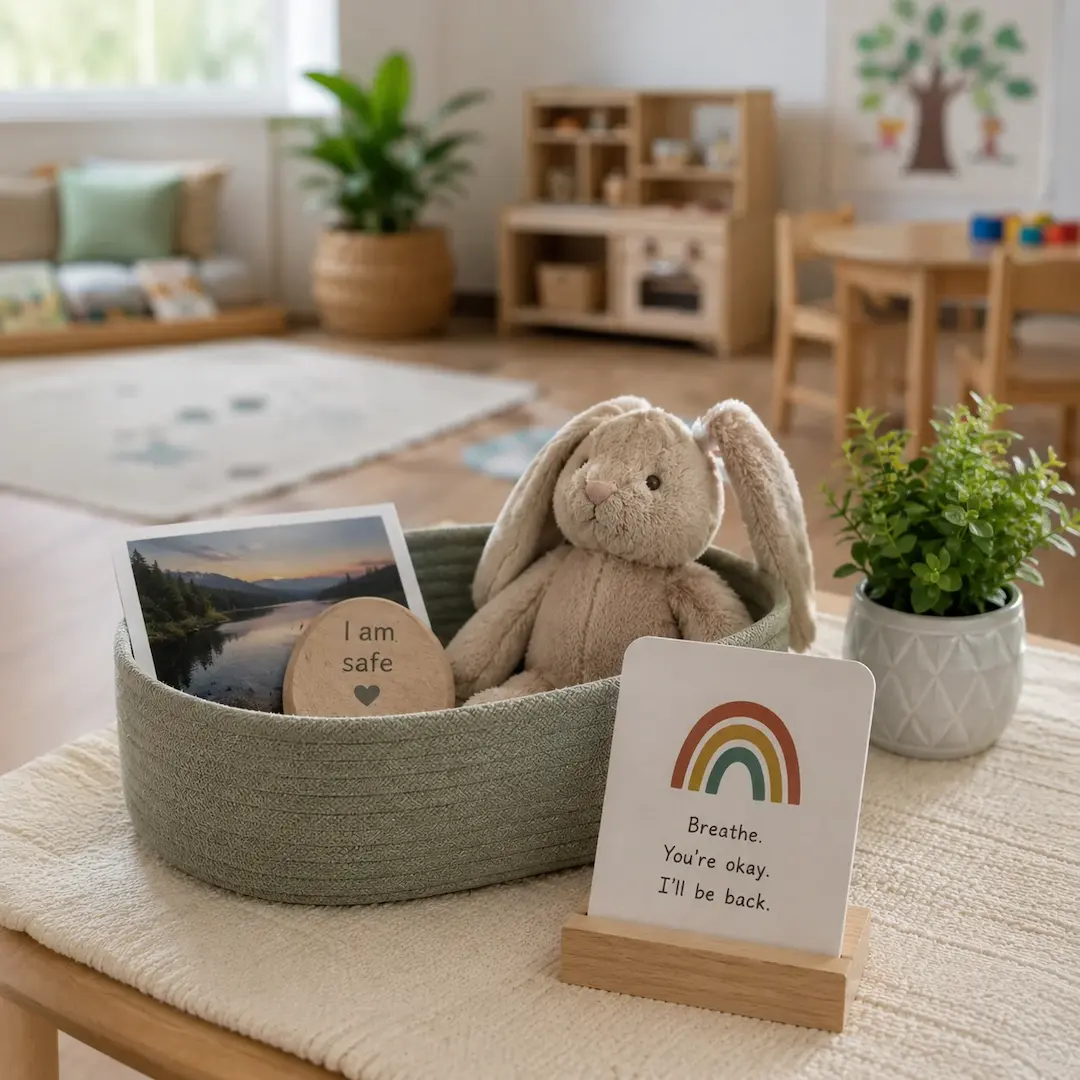
5. Introduce a comfort item
A familiar object, such as a small blanket, soft toy, or family photo, can help your child feel connected to home. Check with your childcare service about what comfort items are allowed and how they are used during the day.
Tips for easier drop-offs
Drop-off is often the hardest moment, but a clear and consistent goodbye routine can make it less distressing over time.
Keep goodbyes short and calm
It is tempting to stay longer when your child is upset. Sometimes that helps, but often it prolongs the distress. A confident, loving goodbye usually works best.
You might:
- greet the educator together
- help your child begin one activity
- give a hug and say when you will return
- leave without sneaking away
Saying goodbye matters. Leaving without telling your child can damage trust and make future separations harder.
Be consistent
Try not to change your routine every day. Predictability helps children feel safer. If one parent does drop-off differently from the other, it can confuse the process.
Stay reassuring, not uncertain
Children notice when adults seem anxious, guilty, or unsure. You do not need to pretend everything is easy, but it helps to project calm confidence. A simple “You’re safe, your educator is here, and I’ll see you this afternoon” can be very powerful.
Let educators support the handover
Experienced educators know how to guide children through difficult transitions. Trusting them to step in with comfort, distraction, and reassurance can help your child begin forming secure relationships in the setting.
The Australian Government’s early childhood resources through the StartingBlocks family guide offer helpful information for families choosing and settling into early learning.
How educators support children through separation anxiety
A strong childcare team does much more than supervise. Educators help children feel seen, safe, and emotionally supported during one of their biggest early transitions.
Effective support often includes:
- building a secure connection with the child
- learning the child’s interests, routines, and comfort needs
- using warm, responsive communication
- creating predictable daily rhythms
- offering soothing strategies at drop-off
- keeping families informed about progress
When children trust the adults caring for them, they are more likely to settle, explore, and engage. This is one reason continuity of care and strong parent-educator communication matter so much.
At Children’s Choice, supportive relationships are at the heart of helping children move from distress to confidence. A familiar face, gentle reassurance, and a calm environment can turn a difficult morning into a positive day.
What not to do
Parents often try their best in stressful moments, but some common habits can make separation anxiety worse.
Try to avoid:
- sneaking out without saying goodbye
- making promises you cannot keep
- returning repeatedly after you have already said goodbye
- showing anger or frustration at your child’s tears
- labelling your child as “too clingy” or “too sensitive”
- comparing them to siblings or other children
It also helps not to overload your child with rewards for “being brave”. Encouragement is useful, but the main goal is helping them feel safe, not making them feel they must hide their emotions.
When separation anxiety may need extra support
For many children, separation anxiety improves with time, routine, and responsive care. But there are times when extra guidance is a good idea.
You may want to speak with your GP or child health professional if your child:
- remains highly distressed for a long period
- struggles to settle even after several weeks
- has changes in eating, sleep, or behaviour that do not ease
- seems fearful in many settings, not only childcare
- complains often of physical symptoms linked to anxiety
- stops enjoying usual play or activities
The Australian Government’s pregnancy, birth and baby service provides trusted support for parents and carers, including information about child development and family wellbeing. For broader mental health support for young people and families, Head to Health is another useful government resource.
Supporting yourself as a parent
It is not only children who find this stage hard. Many parents feel emotional after leaving a crying child at childcare. You may question your decision, worry about their wellbeing, or feel torn between work and family responsibilities.
These feelings are common. They do not mean you are doing the wrong thing.
A few simple strategies can help:
- ask educators for updates during the settling-in period
- focus on small signs of progress
- keep communication open with the centre
- allow time for adjustment rather than expecting instant ease
- be kind to yourself during the process
Often, children settle faster than parents expect. A child who cries at the gate may be happily painting, building, or joining group time within minutes.
Building confidence over time
The goal is not to eliminate all tears straight away. The goal is to help your child learn that childcare is a safe place, that trusted adults will care for them, and that you will always return.
Confidence grows step by step. One calm goodbye, one comforting educator, one positive morning, and one successful routine at a time. Over the weeks, most children begin to enter more easily, connect with peers, and engage in the day with greater confidence.
That progress is worth celebrating.
Final thoughts
Separation anxiety at childcare can be emotional, exhausting, and at times heartbreaking. But it is also a common and manageable part of early childhood. With patience, steady routines, and a strong partnership between families and educators, children can move through this stage and thrive.
Children’s Choice believes that every child deserves a gentle, supported transition into care. When children feel secure, they are free to explore, learn, and grow. And when parents feel informed and supported, the whole experience becomes easier for everyone.
If your child is struggling with separation anxiety, know that you are not alone. With the right support, this difficult stage can become the start of a confident and positive childcare journey.
FAQs
What causes separation anxiety in children?
Separation anxiety is often a normal part of childhood development. It typically occurs when children are adjusting to being apart from their caregivers and are learning to feel safe and secure in new environments.
At what age does separation anxiety typically occur?
Separation anxiety most commonly appears between the ages of six months and three years, but it can occur at other ages depending on a child’s developmental stage and experiences.
How can I prepare my child to start childcare?
You can prepare your child by introducing them to the new environment gradually, visiting the childcare center together, and talking positively about the experience. Establishing consistent routines at home can also help.
How can I help my child feel more secure during drop-off?
Create a goodbye routine, such as a hug and a reassuring statement that you’ll be back later. Keep goodbyes brief and consistent to help your child adjust more easily.
What if my child cries a lot when I leave?
It’s normal for children to cry at drop-off as they adjust. Trust that childcare providers are skilled in comforting children, and give your child time to adapt to the new routine.
How long does separation anxiety typically last?
The duration of separation anxiety varies for each child. With consistent routines, supportive caregivers, and patience, most children overcome their anxiety within a few weeks.
Are certain strategies particularly effective for easing separation anxiety?
Strategies such as maintaining a calm demeanor, using transitional objects (like a favorite stuffed toy), and openly communicating with childcare providers can make the transition smoother for your child.