Seeing your little one frightened can be heartbreaking for any parent. Whether it is a sudden fear of the dark, anxiety about dogs, or nervousness about starting school, navigating these emotions is a normal part of growing up. While we cannot protect our children from every worry, we can give them the tools to manage them.
At Children’s Choice, we understand that emotional resilience is just as important as cognitive development. As a provider of safe, nurturing childcare and play-based early learning that supports children’s development and school readiness, we see firsthand how children navigate their big feelings. This guide will explore practical, gentle ways to help your child find their courage and understand the difference between healthy caution and overwhelming anxiety.
Understanding Childhood Fears
It is helpful to remember that fear serves a purpose. It is our body’s natural alarm system, designed to keep us safe from danger. However, children often struggle to distinguish between a real threat and something that simply feels scary.
It is also important to distinguish between fear and anxiety. Fear is usually a reaction to something immediate,like a loud clap of thunder or a barking dog. Anxiety, on the other hand, is the anticipation of something scary. It is the worry a child feels about going to a birthday party because there might be a clown, or the tummy ache they get on Sunday night thinking about school on Monday.
Fears tend to change as children grow. Infants often fear loud noises or separation from parents. Toddlers might fear imaginary creatures or the dark. As children reach school age, their fears often become more grounded in reality, such as fear of injury, storms, or social situations.
Identifying Your Child’s Fears
Sometimes, children cannot find the words to tell us what is wrong. You might notice your child becoming clingy, having trouble sleeping, or acting out aggressively. These can all be signs of underlying fear.
To get to the root of the issue, try asking open-ended questions when your child is calm. Instead of asking, “Are you scared of the dark?”, you might ask, “What do you think happens in your room when the lights go out?”
For younger children who may not have the vocabulary to explain their feelings, look for non-verbal cues. Clenched fists, covering their eyes, or hiding behind your legs are clear signals. Somatization,where emotional distress shows up as physical symptoms like headaches or stomach aches,is also common in young children.
Practical Strategies for Helping Children Overcome Fears
Helping a child navigate fear requires patience and empathy. Here are several strategies to support your child through these challenging moments.
Validate Their Feelings
The most important step is validation. Avoid dismissing their fear with phrases like, “Don’t be silly, there’s nothing there.” To a child, the fear is very real. Instead, say, “I can see that you are feeling scared right now, and that is okay. I am here with you.” This builds trust and helps them feel safe enough to calm down.
Teach Relaxation Techniques
When a child is frightened, their body enters a “fight or flight” mode. Teaching them simple relaxation techniques can help them regain control.
- Deep Breathing: Ask them to pretend they are smelling a flower (deep breath in) and then blowing out a candle (slow breath out).
- Muscle Relaxation: Have them squeeze their hands into tight fists like lemons, and then drop them open to “release the juice.”
Encourage Positive Affirmations
Help your child develop an internal voice that is supportive rather than critical. Phrases like “I am brave,” “I am safe,” and “I can handle this” can be powerful tools. Practice these when your child is calm so they can access them when they are anxious.
Create Predictable Routines
Routine provides a sense of security. When children know what to expect, the world feels less chaotic and frightening. A consistent bedtime routine, for example, can significantly reduce anxiety about the dark or separation at night.
Explain Real vs. Imaginary
For younger children, the line between reality and fantasy is blurry. Gently explaining how things work can demystify scary concepts. If they are afraid of monsters, you might look under the bed together,not to “check” for monsters, which validates they might exist, but to show that the space is just for dust bunnies and lost socks.
The Role of Independence and Responsibility
It is a natural instinct to want to shield our children from everything that scares them. However, overprotection can inadvertently feed anxiety. If we always step in to fix the problem, the child learns that they are not capable of handling it themselves.
Encouraging age-appropriate independence helps build confidence. This might be as simple as letting a toddler choose their own outfit or allowing a preschooler to order their own food at a cafe. When children successfully handle small responsibilities, they build a “bank” of evidence that they are capable and strong. This confidence acts as a buffer against future fears.
Addressing Irrational Fears
When a child has a fear that seems completely irrational to an adult,like a fear of volcanoes in a place where they don’t exist,it can be frustrating.
In these moments, acknowledge the feeling but emphasize the truth. You might say, “It sounds really scary to think about volcanoes. The truth is, there are no volcanoes anywhere near our home, so we are safe.” Grounding children in a sense of security involves being a calm, steady presence. If you are calm, it signals to them that there is no immediate danger.
Children’s Choice: Creating a Safe Space
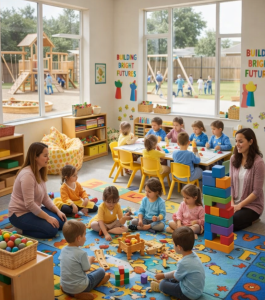
At Children’s Choice, we integrate these emotional support strategies into our daily care. We believe that a nurturing environment is the foundation for all learning. Our educators are trained to recognise signs of anxiety and respond with warmth and understanding.
We utilize a play-based learning approach, which allows children to process emotions in a safe way. Through role-play, drawing, and storytelling, children can act out fears and gain mastery over them. Whether it is playing “doctors” to reduce fear of a check-up or reading stories about brave characters, we support every aspect of your child’s emotional growth.
Finding the Right Support for Your Child
Choosing the right environment for your child is crucial for their emotional confidence. When parents look for the Best childcare centre Raceview or the Best childcare centre Heritage Park, they are often looking for more than just supervision; they are looking for partners in raising resilient children.
We are proud to be considered a leading choice for families in these areas. Our tailored programs focus on school readiness, not just academically, but emotionally. By fostering independence and providing a secure base, we help children step into the world with confidence.
Nurturing Courage
Helping children overcome fears is not about removing all obstacles from their path, but rather walking beside them as they learn to navigate the world. With patience, understanding, and the right strategies, we can teach our children that while fear is a part of life, it does not have to control them.
At Children’s Choice, we are dedicated to supporting children’s development and helping them grow into brave, resilient learners. By working together, we can ensure your child feels safe, supported, and ready to take on new adventures.
FAQs
What are common fears in toddlers, and how can I help?
Toddlers often fear separation from parents, loud noises (like thunder or vacuums), and imaginary creatures. You can help by maintaining calm, consistent routines, using comfort objects like a favourite teddy, and offering plenty of reassurance and cuddles during scary moments.
How can I differentiate between normal fear and anxiety?
Normal fear is usually a temporary reaction to a specific trigger, like a spider. Anxiety is more persistent and involves worry about future events. If the fear interferes with daily life,like sleeping, eating, or going to school,it may be anxiety rather than simple fear.
What role does routine play in managing childhood fears?
Routine creates predictability, which signals safety to a child’s brain. Knowing exactly what comes next reduces the “unknown,” which is a major source of anxiety. Consistent meal times, drop-off rituals, and bedtimes provide a secure framework for the day.
How can Children’s Choice help my child overcome fears?
Children’s Choice provides a supportive environment where feelings are validated. Our educators use play-based learning to help children express and process emotions. By building strong relationships with carers and encouraging age-appropriate independence, we help children build the confidence to face their worries.
When should I seek professional help for my child’s fears?
If your child’s fears are intense, last for a long time, or stop them from participating in normal activities like playing with friends or going to childcare, it may be time to speak to a professional. Your GP or a child psychologist can offer specific strategies.