Have you ever watched your little one transform into a doctor, a superhero, or a chef right in the middle of your living room? It is a delightful sight, but these moments of make-believe are far more than just cute photo opportunities. They are the building blocks of your child’s understanding of the world. Through these imaginative scenarios, children process their observations, experiment with social roles, and build the confidence they need to navigate real-life situations.
For many parents, it can be surprising to learn just how critical this “pretend time” is for cognitive and emotional growth. It is not just about fun; it is about making sense of complex concepts like empathy, negotiation, and problem-solving in a safe, low-stakes environment. When a child pretends to be a parent feeding a doll, they are practicing care and responsibility. When they play ‘shop’, they are exploring transaction and communication.
At Children’s Choice, we believe that play is the serious business of childhood. Children’s Choice provides safe, nurturing childcare and play-based early learning that supports children’s development and school readiness. We see role play as a vital tool in this journey, helping young minds expand their horizons while feeling secure and supported. By understanding the mechanics of role play, you can better support this essential developmental stage at home.
What is Role Play?
Role play, often called imaginative or dramatic play, is essentially when children act out scenarios or take on specific characters. Unlike structured games with strict rules, role play is open-ended and driven entirely by a child’s imagination. It differs from other forms of play,like building with blocks or doing puzzles,because it requires the child to step outside of themselves and view the world from a different perspective.
Typically, you will start to see the seeds of role play emerge around the age of two or three. A toddler might pick up a banana and pretend it is a phone, or stir a spoon in an empty bowl and offer you a “taste.” As they grow older, these scenarios become more complex, involving elaborate storylines, costumes, and cooperative play with peers. This evolution marks a significant leap in cognitive development, showing that the child is capable of symbolic thinking.
The Incredible Benefits of Role Play
While it looks like simple fun, role play works hard behind the scenes to develop essential life skills. Here is how this form of play nurtures your child’s growth.
Creative Thinking
When children engage in role play, they are the writers, directors, and actors of their own stories. They must invent scenarios, solve plot holes, and improvise dialogue. This constant exercise of the imagination strengthens neural pathways related to creativity and innovation, skills that are crucial for academic success later in life.
World Understanding
Children are constantly observing the world around them. Role play allows them to process these observations. By acting out a visit to the dentist or a day at school, they make sense of these experiences, reducing anxiety about the unknown and solidifying their understanding of how society functions.
Cultural Connection
Through dressing up and acting out different traditions or family roles, children connect with their own culture and learn to appreciate others. Whether they are pretending to cook a traditional family meal or celebrating a festival through play, they are deepening their sense of identity and belonging.
Communication Skills
Pretend play is a language powerhouse. Children often use words and phrases they have heard adults use, practising vocabulary in context. When playing with others, they must articulate their ideas, listen to their peers, and negotiate roles,”I’ll be the patient, and you be the doctor”,which requires clear, effective communication.
Social Skills
Cooperative role play is one of the best ways for children to learn social dynamics. They learn to take turns, share resources (like the best costume hat), and collaborate on a shared narrative. It teaches them that to keep the fun going, they must work together and respect the contributions of others.
Confidence and Empathy
Stepping into someone else’s shoes promotes empathy. When a child pretends to be a crying baby or a grumpy bear, they explore different emotions and perspectives. Furthermore, successfully navigating a pretend scenario builds self-esteem. A child who “fixes” a toy car feels a real sense of accomplishment and capability.
Mental Wellbeing
Role play provides a safe outlet for expressing feelings. A child who is worried about starting school might act out a classroom scene with their teddy bears, allowing them to work through their fears. This emotional regulation is key to maintaining good mental wellbeing and resilience.
Children’s Choice and Role Play
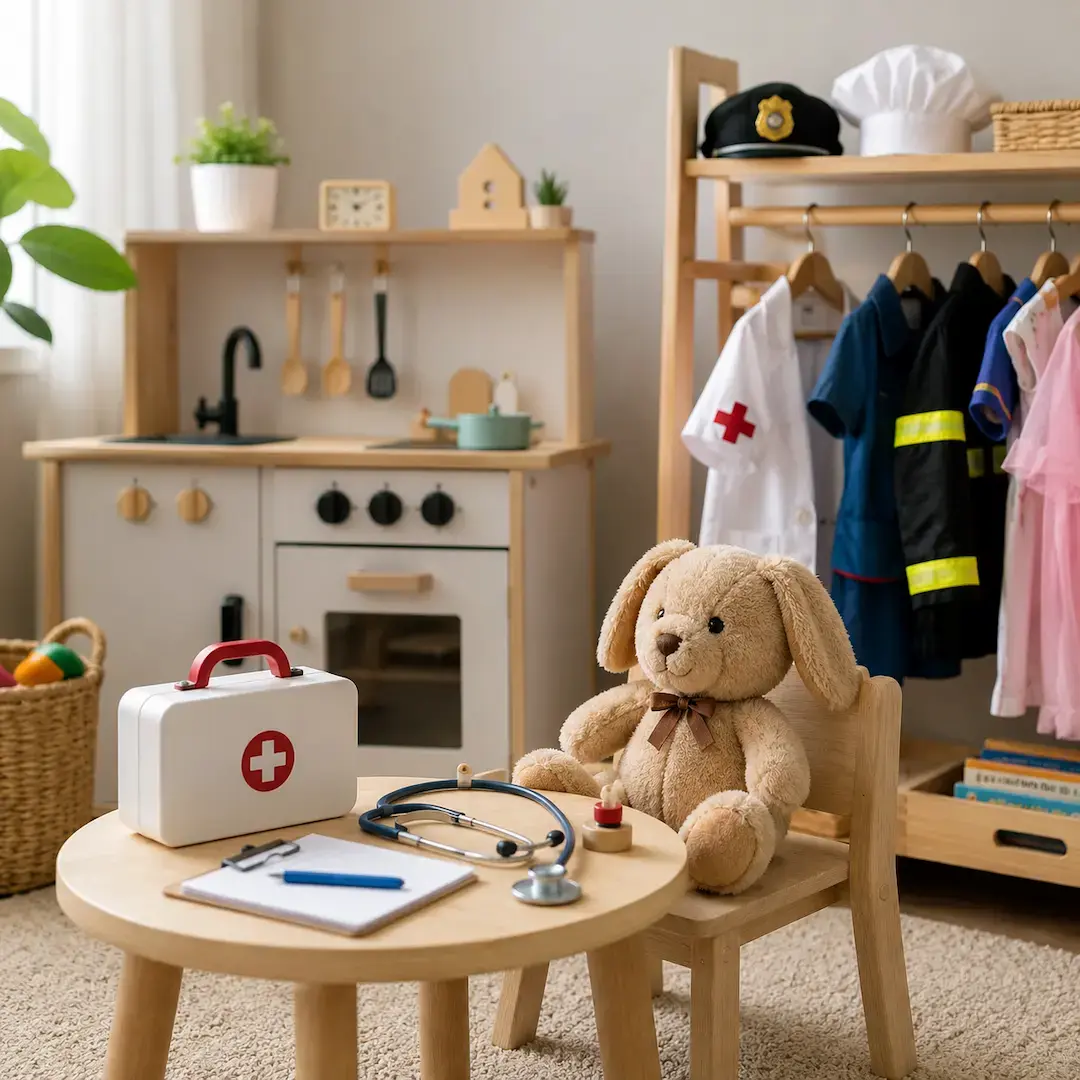
At Children’s Choice, we integrate role play into the very fabric of our curriculum because we know it supports holistic development. Our educators create inviting spaces filled with open-ended resources, like dress-up clothes, kitchen sets, and dolls, that encourage children to dive into their imaginations. We do not just provide the toys; we scaffold the learning by asking open-ended questions that deepen the play, such as “What do you think the patient needs to feel better?” or “Where is the bus travelling to today?”
In our centres, you might see a corner transformed into a veterinary clinic, a post office, or a space station. These setups are designed to align with the children’s current interests. For example, if a child at our Raceview centre is fascinated by construction, we might set up a ‘building site’ with hard hats and blueprints. This responsiveness ensures engagement is high and learning is relevant. By observing these interactions, our educators can assess social skills and language development in a natural, stress-free environment.
Creating Role Play Opportunities at Home
You do not need an elaborate playroom to foster imagination at home. Simple changes to your environment and routine can spark hours of creative play.
Designate an Artistic Space at Home
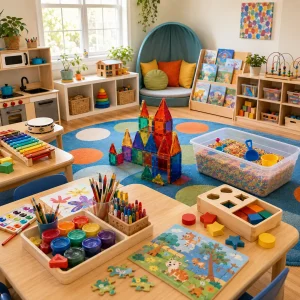
Create a “yes” space where creativity is encouraged and mess is manageable. This does not have to be a whole room; a corner of the lounge or a specific rug can work wonders. Stock a basket with “loose parts”,scarves, old hats, cardboard boxes, and fabric scraps. Unlike specific costumes (like a pre-made superhero suit), these open-ended items can be anything a child wants them to be. A cardboard box can become a castle, a car, or a cave, challenging your child to use their creative thinking to fill in the blanks.
Theme for Family Art Session
Sometimes, children need a little nudge to get started. You can encourage role play through art by setting a theme for a family crafting session. For instance, if you decide on an “Under the Sea” theme, you can make paper plate fish or cardboard masks together. Once the crafts are done, use them as props to act out an underwater adventure. This connects artistic expression with dramatic play, showing your child that they have the power to create the worlds they want to explore.
Nurturing Your Child’s Future Through Play
The magic of role play extends far beyond the early years. The skills children learn when they are pretending,negotiation, empathy, problem-solving, and creative thinking,are the very skills they will rely on as adults. By encouraging this natural form of learning, you are giving them tools for life.
At Children’s Choice, we are committed to providing a rich, play-based curriculum that respects each child’s pace and interests. Children’s Choice provides safe, nurturing childcare and play-based early learning that supports children’s development and school readiness. Whether at home or in our care, championing your child’s imagination is one of the most supportive things you can do for their future.
Frequently Asked Questions About Role Play
How does role play help with my child’s development?
Role play is a powerhouse for growth. It enhances creative thinking by allowing kids to invent scenarios, builds world understanding as they act out real-life events, and significantly boosts communication skills as they articulate their narratives and negotiate with peers during play.
At what age should my child start role-playing?
While every child is unique, most children begin engaging in simple pretend play between 2 and 3 years old. This might start with mimicking everyday actions, like talking on a toy phone, and evolve into more complex, story-driven play as they approach preschool age.
What sets a leading childcare centre in Heritage Park apart regarding play?
A leading childcare centre in Heritage Park, like Children’s Choice, distinguishes itself by prioritizing play-based learning. We provide structured yet flexible environments where role play is used intentionally to develop school readiness, social skills, and emotional resilience in a safe, nurturing setting.
How can I create a stimulating role-playing environment at home?
You can easily foster this at home by designating a specific creative space filled with open-ended props like boxes and fabric. Additionally, hosting a themed family art session allows you to create props together, which can then be used to spark new imaginative stories and adventures.
How do I find the best childcare centre in Ipswich for my family?
When looking for the best childcare centre Ipswich has to offer, visit locations to see if the environment feels nurturing. Children’s Choice has centres in Raceview and Heritage Park that focus on safe, developmental play, making them excellent options for families seeking quality early learning.