Watching a young child clap to a beat, sway to a lullaby, or light up during a familiar song may seem like a simple moment of fun. In reality, it is much more than that. During the early years, the brain develops at an extraordinary pace, forming the neural connections that support learning, communication, movement, and emotional wellbeing. Music helps strengthen many of those connections at once.
This blog is for parents and educators who want to understand how everyday musical experiences support healthy development. You will learn how music helps build language, memory, emotional regulation, and social skills, plus simple ways to bring more music into daily routines. Whether it is singing during playtime or using songs to guide transitions, small moments of music can have a lasting impact.
Engaging Multiple Areas of the Growing Brain
When children listen to music, they are not only hearing sounds. Their brains are processing rhythm, melody, words, movement, and emotion all at the same time. That is one reason music is such a powerful learning tool in early childhood.
Different parts of the brain respond to different elements of music. The auditory cortex helps children process sound. The motor cortex becomes active when they clap, bounce, or dance. The prefrontal cortex supports attention, planning, and self-control. At the same time, the limbic system responds to the emotional quality of music, while language areas begin making sense of lyrics and repeated sounds.
This whole-brain activity matters because early learning depends on strong connections between brain regions. When children sing actions in a song, copy a rhythm, or listen carefully for a familiar line, they are practicing skills that support later learning in many areas.
Why whole-brain activation matters
A child may look like they are simply enjoying a catchy tune, but their brain is doing a lot of important work. Music encourages children to:zeor
- listen closely
- recognise patterns
- coordinate movement
- remember sequences
- respond to emotional cues
These are all foundational skills for school readiness. In other words, music is not an extra. It is one of the many playful ways young children build the mental framework they will use for reading, problem-solving, and social interaction.
How Music Enhances Language and Literacy Skills
Many parents know the experience of hearing the same nursery rhyme over and over again. While repetition can feel endless, it is actually helping children build vital language skills.
Songs expose children to speech sounds in a clear and memorable way. Rhyme, rhythm, and repetition help them notice how words sound and how language is structured. This supports phonological awareness, which is an early literacy skill linked to later reading success. Children also pick up new vocabulary through songs, especially when music is paired with movement, pictures, or daily routines.
For example, a simple clean-up song teaches more than behavior. It also reinforces action words, sequencing, listening, and comprehension. Over time, children begin to predict words, fill in missing lines, and sing independently. These are early signs of growing language confidence.
Parents and educators looking for practical ways to support language development can explore early childhood resources from the Queensland Government.
Music makes language easier to remember
Music gives language a pattern. That pattern helps young children hold on to words and phrases more easily than spoken language alone. This is why children often remember lyrics long before they can read text on a page.
Songs also support:
- pronunciation through repeated sounds
- vocabulary growth through everyday themes
- listening skills through rhythm and pacing
- storytelling through sequence and repetition
For children learning more than one language, music can be especially helpful. Familiar tunes, repeated phrases, and gestures can make new words feel less overwhelming and more enjoyable.
Building Memory and Cognitive Problem-Solving
It is common for children to remember every line of a favorite song, even if they cannot yet explain what all the words mean. That memory skill is not accidental. Music supports memory by combining repetition, structure, and emotion.
When children hear the same melody or rhyme again and again, the brain strengthens its ability to store and retrieve information. This supports working memory, which helps children follow instructions, complete tasks, and hold ideas in mind while learning something new.
Music also introduces children to patterns. Beats, tempo, and repeated sequences help them notice order and predict what comes next. Those same skills are important in math and scientific thinking.
The link between music and early cognitive development
Pattern recognition is a key part of problem-solving. When children tap a rhythm, match sounds, or repeat a sequence, they are building the ability to compare, predict, and organise information. These are early cognitive skills that support later academic learning.
Information about developmental progress in young children can also be found through the Australian Government’s Early Childhood and education resources.
Practical examples of music supporting thinking skills
Here are a few simple examples:
- Call-and-response songs help children listen, remember, and respond in order.
- Action songs build sequencing as children connect words with movements.
- Instrument play encourages cause and effect learning.
- Rhythm games strengthen pattern recognition and sustained attention.
These experiences may look playful on the surface, but they help children practice the cognitive skills they will use in more formal learning later on.
Supporting Emotional Regulation and Wellbeing
Young children often feel big emotions before they have the words to explain them. Music can help bridge that gap. A gentle song can calm an overwhelmed child. An upbeat tune can lift energy during a slow part of the day. A familiar melody can make transitions feel safer and more predictable.
This is one reason music is often used in early learning environments. Songs help children settle, focus, and feel secure. They also give children a safe way to express feelings through movement, sound, and rhythm.
For example, a calm rest-time song can signal that it is time to slow down. A tidy-up song can reduce stress around transitions because the routine feels familiar. Music creates cues that children can trust.
Why emotional support matters in early childhood
Emotional regulation does not appear overnight. It develops slowly through responsive relationships and repeated experiences. Music can support that process by helping children:
- identify mood through tone and tempo
- express emotion without needing many words
- self-soothe during difficult moments
- build a sense of safety through routine
Mental health and wellbeing guidance for children and families is also available from the Australian Government Department of Health and Aged Care.
At Children’s Choice, music can be part of a calm and nurturing environment where children feel supported through everyday routines, transitions, and social experiences.
Fostering Social Skills and Physical Coordination
Music often brings children together in natural and joyful ways. Singing in a group, taking turns with instruments, or dancing with others all create opportunities for connection. These moments help children learn how to interact, cooperate, and share attention.
Group music activities support important social skills such as turn-taking, listening, imitation, and teamwork. Children begin to understand that they are part of a shared experience. They wait for their turn, follow cues, and respond to others. These are valuable skills for both friendships and classroom learning.
Music also supports physical development. Clapping, marching, spinning, or shaking an instrument helps children strengthen coordination and body awareness. Fine motor skills develop when children grasp small instruments or use finger plays. Gross motor skills improve through larger movements such as jumping, swaying, and balancing.
Collaborative music play builds confidence
When children succeed in group musical activities, they often feel a strong sense of belonging. That confidence can carry over into other areas of development, including communication and participation in group learning.
Guidance on quality early childhood practice and child development can be explored through ACECQA, the Australian Children’s Education and Care Quality Authority.
Social and physical benefits of music in action
Music can support:
- cooperation during group singing
- turn-taking during instrument play
- coordination through movement games
- confidence through performance and participation
- stronger relationships with peers and educators
These outcomes matter because children learn best when they feel connected, capable, and engaged.
Simple Ways to Bring Music Into Daily Routines
Parents do not need formal music training to use music well at home. What matters most is consistency, warmth, and participation. In fact, simple songs sung regularly can be more meaningful than polished performances.
Music works best when it becomes part of normal routines. This helps children connect sound with daily activities and expectations.
Easy ways to use music at home
Try a few of these ideas:
- sing a good morning song to start the day
- use a hand-washing song to make routines easier
- play a calm tune before naps or bedtime
- create a pack-away song for toys and books
- clap simple rhythms and invite your child to copy them
- make homemade instruments from containers, rice, or wooden spoons
These activities are inexpensive, simple, and effective. They also create warm shared moments, which are just as valuable as the developmental benefits.
What if you are not musical?
This is a common concern, but children do not need perfect singing or expert rhythm. They need connection. Your voice, your presence, and your willingness to join in are what matter most.
If you feel unsure, start small. Pick one song for one routine. Repeat it each day. Over time, your child will come to recognise the pattern and respond to it. That sense of familiarity is part of what makes music so helpful.
At Children’s Choice, music and movement can be woven into play-based learning in ways that help children build confidence, communication skills, and school readiness. Families can also borrow these simple ideas and use them at home.
Common Mistakes to Avoid When Using Music for Learning
Music is powerful, but a few common mistakes can make it less helpful than it could be.
Relying only on background noise
Constant background music can become distracting. Children benefit more from intentional musical moments where they can listen, respond, and engage.
Choosing music that is too complex
Young children do best with simple, repetitive songs. Clear rhythms and familiar words are easier to follow and remember.
Using music only for entertainment
Music can absolutely be fun, but it also supports learning, regulation, and routine. Try to use it in purposeful ways throughout the day.
Forgetting the child’s cues
Not every child responds to music in the same way. Some love lively songs. Others prefer quiet, soothing melodies. Pay attention to how your child reacts and adjust as needed.
Quick Recap: How Music Supports Brain Development
Music supports early childhood development in many connected ways. It helps children build strong foundations for learning while also making daily life more joyful.
Here is a quick summary:
- Music activates multiple parts of the brain at once.
- Songs support language, vocabulary, and early literacy.
- Repetition and rhythm strengthen memory and thinking skills.
- Music helps children regulate emotions and feel secure.
- Shared musical experiences build social skills and coordination.
- Simple daily routines with music can make a meaningful difference.
Conclusion
Music is not just a fun activity for young children. It is a practical and powerful way to support brain development, emotional wellbeing, communication, and social growth during the years that matter most. Small musical moments, repeated over time, can help children build skills that last well beyond early childhood.
If you want to see how a nurturing, play-based environment supports your child’s development through meaningful everyday experiences, book a tour with Children’s Choice.
FAQs
How does music impact brain development in young children?
Music stimulates multiple areas of the brain, including those responsible for memory, motor coordination, and auditory processing. By engaging with music, children strengthen neural connections and develop critical cognitive skills.
At what age should children start engaging with music?
Children can benefit from music as early as infancy. Singing, rhythmic patterns, and exposure to melodies can support early brain development and sensory processing, even for newborns.
What types of musical activities are best for early childhood?
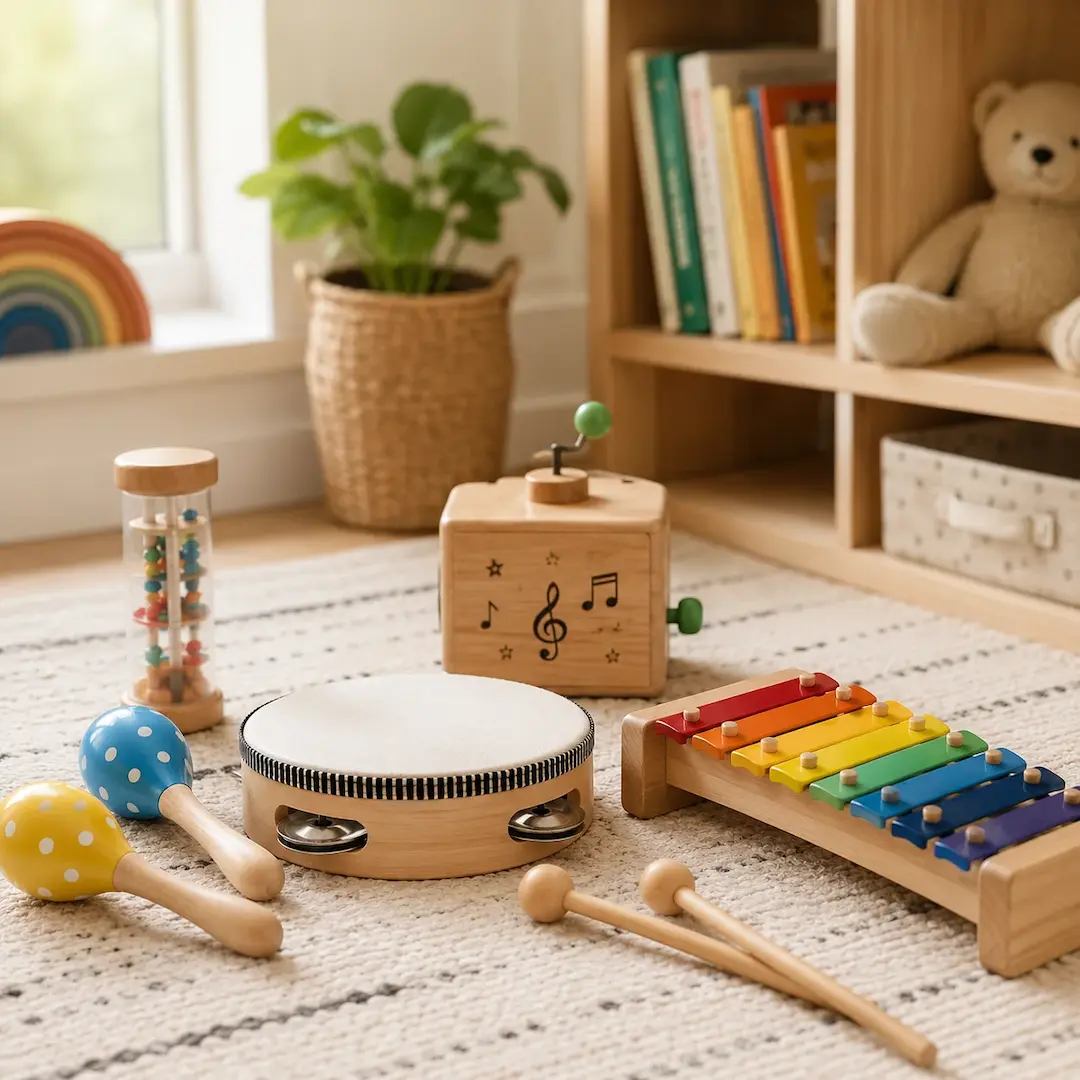
Simple activities like singing, clapping, dancing to rhythms, and playing with basic instruments like shakers or tambourines provide excellent opportunities for young children to engage with music and boost their development.
How does music support language development in children?
Music helps children recognise sounds and patterns, which are foundational skills for language acquisition. Singing songs with repetitive lyrics can also expand vocabulary and improve pronunciation.
Can music help with social skills?
Yes, participating in group musical activities fosters teamwork, turn-taking, and communication, helping children develop essential social skills while having fun.
Does exposure to music have emotional benefits for children?
Music can provide a soothing effect, helping children regulate their emotions and develop a sense of calm. It also offers them a way to express themselves creatively and build
How much time should children spend engaging with music daily?
Even short, consistent interactions with music, such as 10-15 minutes a day, can have a significant positive impact on a child’s brain and emotional development. A mix of active participation and passive listening is ideal.