It can feel like technology is moving faster than ever. From smartphones to smart homes, digital tools are woven into the fabric of our daily lives. Naturally, many parents find themselves wondering where technology fits into their child’s early education. Is it a distraction, or is it a vital tool for the future?
The answer lies in balance and intention. When used thoughtfully, technology does not replace the hands-on play and human connection that are central to early childhood; instead, it enhances them. It opens new doors for creativity, problem-solving, and communication.
At Children’s Choice, we believe in a balanced approach. Our commitment to providing safe, nurturing childcare and play-based early learning supports children’s development and school readiness, and today, that includes the smart integration of digital tools. Let’s explore how technology is reshaping the preschool landscape in Australia and what that means for your little one.
The Growing Role of Technology in Early Childhood Education
Gone are the days when technology in the classroom simply meant a computer in the corner. Today, digital tools are integrated into the learning environment to support curiosity and exploration. Research indicates that the use of Artificial Intelligence (AI) and digital tools in education is growing rapidly, providing educators with new ways to understand and support each child’s unique journey.
However, in an early learning setting, technology looks very different from a high school or university. It is tactile, interactive, and social. It isn’t about children staring passively at screens; it is about children using tools to create, discover, and collaborate. Whether it is a digital microscope allowing a group of toddlers to examine a leaf up close or a simple coding game that teaches cause and effect, technology serves as a bridge between the physical world and new concepts.
Benefits of Technology in Preschool Education
When we look past the screens, we can see that technology offers remarkable benefits for young minds. It acts as a powerful assistant to educators, allowing them to tailor experiences to the needs of every child.
Personalized Learning Experiences
Every child learns at their own pace. Some children are visual learners, while others learn best by doing. Adaptive learning apps and programs can adjust to a child’s skill level, offering challenges that are just right for them. This helps build confidence, ensuring a child doesn’t feel overwhelmed or bored, but rather engaged and capable.
Enhanced Skill Development
Technology can turn abstract concepts into fun, engaging games.
- Literacy and Language: Interactive storybooks can read aloud, highlight words, and bring characters to life, helping to build vocabulary and comprehension.
- Math and Logic: Pattern recognition games and simple coding robots help children understand sequences and problem-solving long before they pick up a calculator.
- Creativity: Digital drawing pads and music-making apps allow children to experiment with sounds and colours in ways that complement traditional painting and instrument play.
Support for Diverse Needs
One of the most profound impacts of technology is inclusivity. For children with diverse learning needs or physical disabilities, assistive technology can be a game-changer. Voice-to-text tools, sensory-friendly apps, and communication devices ensure that every child can participate fully in the classroom community.
Integrating Technology Thoughtfully
The key to successful technology use in preschool is “thoughtful integration.” This means prioritizing active engagement over passive consumption.
Interactive vs. Passive Tech
We encourage activities where children are active participants. For example, using an interactive whiteboard to solve a group puzzle encourages teamwork and communication. This is vastly different from a child sitting alone watching a video. Digital storytelling allows children to be the authors of their own tales, boosting their narrative skills and imagination.
Balancing Screen Time with Hands-On Play
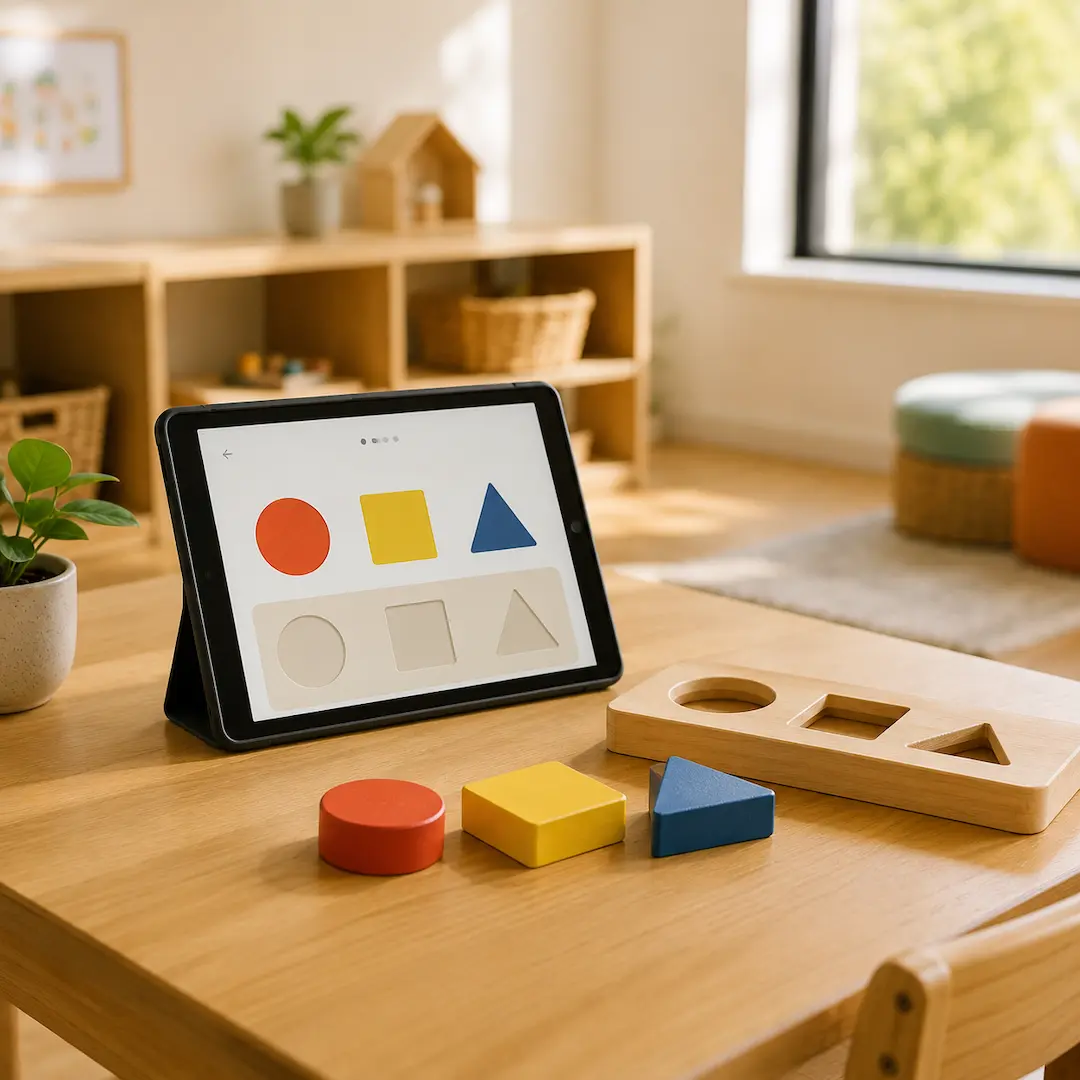
Technology should never replace the sandbox, the block corner, or the art easel. In a high-quality early learning environment, you will see a seamless flow between digital and physical play. A child might look up a type of dinosaur on a tablet and then go to the clay station to sculpt it. The digital tool supports the physical creation, rather than replacing it.
Addressing Concerns and Challenges
It is completely natural for parents to have concerns about screen time. We all want to ensure our children are growing up healthy and socially connected.
Establishing Healthy Boundaries
Australian guidelines regarding screen time are there to protect young eyes and developing brains. High-quality centres adhere strictly to these guidelines, ensuring that any screen use is short, purposeful, and educational. The focus remains on social interaction and physical movement.
Ensuring Equitable Access
Not every family has the same access to technology at home. Early learning centres play a crucial role in bridging this digital divide, giving all children the opportunity to develop digital literacy skills in a supportive environment.
Teacher Training and Support
Technology is only as good as the educator using it. Continuous professional development ensures that teachers feel confident guiding children through digital experiences, knowing when to step in and when to step back.
How Children’s Choice Integrates Technology for Better Learning
At Children’s Choice, we view technology as a tool to amplify our core mission: supporting your child’s development and school readiness. We don’t use technology to fill time; we use it to spark curiosity.
For families searching for the Best childcare centre raceview, you will find that our approach creates a rich, blended learning environment. We utilize secure platforms to document your child’s day, allowing us to share photos, videos, and learning milestones directly with you. This digital connection bridges the gap between home and care, helping you feel part of your child’s daily discoveries.
Our educators might use tablet-based apps to help children identify bird calls they hear in the playground, turning a simple outdoor moment into a science lesson. We might use simple coding activities to teach logic and sequencing,skills that are essential for future success in school.
If you are looking for the Best childcare centre Ipswich, it is important to choose a provider that understands the nuances of modern education. We ensure that our technology use always supports social and emotional growth, encouraging children to work together to solve digital challenges.
Preparing for a Digital Future, One Step at a Time
The world our children will inherit is digital. Early education is about preparing them for that world, not by rushing them, but by giving them the foundational skills they need to navigate it with confidence.
Technology in preschool offers a unique opportunity to teach digital citizenship, kindness, safety, and responsibility online, from a young age. By combining the best of traditional play-based learning with the advantages of modern tools, we can create an environment where children thrive. It is about expanding their horizons, one click, one swipe, and one muddy footprint at a time.
FAQs
What is the recommended screen time for preschoolers?
In Australia, health guidelines generally recommend no more than one hour of high-quality sedentary screen time per day for children aged 2 to 5 years. However, in early learning settings, technology is used interactively and for short bursts to support learning, rather than as passive entertainment.
How does Children’s Choice ensure technology doesn’t replace play?
At Children’s Choice, technology is a tool that supports play, not a replacement for it. We use digital resources to enhance hands-on activities,like researching an insect found in the garden,ensuring that physical movement, social interaction, and creative play remain the heart of our curriculum.
Does technology in preschool affect social skills?
When used correctly, technology actually boosts social skills! Collaborative tools, like multi-touch screens or coding games, require children to turn-take, negotiate, and solve problems together. Educators guide these interactions to ensure technology becomes a shared, social experience.
How does technology help with school readiness?
Digital tools help build foundational skills required for school, such as letter recognition, numeracy, and fine motor control. Furthermore, familiarity with basic technology helps children feel confident and capable when they enter a primary school classroom where digital boards and tablets are common.
Can I see what my child is learning through technology?
Yes. Many centres, including Children’s Choice, use secure apps to share updates with families. This allows you to see real-time examples of your child’s projects and progress, giving you a clearer window into their day and helping you continue the learning conversation at home.