Choosing the right childcare is one of the biggest decisions you will make as a parent. In Australia, the importance of early childhood education is widely recognised, not just for looking after children while parents work, but for building the foundations of lifelong learning. With so many options available, it is normal to feel a little overwhelmed by the different terminologies and teaching styles.
You may have heard friends discussing Montessori, while others swear by traditional or “classic” childcare centres. Both approaches aim to nurture and educate your little one, but they do so in different ways. At Children’s Choice, we understand that every family is unique. Children’s Choice provides safe, nurturing childcare and play-based early learning that supports children’s development and school readiness.
To help you navigate this important journey, we have broken down the key differences between Montessori and classic childcare. By understanding how each environment works, you can feel confident in finding the perfect fit for your child’s personality and needs.

What is Montessori Childcare?
The Montessori method was developed in the early 1900s by Dr. Maria Montessori, an Italian physician and educator. It is a distinct educational philosophy that views children as naturally eager for knowledge and capable of initiating learning in a supportive, thoughtfully prepared learning environment.
Key Principles of Montessori
The core of the Montessori approach is independence. In these centres, the belief is that children learn best when they are free to follow their own interests at their own pace. The focus is heavily placed on self-directed activity, hands-on learning, and collaborative play.
The Classroom and Educator
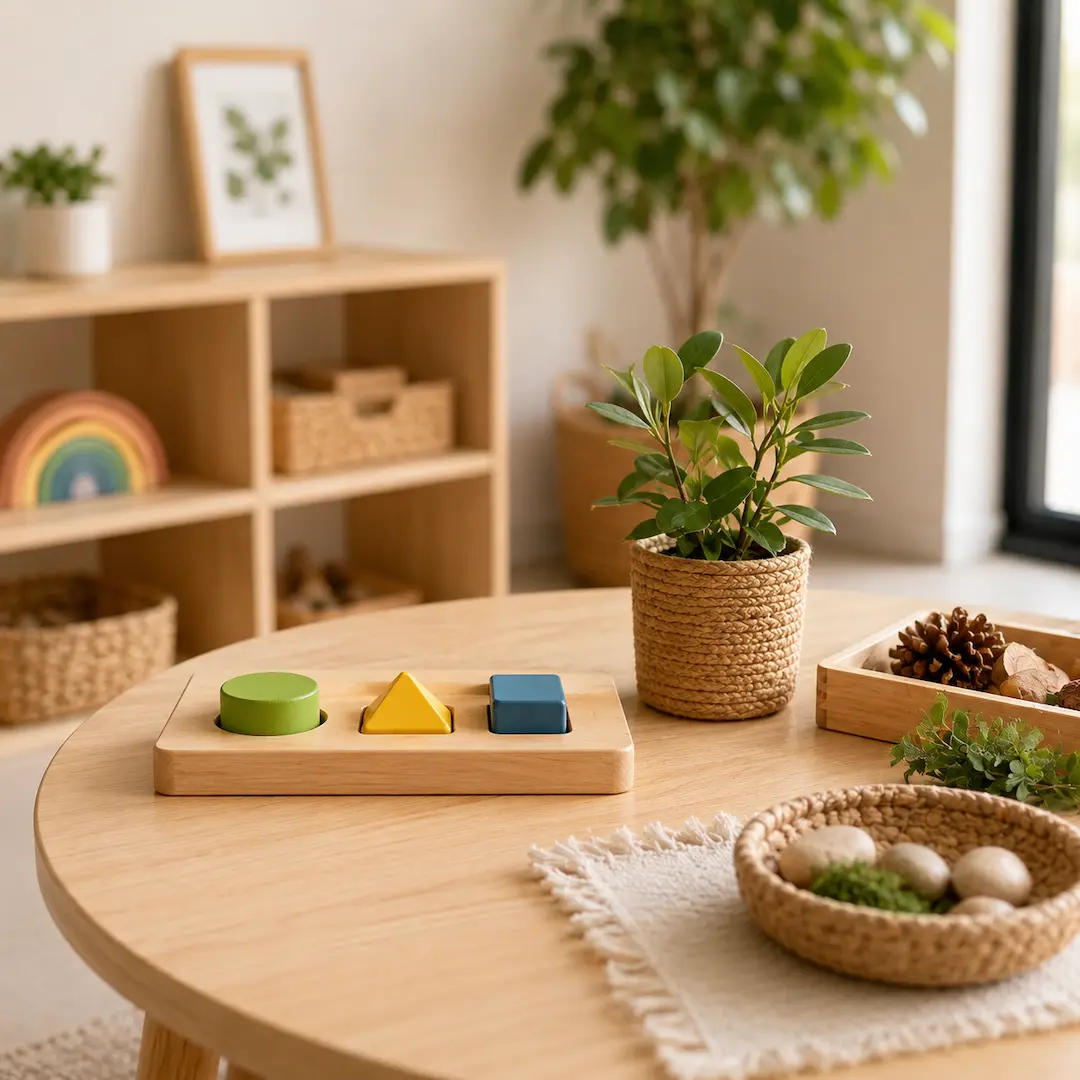
If you walk into a Montessori classroom, you will notice it looks quite different from a standard playroom. Everything is accessible to the children, placed on low shelves to encourage them to choose activities without needing adult assistance. The role of the educator here is not to “teach” in the traditional sense, but to guide. They observe the children and provide the right materials to stimulate their natural curiosity, stepping back to allow the child to learn through discovery.
What is Classic Childcare?
When we talk about “classic” or traditional childcare in Australia, we are referring to the model most families are familiar with. This approach generally aligns with the Early Years Learning Framework (EYLF), which emphasises belonging, being, and becoming. While it can vary from centre to centre, classic childcare typically combines structured routines with play-based learning.
The Environment and Structure
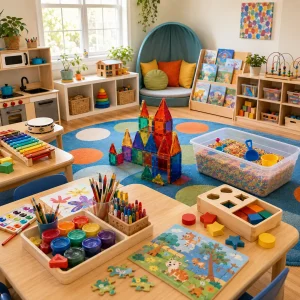
In a classic childcare setting, the environment is often vibrant, colourful, and filled with a variety of toys and resources designed to stimulate different senses. The day usually follows a predictable rhythm or routine, including set times for meals, naps, group stories, and outdoor play.
Children are typically grouped by age (e.g., nurseries for babies, toddler rooms, and kindergarten rooms). This structure allows educators to tailor activities specifically to the developmental milestones relevant to that age group, ensuring safe and age-appropriate challenges for every child.
Montessori vs. Classic Childcare: Key Differences
While both methods want the best for your child, the daily experience can feel quite different. Here are the main areas where they diverge:
Curriculum Approach
Montessori focuses on a child-led curriculum. A child might spend two hours deeply focused on a single puzzle or practical life task (like pouring water) without interruption.
Classic Childcare usually employs a teacher-guided curriculum mixed with free play. Educators plan themes or activities based on the children’s collective interests, encouraging the group to explore concepts like “sea life” or “colours” together.
Classroom Environment
Montessori classrooms often use mixed-age groups (e.g., ages 3 to 6 together). This encourages peer-to-peer learning, where older children help younger ones. The room is often quieter and more orderly.
Classic Childcare groups children by age. This allows for strong social bonds with peers at the same developmental stage. The environment is often buzzier, with more group interactions and collaborative play.
Teaching Style
Montessori educators act as facilitators. They are trained to observe and intervene only when necessary, fostering distinct independence.
Classic Childcare educators are more interactive. They often lead group times, sing songs, and actively participate in play to model social skills and language development.
Benefits of Montessori Education
For families who choose Montessori, the benefits are often centred around the development of self-sufficiency.
- Academic Skills: Because materials are self-correcting and focus on specific concepts, children often develop strong early literacy and numeracy skills.
- Social Maturity: The mixed-age environment can foster empathy, as older children learn to care for younger peers.
- Deep Focus: The uninterrupted work cycles allow children to develop excellent concentration skills and intrinsic motivation.
Benefits of Classic Childcare
Classic childcare remains the most popular choice for Australian families, and for good reason. It offers a balanced approach that mirrors the society children will grow up in.
- Socialisation: Group activities, shared meal times, and collaborative play are excellent for teaching children how to share, take turns, and navigate friendships.
- Routine and Stability: The consistent schedule provides a sense of security. Children know what to expect next, which helps reduce anxiety and builds confidence.
- Diverse Experiences: Classic centres often incorporate a wide range of activities, from messy art and music to physical sports and dramatic play, exposing children to many different ways of learning.
Is Montessori Right for My Child?
There is no “one size fits all” in education. Montessori might be a wonderful choice if your child thrives in a quieter environment and enjoys focusing on tasks for long periods. It suits children who are naturally independent and enjoy doing things “all by myself.” It encourages self-discipline and fosters a deep love of learning through solitary or small-group discovery.
Is Classic Childcare Right for My Child?
Classic childcare is often the ideal environment for children who thrive on social interaction and variety. If your child loves playing with others, enjoys music and movement, and finds comfort in a predictable daily routine, this environment will likely help them flourish. It is also excellent preparation for the structure of primary school, teaching children how to listen to group instructions and transition between activities.
Children’s Choice: Providing Quality Childcare
At Children’s Choice, we believe in taking the best elements of early childhood education to create a warm, welcoming environment for every child. We follow a play-based learning approach, which research shows is one of the most effective ways for young children to learn.
Children’s Choice provides safe, nurturing childcare and play-based early learning that supports children’s development and school readiness. Our educators are dedicated to building strong relationships with every family, ensuring that your child feels seen, heard, and valued. We offer the structure and social benefits of classic childcare while ensuring that every child has the freedom to explore their own interests.
Choosing the Best Childcare in Ipswich
If you are looking for high-quality care in Queensland, location and reputation matter. For families in the Ipswich region, finding a centre that feels like a “home away from home” is essential.
If you are searching for the Best childcare centre Raceview has to offer, it is important to visit the local centres to get a feel for the atmosphere. Parents often tell us that a welcoming team and happy children are the first things they look for. Similarly, if you are looking for a Leading childcare centre Raceview, look for one with experienced staff and spacious outdoor areas.
For those further south, finding the Best childcare centre Raceview creates a similar need for quality and trust. A Leading childcare centre Raceview will offer transparent communication with parents and a curriculum that excites the children.
Ultimately, whether you are looking for the Best childcare centre Ipswich wide or in a specific suburb, we invite you to explore what we offer. Children’s Choice is proud to serve these communities, providing a standard of care that local families trust.
Making the Right Choice for Your Child
Deciding between Montessori and classic childcare is a personal choice, and there is no right or wrong answer, only what is right for your family. We encourage you to tour different centres ask questions, and watch how the educators interact with the children.
Remember, your child’s happiness and sense of security are the most important indicators of a great fit. At Children’s Choice, we are committed to providing safe, nurturing childcare and play-based early learning that supports children’s development and school readiness. We would love to welcome you for a tour to see our philosophy in action.

FAQs
What are the key differences between Montessori and classic childcare?
The main difference lies in the structure and teaching style. Montessori is child-led, focuses on independence, and uses mixed-age classrooms with specific learning materials. Classic childcare is generally age-grouped, follows a more structured routine with teacher-guided activities, and places a strong emphasis on socialisation and play-based learning.
How does Montessori education promote independence in children?
Montessori promotes independence by designing the environment so children can do things for themselves. Furniture is child-sized, and materials are placed on low shelves. Children are encouraged to choose their own activities, complete them, and pack them away, which builds self-reliance and confidence in their own abilities.
What kind of activities can children expect in classic childcare?
In classic childcare, children engage in a wide variety of activities designed to develop different skills. This includes sensory play (like sand and water), arts and crafts, music and singing, outdoor physical play, building blocks, and dramatic role-play (like home corners). These activities help develop fine motor skills, social cooperation, and creativity.
How does Children’s Choice integrate play-based learning into its curriculum?
At Children’s Choice, play is at the heart of everything we do. We set up inviting learning spaces that encourage children to explore, ask questions, and solve problems. Our educators observe the children’s interests, whether it’s dinosaurs, space, or gardening, and create play activities around those topics, ensuring learning is always engaging and relevant to them.
What are the benefits of choosing Children’s Choice for my child’s early education?
Choosing Children’s Choice means choosing a centre that prioritises your child’s emotional wellbeing and academic growth. We offer a balanced routine that helps children feel secure, combined with a rich, play-based curriculum that prepares them for school. Our focus is on nurturing kind, confident, and curious learners in a safe and supportive community.