Preschool years are full of growth, curiosity, and big feelings. One minute your child is happily building towers, and the next they are melting down because the blue cup is in the dishwasher. If this sounds familiar, you are not alone. These moments are exactly why positive behaviour strategies matter. They help you guide your child with calm, clear support instead of constant power struggles.
In this blog, you will learn why preschoolers behave the way they do, which positive behaviour strategies work best at home, and how to respond to challenging moments in ways that teach rather than punish. You will also see how the team at Children’s Choice uses the same supportive approach to help children build confidence, emotional wellbeing, and self-control.
Understanding Preschooler Behaviour
Before you can guide behaviour well, it helps to understand what is driving it.
Many parents notice that simple daily moments can quickly become hard. Getting dressed, turning off the TV, or leaving the playground can bring sudden tears, refusal, or shouting. While that can feel frustrating, it is also very normal for this age group.
Preschoolers are learning independence, but they do not yet have strong impulse control. They want to do things their own way, yet they often lack the words and emotional tools to handle disappointment. That gap is where many challenging behaviours begin.
The key thing to remember is this: behaviour is communication. A child may be saying, “I’m tired,” “I need help,” “I feel overwhelmed,” or “I want more control,” even if the message comes out as yelling or refusing.
It can help to learn what is typical for your child’s stage of development. The Australian Government’s Starting Blocks resource offers useful guidance on child development and milestones: Starting Blocks developmental milestones.
When you see behaviour through a developmental lens, it becomes easier to respond with patience and purpose. That does not mean allowing hurtful behaviour. It means teaching the skills your child has not fully learned yet.
Why Positive Behaviour Strategies Work Better Than Punishment
Positive behaviour strategies focus on teaching, connection, and consistency. Instead of reacting only to what went wrong, you help your child learn what to do instead.
This matters because punishment may stop behaviour in the moment, but it often does not build long-term skills. A child might comply out of fear or confusion, yet still not understand how to handle the same feeling next time. Positive guidance, on the other hand, supports emotional growth and self-regulation.
Here is what positive behaviour strategies aim to build:
- Emotional awareness
- Self-control
- Problem-solving skills
- Respectful communication
- Trust between parent and child
That trust is important. When children feel safe and understood, they are more open to guidance. They also learn that boundaries can be firm and kind at the same time.
At Children’s Choice, this balanced approach is a key part of helping children feel secure while they learn important social and emotional skills. When similar strategies are used at home and in early learning settings, children often adjust more easily and feel more confident.
Foundational Positive Behaviour Strategies to Use Every Day
The most effective support starts long before a meltdown happens. Daily routines and simple habits can prevent many behaviour struggles before they begin.
Create a Supportive Environment
Children do best when their world feels predictable. Routines help them know what is coming next, which lowers stress and reduces resistance.
You can make home life feel more secure by:
- Keeping morning and bedtime routines consistent
- Giving simple warnings before transitions
- Using clear, calm expectations
- Limiting chaos when possible
For example, saying, “In five minutes, we’ll pack away the toys and wash hands for lunch,” often works better than a sudden command. It gives your child time to shift gears.
Predictability does not remove all hard moments, but it makes them less intense and less frequent.
Use Positive Reinforcement
Children repeat behaviours that get attention. That is why specific praise is one of the most useful positive behaviour strategies you can use.
Instead of saying, “Good job,” try naming the behaviour you want to encourage. For example:
- “You packed away your blocks so carefully.”
- “I noticed you used gentle hands with your brother.”
- “You kept trying even when that puzzle felt hard.”
This kind of praise helps your child know exactly what they did well. It also builds internal motivation because they feel seen and capable.
The goal is not to praise every second. It is to notice effort, kindness, and progress in meaningful ways.
Communicate With, Not At, Your Child
How you speak to your child shapes how they respond. Preschoolers are more likely to cooperate when they feel heard.
Try to:
- Get down to their eye level
- Use short, clear sentences
- Stay calm, even if they are upset
- Correct behaviour privately when possible
For example, instead of calling out from across the room, “Stop that right now,” you might move closer and say, “I won’t let you throw the blocks. Blocks stay on the floor. Let’s build together or choose another game.”
That approach protects your child’s dignity while still setting a clear boundary.
Practical Tools and Techniques for Challenging Moments
Now that the foundation is in place, let’s look at what to do in the moment when behaviour becomes difficult.
Redirection and Distraction
Preschoolers have short attention spans, which can work in your favor. Redirection means gently moving your child from an unwanted behaviour to a more helpful one.
If your child starts climbing on the table, you might say, “Tables are for eating. If you want to climb, let’s go outside or use the cushions for a safe obstacle course.”
This works well because it does not turn every issue into a battle. Instead, it guides the child toward what they can do.
Offer Simple Choices
Many preschool struggles come from a strong need for control. Offering two acceptable choices gives your child some power while keeping you in charge.
For example:
- “Would you like the red shoes or the blue shoes?”
- “Do you want to brush teeth before or after pajamas?”
- “Should I help you clean up, or do you want to do it yourself?”
Choices can reduce resistance because they turn demands into shared decision-making. Just make sure both options are ones you are happy with.
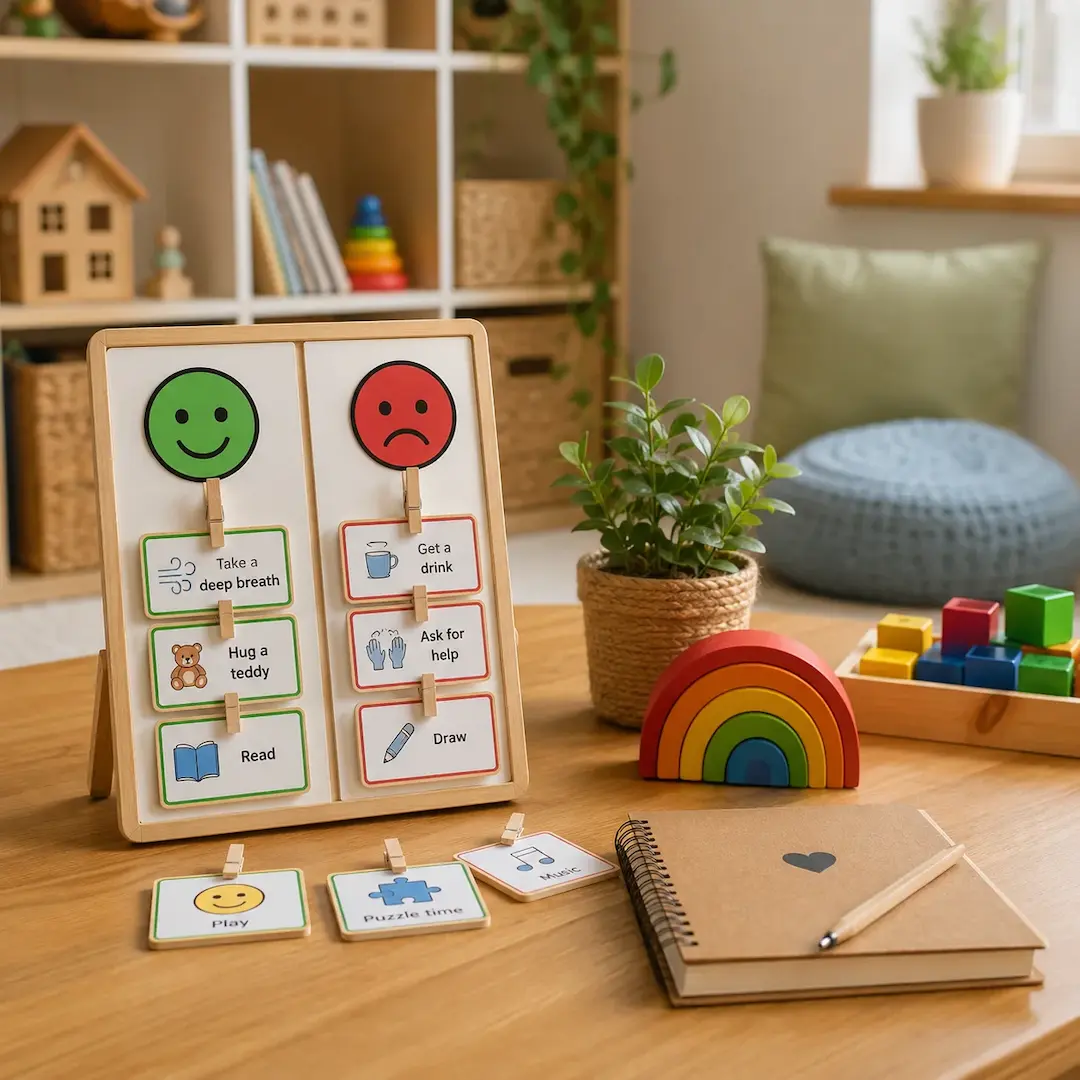
Help Children Name Their Feelings
Children cannot manage feelings well if they do not understand them. Teaching emotional words is a simple but powerful way to support regulation.
You might say:
- “You seem frustrated that the tower fell.”
- “I can see you’re angry because playtime ended.”
- “That was disappointing. You really wanted another turn.”
When you name the feeling, you show your child that emotions are normal and manageable. Over time, they start to use those words themselves.
Role-Model Through Play
Play is one of the best teaching tools for preschoolers. Through pretend games, dolls, role-play, and stories, you can model sharing, turn-taking, apologizing, and calming down.
Imagine your child often grabs toys from others. During play, you might act out a scene with two stuffed animals and say, “Bunny wants a turn. Let’s ask, ‘Can I have it when you’re done?’”
This kind of playful learning feels safe and memorable. It also gives children a chance to practice skills before they need them in real life.
Working with Consequences in a Calm, Helpful Way
Many parents worry that being positive means being too soft. It does not. Children still need boundaries and consequences. The difference is that the consequence should teach something useful.
Fear-based punishment may stop behaviour fast, but it rarely helps a child understand cause and effect in a healthy way. Logical and natural consequences do.
Here are a few examples:
- If a child throws food, mealtime may end early
- If they spill something on purpose, they help clean it up
- If they draw on the wall, they help wipe it clean with you
These responses connect the action with the outcome. They build responsibility instead of shame.
To make consequences more effective:
- Stay calm
- Keep the consequence related to the behaviour
- Be consistent
- Avoid long lectures
- Follow up with support and reconnection
For example, after helping your child clean up spilled water, you might say, “Water stays in the cup. Next time, if you want to pour, I’ll help you do it safely.”
That final step matters. It turns a correction into a learning moment.
Common Mistakes to Avoid
Even the best positive behaviour strategies can lose impact if they are used inconsistently. The good news is that small changes can make a big difference.
Here are some common mistakes parents make:
Expecting Too Much for the Child’s Age
A preschooler may understand a rule but still struggle to follow it every time. That is not defiance in every case. Often, it is immature self-control.
Giving Too Many Warnings
If you repeat the same request again and again without follow-through, your child learns that boundaries are flexible. Try giving one clear reminder, then calmly acting.
Using Praise Too Vaguely
“Good job” is kind, but it does not teach much. Specific praise shows your child exactly what worked.
Reacting Big to Small Behaviours
Not every unhelpful behaviour needs a strong response. Sometimes a calm redirect is more effective than a long discussion.
Forgetting Connection
Children respond better when they feel connected. A few minutes of focused play, cuddles, or calm conversation can reduce attention-seeking behaviour later.
Why Parent-Educator Collaboration Matters
Children often behave differently at home than they do in early learning settings. That is normal. Different spaces have different routines, expectations, and social demands.
Still, children benefit most when the adults around them work as a team. When parents and educators use similar language and strategies, children get a clearer message about what is expected.
This might include:
- Sharing what works during transitions
- Using similar phrases for emotional coaching
- Talking about recurring behaviour patterns
- Agreeing on simple, realistic goals
At Children’s Choice, educators understand that strong family partnerships support better outcomes for children. Open communication helps create consistency, and consistency helps children feel safe.
You can read more about the value of parent-educator partnerships through ACECQA here: ACECQA on partnerships with families.
The Long-Term Benefits of Positive Behaviour Strategies
Positive behaviour strategies do more than improve the day you are having. They help build the skills your child will use for years.
When you guide behaviour with patience and clear limits, your child learns how to:
- Understand emotions
- Cope with frustration
- Build healthy relationships
- Solve social problems
- Develop confidence and independence
These are the foundations of emotional intelligence and school readiness. They also help children feel secure in themselves and in their relationships with others.
The results do not appear overnight. Preschoolers need repetition, practice, and support. But over time, these small daily moments add up. A calm response, a clear routine, or a well-timed choice can shape how your child handles challenges far beyond the preschool years.
A Calm and Connected Home
Positive behaviour strategies are not about raising a perfect child or having perfect days. They are about building trust, teaching skills, and setting clear boundaries with care. When you understand what your preschooler is trying to communicate, you can respond in ways that reduce stress and support growth.
Start small. Choose one or two strategies to use consistently this week, such as offering simple choices or praising specific positive behaviour. Those small shifts can create a calmer home and help your child feel more understood.
If you would like to see how this approach is supported in a nurturing early learning environment, explore Children’s Choice. Book a tour and discover how our team partners with families to build confidence, emotional wellbeing, and positive behaviour skills in every stage of early learning.
Frequently Asked Questions
What is the age range for children at Children’s Choice?
Children’s Choice welcomes children from infancy to preschool age, providing tailored early learning programs for each developmental stage.
What curriculum does Children’s Choice follow?
We use a play-based learning approach that promotes emotional, social, and cognitive development, preparing children for future educational success.
How can I book a tour at Children’s Choice?
Booking a tour is simple! Visit our website or contact us directly to schedule a convenient time to explore our nurturing learning environment.
Are meals and snacks provided?
Yes, we provide nutritious meals and snacks designed to support children’s health and energy throughout the day.
How does Children’s Choice handle behavioral challenges?
Our staff employs positive behavior guidance strategies, focusing on understanding and addressing the individual needs of each child to build emotional resilience.
Is parent involvement encouraged?
Absolutely! We value strong partnerships with families and encourage open communication and participation in our programs and activities.
What safety measures are in place at Children’s Choice?
We prioritise safety through secure facilities, trained staff, and strict protocols to ensure a safe and welcoming environment for every child.