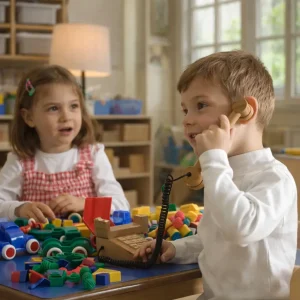
Have you ever watched a child turn a simple cardboard box into a spaceship, a castle, or a race car? It is a magical moment to witness, but it is also much more than just play. It is the engine of cognitive development whirring to life. Imagination is the foundation of creativity, problem-solving, and emotional intelligence,skills that will serve your child for the rest of their life.
At Children’s Choice, we understand that early learning is about fostering these natural instincts. Children’s Choice provides safe, nurturing childcare and play-based early learning that supports children’s development and school readiness. By understanding how to support imaginative play at home and in care settings, we can help our little ones unlock their full potential.
The Significance of Play-Based Early Learning
In Australia, the Early Years Learning Framework highlights play as a crucial context for learning. Play-based learning allows children to organize and make sense of their social worlds as they engage actively with people, objects, and representations.
When children play, they are not just passing time. They are hypothesizing, testing ideas, and solving problems. For example, building a block tower that keeps falling over teaches a child about gravity, balance, and persistence. This type of learning fosters creativity because it requires the child to think of new solutions when the first one doesn’t work.
Furthermore, imagination plays a massive role in social-emotional development. When children engage in dramatic play, like pretending to be a doctor or a shopkeeper, they practice empathy. They step into someone else’s shoes, navigate social negotiations with peers, and learn to manage their emotions.
Creating a Stimulating Learning Environment
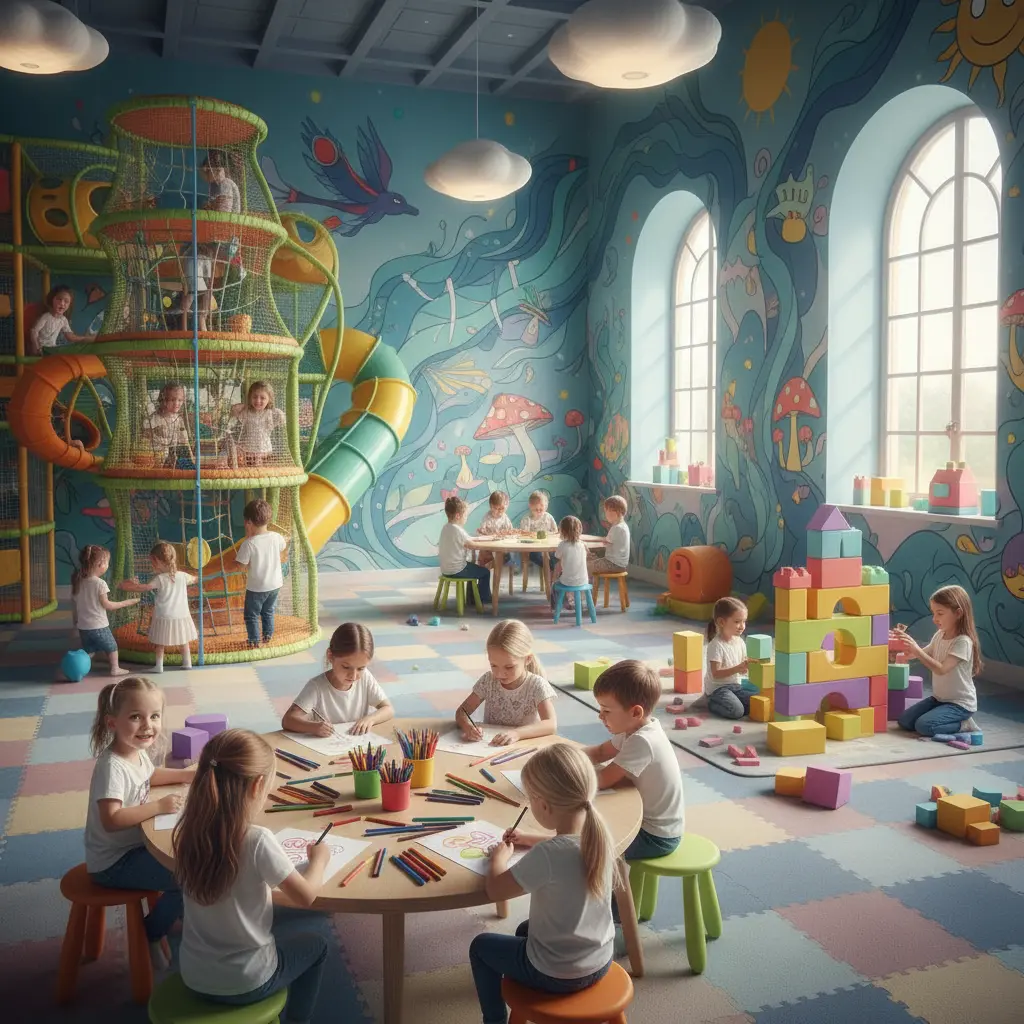
You don’t need expensive toys to build an environment that sparks creativity. In fact, often the simplest environments are the best because they leave room for the child’s mind to fill in the blanks.
To create a stimulating space at home or in a classroom, focus on “open-ended” resources. These are items that can be used in many different ways. A set of wooden blocks, for instance, offers more creative potential than a toy robot that only performs one specific action.
It is also vital to provide a safe and supportive space. Children need to feel secure enough to take risks and express themselves without fear of judgment. This means creating an atmosphere where “mistakes” are viewed as learning opportunities. Whether it is a messy painting corner or a quiet reading nook, the environment should invite exploration and say to the child, “Your ideas are welcome here.”
Unleashing Imagination Through Art and Creative Activities
Art is one of the most visible ways we see children express their inner worlds. However, the benefits of art in early childhood education go far deeper than creating a pretty picture for the fridge. Art supports fine motor skills, visual-spatial skills, and emotional regulation.
To truly unleash imagination, we focus on “process art.” This means valuing the experience of making the art more than the final result.
Here are a few activities that encourage this type of expression:
- Sensory Painting: Using fingers, sponges, or even leaves to paint allows children to explore texture and cause-and-effect.
- Collage Making: Providing recycled materials like magazines, fabric scraps, and buttons lets children make decisions about composition and texture.
- Sculpting: Working with playdough or clay builds hand strength and allows children to think in three dimensions.
Incorporating Problem-Solving Games and Activities
Critical thinking is a skill that can be nurtured from a very young age. Problem-solving games encourage children to think creatively and independently, moving them from asking “What is the answer?” to asking “How can I figure this out?”
Simple activities can have a profound impact. Scavenger hunts, for example, require children to listen to clues, visualize objects, and navigate their environment. Puzzles help with pattern recognition and patience.
Even building a fort with blankets requires significant problem-solving: “How do we get the roof to stay up?” or “Is this big enough for two people?” These moments of negotiation and engineering are where deep learning happens.
Children’s Choice: Nurturing Imagination and School Readiness
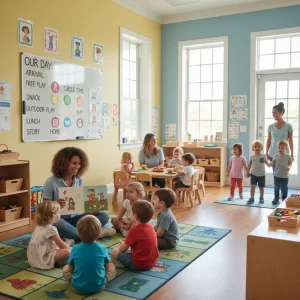
At Children’s Choice, our philosophy is grounded in the belief that children learn best when they feel safe, happy, and engaged. Our play-based learning approach is designed to prepare children for school not just academically, but socially and emotionally.
We know that families in Queensland are looking for high-quality care that feels like a second home. Whether you are searching for the best childcare centre Raceview has to offer, or the best childcare centre heritage park families recommend, the priority remains the same: finding a place where your child is seen and valued.
Our educators are trained to recognize the unique spark in every child. We are proud to be recognized as a leading childcare centre Raceview parents trust, and a leading childcare centre heritage park community members rely on. We believe that by fostering imagination today, we are building the innovators of tomorrow. This commitment to excellence is also why so many families regard us as the best childcare centre Ipswich has for early development.
Encouraging Curiosity and Exploration
Curiosity is the fuel for learning. It drives children to explore their world and ask questions. As parents and educators, our role is to stoke that fire, not put it out.
When a child asks “Why is the sky blue?” or “Where do ants go at night?”, it is an invitation to explore together. You don’t always need to have the answer. Saying, “I don’t know, let’s find out together,” models a love for lifelong learning.
Encourage exploration by spending time in nature. The outdoors provides a constantly changing environment that stimulates all the senses. Watching a caterpillar, feeling the bark of a tree, or listening to birds are simple, powerful ways to connect with the world.
Addressing Common Challenges
Fostering imagination isn’t always smooth sailing. It can be messy, loud, and sometimes chaotic. One common challenge parents face is the desire to keep things tidy versus the child’s need to explore. It helps to have designated “messy zones” or to use washable materials to reduce the stress of cleanup.
Another challenge is the prevalence of screens. While technology has its place, passive screen time can dampen imagination if it replaces active play. The solution isn’t necessarily to ban screens, but to balance them with plenty of offline, hands-on play.
Finally, some children may seem hesitant to engage in imaginative play. In these cases, adults can act as “play partners,” gently modeling how to pretend or create without taking over the activity.
Partnering for Your Child’s Future
Nurturing a child’s imagination is one of the greatest gifts we can give them. It empowers them to see the world not just as it is, but as it could be. By providing a stimulating environment, engaging in creative activities, and choosing the right early learning partner, you are laying the groundwork for a lifetime of curiosity and success.
At Children’s Choice, we are honoured to be part of that journey with you. We are committed to providing the safe, nurturing space your child needs to explore, create, and grow into a confident learner ready for the adventures ahead.
Frequently Asked Questions
Why is imagination considered a cognitive skill in early learning?
Imagination is much more than daydreaming; it is a complex cognitive process. It involves the ability to form mental images, predict outcomes, and manipulate ideas in the mind. When a child imagines, they are using memory and abstract thinking to create scenarios that don’t exist yet, which is the basis for advanced problem-solving and critical thinking later in life.
How does Children’s Choice prepare my child for school?
Children’s Choice uses a play-based curriculum that targets all the key areas of school readiness. Beyond learning numbers and letters, we focus on social skills like sharing and listening, emotional resilience, and independence. Our educators ensure children have the confidence to ask questions and the ability to manage their own belongings, making the transition to “big school” smooth and positive.
What should I look for in a Raceview or Heritage Park childcare centre?
When looking for a high-quality centre in these areas, look for environments that prioritize safety and genuine connection. The best centres will have educators who get down to the child’s level and engage in their play. You want a facility that offers a balance of structured learning and free, imaginative exploration, ensuring your child is happy and developing holistically.
Is play-based learning effective for academic development?
Yes, research consistently shows that play-based learning is highly effective for long-term academic success. Children who learn through play develop a positive attitude toward learning itself. They tend to have better language skills, stronger self-regulation, and deeper conceptual understanding because they have learned concepts through hands-on experience rather than rote memorization.
How does Children’s Choice handle messy creative play?
At Children’s Choice, we embrace the mess because we know it signifies deep engagement! We provide safe, washable materials and protective aprons, and we always have designated areas for sensory and art activities. We believe the sensory feedback children get from finger painting or mud play is invaluable for their neural development, so we encourage them to get involved.