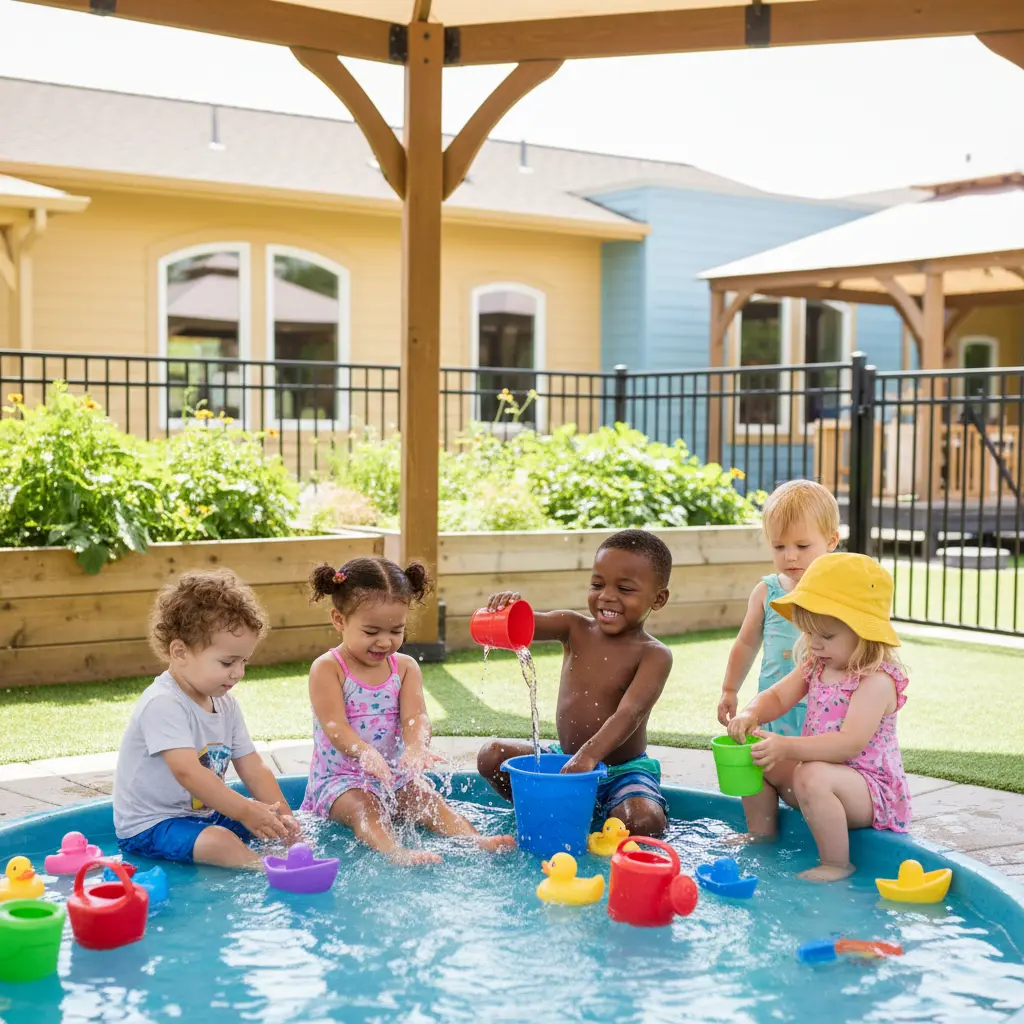
Water play is a natural fascination for children. Whether they are stomping in puddles after an Australian summer storm, splashing in the bathtub, or carefully pouring water from one cup to another at a sensory table, they are doing much more than just making a mess. They are engaging in a powerful, multi-sensory learning experience that lays the groundwork for critical developmental milestones.
At Children’s Choice, we understand that play is the work of childhood. We recognise that simple elements like water offer endless opportunities for discovery. While it might look like just good fun, water play is actually a complex activity that supports physical coordination, cognitive growth, and social-emotional well-being. By embracing these splash-filled moments, we help unlock a child’s potential in a safe, nurturing environment designed to support their journey toward school readiness.
The Sensory Magic of Water Play
One of the most immediate benefits of water play is sensory development. Children learn about the world primarily through their senses, and water offers a unique textural experience. It can be warm or cool, still or moving, clear or bubbly.
When a child plunges their hands into a basin of water, they are processing temperature and texture. Watching ripples form when they drop a pebble stimulates their visual tracking. Hearing the splash or the gentle trickle of water pouring from a jug engages their auditory processing.
This multi-sensory stimulation is crucial for brain development. It helps build nerve connections in the brain’s pathways, which supports the ability to complete more complex learning tasks. For children who might be easily overwhelmed by other sensory inputs (like loud noises or bright lights), water play can often be a calming, therapeutic sensory experience that helps them regulate their bodies.
Building Strong Bodies: Motor Skills Development
Water play is an excellent way to enhance both fine and gross motor skills, which are essential for physical development and future independence.
Fine Motor Skills
Fine motor skills involve the coordination of small muscles, usually in the hands and fingers. During water play, actions like squeezing a sponge, using an eyedropper, or pinching a water bead require precise control. These small movements strengthen the muscles needed for critical future tasks, such as holding a pencil, writing, buttoning a shirt, or tying shoelaces.
Gross Motor Skills
Gross motor skills involve the large muscles of the body that enable walking, running, and lifting. Activities like carrying a heavy bucket of water across the yard, running through a sprinkler, or scooping water with large ladles help children develop balance, coordination, and physical strength. This active play supports overall physical fitness and helps children gain confidence in their physical abilities.
The Science of Splash: Cognitive Growth
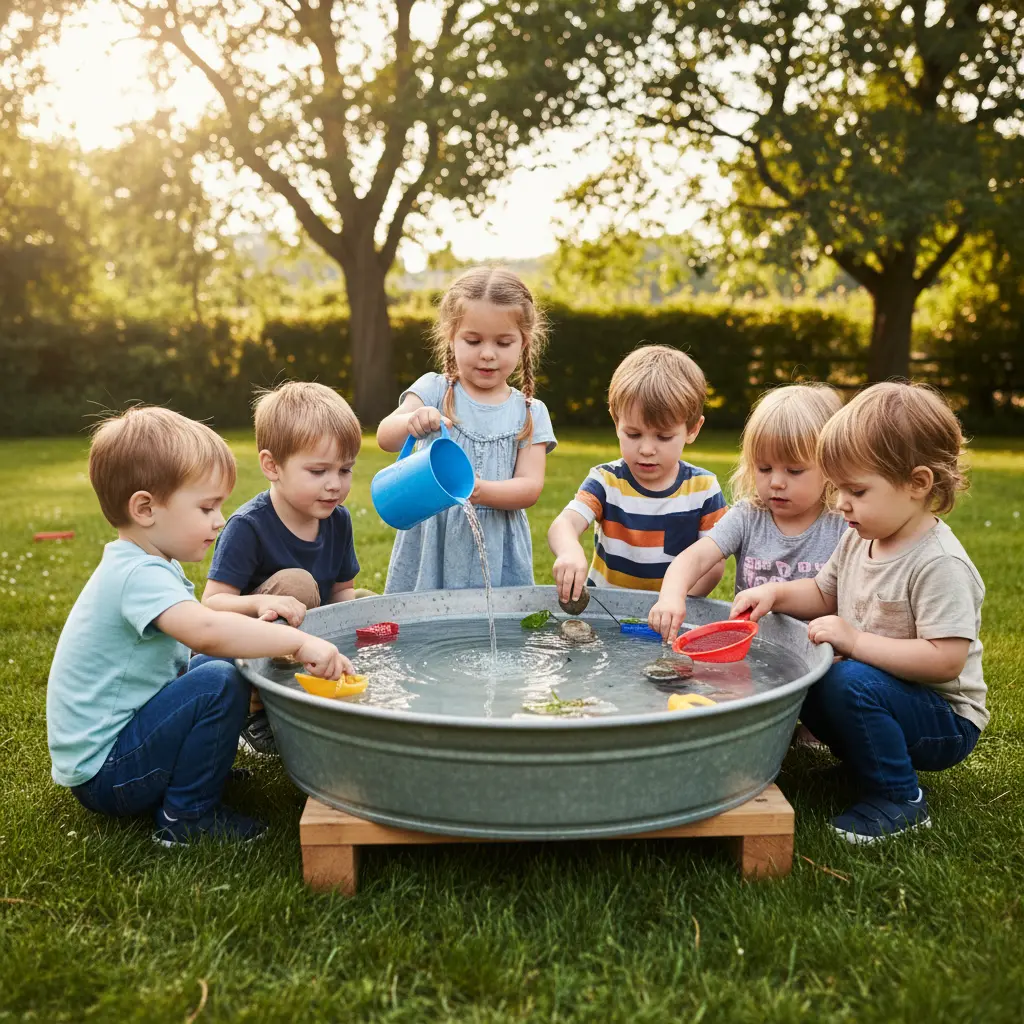
Believe it or not, a water trough is often a child’s first physics and mathematics laboratory. Water play introduces foundational concepts in a hands-on, intuitive way that books simply cannot replicate.
Through experimentation, children encounter:
- Volume and Capacity: “How many small cups does it take to fill this big bucket?”
- Physics and Buoyancy: “Why does the heavy rock sink, but the big plastic boat floats?”
- Cause and Effect: “What happens when I block the flow of water with my hand?”
- Measurement: Learning terms like “full,” “empty,” “heavy,” and “light.”
These early experiences with scientific inquiry foster critical thinking and problem-solving skills. When a child tries to make a water wheel spin or figure out how to transport water without spilling it, they are hypothesizing, testing, and refining their ideas, the very basis of the scientific method.
Ripples of Connection: Social and Emotional Development
While water play can be a solitary activity, it is often a social one in a childcare setting. A water table acts as a gathering place where children learn to navigate social interactions.
Because water is a shared resource, children must learn to take turns with the funnel, share the space at the trough, and negotiate who gets to use the blue bucket. These interactions build empathy and cooperation. They learn to communicate their needs (“Can I have a turn?”) and respect the boundaries of others.
Emotionally, water play is incredibly regulating. The repetitive nature of pouring or the sensation of warm water can be soothing for a child who is feeling anxious or frustrated. It provides a safe outlet for energy and emotion, helping children return to a state of calm. This emotional regulation is a key component of the “school readiness” that we nurture at Children’s Choice, ensuring children have the emotional tools to handle a classroom environment.
Nurturing Childcare with Children’s Choice
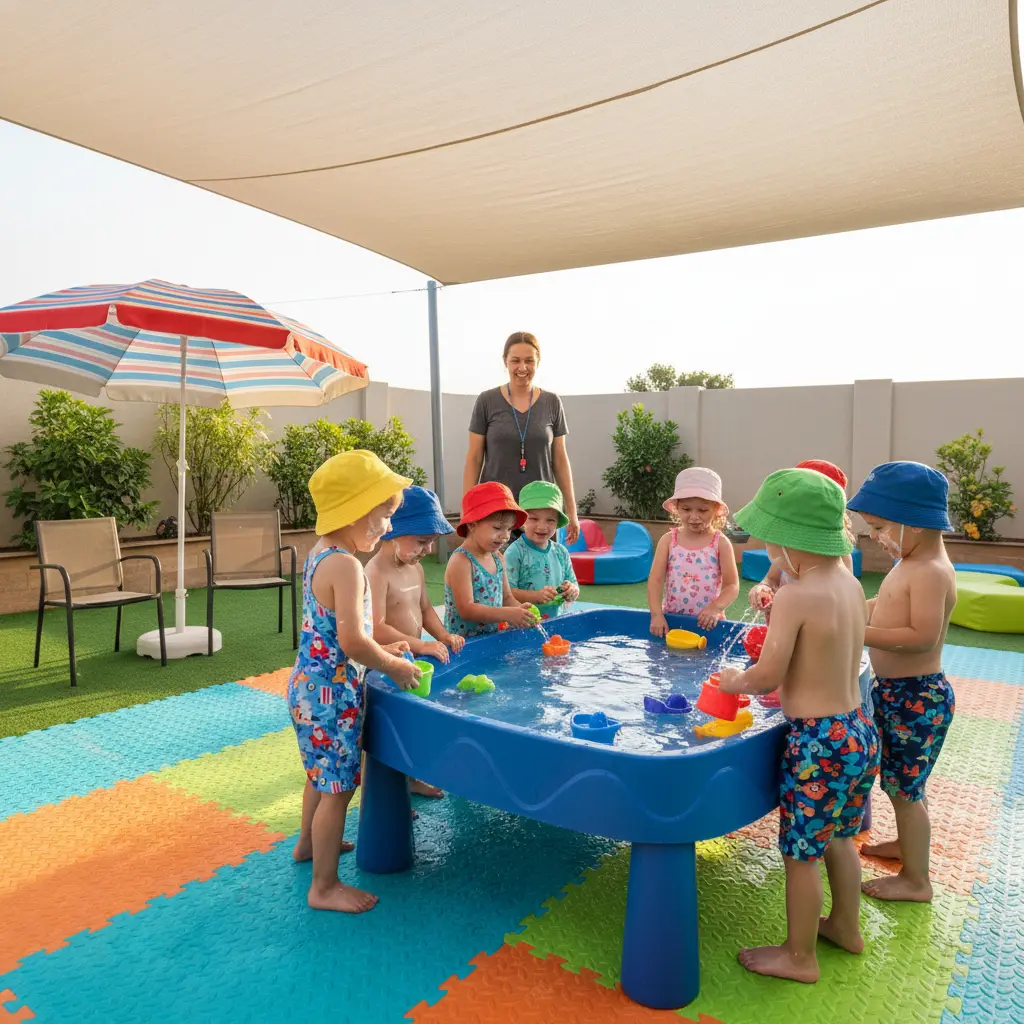
At Children’s Choice, we believe that the environment is the “third teacher.” Our approach integrates water play into our curriculum not just as a fun activity, but as a deliberate educational tool. We provide safe, supervised opportunities for children to explore water in ways that align with their developmental stage.
Whether you are looking for the best childcare centre Raceview has to offer, or a leading childcare centre Heritage Park families trust, our philosophy remains the same: we nurture the whole child. Our educators are trained to observe and scaffold these play experiences. If a child is fascinated by sinking objects, an educator might introduce new materials to test, extending the learning moment.
We understand that families want a childcare provider that balances safety with exploration. We ensure that water safety is paramount while still allowing children the freedom to splash, pour, and discover. This balance of care and education is what makes Children’s Choice a partner in your child’s early years.
Practical Tips for Safe Water Play
Water play is wonderful, but safety is always the priority. Whether at our centre or in your own backyard, here are some practical tips to keep water play safe and enjoyable:
- Active Supervision: Always stay within arm’s reach when children are playing near water. Distractions like phones should be put away.
- Appropriate Depth: For toddlers and young children, a shallow sensory bin or water table is safer and just as fun as a pool.
- Sun Safety: In the Australian climate, water play often happens outdoors. Remember hats, sunscreen, and shade.
- Hygiene: Empty and clean water play containers after each use to prevent bacteria growth.
- Slip Hazards: Be mindful of wet surfaces. Place non-slip mats down or play on grass to prevent falls.
Benefits of Nurturing Childcare with Children’s Choice
Water play is just one example of how play-based learning unlocks a child’s potential. It supports physical coordination, introduces early math and science concepts, and builds the social-emotional resilience children need for the future.
At Children’s Choice, we are committed to providing the safe, nurturing childcare that Australian families rely on. By fostering these developmental milestones through engaging, thoughtful play, we help prepare your child not just for school, but for a lifetime of learning.
If you are looking for the leading childcare centre Raceview parents recommend, or the Best childcare centre Heritage Park has for early learning, we invite you to connect with us. Let’s work together to make your child’s early years full of discovery and growth.
Frequently Asked Questions
What are the benefits of water play for toddlers?
Water play supports toddlers’ gross and fine motor skills as they lift buckets or squeeze sponges. It also aids in language development as they learn new words like “wet,” “splash,” and “pour.” Furthermore, it provides a calming sensory experience that helps toddlers regulate their emotions and explore cause-and-effect relationships in a safe environment.
How does Children’s Choice integrate water play into its programs?
At Children’s Choice, we incorporate water play into our curriculum to support holistic development. Our educators set up purposeful water stations that encourage problem-solving and social interaction. Whether at the Best childcare centre Ipswich or our other locations, we ensure these activities are age-appropriate and supervised to foster learning and safety.
How does water play enhance cognitive skills?
Water play introduces early math and science concepts naturally. Children learn about volume, measurement, and buoyancy through hands-on experimentation. By observing what floats or sinks and seeing how water moves, they develop critical thinking and problem-solving abilities that form the foundation for future academic learning.
What safety measures should be taken during water play?
Active adult supervision is the most critical safety measure; never leave a child unattended near water. Ensure the water depth is appropriate for the child’s age, and be mindful of slip hazards on wet surfaces. Additionally, always practice sun safety with hats and sunscreen, and empty containers after use to maintain hygiene.
How can Children’s Choice help with my child’s development?
Children’s Choice provides a nurturing, play-based environment designed to support school readiness. Our experienced educators use activities like water play to build social, emotional, and cognitive skills. By focusing on individual growth and secure relationships, we help children develop confidence and resilience for their educational journey ahead.