Home /

/

Unlocking Toddler Development Through Messy Play: More Than Just a Mess

Unlocking Toddler Development Through Messy Play: More Than Just a Mess At Children’s Choice, we believe that the most meaningful learning often happens when hands get dirty and curiosity runs wild. We know that walking into a room full of finger paint, mud, or slime might look chaotic at first glance, but beneath that chaos lies a world of discovery. As parents, it’s natural to feel a little hesitation about the cleanup that follows a messy play session. However, this type of play is one of the most powerful tools in early childhood education. Messy play, or sensory play, is an open-ended, unstructured activity that allows children to explore materials with their hands and senses. It is fundamental to our play-based learning philosophy because it supports holistic growth in a way that rigid, structured tasks simply cannot. What is Messy Play? Messy play is exactly what it sounds like,play that involves textures, materials, and substances that might leave a mark! But more technically, it is an active, sensory-rich activity that encourages exploration without a predetermined end goal. Unlike a coloring book where the goal is to stay within the lines, messy play is about the process, not the product. It involves using materials like sand, water, clay, playdough, paint, slime, mud, or even food items like cooked pasta. It is unstructured, meaning there is no "right" or "wrong" way to do it. This freedom encourages toddlers to experiment, make decisions, and see the immediate results of their actions. Benefits of Messy Play for Toddler Development The developmental benefits of getting messy are vast. When a toddler squishes mud between their toes or smears paint across a canvas, they are doing serious developmental work. Cognitive Development Messy play is a natural laboratory for little scientists. It encourages exploration and experimentation. When a child mixes water with sand, they learn about cause and effect (the sand becomes heavy and moldable). They engage in problem-solving: "How can I make this tower stand up?" or "What happens if I mix blue and yellow?" These early experiences with physics and material properties build the neural pathways needed for complex thinking later in life. Sensory Development Toddlers learn primarily through their senses. engaging them in sensory play experiences within the realm of messy play offers a wealth of tactile sensations, providing rich sensory stimulation. By feeling different textures,sticky, slimy, rough, smooth, cold, warm,children process information about the world around them. This helps with sensory integration, which is the brain's ability to organize and interpret information. Fine Motor Skills Messy play activities like finger painting or squishing clay aren't just about getting their hands dirty; it's a crucial aspect of their development, particularly in fine motor skills. Actions like pouring, scooping, grasping, and pinching help strengthen the small muscles in the hands and fingers. These are the exact same muscles required for holding a pencil, buttoning a shirt, and tying shoelaces later in life. Social Skills While messy play can be a solitary activity, it is often a shared experience. It nurtures social skills as toddlers interact, share, take turns, and collaborate within a playful environment. Standing around a sensory bin, children learn to negotiate space ("Can I use that shovel next?") and observe how others play. It fosters communication and empathy as they navigate the shared joy of the activity. Creativity and Imagination Messy play ignites toddlers' creativity and imagination, providing abundant opportunities for self-expression and artistic exploration. Because there are no rules, children are free to invent. A pile of shaving cream can become a snowy mountain; a bowl of green slime can be a swamp for dinosaurs. This imaginative play is vital for emotional health and cognitive flexibility. Emotional Development There is a calming, therapeutic quality to sensory play. For many children, the rhythmic motion of scooping sand or kneading dough helps regulate their emotions and reduce anxiety. Furthermore, it deepens the emotional bonding between parents and children as they immerse themselves in a shared, enjoyable experience. When you join in the fun without worrying about the mess, it signals to your child that their exploration is valued and safe. Embracing Outdoor Messy Play Nature is the ultimate sensory bin. Introducing toddlers to the wonders of outdoor messy play not only amplifies their overall experience but also immerses them in the myriad benefits of nature and open-ended exploration. Outdoor play removes the worry of staining the carpet, allowing for bigger, bolder movements. Whether it's jumping in muddy puddles, making "soup" with leaves and twigs, or digging in the dirt, the outdoors offers varied textures and sensory inputs,like the wind, the smell of rain, and the warmth of the sun,that indoor environments can't replicate. Structured Messy Play Activities While free exploration is key, engaging toddlers in structured messy play activities provides an educational foundation, introducing them to fundamental concepts like colours, shapes, and textures. For example, hiding plastic shapes inside a tub of jelly creates a sensory scavenger hunt that teaches shape recognition. Using fingers to trace letters in a tray of shaving cream is a precursor to writing. These activities bridge the gap between pure play and formal learning concepts, making them an excellent tool for school readiness. Children’s Choice and Messy Play At Children’s Choice, we don't just tolerate mess; we plan for it! We integrate messy play deeply into our curriculum to support holistic development. Our educators set up inviting sensory stations designed to spark curiosity and encourage specific developmental milestones. The benefits of messy play at Children’s Choice centres are visible every day. We see shy children open up as they share a water table with a peer. We see energetic children find focus as they pour rice from one container to another. By providing a safe environment where "making a mess" is celebrated, we give children the confidence to explore their world without inhibition. Tips for Safe and Fun Messy Play at Home Bringing messy play into your home doesn't have to be a disaster. Here is how to keep it fun and manageable: Preparation is Key: Use a splash mat, an old shower curtain, or take the activity outside. Dress your child in old clothes or just a nappy/underwear if the weather permits. Manage the Mess: Keep a bucket of warm soapy water and a towel nearby for quick hand rinsing. Use edible materials (like crushed cereal, yoghurt, or cooked pasta) for younger toddlers who still put everything in their mouths. Easy Cleanup: Use trays or large plastic tubs to contain the materials. When play is done, involve your child in the cleanup process,it teaches responsibility and signals the end of the activity. Leading Childcare Centre Raceview If you are looking for a care provider that understands the developmental importance of sensory experiences, look no further than our centres. As the leading childcare centre Raceview, we pride ourselves on creating environments where children are free to learn through exploration. Our educators are trained to facilitate play that builds confidence and cognitive skills, ensuring your child is supported every step of the way. Children’s Choice: Nurturing Development Through Play In summary, messy play is a vital component of a healthy childhood. It builds strong bodies and brains, fosters creativity, and helps children make sense of the world. At Children’s Choice, we remain committed to providing a safe, nurturing, and stimulating environment where your child’s growth is our priority. By embracing the mess, we embrace the learning potential in every child. FAQs Are messy play activities suitable for all toddlers? Yes, messy play is beneficial for almost all toddlers, but it can be adapted to suit individual needs. Some children may have sensory sensitivities and find certain textures overwhelming. In these cases, we start with dry, less messy textures (like rice or dry pasta) and gradually introduce wetter materials as the child feels comfortable. What are some easy messy play activities to do at home? Simple is often best! You can try: Oobleck: Mix cornflour and water for a substance that is both solid and liquid. Cloud Dough: Mix flour and baby oil for a moldable, soft sand texture. Water Play: A tub of water with cups, sponges, and funnels provides endless entertainment. How does Children’s Choice ensure safety during messy play? Safety is our top priority. At Children's Choice, we use non-toxic, child-safe materials for all activities. Our educators closely supervise all play sessions to ensure materials are not ingested and that the environment remains safe (e.g., cleaning up slippery floors immediately). We also ensure activities are age-appropriate to minimize choking hazards. What are the benefits of outdoor messy play? Outdoor messy play combines sensory exploration with physical activity. It encourages larger movements, supports gross motor skills, and connects children with nature. It also boosts the immune system through exposure to diverse microbes in soil (in safe environments) and provides Vitamin D from sunlight. How does messy play contribute to school readiness? Messy play builds the foundation for academic skills. Fine motor activities prepare hands for writing. Sensory sorting prepares brains for math (classifying and measuring). Socially, learning to share a sensory bin prepares children for the collaborative environment of a classroom. Meta data Meta title Unlocking Toddler Development Through Messy Play Meta description Unlock your toddler's potential with messy play! Discover how sensory activities boost cognitive, motor, and social skills at Children's Choice. Slug unlocking-toddler-development-through-messy-play AI Summary Discover how messy play unlocks toddler development at Children's Choice, Raceview. Enhance cognitive, sensory, and motor skills through fun, structured activities.

Unlocking Toddler Development Through Messy Play: More Than Just a Mess

Discover how messy play unlocks toddler development at Children's Choice, Raceview. Enhance cognitive, sensory, and motor skills through fun, structured activities.

Table of Contents

Share this article

At Children’s Choice, we believe that the most meaningful learning often happens when hands get dirty and curiosity runs wild. We know that walking into a room full of finger paint, mud, or slime might look chaotic at first glance, but beneath that chaos lies a world of discovery.

As parents, it’s natural to feel a little hesitation about the cleanup that follows a messy play session. However, this type of play is one of the most powerful tools in early childhood education. Messy play, or sensory play, is an open-ended, unstructured activity that allows children to explore materials with their hands and senses. It is fundamental to our play-based learning philosophy because it supports holistic growth in a way that rigid, structured tasks simply cannot.

What is Messy Play?

Messy play is exactly what it sounds like,play that involves textures, materials, and substances that might leave a mark! But more technically, it is an active, sensory-rich activity that encourages exploration without a predetermined end goal.

Unlike a coloring book where the goal is to stay within the lines, messy play is about the process, not the product. It involves using materials like sand, water, clay, playdough, paint, slime, mud, or even food items like cooked pasta. It is unstructured, meaning there is no “right” or “wrong” way to do it. This freedom encourages toddlers to experiment, make decisions, and see the immediate results of their actions.

Benefits of Messy Play for Toddler Development

The developmental benefits of getting messy are vast. When a toddler squishes mud between their toes or smears paint across a canvas, they are doing serious developmental work.

Cognitive Development

Messy play is a natural laboratory for little scientists. It encourages exploration and experimentation. When a child mixes water with sand, they learn about cause and effect (the sand becomes heavy and moldable). They engage in problem-solving: “How can I make this tower stand up?” or “What happens if I mix blue and yellow?” These early experiences with physics and material properties build the neural pathways needed for complex thinking later in life.

Sensory Development

Toddlers learn primarily through their senses. engaging them in sensory play experiences within the realm of messy play offers a wealth of tactile sensations, providing rich sensory stimulation. By feeling different textures, sticky, slimy, rough, smooth, cold, warm, children process information about the world around them. This helps with sensory integration, which is the brain’s ability to organize and interpret information.

Fine Motor Skills

Messy play activities like finger painting or squishing clay aren’t just about getting their hands dirty; it’s a crucial aspect of their development, particularly in fine motor skills. Actions like pouring, scooping, grasping, and pinching help strengthen the small muscles in the hands and fingers. These are the exact same muscles required for holding a pencil, buttoning a shirt, and tying shoelaces later in life.

Social Skills

While messy play can be a solitary activity, it is often a shared experience. It nurtures social skills as toddlers interact, share, take turns, and collaborate within a playful environment. Standing around a sensory bin, children learn to negotiate space (“Can I use that shovel next?”) and observe how others play. It fosters communication and empathy as they navigate the shared joy of the activity.

Creativity and Imagination

Messy play ignites toddlers’ creativity and imagination, providing abundant opportunities for self-expression and artistic exploration. Because there are no rules, children are free to invent. A pile of shaving cream can become a snowy mountain; a bowl of green slime can be a swamp for dinosaurs. This imaginative play is vital for emotional health and cognitive flexibility.

Emotional Development

There is a calming, therapeutic quality to sensory play. For many children, the rhythmic motion of scooping sand or kneading dough helps regulate their emotions and reduce anxiety. Furthermore, it deepens the emotional bonding between parents and children as they immerse themselves in a shared, enjoyable experience. When you join in the fun without worrying about the mess, it signals to your child that their exploration is valued and safe.

Embracing Outdoor Messy Play

Nature is the ultimate sensory bin. Introducing toddlers to the wonders of outdoor messy play not only amplifies their overall experience but also immerses them in the myriad benefits of nature and open-ended exploration.

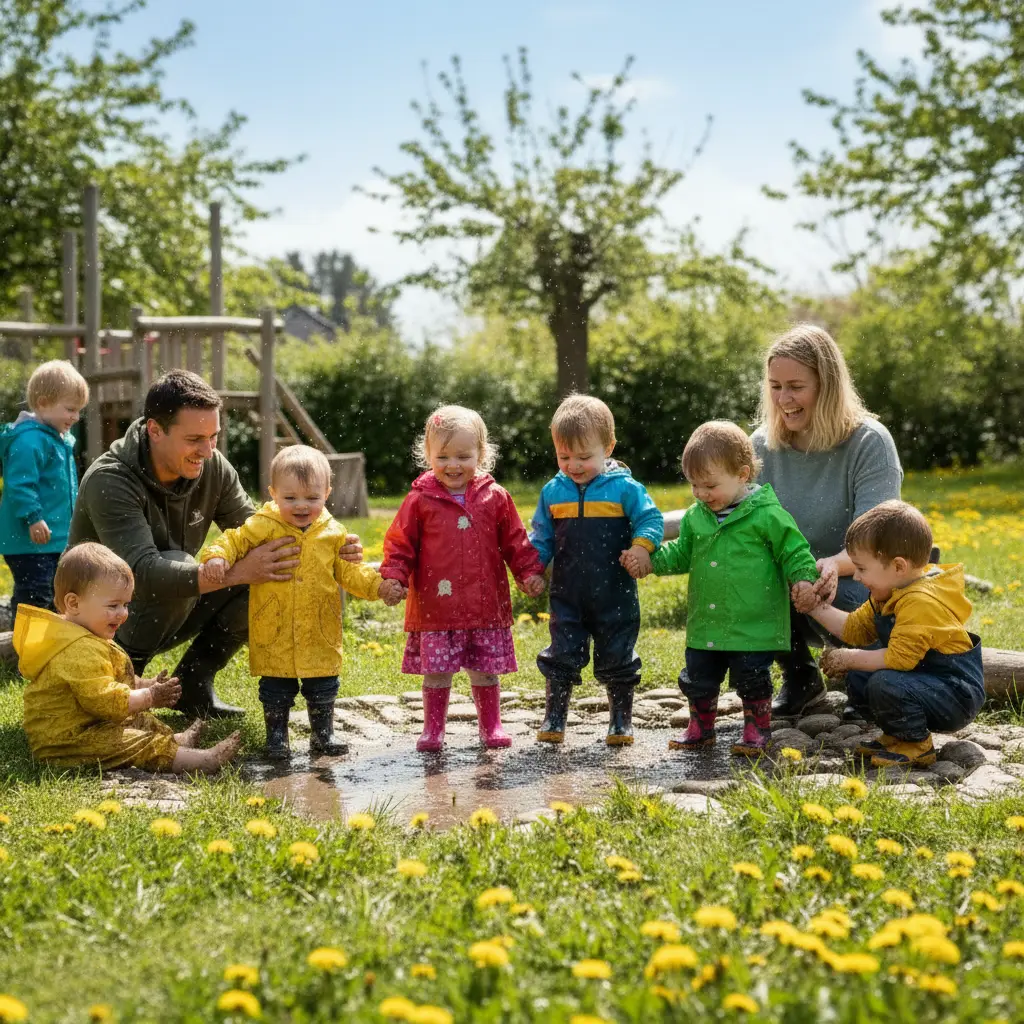
Outdoor play removes the worry of staining the carpet, allowing for bigger, bolder movements. Whether it’s jumping in muddy puddles, making “soup” with leaves and twigs, or digging in the dirt, the outdoors offers varied textures and sensory inputs,like the wind, the smell of rain, and the warmth of the sun,that indoor environments can’t replicate.

Structured Messy Play Activities

While free exploration is key, engaging toddlers in structured messy play activities provides an educational foundation, introducing them to fundamental concepts like colours, shapes, and textures.

For example, hiding plastic shapes inside a tub of jelly creates a sensory scavenger hunt that teaches shape recognition. Using fingers to trace letters in a tray of shaving cream is a precursor to writing. These activities bridge the gap between pure play and formal learning concepts, making them an excellent tool for school readiness.

Children’s Choice and Messy Play

At Children’s Choice, we don’t just tolerate mess; we plan for it! We integrate messy play deeply into our curriculum to support holistic development. Our educators set up inviting sensory stations designed to spark curiosity and encourage specific developmental milestones.

The benefits of messy play at Children’s Choice centres are visible every day. We see shy children open up as they share a water table with a peer. We see energetic children find focus as they pour rice from one container to another. By providing a safe environment where “making a mess” is celebrated, we give children the confidence to explore their world without inhibition.

Tips for Safe and Fun Messy Play at Home

Bringing messy play into your home doesn’t have to be a disaster. Here is how to keep it fun and manageable:

  • Preparation is Key: Use a splash mat, an old shower curtain, or take the activity outside. Dress your child in old clothes or just a nappy/underwear if the weather permits.
  • Manage the Mess: Keep a bucket of warm soapy water and a towel nearby for quick hand rinsing. Use edible materials (like crushed cereal, yoghurt, or cooked pasta) for younger toddlers who still put everything in their mouths.
  • Easy Cleanup: Use trays or large plastic tubs to contain the materials. When play is done, involve your child in the cleanup process,it teaches responsibility and signals the end of the activity.

Leading Childcare Centre Raceview

If you are looking for a care provider that understands the developmental importance of sensory experiences, look no further than our centres. As the leading childcare centre Raceview, we pride ourselves on creating environments where children are free to learn through exploration. Our educators are trained to facilitate play that builds confidence and cognitive skills, ensuring your child is supported every step of the way.

Children’s Choice: Nurturing Development Through Play

In summary, messy play is a vital component of a healthy childhood. It builds strong bodies and brains, fosters creativity, and helps children make sense of the world. At Children’s Choice, we remain committed to providing a safe, nurturing, and stimulating environment where your child’s growth is our priority. By embracing the mess, we embrace the learning potential in every child.

FAQs

Are messy play activities suitable for all toddlers?

Yes, messy play is beneficial for almost all toddlers, but it can be adapted to suit individual needs. Some children may have sensory sensitivities and find certain textures overwhelming. In these cases, we start with dry, less messy textures (like rice or dry pasta) and gradually introduce wetter materials as the child feels comfortable.

What are some easy messy play activities to do at home?

Simple is often best! You can try:

  • Oobleck: Mix cornflour and water for a substance that is both solid and liquid.
  • Cloud Dough: Mix flour and baby oil for a moldable, soft sand texture.
  • Water Play: A tub of water with cups, sponges, and funnels provides endless entertainment.

How does Children’s Choice ensure safety during messy play?

Safety is our top priority. At Children’s Choice, we use non-toxic, child-safe materials for all activities. Our educators closely supervise all play sessions to ensure materials are not ingested and that the environment remains safe (e.g., cleaning up slippery floors immediately). We also ensure activities are age-appropriate to minimize choking hazards.

What are the benefits of outdoor messy play?

Outdoor messy play combines sensory exploration with physical activity. It encourages larger movements, supports gross motor skills, and connects children with nature. It also boosts the immune system through exposure to diverse microbes in soil (in safe environments) and provides Vitamin D from sunlight.

How does messy play contribute to school readiness?

Messy play builds the foundation for academic skills. Fine motor activities prepare hands for writing. Sensory sorting prepares brains for math (classifying and measuring). Socially, learning to share a sensory bin prepares children for the collaborative environment of a classroom.

Rosa McDonald

Rosa McDonald has 21 years’ experience in education, including five years teaching in primary and secondary schools. She is the Owner of Children’s Choice Early Education and has led the organisation for 16 years across centres in Heritage Park and Raceview.

She holds a Bachelor of Early Childhood Education, a Graduate Diploma of Secondary Education, a Bachelor of Business, and a Graduate Diploma of Communication Practice. Rosa is committed to high-quality learning, strong leadership, and open, respectful communication with families and staff.

Let’s Shape Bright Futures Together!

A nurturing space where children learn, grow, and thrive every day.

Book a Free Tour Today!

Discover how Children’s Choice can support your child’s growth with playful, supportive early learning environments. Arrange a personalised visit to meet our educators, explore our facilities, and see everyday learning in action.