Sending your child off to kindergarten is a significant milestone for any family. It is a time filled with excitement, but it is also natural to have questions about what actually happens once you drop them off. Many parents wonder if their little ones are just playing all day or if they are learning the skills they need for big school.
The truth is, high-quality kindergarten programs offer a perfect blend of both. Early learning is about much more than just memorising facts; it is about building a strong foundation for lifelong success. Through structured activities and guided play, children develop critical thinking, social skills, and emotional resilience.
At Children’s Choice, we understand that these early years are crucial. Children’s Choice provides safe, nurturing childcare and play-based early learning that supports children’s development and school readiness. Let’s explore exactly what your child will experience and learn during this exciting stage of their development.
Building Academic Skills Through Exploration
While kindergarten is not about sitting at desks and taking tests, it is where the building blocks of academic learning are laid. Children are introduced to concepts that will help them transition smoothly into primary school.
Literacy and Language
Language development is a core part of the day. Children learn to recognise letters and sounds, often starting with the letters in their own names. Through storytelling, songs, and rhymes, they begin to understand phonics and sentence structure. You might notice your child “reading” books by looking at pictures or trying to write their name on artwork. These are the first steps toward becoming confident readers and writers.
Mathematics and Problem Solving
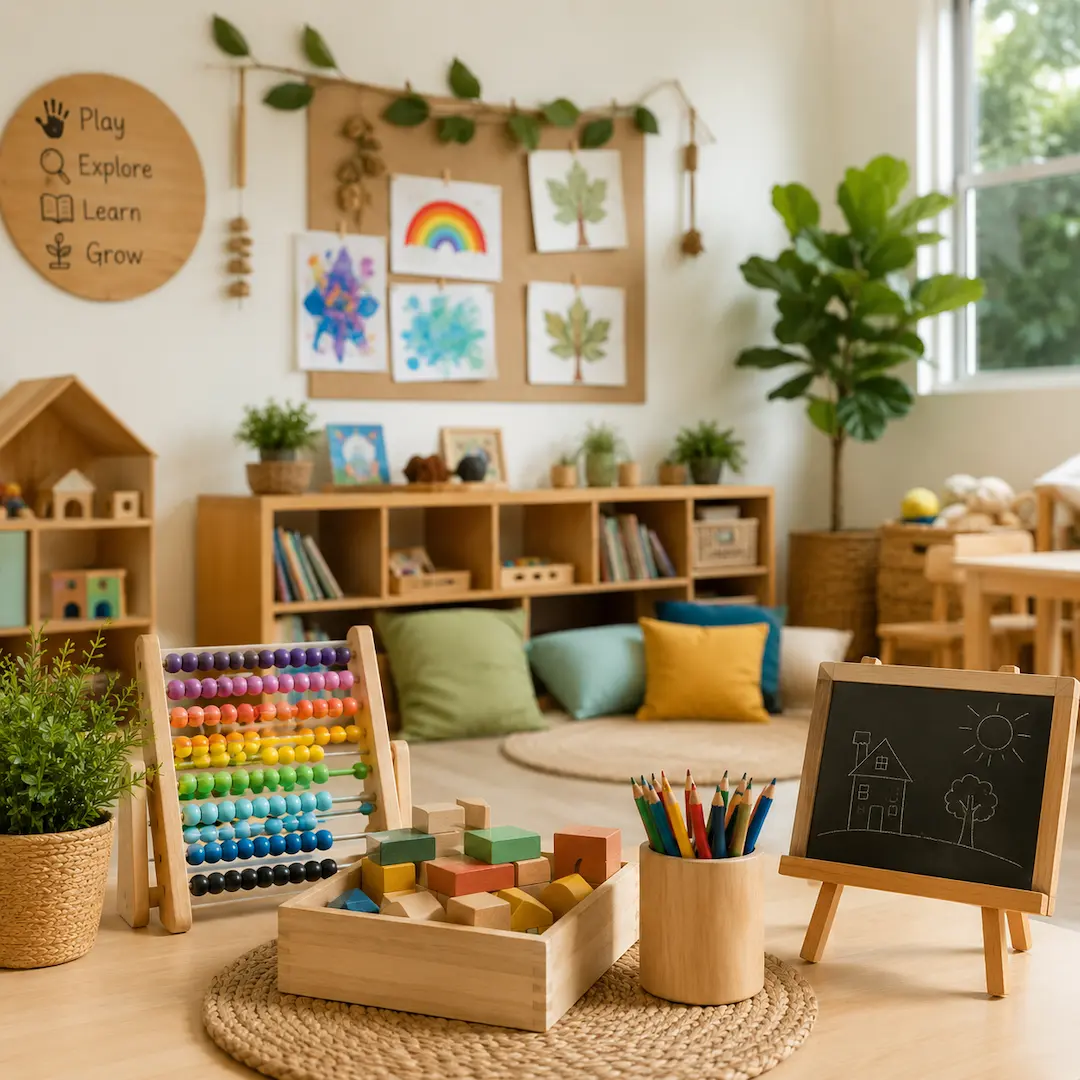
Maths in kindergarten is hands-on and practical. Children learn number recognition and counting through games and daily routines. They explore simple addition and subtraction by grouping objects like blocks or toys. Beyond numbers, they begin to understand patterns, measurements, and volume,for example, by pouring water or sand into different containers to see which holds more.
Understanding the World
Children are naturally curious, and kindergarten harnesses this curiosity. They learn to identify and name shapes and objects in their environment. They also start grasping concepts of time, such as days of the week, months, and the changing seasons. This helps them understand the world around them and brings structure to their daily lives.
Nurturing Social and Emotional Growth
For many children, kindergarten is their first experience navigating a social world outside their family. Social and emotional development is perhaps the most critical aspect of early learning, as these skills help children make friends and manage their feelings.
Developing Social Skills
Learning to interact with peers and adults is a daily practice. Children learn how to share resources, take turns, and cooperate in group activities. They develop communication skills by expressing their needs and listening to others. These interactions teach them empathy and how to resolve minor conflicts with the guidance of their educators.
Emotional Regulation and Confidence
A key focus in kindergarten is helping children identify and manage their emotions. They learn that it is okay to feel frustrated or sad and are given tools to cope with these feelings. As they master new tasks,whether it is zipping up a jacket or finishing a puzzle,they build independence and self-confidence. This resilience is vital for their transition to the more structured environment of school.
Creativity and Self-Expression
Through art, music, dance, and role-playing, children learn to express themselves creatively. Whether they are painting a picture or pretending to be a doctor in the home corner, they are processing their experiences and communicating their unique perspective of the world.
Supporting Physical and Mental Health
A holistic kindergarten program looks after the whole child, including their physical body and their mental well-being. Healthy habits formed now can last a lifetime.
Moving Mind and Body
Physical activity is essential for growing bodies. Children engage in activities that get their hearts pumping, like running, jumping, and climbing. Many programs also incorporate calming practices like simple yoga or mindfulness exercises, which help children learn to slow down and focus their attention.
Motor Skill Development
Educators plan activities specifically to develop both fine and gross motor skills. Gross motor skills involve large movements like balancing on a beam or throwing a ball, which builds coordination. Fine motor skills involve smaller movements, such as holding a pencil, using scissors, or threading beads. Strong fine motor skills are essential for writing and self-care tasks like buttoning shirts.
Nutrition and Healthy Habits
Meal and snack times are learning opportunities too. Children learn about the importance of fueling their bodies with nutritious food. Understanding where food comes from and making healthy choices fosters a positive relationship with eating.
The Power of Play-Based Learning
You might hear educators talk about “play-based learning” and wonder what it means. It is not just free time; it is intentional teaching disguised as fun. Research shows that play is the primary way young children learn.
Play as a Learning Tool
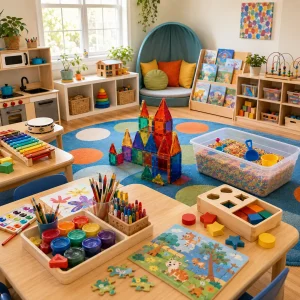
When children play, they are constantly solving problems and thinking critically. Building a tower requires understanding balance and gravity. Playing “shop” involves maths and social negotiation. Play allows children to test ideas and learn from mistakes in a low-pressure environment.
Puzzles and Construction
Engaging with puzzles and construction sets enhances memory and concentration. It requires patience and persistence to fit pieces together or build a structure that stands up. These activities also boost spatial awareness, which is helpful for later mathematics learning.
Fostering Independence
Play encourages children to think for themselves. They choose what to play with and how to use materials, which fosters decision-making skills and autonomy. This independence is a key indicator of school readiness.
How Children’s Choice Nurtures Development and School Readiness
At Children’s Choice, we believe every child deserves the best start in life. Our approach to early learning is designed to support each child’s unique journey in a safe and welcoming atmosphere.
We focus on creating a nurturing environment where children feel secure enough to explore and take risks in their learning. Our educators are dedicated to preparing children not just for primary school, but for a lifetime of curiosity. By integrating academic concepts with play-based experiences, we ensure learning is engaging and effective.
Convenience and community connection are also central to our mission. We know parents need accessible, high-quality care. Our centres are conveniently located for families looking for a leading childcare centre Raceview. We are committed to serving these communities with exceptional early education standards.
Furthermore, if you are searching for the best childcare centre Ipswich has to offer, Children’s Choice provides the comprehensive school readiness programs you need. We pride ourselves on being a partner in your child’s development, ensuring they step into their next chapter with confidence.
FAQs About Kindergarten Learning
What key academic skills do children develop in kindergarten?
Children build foundational literacy and numeracy skills. This includes recognising letters and sounds, counting, and understanding shapes. However, these are taught through songs, games, and hands-on activities rather than formal lessons, ensuring children develop a genuine love for learning.
How does kindergarten support social and emotional development?
Kindergarten provides a supportive space for children to practice interacting with others. They learn to share, take turns, and communicate their feelings. Educators guide them in resolving conflicts and managing emotions, which builds the resilience and confidence needed for school and friendships.
What role does play-based learning have in kindergarten?
Play is the “work” of childhood. Through play, children develop critical thinking and problem-solving skills. Whether building with blocks or engaging in dramatic play, they are testing theories and learning how the world works, which deepens their understanding of complex concepts.
How does Children’s Choice prepare children for school?
Children’s Choice uses a tailored school readiness program that balances academic basics with social-emotional growth. We focus on independence, routine, and confidence, ensuring your child is ready for the classroom environment. Our nurturing approach helps children feel capable and excited about their next educational step.
What should I look for in the best childcare centre Ipswich has to offer?
When searching for a top centre in Ipswich, look for a nurturing environment that prioritises safety and relationships. The best centres offer a balance of structured learning and free play, with experienced educators who genuinely care about your child’s individual development and happiness.
Investing in Your Child’s Future with Children’s Choice
Kindergarten is a vital stepping stone in your child’s life. It is where they discover their potential, learn to navigate the social world, and build the confidence to tackle new challenges. By providing a rich blend of academic, social, and physical learning opportunities, we set the stage for a bright future.
Children’s Choice is dedicated to providing quality early learning experiences that parents trust. When you choose us, you are choosing a partner who cares as much about your child’s growth as you do.