For many parents, getting ready for kindergarten brings two feelings at once: excitement and worry. You may wonder if your child should already know letters, numbers, or how to write their name. But in most classrooms, teachers are looking just as closely at something else: whether a child can manage feelings, follow routines, ask for help, and join in with others.
That is what school readiness skills are really about. At Children’s Choice, we know that a strong start comes from the whole child, not just early academics. National snapshots from the Australian Early Development Census also show why social, emotional, and physical development matter so much in the early years.
In this guide, you’ll learn:
- what school readiness actually means
- which skills matter most before kindergarten
- simple ways to build those skills at home
- how Children’s Choice supports a confident transition to school
What Does School Readiness Actually Mean?
Many families picture school readiness as knowing the alphabet, counting to 20, or holding a pencil correctly. Those skills can help, but they are only one part of the picture. In real classrooms, children also need to cope with routines, listen to directions, manage their belongings, and work with other children.
That is why school readiness is best understood as holistic development. It includes emotional regulation, social skills, language, physical independence, and the ability to take part in group learning. The Department of Education highlights the importance of supporting children’s development across multiple areas as they move into formal schooling.
A child who can sit for a short story, wait for a turn, or ask an adult for help is already showing important readiness skills. These daily abilities shape how well they settle into the school environment.
Think of it this way: academic learning grows faster when the foundation is strong. If a child feels safe, can manage frustration, and knows how to join in, they are more ready to learn letters, numbers, and new routines.
Emotional Regulation: The Master Key to Learning
Preschoolers have big feelings. That is normal. They are still learning how to handle disappointment, change, excitement, and frustration.
In kindergarten, emotional regulation becomes one of the most important school readiness skills. A child may need to stop an activity before they are finished, wait longer than they want, try something difficult, or recover from a mistake. If they can calm themselves and keep going, learning becomes much easier.
Children do not need perfect self-control before starting school. They just need growing skills. For example, a child may still get upset but can now use words, take a breath, or accept comfort from an adult. That is real progress.
How parents can build emotional regulation at home
Here are a few simple ways to help:
- Name feelings clearly
Say things like, “You’re frustrated because the tower fell,” or “You seem disappointed that playtime is over.” This helps children connect feelings with words. - Stay calm during hard moments
Your calm voice helps your child borrow regulation from you. Short, steady language works better than long lectures. - Allow small struggles
If a puzzle piece does not fit or a shoe is hard to put on, pause before stepping in. Small challenges help children practice persistence. - Use predictable routines
Children manage transitions better when they know what comes next. Morning, mealtime, and bedtime routines all help build security. - Practice calming tools
Try deep breaths, counting slowly, or sitting in a quiet spot together after a tough moment.
A child who can recover after feeling upset is not just better prepared emotionally. They are also better prepared to listen, focus, and learn.
Social Navigation and Classroom Participation
Kindergarten is a social setting from the moment the day begins. Children share space, wait for attention, join group activities, and respond to other people’s needs. Even simple classroom moments require social understanding.
That is why social navigation matters so much. Teachers often look for skills such as:
- taking turns
- sharing materials
- following simple group instructions
- joining play without dominating it
- coping when things do not go their way
- solving small conflicts with support
These skills are not built through lectures. They are built through experience, especially play. When children play with others, they practice reading cues, adjusting their behavior, and negotiating. Those early interactions also support executive functioning, which helps with attention, flexibility, and self-control.
Easy ways to practice social skills at home
You do not need a formal program. Everyday activities work well:
- Board games teach turn-taking and patience.
- Pretend play helps children practice roles, cooperation, and problem-solving.
- Playdates or park time give them chances to enter and leave group play.
- Family games help children handle both winning and losing.
One helpful habit is to coach after the moment, not during every second of it. If your child grabs a toy, wait until calm returns, then talk through what happened and what they could try next time.
These little lessons add up. A child who can share space and take part in a group will often settle into kindergarten more smoothly.
Physical Independence and Fine Motor Skills
Physical independence gives children confidence. It also helps the school day run better. If a child can manage basic tasks on their own, they spend less time feeling stuck and more time feeling capable.
Before kindergarten, children benefit from practicing practical self-help skills such as:
- opening a lunchbox
- unzipping and zipping a bag
- putting on shoes
- washing hands properly
- managing toileting independently
- packing away their belongings
These tasks may seem small to adults, but they can feel huge to a young child in a busy classroom. Independence lowers stress and helps children move through the day with more ease.
Physical readiness also includes stamina and fine motor development. Children need enough core strength to sit upright during group time, enough coordination to use tools like crayons and scissors, and enough energy to stay engaged through a full day. The Queensland Government’s early childhood education resources emphasize the value of physical wellbeing in the early years.
Practical ways to build physical readiness
Try these at home:
- Do a lunchbox test
Use the exact containers your child will take to school and let them open and close each one by themselves. - Make dressing part of the routine
Give extra time in the morning so your child can practice shoes, socks, and jackets. - Build hand strength through play
Playdough, drawing, tongs, stickers, and child-safe scissors all support fine motor control. - Encourage active play
Climbing, jumping, balancing, and running help build body awareness and stamina. - Practice tidy-up habits
Asking your child to put toys back in the right place supports independence and routine-following.
Children feel more secure when they can do things for themselves. That confidence often carries over into learning and social participation too.
Communication Confidence and Self-Advocacy
Communication is about more than vocabulary. A child may know many words but still struggle to explain a need, listen to a direction, or ask for help at the right time.
In kindergarten, communication confidence matters every day. Children need to say when they are unsure, let an adult know if they feel unwell, ask to use the bathroom, and express themselves clearly with peers. These are core school readiness skills because they help children stay safe, connected, and involved.
Self-advocacy is a big part of this. Young children do not need polished language. They just need enough confidence to speak up. A simple sentence like “Can you help me?” or “I’m not finished yet” can make a big difference.
At Children’s Choice, educators support this growth by modeling respectful communication, encouraging back-and-forth conversation, and helping children put words to their feelings and needs. When children feel heard, they are more likely to speak with confidence.
How to encourage communication at home
You can build these skills through ordinary moments:
- Ask open-ended questions like “What was your favorite part?” instead of yes-or-no questions.
- Pause after asking something so your child has time to think and answer.
- Encourage polite problem-solving, such as “Can I have a turn when you’re done?”
- Role-play simple school scenarios, like asking a teacher for help.
- Read together and talk about what characters might be thinking or feeling.
A child who can listen, speak up, and ask for help has an easier time navigating the classroom day.
Building Learning Stamina Through Everyday Routines
Kindergarten asks children to stay engaged for longer than they may be used to at home. They need to move between activities, listen to instructions, and keep trying even when a task feels tricky. This takes learning stamina.
Learning stamina is not about sitting still for long stretches without support. It is about gradually building focus, flexibility, memory, and resilience. A child who can stick with a puzzle, return to a task after a break, or try again after making a mistake is developing this skill.
Imagine a child drawing a picture and becoming upset when the crayon breaks. One child gives up right away. Another pauses, accepts help, and starts again. That second response shows the kind of stamina that supports success in the early school years.
Simple ways to build focus and resilience
- Offer short, sustained activities like puzzles, blocks, coloring, or sorting games.
- Increase time slowly so focus grows without becoming a battle.
- Break tasks into steps to make them feel manageable.
- Praise effort by saying things like, “You kept trying,” instead of only praising the final result.
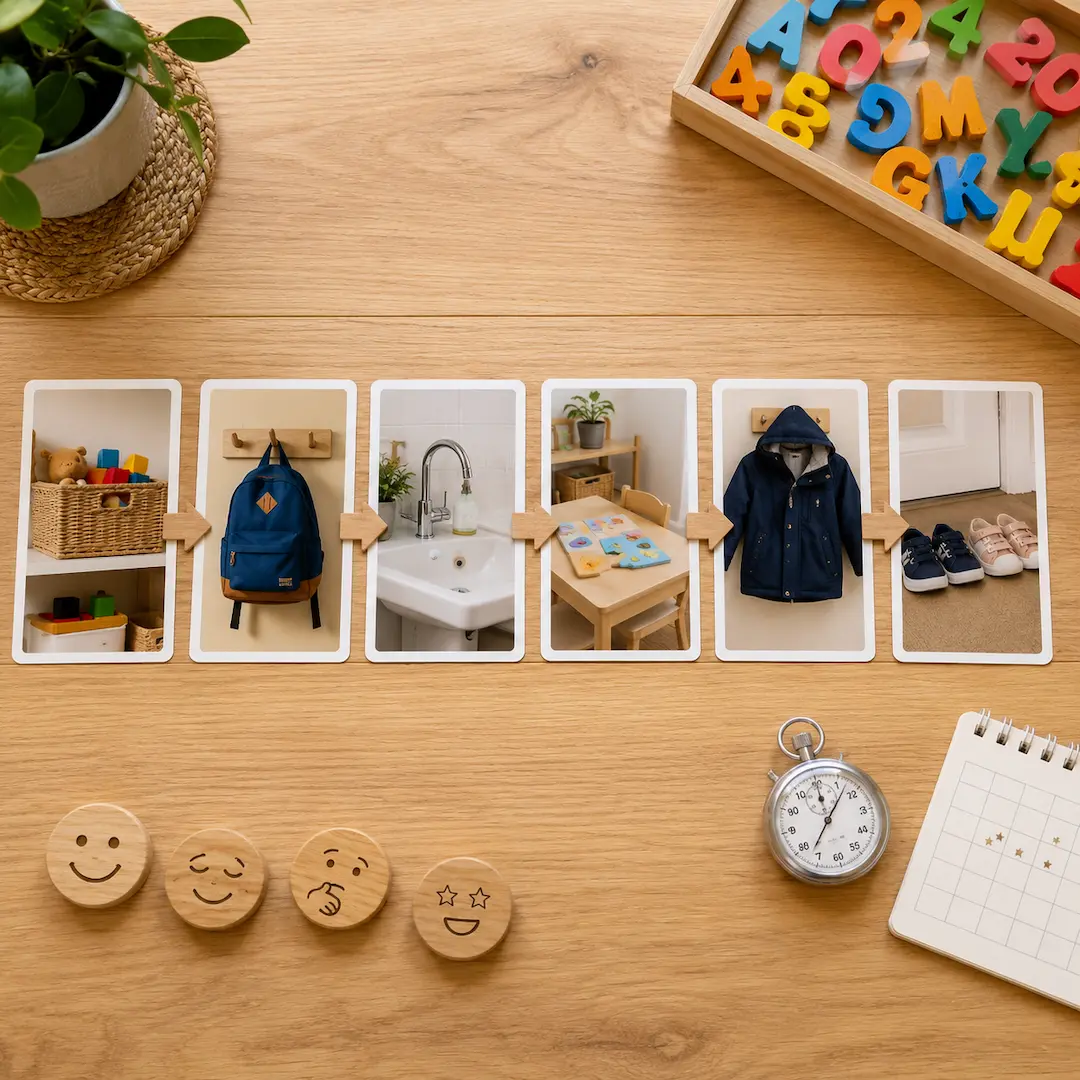
- Use routines so children know when it is time to listen, tidy up, eat, or rest.
There is another helpful factor here: consistency. A child who follows simple routines at home often finds classroom routines easier to understand. That sense of predictability frees up energy for learning.
Setting Your Child Up for Success
School readiness is not about pushing academics earlier and earlier. It is about helping your child build the social, emotional, physical, and communication skills that make learning possible in the first place.
When children have secure relationships, steady routines, and plenty of play-based learning, they develop the confidence to manage the school day. They learn how to cope with challenges, connect with others, and keep trying when something feels hard.
The good news is that these skills grow through everyday life. Packing a lunchbox, taking turns in a game, naming feelings, listening to a story, and asking for help all contribute to school readiness in meaningful ways.
At Children’s Choice, we believe every child deserves a calm, supported start to their learning journey. If you’re preparing for the transition to kindergarten, we invite you to explore how Children’s Choice helps children build the readiness skills that matter most.
FAQs
What are the key school readiness skills for kindergarten?
Key school readiness skills include emotional regulation, social interaction, language and communication abilities, basic motor tasks, the ability to follow instructions, early numeracy, and a basic understanding of letters and sounds.
How can parents encourage emotional regulation in young children?
Parents can encourage emotional regulation by modeling calm behavior, teaching children to identify and express their feelings, and providing strategies like deep breathing or using words to handle frustration.
What social skills should children develop before kindergarten?
Children should be able to share, take turns, play cooperatively with peers, and follow group rules. Building these skills helps them adapt to classroom dynamics and interact with others successfully.
How can I help my child improve their fine and gross motor skills?
Engage your child in activities like drawing, cutting with safety scissors, climbing, and playing catch. These tasks strengthen hand-eye coordination and motor control needed for classroom tasks.
Why are early literacy and numeracy skills important?
Early literacy and numeracy skills, such as recognizing letters, numbers, and counting, build a strong foundation for more complex learning in kindergarten and beyond.
How can I encourage my child to follow instructions?
Start with simple one-step instructions and gradually build to multi-step tasks. Positive reinforcement and practicing in fun, everyday scenarios can make this process more engaging.
How much independence is necessary before starting kindergarten?
Encourage your child to practice basic self-care tasks such as dressing, using the restroom, and cleaning up after themselves. Fostering independence helps them feel confident and capable in a school setting.