Choosing the right early learning setting is one of the biggest decisions a family can make. In Park Ridge, more parents are looking beyond worksheets and rigid routines. They want a place where their children can learn in ways that feel natural, joyful, and meaningful. That is why play-based early learning is gaining strong support among local families.
Play-based learning is not “just play.” It is a proven approach that helps young children build social, emotional, physical, and thinking skills through hands-on experiences. In this blog, you will learn why this approach matters, what makes it effective, what it looks like in daily practice, and why families are choosing centres like Children’s Choice for a strong start.
Why early learning expectations have changed in Park Ridge
Family needs have changed. Parents today want more than basic care and supervision. They want an early learning environment that supports school readiness, confidence, wellbeing, and independence all at once.
Many local families also understand that the early years are critical for development. According to the Australian Government Department of Education, high-quality early childhood education helps children build a strong foundation for learning and life. That matters to parents who want their child to thrive not only in prep, but well beyond it.
Families want learning that matches how young children grow
Young children do not learn best by sitting still for long periods and memorizing facts. They learn by doing, exploring, repeating, pretending, building, moving, and talking. This is one reason play-based early learning appeals to so many Park Ridge families.
Parents often notice that when children are engaged in play, they are:
- More curious
- More willing to try new things
- Better able to solve problems
- More confident in social settings
- More motivated to learn
These are not small wins. They are the building blocks of lifelong learning.
There is less trust in one-size-fits-all learning models
Families are also moving away from the idea that every child should learn in the same way at the same pace. Play-based early learning allows educators to respond to each child’s interests, strengths, and stage of development.
That flexibility matters. One child may build early maths skills through blocks. Another may develop language through dramatic play. A third may strengthen focus and coordination through sensory activities. The learning goal is still there, but the path feels natural and child-centered.
What play-based early learning really means
Play-based early learning is a structured educational approach where children learn through guided and self-directed play. Skilled educators plan experiences with clear learning outcomes in mind, even when the activity looks simple on the surface.
The Queensland Government’s early childhood information supports approaches that promote children’s development through responsive, age-appropriate learning experiences. Play-based programs fit this well because they support the whole child.
It blends fun with purposeful teaching
Good play-based learning is intentional. Educators observe children, ask questions, extend ideas, and create opportunities for deeper learning.
For example, a child playing in a pretend grocery store may be learning to:
- Count items
- recognise numbers
- Use new vocabulary
- Practice turn-taking
- Build confidence in conversation
This is one reason many Park Ridge families prefer this model. It does not separate learning from enjoyment. It combines both.
It supports every area of development
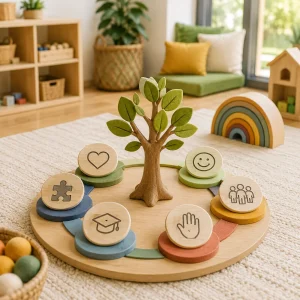
Play-based early learning helps children grow across key areas at the same time, including:
- Language and communication through stories, songs, role play, and group discussion
- Social skills through sharing, teamwork, and conflict resolution
- Physical development through climbing, running, fine motor tasks, and outdoor play
- Emotional growth through self-expression, resilience, and self-regulation
- Early literacy and numeracy through games, patterns, counting, sorting, and mark making
The Australian Children’s Education and Care Quality Authority also highlights the value of quality early childhood programs that support children’s learning, development, and wellbeing in a holistic way.
Why Park Ridge families are drawn to this approach
There are several practical reasons local families are choosing play-based early learning over more formal models.
Children are more engaged when learning feels natural
When children enjoy what they are doing, they stay involved for longer. They ask more questions. They test ideas. They come back to activities again and again. That kind of repetition is powerful because it helps deepen understanding.
Parents in Park Ridge often want their children to feel excited about learning, not pressured by it. Play-based settings create that positive connection early.
It helps build school readiness without stress
Some families worry that play-based early learning may not prepare children for school. In reality, strong programs do the opposite. They help children build the skills schools value most.
These include:
- Listening and following instructions
- Working with others
- Managing emotions
- Solving simple problems
- Recognizing sounds, shapes, letters, and numbers
- Becoming more independent with daily routines
The Queensland Curriculum and Assessment Authority provides early years guidance that reflects the importance of developmentally appropriate learning. School readiness is not only about academic drills. It is also about confidence, communication, and the ability to participate in a group setting.
Families value the whole-child focus
Many parents are not just asking, “Can my child count to 10?” They are asking bigger questions:
- Is my child happy and secure?
- Are they making friends?
- Are they learning to express themselves?
- Do they feel safe enough to explore?
- Are they building resilience and independence?
Play-based early learning speaks directly to these concerns. It supports academic growth, but it does not ignore emotional and social development.
What play-based learning looks like in practice
Understanding the day-to-day experience can help families see why this model works so well.
Scenario A: Learning through imaginative play
A group of children sets up a pretend veterinary clinic. One child is the vet, another is the pet owner, and another writes “appointments” on a clipboard.
In that one activity, children may be practicing:
- Speaking and listening
- Writing for a purpose
- Empathy and caregiving
- Cooperation and role negotiation
- Planning and memory
To a child, it feels like fun. To a skilled educator, it is rich learning.
Scenario B: Learning through sensory and outdoor experiences
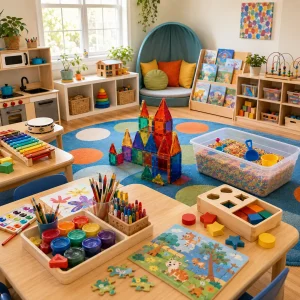
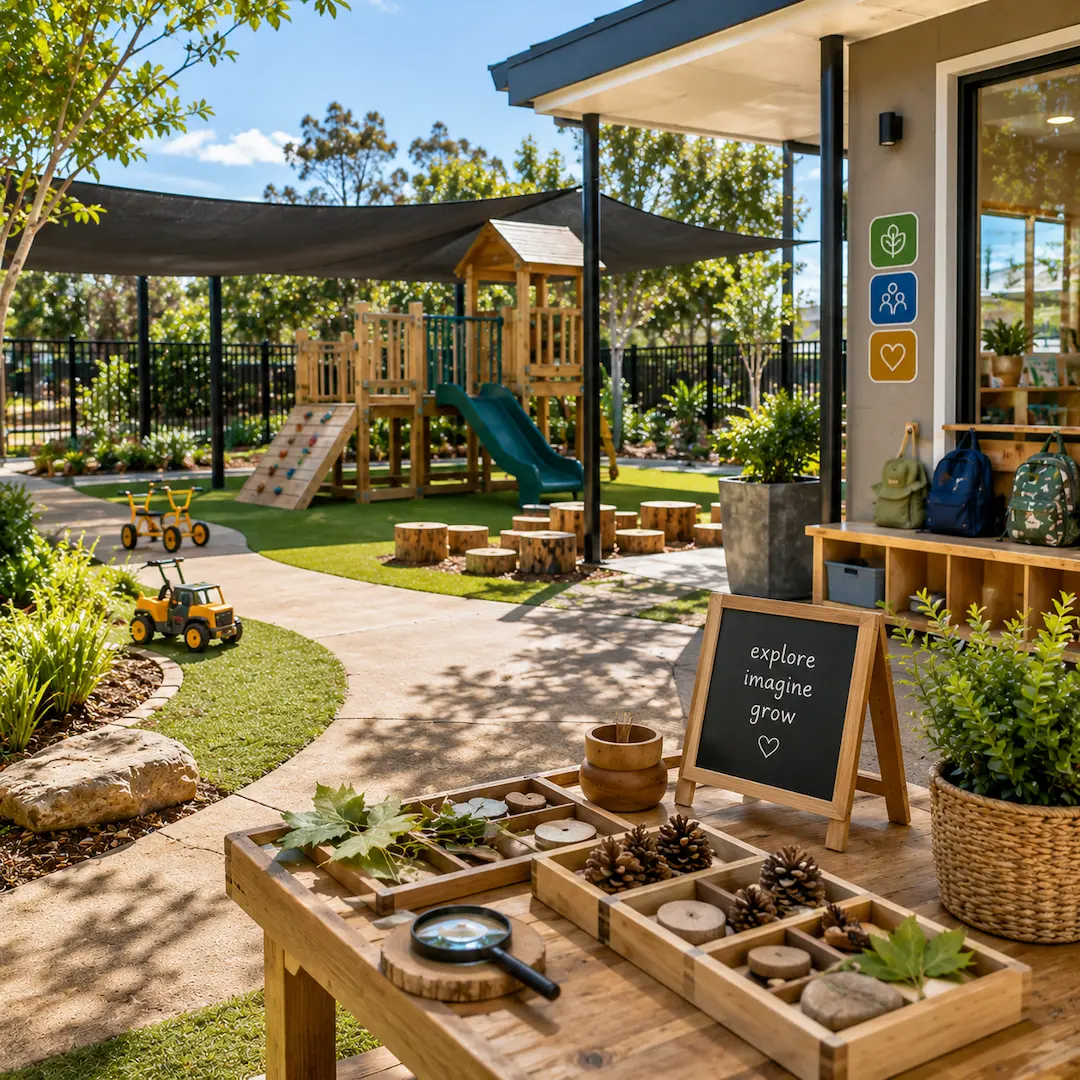
Outdoors, children might collect leaves, dig in soil, pour water, or build obstacle courses. These experiences help develop coordination, scientific thinking, and persistence.
Children learn to ask questions such as:
- What happens when I mix this?
- Why does this float?
- How can I make this tower stronger?
- What do I need to change to make this work?
This kind of hands-on discovery helps children become active learners rather than passive receivers of information.
Scenario C: Learning through guided group experiences
Play-based learning also includes intentional group times. Educators may use stories, songs, games, or shared projects to build focus and teach specific concepts.
For example, a group story session can support:
- Listening skills
- Vocabulary growth
- Sequencing
- Comprehension
- Emotional understanding
At Children’s Choice, this balance between child-led discovery and educator-guided teaching is part of what families appreciate most.
Common misconceptions about play-based early learning
Some parents hear the term and assume it means children do whatever they want all day. That is not the case in a quality program.
Misconception 1: “It is just free play”
Free play can be part of the day, but strong play-based programs are guided by clear learning goals. Educators plan environments, observe children closely, and extend learning through questions and challenges.
Misconception 2: “Children will fall behind academically”
Play-based learning builds early literacy and numeracy in ways that fit a child’s stage of development. Children often learn better because the concepts are tied to real experiences.
Misconception 3: “It is too unstructured”
In quality centres, the environment is carefully prepared. The learning may look flexible, but it is supported by routines, thoughtful planning, and professional teaching strategies.
What to look for in a play-based early learning centre
If you are comparing options in Park Ridge, a few signs can help you spot a quality program.
Watch for these indicators
- Educators engage with children rather than only supervise them
- Learning spaces invite exploration, creativity, and movement
- Daily experiences include indoor and outdoor play
- Children are encouraged to ask questions and make choices
- Educators can explain the learning behind activities
- The environment feels warm, calm, and welcoming
You will also want to notice how children respond. Are they curious? Settled? Involved? Happy to participate? Those signs matter.
Quick checklist for families in Park Ridge
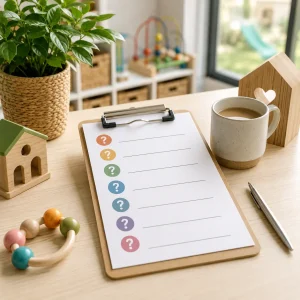
Use this simple checklist when exploring early learning options:
- Does the centre explain how children learn through play?
- Are educators intentional, warm, and responsive?
- Is there a balance of child-led and guided learning?
- Do the activities support social, emotional, physical, and cognitive growth?
- Does the environment feel safe, stimulating, and age-appropriate?
- Can you picture your child feeling confident and engaged there?
If the answer is yes to most of these, you are likely looking at a strong fit.
Conclusion
More families in Park Ridge prefer play-based early learning because it reflects how young children learn best. It builds confidence, curiosity, communication, and school readiness in a way that feels natural and supportive. Rather than pushing children into narrow academic routines too soon, it gives them the skills they need to grow well.
For families looking for a nurturing and purposeful early learning environment, Children’s Choice reflects the kind of whole-child approach many parents now value most. Use the checklist above as you compare your options and focus on the setting where your child can feel secure, capable, and excited to learn.
FAQs
What is play-based learning?
Play-based learning is an educational approach where children learn through hands-on exploration and play activities. It emphasizes creativity, problem-solving, and social interaction, all within a structured yet flexible framework.
How does play-based learning support development?
Play-based learning supports holistic development by fostering cognitive, social, emotional, and physical growth. Through imaginative play and group activities, children build critical thinking skills, teamwork abilities, and self-confidence.
At what age should children begin play-based learning?
Play-based learning is ideal for young children, typically starting at preschool age (around 3 to 5 years old). However, it can benefit children at various developmental stages depending on the program.
Does play-based learning prepare children for school?
Yes, play-based learning equips children with essential pre-academic skills like language, early math concepts, and problem-solving abilities. It also fosters a love of learning, making the transition to formal schooling smoother.
How does play-based learning differ from traditional methods?
Compared to traditional methods, play-based learning focuses less on direct instruction and rote memorization and more on active, hands-on experiences. It encourages children to explore, ask questions, and engage in collaborative activities.
Is play-based learning aligned with educational standards?
Yes, most play-based programs align with early childhood education standards while offering a developmentally appropriate way to meet learning goals. This ensures children are school-ready while enjoying the process.
How can parents support play-based learning at home?
Parents can support play-based learning by encouraging unstructured playtime, providing materials for creative activities, and engaging in their child’s imaginative play. Creating a supportive and exploratory environment at home can further enhance their development.