Key Takeaways
The eight developmental benefits of play-based learning for young children, and why play is how they learn best.
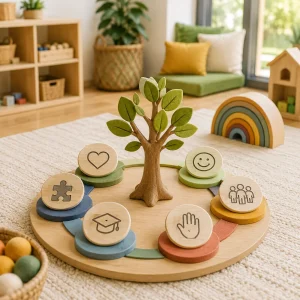
- Play-based learning develops the whole child, from thinking skills to emotional regulation, all at once.
- Problem-solving, language and social skills are all built through everyday, guided play.
- Play is not a break from learning; for young children, it is the most effective way to learn.
- The approach is grounded in Australia’s Early Years Learning Framework.
- Together, these benefits lay a strong foundation for school and beyond.
Why Play-Based Learning Benefits Young Children So Much
Watch a child deeply absorbed in play and you are watching learning in its most powerful form. The benefits of play-based learning are wide-ranging and profound, because play develops the whole child at once, from thinking and language to emotions and confidence. This is exactly why quality early education is built around it.
This guide sets out the 8 benefits of play-based learning for young children, one developmental area at a time. Whether you are a parent weighing up an early learning program or simply curious about how young children learn, understanding these benefits shows why something that looks like play is, in fact, serious developmental work.
Play-based learning is not a trend. It is grounded in decades of child development research and in Australia’s Early Years Learning Framework, the national framework for early education. Our guide on play-based learning in childcare explains the foundations, and the eight benefits below show what it delivers.
1. It Develops Problem-Solving and Critical Thinking
The first benefit is that play builds problem-solving and critical thinking. A child working out how to make a tower stand, or how to fit shapes together, is doing real cognitive work and enjoying every minute of it.
Play is full of small, meaningful challenges. Children experiment, fail, adjust and try again, which is exactly how problem-solving develops. Because the child is motivated by the play itself, they persist far longer than they would with a worksheet, building the kind of flexible thinking that transfers directly to school learning.
This is one of the most underrated benefits of play. Our guide on how play helps children develop critical thinking skills explains the science behind it in more depth.
2. It Builds Language and Communication
The second benefit is that play strongly develops language and communication. The early years are a critical window for language, and play immerses children in conversation, storytelling, new words and self-expression.
Imaginative play in particular is a language powerhouse. When children play shops, families or doctors, they practise vocabulary, negotiate roles and narrate their ideas, all while educators model and extend their language. This everyday immersion builds the strong communication skills that underpin reading, learning and social confidence later on.
Communication is one of the clearest benefits parents see. Our guide on developing communication skills in preschool explores how play accelerates this crucial area.
3. It Strengthens Social Skills and Cooperation
The third benefit is that play develops social skills and cooperation. Shared play is where children learn to take turns, share, negotiate, resolve conflict and work together, all essential skills for school and life.
These social skills cannot be taught from a book; they are practised in real interactions. Group play gives children countless low-stakes chances to navigate other people’s needs and feelings, with educators guiding them through the tricky moments. Over time, children become more cooperative, empathetic and socially confident.
For many families, watching a shy child grow sociable through play is the clearest proof of its value. Cooperative, guided play is where lasting friendships and social confidence begin.
4. It Supports Emotional Development and Regulation
The fourth benefit is that play supports emotional development and regulation. Through play, children explore and make sense of their feelings, learning to manage frustration, express emotions and build resilience in a safe setting.
Imaginative and pretend play is especially powerful here. When a child acts out a scenario, they process real emotions and experiences at a safe distance, which helps them understand and regulate their feelings. Educators support this by naming emotions and modelling calm responses, building a child’s emotional vocabulary and control.
Emotional regulation is a foundation for everything else. Our guide on how imaginative play supports emotional growth explores this benefit in detail.
5. It Develops Fine and Gross Motor Skills
The fifth benefit is that play develops both fine and gross motor skills. Physical play builds the strength, coordination and control children need for everything from running to holding a pencil.
Gross motor skills grow through active play: running, climbing, jumping and balancing all build large-muscle strength and coordination. Fine motor skills develop through activities like threading, drawing, cutting, building and manipulating small objects, which prepare a child’s hands for writing. A quality program balances both across the day.
These physical foundations matter more than many parents realise. Fine motor development in particular underpins school-readiness tasks like writing, and it is built steadily through everyday play.
6. It Sparks Creativity and Imagination
The sixth benefit is that play nurtures creativity and imagination. Open-ended play invites children to invent, pretend, create and think in original ways, building a capacity that serves them for life.
Creativity is not just about art. It is about flexible thinking, generating ideas and approaching problems in new ways, all of which flourish in imaginative play. When a child turns a box into a spaceship or invents a game, they are exercising exactly the creative thinking that fuels learning and innovation later on.
Pretend play is one of the richest sources of this. Our guide on the benefits of pretend play explores how imaginative play builds creativity and so much more.
7. It Builds Confidence, Independence and Resilience
The seventh benefit is that play builds confidence, independence and resilience. In a safe, supported setting, children learn to try new things, make choices, do things for themselves and recover from setbacks.
Confidence grows one small success at a time. When a child masters a new skill, makes a friend or solves a problem in their play, they build a quiet self-belief. Independence develops alongside it as children learn to manage tasks themselves, and resilience grows every time they try again after something does not work. Play offers endless chances for all three.
This inner foundation lasts. A confident, independent, resilient child approaches school and new challenges with genuine self-assurance rather than anxiety.
8. It Lays the Foundation for School Readiness
The eighth benefit ties the others together: play-based learning builds genuine school readiness. All the skills above, thinking, language, social, emotional, physical and creative, are exactly what a child needs to thrive at school.
School readiness is about far more than knowing letters and numbers. It is about a child who can separate from a parent, follow a routine, get along with others, manage feelings and approach learning with confidence. Play-based learning develops every one of these naturally, so children arrive at school ready and eager rather than anxious.
This is why the approach is so valued. To see how a quality program brings these benefits together, you are welcome to explore our early learning programs or visit our Raceview centre page.
The 8 Benefits at a Glance
Here is a quick summary of what each benefit develops.
| Benefit | What it builds |
| Problem-solving | Critical thinking, persistence |
| Language and communication | Vocabulary, expression |
| Social skills | Sharing, cooperation, empathy |
| Emotional development | Regulation, resilience |
| Motor skills | Coordination, writing readiness |
| Creativity | Imagination, flexible thinking |
| Confidence and independence | Self-belief, self-reliance |
| School readiness | The whole foundation for school |
Why the Benefits Matter Together
The real power of play-based learning is that these eight benefits develop together, not in isolation. A single episode of imaginative play might build language, social skills, emotional regulation and creativity all at once. That is what makes play such an efficient and natural way for young children to learn.
For parents, the takeaway is reassuring. When your child is playing in a quality early learning program, they are not missing out on learning; they are learning in the most effective way there is. If you would like to see it in action, you are welcome to reach out to Children’s Choice or contact our team.
Frequently Asked Questions
What are the benefits of play-based learning?
Play-based learning develops problem-solving and critical thinking, language and communication, social skills, emotional regulation, fine and gross motor skills, creativity, confidence and independence, and school readiness. These benefits develop together through guided play, which is the most effective way for young children to learn, as reflected in the Early Years Learning Framework.
Is play-based learning better than academic teaching for young children?
For young children, play-based learning is generally more effective than formal academic teaching. Research and the Early Years Learning Framework recognise play as the primary way children under school age learn. Quality play-based learning is intentional and guided by educators, building the same skills as formal teaching while keeping children engaged.
How does play help brain development?
Play supports brain development by engaging children in problem-solving, language, social interaction, emotional processing and physical activity, all of which build neural connections during a critical developmental window. Because play is motivating, children engage deeply and repeatedly, which strengthens learning far more effectively than passive instruction at this age.
Does play-based learning prepare children for school?
Yes. Play-based learning builds the full set of school readiness skills, including thinking, language, social and emotional skills, motor skills and confidence. School readiness is about far more than letters and numbers, and quality play-based learning develops the whole child so they settle and thrive when they start school.
What is an example of play-based learning?
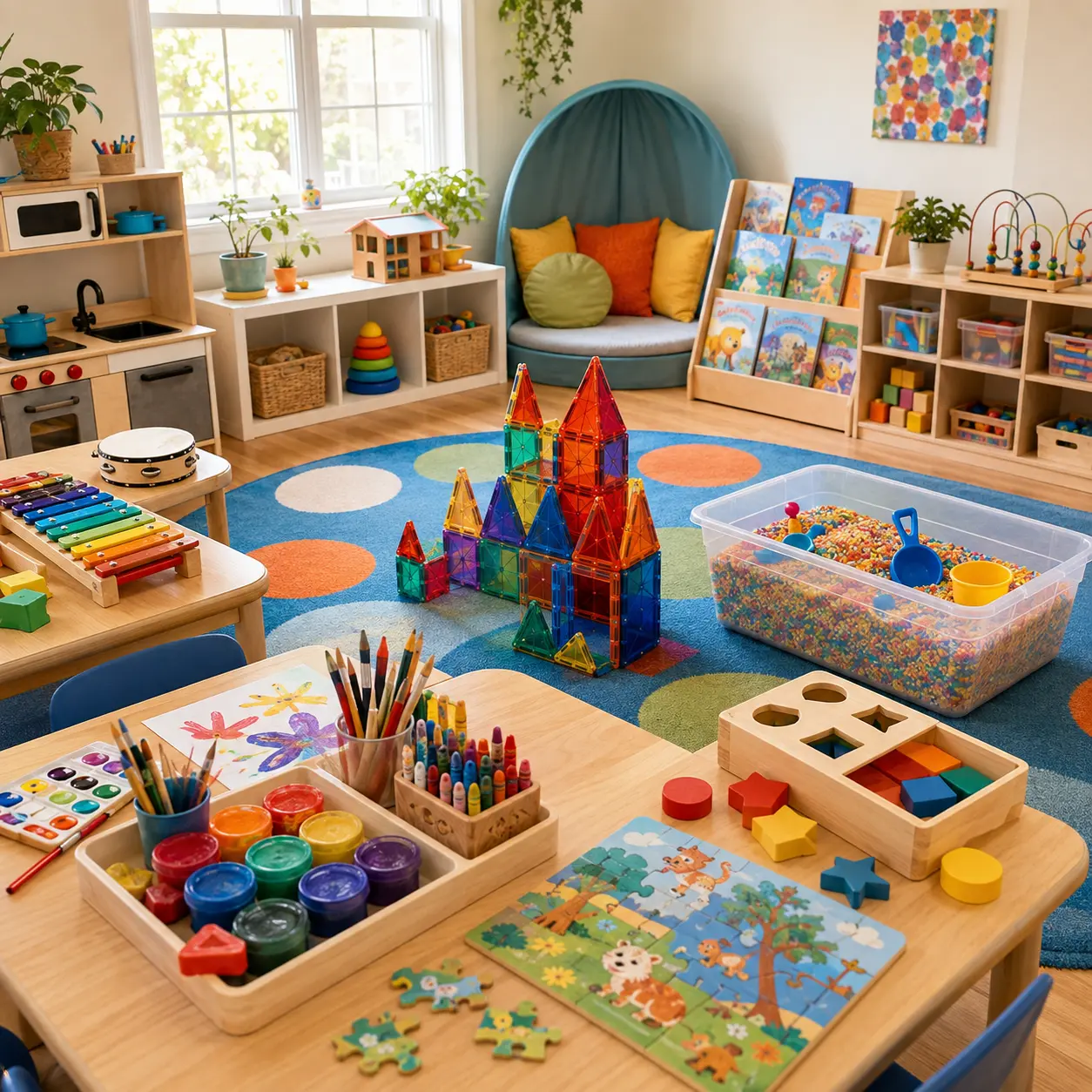
A simple example is block play, where a child builds and balances structures. This develops problem-solving, fine motor skills, persistence and often language and cooperation if playing with others. Imaginative play, art, outdoor exploration and group games are other examples, each building several developmental benefits at once through guided, purposeful play.
Resources & Further Reading
- Raising Children Network Play and learning in early childhood
- ACECQA Early Years Learning Framework and the National Quality Standard
- Australian Institute of Family Studies, Research on play, learning and child development —
- Queensland Government, Early childhood education and care for families