Choosing a preschool is one of the first big decisions you make for your child’s education, and it is natural to feel a mix of excitement and apprehension. You want an environment where your little one feels safe, happy, and inspired to learn. However, navigating the different educational terms and philosophies can sometimes feel overwhelming. You might hear terms like “Montessori,” “Reggio Emilia,” or “Play-Based” and wonder which approach will best support your child’s unique personality.
Every family wants the best start for their child, and understanding the “why” behind these methods can give you the confidence to make the right choice. While the terminologies differ, the ultimate goal is often the same: to foster a love for learning and support healthy development. The difference lies in how they get there, whether through structured, self-directed tasks or through open-ended exploration and imagination.
At Children’s Choice, we understand that every child learns differently. We believe that by understanding the core differences between the major philosophies, you can find a care environment that feels like a home away from home. Whether you are looking for a highly structured environment or a creative, social space, knowing what to look for is the first step in your journey.

Understanding Montessori Education
The Montessori method is a specific educational approach developed by Dr. Maria Montessori in the early 1900s. It is grounded in the belief that children are naturally eager to learn and capable of initiating learning in a supportive, thoughtfully prepared environment. If you visit a Montessori centre, you will likely notice a calm, orderly atmosphere where children are deeply focused on their tasks.
The Prepared Environment
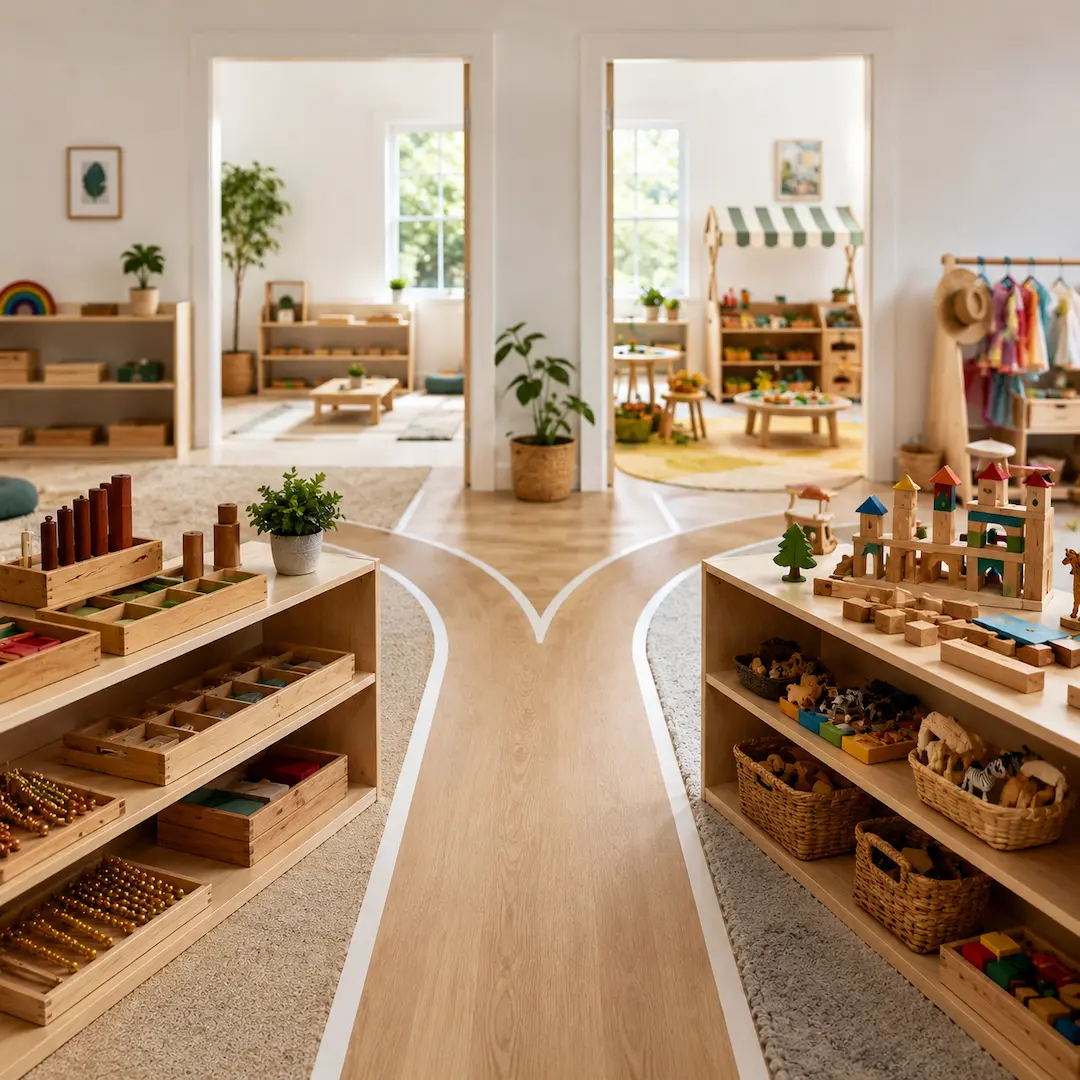
A key hallmark of Montessori is the “prepared environment.” Classrooms are meticulously organized with low shelves, allowing children to access materials independently. These materials are not typical toys; they are specific learning tools designed to teach concepts like mathematics, language, and sensory skills. Each item has a specific place and purpose, encouraging children to maintain order and respect their surroundings.
The Role of the Teacher
In this setting, the teacher acts more as a quiet guide than a traditional instructor. They observe the children and introduce new materials when a child shows readiness, but they generally step back to allow the child to learn through discovery. The focus here is heavily on independence, concentration, and completing tasks from start to finish.
Exploring Play-Based Learning
Play-based learning is exactly what it sounds like: a philosophy where play is the primary vehicle for learning. However, it is important to understand that this isn’t just “free time” or running around without purpose. In a high-quality play-based program, educators use play to foster cognitive, social, and emotional development in a way that feels natural and joyful to the child.
Learning Through Inquiry
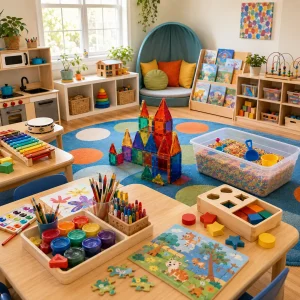
In a play-based classroom, you will see children engaging in open-ended activities, building block towers, engaging in dramatic play in a home corner, or exploring sensory tables filled with sand or water. These activities are designed to spark curiosity. When children play together, they are constantly solving problems, negotiating rules, and using their imagination to understand the world around them.
The Educator as a Co-Learner
Unlike the solitary focus often found in Montessori, play-based learning relies heavily on social interaction. Educators are active participants. They might ask open-ended questions like, “What do you think will happen if we add another block?” to extend the child’s thinking. This approach, often called “scaffolding,” helps children reach the next level of understanding while keeping the experience fun and engaging.
Montessori vs. Play-Based: Key Differences and Similarities
While both philosophies respect the child as a capable learner, their daily rhythms look quite different. Understanding these nuances can help you decide which environment suits your family values.
Structure vs. Flexibility
Montessori is generally more structured. Children choose activities, but they choose from a set range of prepared options and are expected to use the materials in a specific way. Play-based learning is more flexible and “emergent,” meaning the curriculum often evolves based on the children’s current interests. If the class is fascinated by a thunderstorm that morning, a play-based teacher might pivot the day’s learning to explore weather, water, and clouds.
Realism vs. Imagination
Montessori classrooms typically discourage fantasy play (like pretending to be fairies or superheroes) in favour of real-world tasks, such as washing dishes or chopping fruit. In contrast, play-based programs celebrate imaginative play. They view pretending as a crucial way for children to process emotions, develop empathy, and build complex language skills.
Social Interaction
Montessori work is often individual. A child selects a mat, works on a task alone, and returns it. While this builds incredible focus and independence, it offers fewer opportunities for collaboration than a play-based setting. Play-based environments are often buzzing with conversation and collaborative projects, placing a higher emphasis on social skills and teamwork.
How to Choose the Right Philosophy for Your Child
There is no single “correct” philosophy; there is only the right fit for your child. To make an informed decision, it helps to look at your child’s temperament and your own goals for their early years.
Consider Your Child’s Personality
Does your child thrive on routine, order, and quiet time? Do they enjoy tinkering with puzzles alone for long periods? They might flourish in a Montessori setting. On the other hand, if your child is highly social, loves storytelling, and enjoys creative, messy play, a play-based environment might be more nurturing for their spirit.
Observe the Environment
We strongly encourage parents to book tours. When you visit a centre, look beyond the equipment. Watch the children. Do they look engaged? Watch the educators. Are they on the floor interacting with the children? Trust your instincts on which atmosphere feels warm and welcoming to you.
Children’s Choice: Nurturing Development and School Readiness
At Children’s Choice, we believe that the early years should be filled with wonder, exploration, and secure relationships. We provide safe, nurturing childcare and play-based early learning that supports children’s development and school readiness.
Our approach integrates the best aspects of inquiry-based learning. We know that school readiness isn’t just about knowing ABCs; it’s about social confidence, emotional resilience, and the ability to ask questions. By creating play-based environments where children can experiment and collaborate, we ensure they leave us with the independence and curiosity needed to thrive in primary school.
Best Childcare Centre Raceview Options
Finding a location that offers high-quality care near your home is essential for a stress-free daily routine. We are proud to serve families across Queensland with centres that prioritize community and connection.
If you are looking for the best childcare centre Raceview has to offer, our local campus provides spacious outdoor environments designed to spark adventure. Similarly, for families further south, we are often cited as a leading childcare centre Raceview parents recommend, thanks to our dedicated team of long-standing educators.
We strive to be the best childcare centre Ipswich families can rely on. Whether you are touring our leading childcare centre Raceview location, you will find a genuine commitment to quality. We invite you to see why we are considered the best childcare centre Raceview has for early learning excellence.
Choosing the Right Philosophy: A Personalized Decision
Deciding on a preschool philosophy is a personal journey that depends on your family’s values and your child’s needs. Whether you lean toward the structure of Montessori or the creative freedom of play-based learning, the most important factor is a supportive, safe environment where your child feels seen and valued.
We encourage you to visit different centres, ask questions, and imagine your child in the space. If you are interested in seeing how a high-quality play-based curriculum comes to life, we would love to welcome you to Children’s Choice for a tour.

FREQUENTLY ASKED QUESTIONS
What are the benefits of Montessori education?
Montessori education excels at fostering independence, concentration, and self-discipline. The structured environment helps children develop a sense of order and mastery over specific skills, often leading to strong practical life skills and the ability to work independently from a young age.
How does play-based learning support child development?
Play-based learning supports the “whole child.” Through play, children develop vocabulary, problem-solving skills, and emotional regulation. It allows them to practice social interactions, such as sharing and negotiation, which are critical foundations for future academic and life success.
What should I look for when visiting a preschool?
Look for a welcoming atmosphere where children seem happy and engaged. Observe the educators: are they warm, responsive, and interacting with the children at eye level? Check if the environment is clean, safe, and rich with resources that encourage exploration and curiosity.
Does Children’s Choice use only play-based learning?
At Children’s Choice, our primary philosophy is play-based because research shows it is the most effective way for young children to learn. However, we also incorporate intentional teaching moments to ensure children are developing key literacy, numeracy, and life skills within that playful context.
How does Children’s Choice prepare my child for school?
Children’s Choice prepares children for school by building resilience, independence, and social skills. Our programs encourage children to manage their belongings, follow instructions, and interact positively with peers, ensuring they start school with the confidence and capability to learn.