There is something truly magical about watching a young child engage with art materials. The look of intense concentration as they squeeze a bottle of glue, the delight in the crinkle of tissue paper, and the pride in sticking a bright feather onto a piece of cardboard are moments to cherish. While it might look like a beautiful mess to some, collage is actually a powerful tool for learning and development.
For parents, diving into the world of collage can sometimes feel a bit daunting, mostly due to the potential for sticky fingers and glitter on the floor! However, the benefits for your child’s growth are immense. It is not just about making a picture; it is about exploring textures, making choices, and developing fine motor skills that will one day help them hold a pencil.
At Children’s Choice, we believe in the power of play-based early learning. We understand that children learn best when they are free to explore and create in a safe, nurturing environment. Whether you are doing this at home or looking for support in a childcare setting, understanding the value of collage can help you encourage your child’s natural creativity.
What is collage?
At its simplest, collage is the art of assembling different materials and sticking them onto a surface. The word comes from the French word coller, which means “to glue.” For an adult, a collage might be a carefully composed collection of images. For an under-five, it is an open-ended exploration of materials.
Unlike a colouring book where there are lines to stay within, collage offers a blank canvas. There is no right or wrong way to do it. A child might stack ten pieces of paper on top of each other, or they might spread them out to cover every inch of white space. This freedom is what makes collage such a vital part of early childhood art experiences. It allows children to be the architects of their own creations, fostering a sense of autonomy and confidence.
The developmental benefits for under-fives
When your child is busy pasting pasta shapes or fabric scraps onto paper, they are doing much more than just passing the time. They are actively building a wide range of essential skills.
Fine motor skills
Collage is a workout for little hands. Actions like tearing paper, squeezing glue bottles, picking up small items like buttons or sequins, and using scissors all require coordination. These movements strengthen the small muscles in the hands and fingers, laying the groundwork for writing, tying shoelaces, and using cutlery independently.
Cognitive development
Through collage, children learn about the physical properties of the world around them. they discover that glue is wet and sticky, that sandpaper is rough, and that foil is shiny. They begin to sort and classify items by colour, shape, or size, which are early mathematical concepts.
Communication and language skills
Art provides a wonderful opportunity for conversation. As you sit with your child, you can introduce new descriptive words like “crinkly,” “smooth,” “sticky,” or “overlapping.” Discussing their artwork helps them articulate their thoughts and feelings, bridging the gap between what they are thinking and what they can say.
Problem-solving and concentration
Deciding where to place an item, figuring out how much glue is needed to make a heavy button stick, or realizing that the paper is too big and needs to be torn, these are all problem-solving moments. Collage also requires a level of focus that helps extend a child’s attention span.
Creativity and emotional expression
Perhaps most importantly, collage is a form of self-expression. For young children who may not yet have the vocabulary to express complex emotions, art serves as a language. It allows them to represent their understanding of the world in a way that makes sense to them.
Gathering your materials
One of the best things about collage is that you likely have everything you need right now. You don’t need expensive art supplies; you just need to look at your recycling bin or nature through a new lens.
Essential supplies:
- Base: Thick paper, cardboard (cereal boxes work wonders), or paper plates.
- Adhesive: PVA glue (great for squeezing), glue sticks (less messy), or a flour-and-water paste.
- Tools: Child-safe scissors and spreaders (a piece of stiff card or a paddle pop stick).
Collage materials:
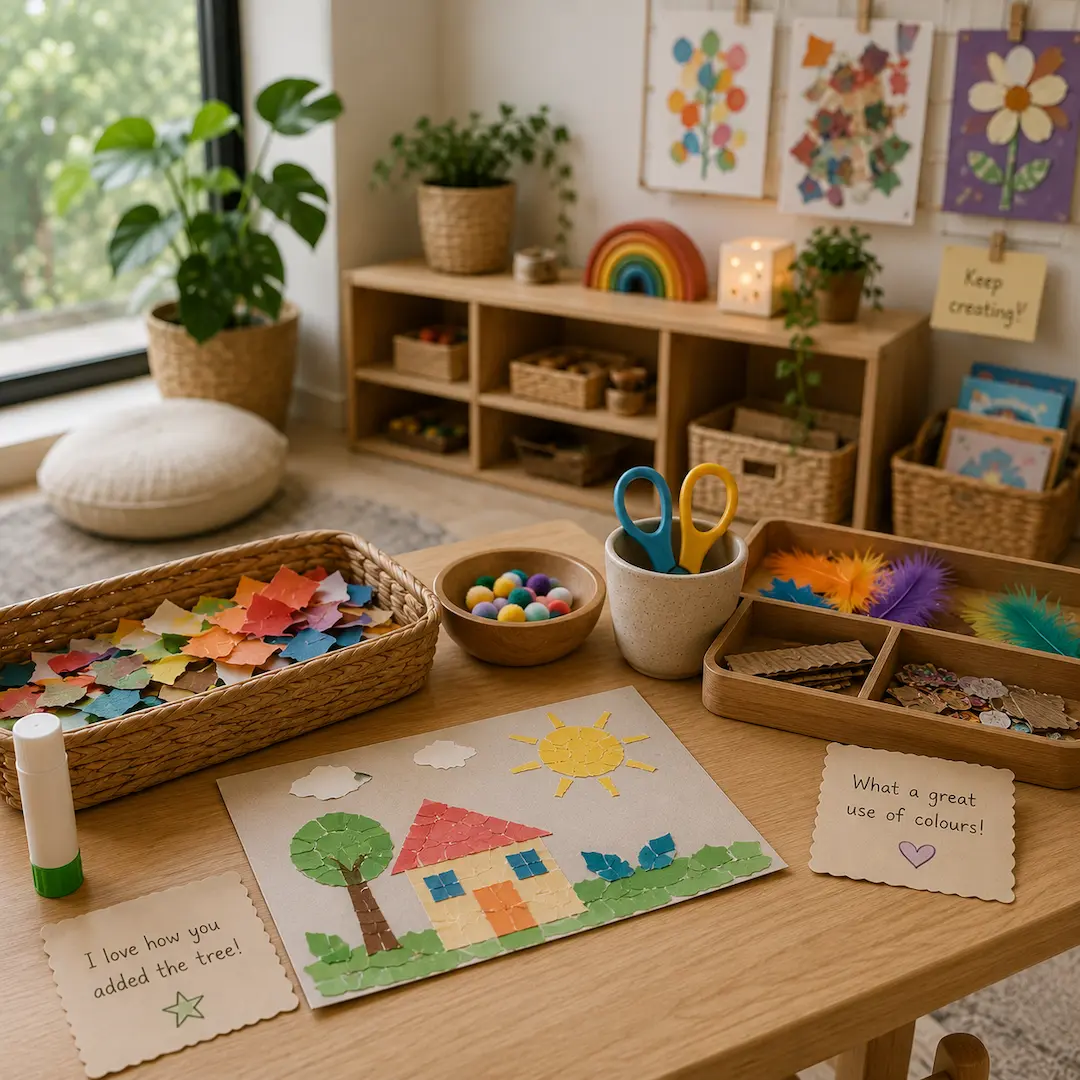
- Natural items: Leaves, dried flowers, twigs, sand, or feathers found on a walk.
- Household recyclables: Egg cartons, toilet rolls, bottle tops, magazines, and newspapers.
- Textures: Fabric scraps, wool, cotton balls, foil, tissue paper, or wrapping paper offcuts.
- Small items: Pom poms, large buttons, or pasta shapes.
Safety first: Always ensure the materials are age-appropriate. For children under three, avoid small items like beads or small buttons that could pose a choking hazard. Supervise the use of scissors and glue to ensure a safe and positive experience.
Setting up a successful collage activity
A little preparation goes a long way in making collage a stress-free activity for parents and a rich experience for children.
Preparation
Start by setting up a dedicated workspace. A table covered with a wipeable tablecloth or newspaper is ideal. Squeeze some glue into a small pot or jar lid if you are using PVA, and place the collage materials in shallow bowls or a muffin tin. This makes the materials inviting and easy for little fingers to grab.
The process
Write your child’s name on the back of the cardboard before you begin,it saves trying to write on wet glue later! Invite your child to explore the materials. Let them lead the way. You might show them how to apply the glue, but try to resist the urge to place the items for them.
Encouraging creativity
If your child seems unsure, you can sit alongside them and do your own collage. Narrate what you are doing: “I am going to stick this blue feather right in the middle because it feels so soft.” This models the process without correcting them. Remember, there is no specific outcome to achieve. If they want to pile everything in one corner, that is a valid creative choice!
Play-based learning at Children’s Choice
At Children’s Choice, our philosophy is grounded in the belief that play is the work of childhood. We provide environments where children feel secure enough to take risks and try new things. Collage fits perfectly into our curriculum because it is child-led and process-driven.
Parents often ask us how we support individual development in a group setting. Whether you are looking for the best childcare centre Raceview has to offer, or searching for the best childcare centre Raceview provides, the answer lies in our approach to activities like collage. We observe how each child interacts with the materials and offer support that scaffolds their learning. For a child mastering their grip, we might offer tongs to pick up cotton balls. For a child interested in patterns, we might provide varied geometric shapes.
This tailored approach ensures that while the activity is fun, it is also deeply educational, supporting school readiness in a way that feels natural and enjoyable for the child.
Understanding process art
You may hear educators use the term “process art.” This simply means that the value of the art activity lies in the process of making it, rather than the finished product.
In product-focused art, every child creates a snowman that looks identical. In process art, every child is given white paint, paper, and glitter, and they create whatever they wish. Collage is the ultimate process art. It honors the child’s ideas and decisions.
By focusing on the process, we remove the pressure to perform. Children don’t worry about “doing it wrong.” This builds resilience and self-esteem. They learn to trust their own judgment and enjoy the act of creation for its own sake. This mindset is crucial for lifelong learning, fostering a willingness to experiment and innovate.
Nurturing creativity with Children’s Choice
Collage is more than just sticking paper to cardboard; it is a foundational activity that supports physical, cognitive, and emotional development. By providing simple materials and the freedom to explore, you are giving your child the tools to understand their world and express themselves.
At Children’s Choice, we are committed to providing safe, nurturing childcare and play-based early learning that supports children’s development and school readiness. We see the brilliance in every messy masterpiece. Whether you are searching for the best childcare centre Ipswich has for your family, or simply looking for ways to enrich your child’s day at home, remember that the journey of creation is always more important than the destination. We encourage you to open the recycling bin, grab some glue, and start creating today.
Frequently asked questions
What are the main benefits of collage for toddlers?
Collage supports fine motor skills like tearing and pasting, which prepares hands for writing. It also boosts cognitive skills through sorting textures and colours, encourages language development as children describe their work, and fosters creativity by allowing open-ended expression.
What materials are safe for a 2-year-old to use?
For toddlers, avoid small choking hazards like beads or small buttons. Stick to larger items like large pom-poms, fabric scraps, paper pieces, leaves, and feathers. Use non-toxic PVA glue or glue sticks. Always supervise activity to prevent materials from going into mouths.
Does Children’s Choice incorporate collage daily?
Yes, creative arts are a staple of our curriculum. As a leading childcare centre Raceview families trust, we ensure materials are accessible daily. This allows children to engage in spontaneous artistic expression, fostering independence and helping them process their experiences through art.
Is collage messy and how can I minimize it?
It can be! To manage it, use a plastic tablecloth and have a damp cloth ready for sticky fingers. Use glue sticks instead of liquid glue for less mess. Remember, mess is often part of the sensory learning experience, but being prepared makes the clean-up much faster.
How do educators at Children’s Choice encourage shy children?
We use art as a gentle bridge for social interaction. At our leading childcare centre Raceview location, educators sit with children, using parallel play to build comfort. We narrate their actions positively, validating their choices to build confidence without pressure to perform.