Watching your child step into group play for the first time can bring a mix of pride, hope, and a little worry. You may see them hang back, jump right in, or try to make sense of sharing space, toys, and attention with others. These early moments matter more than they seem. They are often where leadership skills in young children begin to take shape.
In early childhood, leadership is not about telling others what to do. It is about learning how to make choices, solve simple problems, show empathy, and take part in a group with confidence. A young child who speaks up kindly, helps a friend, listens during group time, or keeps trying after a setback is already building the foundations of leadership.
That is why a high-quality childcare setting can play such an important role. In a warm, play-based environment, children learn how to find their voice while also learning to understand the feelings and needs of others. With support from caring early childhood educators, they practice independence in safe, age-appropriate ways. At Children’s Choice, these everyday moments are seen as valuable opportunities for growth, not just milestones to rush through.
In this blog, we’ll look at how childcare helps children develop leadership through play, routines, communication, relationships, and guided responsibility. We’ll also explore practical ways families and educators can work together to support these skills at home and in the early learning setting.
Understanding Leadership in Early Childhood
When adults hear the word “leadership,” they often picture confidence, direction, and influence. In the early years, though, leadership looks much simpler and much more meaningful. It shows up in small daily actions.
A child may lead by:
- asking to have a turn
- suggesting an idea during play
- helping clean up after an activity
- comforting a friend who is upset
- sticking with a task even when it feels hard
- making a choice and following through
These are all early signs of leadership skills in young children. They reflect a growing sense of self, social awareness, and the ability to take part in a shared experience.
What leadership looks like in young children
Leadership in early childhood often includes:
- Communication: expressing needs, ideas, and feelings clearly
- Teamwork: playing cooperatively and working toward a shared goal
- Problem-solving: thinking through simple challenges and trying solutions
- Autonomy: making age-appropriate choices with growing confidence
- Empathy: noticing how others feel and responding with care
- Responsibility: taking ownership of small tasks and routines
- Integrity: learning fairness, honesty, and respect in everyday moments
These skills do not appear all at once. They grow over time through repetition, guidance, and practice.
The role of early childhood educators
Children learn leadership best in relationships where they feel safe, seen, and supported. Early childhood educators help create that sense of security. Through consistent routines, calm guidance, and meaningful interactions, they show children how to engage with others in positive ways.
At Children’s Choice, educators model the behaviors they hope to nurture. They listen respectfully. They encourage children to speak up. They guide conflict with patience. They celebrate effort, not just outcomes. In doing so, they help children understand that leadership is not about control. It is about contribution, confidence, and care.
This approach also aligns with the principles of Australia’s early learning framework. The Australian Children’s Education & Care Quality Authority explains how the Early Years Learning Framework supports children in developing a strong sense of identity, wellbeing, and connection, all of which are central to leadership development.
How Childcare Environments Cultivate Leadership
A quality childcare environment gives children many chances to practice leadership in natural, age-appropriate ways. These chances are built into play, group routines, conversations, and shared responsibilities. Rather than teaching leadership as a formal lesson, childcare weaves it into the day.
Structured Play and Activities
Parents often wonder how something as simple as play can build serious life skills. The answer is that play gives children repeated chances to think, decide, cooperate, and adapt.
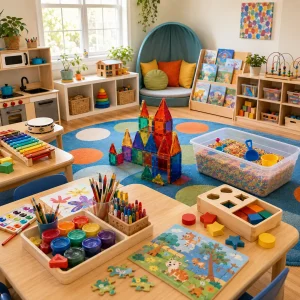
In play-based learning, children are not just being entertained. They are testing ideas and learning how their choices affect outcomes. When a child decides how to build a tower, organise a pretend café, or join a group game, they are practicing decision-making. When they adjust their plan because a block falls or another child has a different idea, they are building resilience and problem-solving.
How play supports leadership
Structured and open-ended activities help children:
- choose between options
- take initiative
- negotiate roles
- solve disagreements
- work toward a shared result
- learn from trial and error
For example, a group art project may require children to share materials, wait for space, and agree on how to use a table together. A dramatic play area may lead one child to suggest a story while others join in and add ideas. A building activity may call for turn-taking, planning, and patience.
These are all forms of early leadership. They teach children that being part of a group means both speaking up and making room for others.
At Children’s Choice, play-based learning is designed to support not only school readiness but also social growth. Children are encouraged to make choices, explore ideas, and take part in activities that build both independence and cooperation.
Communication and Social Skills
Strong leadership starts with strong communication. Young children need chances to express what they think, ask for help, explain ideas, and listen to others. Childcare offers this practice every day.
During group time, mealtimes, play, and transitions, children are invited into conversation. They learn that their voice matters. Just as important, they learn that other voices matter too.
Fostering open dialogue
When educators create a setting where children feel heard, children become more confident in sharing ideas. This may be as simple as asking open questions, waiting for a child to respond, and acknowledging their contribution. Over time, this helps children speak with more clarity and assurance.
Children also learn that communication is not only about talking. It includes body language, facial expressions, listening, and responding with care. These social habits are at the heart of healthy leadership.
Teaching active listening
A child who can listen well is learning one of leadership’s most important skills. Active listening helps children understand different views, follow group directions, and respond thoughtfully.
In childcare, active listening is taught through:
- turn-taking conversations
- story time discussions
- guided conflict resolution
- cooperative games
- educator modeling
When children hear phrases like “Let’s listen to your friend’s idea” or “How do you think they feel?” they begin to connect communication with empathy and respect.
For families exploring quality care, Starting Blocks offers helpful government-backed information on how early learning environments support children’s social and communication development.
Building Confidence and Self-Esteem
Children are more likely to take positive initiative when they believe they are capable. Confidence does not come from constant praise alone. It grows when children have real chances to try, succeed, struggle a little, and try again.
This is one reason childcare can be so powerful. In a supportive early learning environment, children are given manageable challenges that match their stage of development. They learn that they can participate, contribute, and improve over time.
Celebrating small wins
Small successes build a strong inner voice. A child who pours their own water, helps pack away toys, or finishes a puzzle begins to see themselves as competent. That sense of competence is the base for leadership.
Early childhood educators support this by noticing effort and progress. Instead of only saying “good job,” they may say:
- “You kept trying until it worked.”
- “You helped your friend find a place to sit.”
- “You remembered what to do all by yourself.”
This kind of feedback is specific and meaningful. It helps children understand what they did well and encourages them to repeat those positive actions.
Designing achievable projects
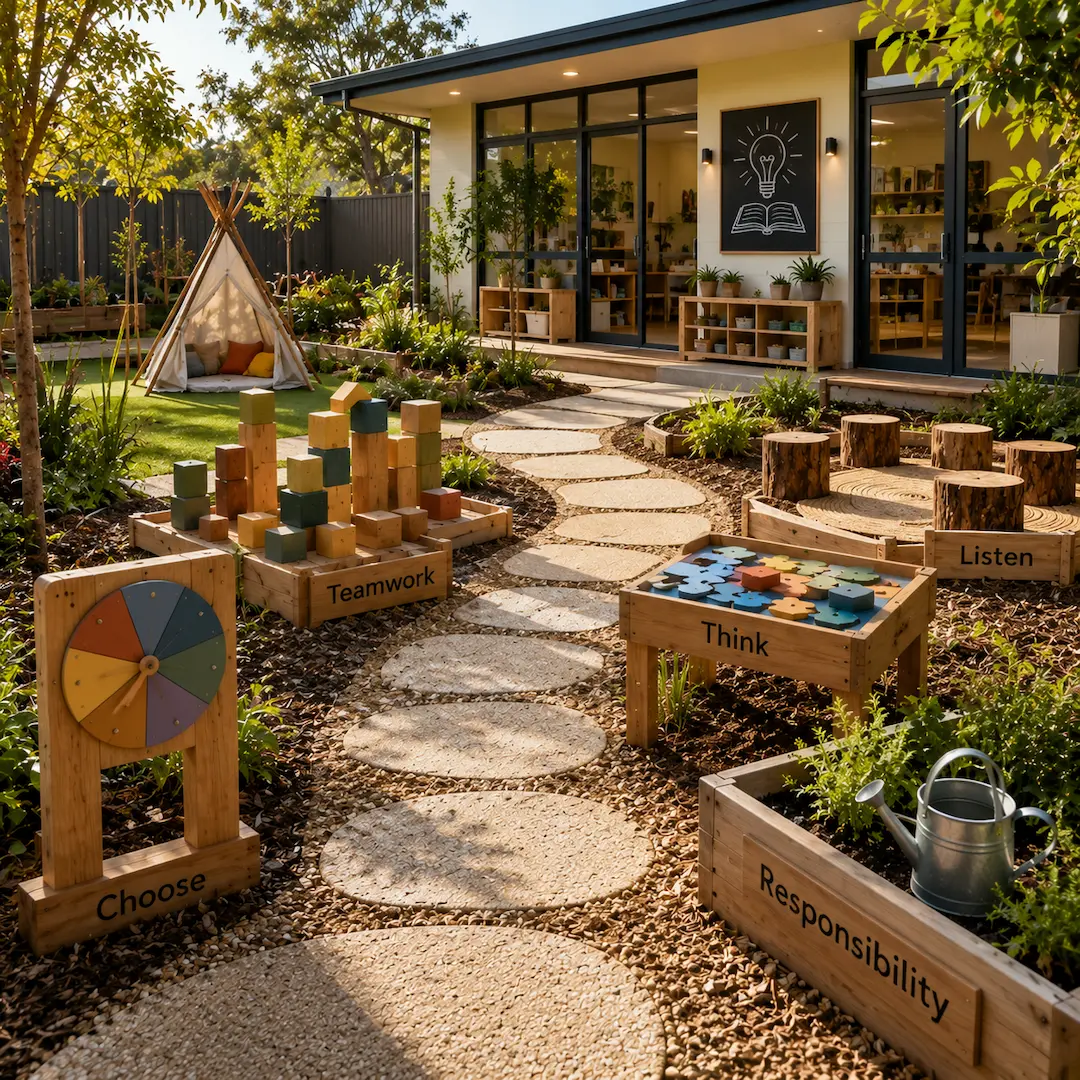
Confidence also grows when children are given tasks they can complete with support, then eventually on their own. This could include caring for a garden bed, helping set up a snack table, or finishing a simple group project.
These experiences matter because they give children proof that they can contribute to a group. They begin to see themselves as capable members of a community, which is a key part of leadership skills in young children.
Assigning Leadership Roles
Leadership in childcare does not need to be formal to be effective. In fact, the most meaningful opportunities are often the simplest ones.
When children are trusted with small responsibilities, they learn that their actions matter. They begin to understand what it means to help others, support routines, and take care of shared spaces.
Everyday roles that build responsibility
Examples of age-appropriate leadership roles include:
- line leader
- snack helper
- book collector
- hat monitor
- plant waterer
- activity helper
- tidying team member
These roles give children a sense of purpose. They also teach practical lessons about patience, fairness, and accountability. A child who hands out materials learns to think about others. A child who leads the line learns to follow expectations while helping the group move together.
At Children’s Choice, these moments are treated as more than routine tasks. They are seen as chances for children to practice independence, responsibility, and care in a safe environment.
Strategies for Educators and Parents
Leadership skills grow best when children receive the same message in both childcare and at home: your ideas matter, your choices have value, and you can learn how to work well with others.
When families and educators work together, children get consistent support. The skills practiced in one setting begin to carry over into the other.
Lead by example
Children watch closely. They notice how adults handle frustration, speak to others, and solve problems. If we want children to develop integrity, empathy, and resilience, we need to model those traits clearly.
This can look like:
- speaking respectfully, even during stress
- apologizing when we get something wrong
- staying calm during small setbacks
- showing kindness in daily interactions
- following through on promises
When adults model these behaviors, children learn that leadership is connected to character.
Foster autonomy through choice
Autonomy is a core part of leadership. Children need chances to make decisions that feel real and manageable.
You can support this by offering simple choices such as:
- choosing between two outfits
- picking a book for story time
- deciding which fruit to have with lunch
- selecting how to begin an activity
- helping plan a weekend routine
The goal is not to give children full control. It is to help them practice decision-making in safe, supported ways. Over time, these choices build confidence and self-trust.
Encourage shared goals
Leadership is not only about individual confidence. It is also about learning to work with others toward a common goal.
At home, this might mean:
- cleaning up toys together
- setting the table as a team
- caring for a pet
- baking something as a family
- organizing books or art supplies
In childcare, shared goals happen through group games, collaborative projects, and daily routines. These tasks help children see how cooperation works. They learn when to lead, when to follow, and how to contribute in ways that help the whole group.
Make room for curiosity and persistence
Children build leadership when they are encouraged to wonder, explore, and keep going through challenges. Adults can support this by praising effort, asking thoughtful questions, and resisting the urge to fix every problem right away.
Helpful prompts include:
- “What do you think we could try next?”
- “How did you figure that out?”
- “Would you like to do it yourself or with help?”
- “What do you think your friend needs?”
These questions support reflection and independent thinking. They also show children that their ideas are worth exploring.
Support the transition to school
Leadership development in the early years also supports school readiness. Children who can communicate, follow routines, manage small responsibilities, and work with others are often better prepared for the move into a school setting.
The Queensland Government early childhood portal provides useful information for families on early development and the transition to school. Families can also explore Queensland Government guidance on starting prep to better understand how to support children as they move into this next stage.
These resources reinforce an important point: leadership in the early years is not a bonus skill. It is deeply connected to confidence, wellbeing, and readiness for future learning.
Why leadership development matters so much in the early years
The early years lay the groundwork for how children see themselves and relate to others. When children learn to express ideas, manage emotions, solve small problems, and contribute to a group, they are building habits that will support them far beyond childcare.
These early leadership experiences can shape how children:
- approach new challenges
- build friendships
- cope with setbacks
- work in teams
- advocate for themselves
- show empathy and fairness
This does not mean every child will become outgoing or eager to take charge. Leadership can look different from one child to another. Some children lead by speaking confidently. Others lead through kindness, observation, persistence, or thoughtful support of their peers.
What matters most is that children are given the space to grow these strengths in ways that suit their personality and stage of development.
The value of a nurturing childcare environment
A nurturing childcare setting gives children more than care during the day. It gives them a community where they can practice being capable, connected, and confident.
In a setting built on play-based learning and strong relationships, children learn how to:
- make decisions
- communicate clearly
- understand other people’s feelings
- take responsibility
- recover from mistakes
- contribute to shared experiences
These are the building blocks of leadership skills in young children. They do not come from pressure or formal instruction alone. They grow through warm guidance, consistent routines, and meaningful opportunities to participate.
At Children’s Choice, these everyday experiences are part of a bigger picture. Each conversation, activity, and moment of responsibility helps children grow into confident learners who can express themselves, work with others, and face new situations with greater assurance.
Conclusion
Leadership in the early years grows quietly. It develops when children make choices during play, solve simple problems, listen to others, take on small responsibilities, and feel proud of what they can do. These everyday moments may seem small, but together they shape confidence, empathy, and independence.
For parents, it helps to remember that leadership is not about pushing children to stand out. It is about helping them build the skills to take part, speak up, care for others, and keep learning. Every child develops at their own pace, and that is exactly as it should be.
The strongest progress happens when families and early childhood educators work together. With support at home and in a nurturing early learning environment, children can build the confidence and social understanding that will serve them well in kindergarten, school, and beyond.
If you would like to see how Children’s Choice supports leadership, wellbeing, and growth through thoughtful, play-based learning, book a tour and explore our nurturing environment for yourself.
FAQs
How does childcare build confidence in young children?
Childcare programs often include activities that encourage children to make decisions, try new things, and express themselves, which helps build their confidence over time.
Can teamwork in childcare activities help develop leadership skills?
Yes, teamwork-focused activities teach children how to collaborate, listen to others, and take initiative,all essential traits of a strong leader.
What role does play-based learning have in fostering leadership skills?
Play-based learning allows children to explore leadership roles in a natural and enjoyable way, such as taking charge during group play or solving problems collaboratively.
How do childcare providers encourage problem-solving in children?
Childcare providers create opportunities for children to think critically, make decisions, and find solutions through guided activities and group challenges.
At what age can children begin developing leadership qualities?
Leadership qualities can begin developing in children as early as preschool age, as they engage in group activities that require decision-making and responsibility.
How does independent thinking contribute to leadership in young children?
Encouraging independent thinking helps children build self-confidence and the ability to make informed choices, which are vital components of effective leadership.
What impact do childcare environments have on fostering leadership skills?
A structured yet flexible childcare environment promotes leadership by creating a safe space for children to explore their abilities, take initiative, and interact with peers collaboratively.