As a parent, watching your child play is one of life’s greatest joys. Whether they are building a tower of blocks, serving you a pretend cup of tea, or intensely studying a beetle in the garden, they seem lost in a world of their own. It is easy to look at these moments and simply see fun. However, early childhood experts know that something profound is happening beneath the surface.
Play is the brain’s favourite way of learning. It is the engine that drives development, helping children make sense of the world, build relationships, and understand themselves. At Children’s Choice, we understand that play is not just a break from learning; it is the learning itself. Children’s Choice provides safe, nurturing childcare and play-based early learning that supports children’s development and school readiness.
By understanding how childcare centres utilise play-based methodologies, you can feel confident that your child’s days are filled with purpose, growth, and joy.
What is Play-Based Learning?
Play-based learning is a research-supported approach to early education where children learn through activities that are driven by their own interests. Unlike “direct instruction,” where a teacher stands at the front and tells children what to know, play-based learning invites children to discover answers for themselves.
In a high-quality childcare setting, play is never passive. It is an active process involving two key elements:
- Self-direction: Children choose what they want to play with and how they want to use materials. This autonomy builds confidence and decision-making skills.
- Open-ended exploration: Educators provide resources that have no single “right” way to be used,such as loose parts, clay, or building blocks. This encourages imagination rather than rote memorisation.
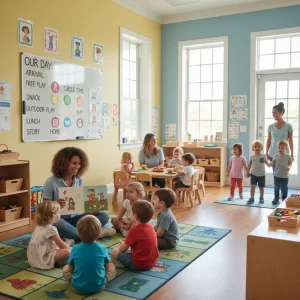
When you walk into a room buzzing with activity, it might look unstructured, but it is carefully curated. Educators act as facilitators, setting up “invitations to play” that target specific developmental outcomes while letting the child lead the way.
The Benefits of Learning Through Play
While it looks like simple fun, play is actually a complex workout for a growing brain. It touches on every aspect of a child’s development, often simultaneously.
Cognitive Development
Play turns children into little scientists. When a child builds a tower that falls over, they are learning about physics, gravity, and cause and effect. They are problem-solving in real-time: “If I put the big block on top of the small block, it falls. What happens if I swap them?” This critical thinking creates neural pathways that support complex academic learning later in life.
Social Skills
The sandpit and the dress-up corner are the first classrooms for social negotiation. In a play-based environment, children learn to collaborate, share resources, and navigate conflict. They learn that to keep the game going, they must communicate their ideas and listen to others. These are the foundational skills of empathy and cooperation.
Physical Development
Both fine and gross motor skills are honed through play. Climbing, running, and digging support gross motor strength and coordination. Meanwhile, smaller, more precise activities,like threading beads, manipulating playdough, or using scissors to cut paper,strengthen the small hand muscles required for writing at school.
Language and Communication
Play is a language-rich experience. Whether they are narrating a story to themselves or negotiating roles with a friend (“I’ll be the doctor, you be the patient”), children are constantly practising vocabulary and sentence structure. Educators support this by modelling language and asking open-ended questions that encourage children to describe what they are doing.
Emotional Development
Play provides a safe space for children to process their emotions. Imaginative play allows them to act out scenarios that might be confusing or scary in real life, giving them a sense of control. It builds resilience, too; when a puzzle is difficult or a tower collapses, they learn to manage frustration and try again.
Types of Play-Based Activities
A robust curriculum includes various types of play, ensuring a holistic learning experience:
- Imaginative Play: Role-playing scenarios (like a home corner or vet clinic) that build empathy and social understanding.
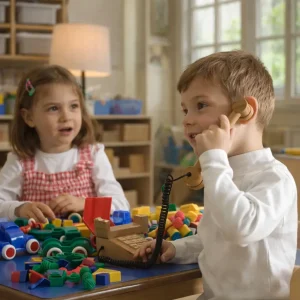
- Constructive Play: Building with blocks or recycled materials to understand spatial awareness and mathematics.
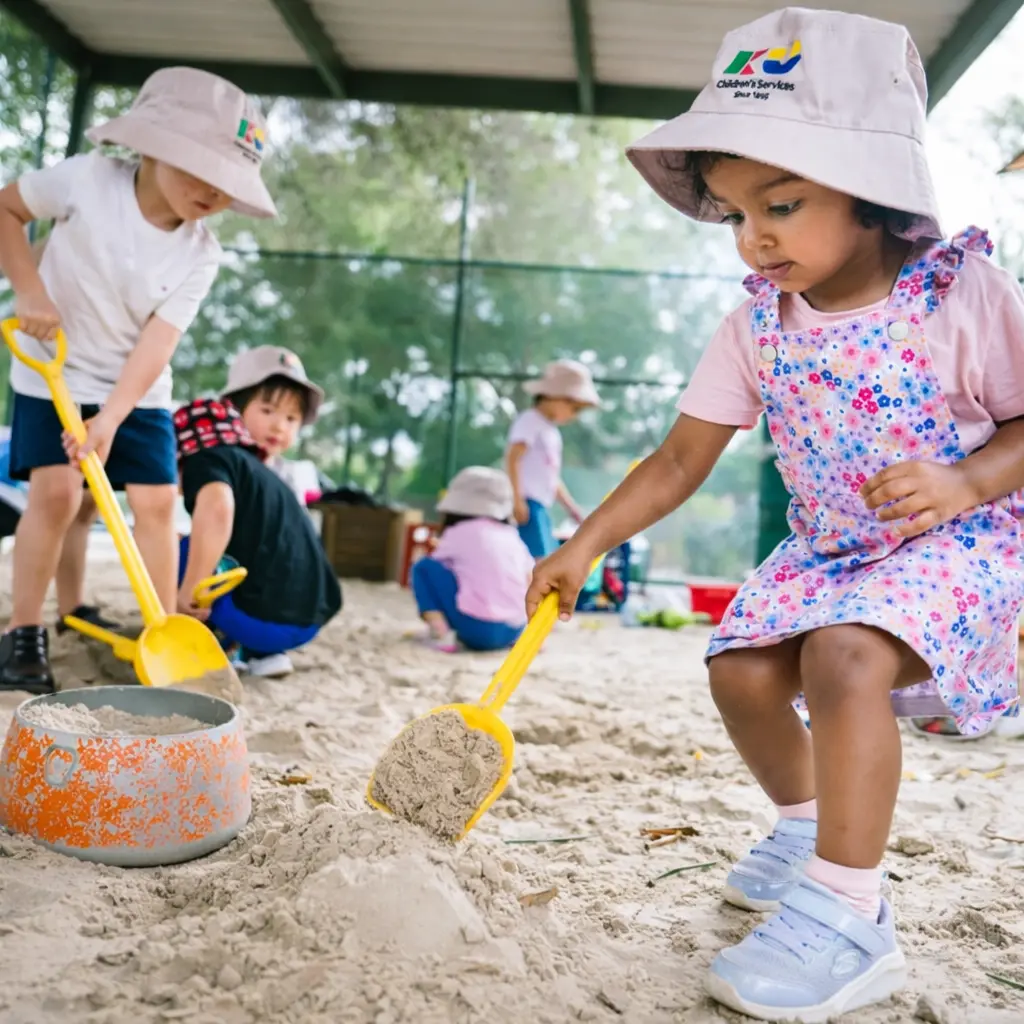
- Sensory Play: Using sand, water, or slime to explore textures and scientific properties.
- Explorative Play: Investigating nature and the environment to encourage curiosity.
- Physical Play: Active movement games that build health and coordination.
- Games with Rules: Simple board games or group games that teach turn-taking and fairness.
Play-Based Learning and School Readiness
A common concern for parents is whether play prepares children for “real school.” The answer is a resounding yes. The Early Years Learning Framework (EYLF), which guides the Australian childcare curriculum, emphasises play as the primary context for learning.
School readiness is not just about writing letters or counting to ten; it is about having the independence to open a lunchbox, the confidence to ask a teacher for help, and the social skills to make friends. Play-based learning instils a love of inquiry. A child who loves to ask “why” and explore “how” is a child who is ready to absorb the academic curriculum of primary school.
Children’s Choice: Nurturing Learning Through Play
At Children’s Choice, we do not view play as just “free time.” We view it as the essential method for delivering our curriculum. Our educators are trained to observe your child’s interests and scaffold their learning. If a child is fascinated by cars, we might introduce a ramp to explore speed (science) or count the wheels (maths).
We create environments that are stimulating yet secure, allowing children to take safe risks. As a leading childcare centre Raceview families rely on, we ensure our indoor and outdoor spaces are designed to spark curiosity. Similarly, for families further south, we are proud to be a leading childcare centre Heritage Park community members trust for preparing their little ones for the transition to school.
Our philosophy is grounded in the belief that when children feel safe and happy, their capacity to learn is limitless. We nurture these environments so that every game of tag and every painting session contributes to a confident, capable learner.
Addressing Common Concerns
It is natural to wonder how we measure success in a play-based environment. You won’t see many worksheets coming home, but that does not mean learning isn’t being tracked.
Educators constantly document your child’s progress through observation. We look for milestones in communication, social interaction, and physical ability. We ask questions like: Is the child engaging with peers? Are they showing resilience when things go wrong? Are they using language to express complex ideas?
The evidence of learning is in the rich conversations your child has with you on the drive home, their increasing independence, and their growing ability to solve problems without help.
Trusting the Power of Play for Lifelong Learning
Choosing a childcare provider is one of the biggest decisions a parent makes. You want a space that feels like a second home, where your child is valued for who they are. By prioritising a centre that values play, you are giving your child the gift of a childhood that is both joyful and educational.
Play builds the architecture of the brain. It fosters the creativity, resilience, and social intelligence that will serve your child well into adulthood. Children’s Choice is committed to providing excellent play-based care that respects the unique pace of every child.
Frequently Asked Questions
What is the main difference between play-based learning and just playing?
Play-based learning is intentional. While it looks like fun, educators set up specific activities (invitations to play) and interact with children to target developmental goals like maths, literacy, and social skills, turning play into a rich educational experience.
How does Children’s Choice support school readiness through play?
Children’s Choice uses play to build the foundational skills schools look for, such as independence, emotional regulation, and social cooperation. We weave literacy and numeracy into games and activities, ensuring children are academically curious and socially confident before they start Prep.
Why is the best childcare centre Raceview has to offer focused on play?
Research shows that children in the early years learn best when they are active and engaged. A focus on play ensures high engagement and deep learning. Our Raceview centre prioritises this approach to ensure children develop a genuine love for learning that lasts a lifetime.
I am looking for the best childcare centre Heritage Park. Do you offer play-based programs there?
Yes. Our Heritage Park centre follows the same high-quality, play-based curriculum as all our locations. We focus on child-led exploration and educator-supported learning to ensure every child in the Heritage Park community gets the best start in life.
How can I support play-based learning at home?
You can support this by providing open-ended toys like blocks, boxes, or art supplies rather than electronic toys. Join in their play, follow their lead, and ask open-ended questions like “I wonder what would happen if…” to extend their thinking and creativity.