Have you ever watched a toddler try to figure out how a toy works? The intense focus, the trial and error, and the sheer delight when they finally succeed? That moment is more than just play,it is the spark of lifelong learning.
We often think of education starting when a child puts on their first school uniform, but the reality is that the journey begins much earlier. From the moment they are born, children are absorbing information about the world around them. They are scientists, explorers, and artists, all wrapped up in tiny packages.
Supporting this natural curiosity in the early years is crucial. It isn’t about rushing them into academic concepts before they are ready; it is about fostering a mindset that views the world as a place full of wonder. At Children’s Choice, we believe that providing safe, nurturing childcare and play-based early learning supports children’s development and school readiness, setting the stage for a lifetime of discovery.
The Foundation of Lifelong Learning: Early Childhood
The first five years of a child’s life are unlike any other period in their development. During this time, a child’s brain is growing faster than it ever will again, forming over one million neural connections every single second. These connections build the architecture of the brain, laying the groundwork for health, learning, and behaviour.
Early experiences shape these connections. When a child’s environment is rich in interaction and support, their brain develops a strong foundation for future learning. Conversely, high stress or lack of stimulation can hinder this growth. This is why the early years are often referred to as the “critical period.” It is the window of opportunity to instil a love for learning that doesn’t just help them pass a test in Grade 3, but helps them navigate challenges, solve problems, and adapt to new situations when they are adults.
Key Elements of Supportive Early Learning Environments
Creating an environment that fosters lifelong learning requires more than just toys and books. It requires a holistic approach that considers the emotional, physical, and social needs of the child.
Safety and Security
Maslow’s Hierarchy of Needs tells us that we cannot focus on higher-level tasks,like learning and creativity,if our basic needs aren’t met. For a child, feeling safe is the absolute priority. When a child feels secure, their nervous system relaxes, allowing their brain to switch from “survival mode” into “learning mode.” A secure environment is one where a child knows they are protected and that their needs will be met.
Rich Sensory Experiences
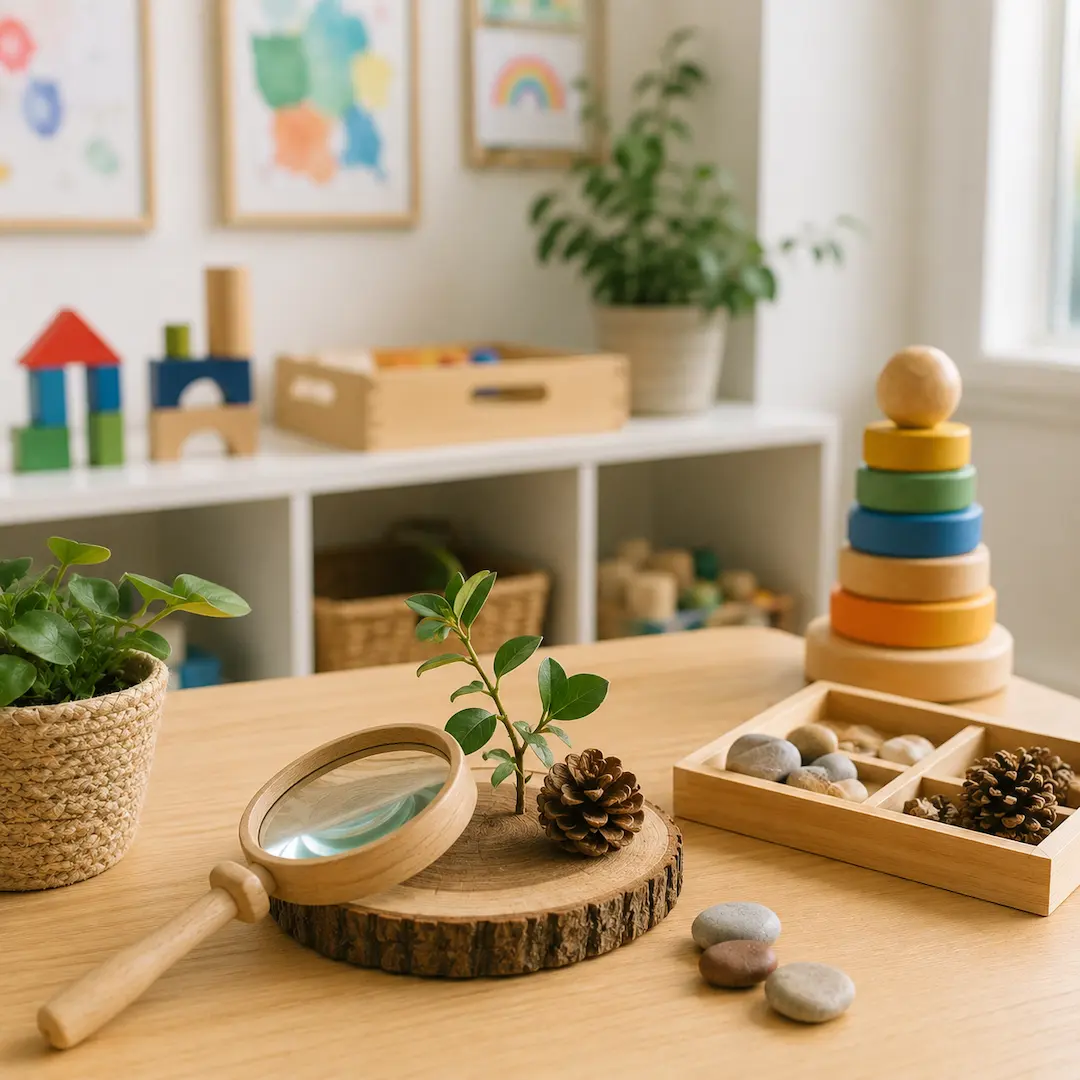
Children learn through their senses. They need to touch the sand, smell the rain, hear the birds, and see the vibrant colours of a painting. Sensory play stimulates the brain, creating new neural pathways. It helps children understand complex concepts like texture, volume, and cause-and-effect in a hands-on, tangible way.
Responsive Caregiving
The most important “toy” a child can have is a responsive adult. This dynamic is often called “serve and return.” The child serves a cue (a coo, a cry, or a point), and the adult returns it (by speaking back, comforting, or naming the object). This back-and-forth interaction builds communication skills and teaches the child that they are valued and heard.
Social Interaction
Learning to navigate social relationships is a massive part of early childhood education. Interacting with peers teaches empathy, negotiation, and cooperation. It helps children understand that others have different perspectives and feelings.
The Role of Play-Based Learning
In Australia, the Early Years Learning Framework (EYLF) emphasises play-based learning, and for good reason. Play is the work of the child. It is the primary way they make sense of their world.
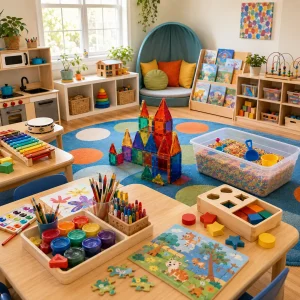
Through play, children can explore ideas, take risks, and make mistakes without fear of failure. Whether they are building a tower of blocks (physics and maths), pretending to be shopkeepers (social skills and numeracy), or finger painting (creativity and fine motor skills), they are actively learning.
Finding a centre that prioritises this approach is vital. If you are looking for a leading childcare centre Raceview, it is important to observe how the educators facilitate play. Are they engaged? Do they ask open-ended questions? Quality centres use play as a vehicle to teach critical thinking and problem-solving, ensuring children are prepared for the transition to formal schooling.
Children’s Choice: Nurturing Lifelong Learners
At Children’s Choice, we understand that we are partners in your child’s development. Our philosophy is centred on the belief that every child is unique and capable. We provide safe, nurturing childcare and play-based early learning that supports children’s development and school readiness.
Our programs are designed to spark curiosity. We don’t just give children the answers; we encourage them to ask the questions. Our educators are trained to recognize the “teachable moments” in everyday activities. If a child finds a bug in the garden, we don’t just say “that’s a beetle.” We ask, “Where do you think it’s going?” or “How many legs can you count?”
This approach builds resilience. It teaches children that not knowing the answer immediately is okay, and that the process of finding out is where the fun lies. By fostering this resilience, we are helping to create a generation of learners who are not afraid of challenges.
Practical Tips for Parents to Support Lifelong Learning at Home
You are your child’s first and most influential teacher. Here are some simple ways you can extend the learning environment into your home:
- Encourage Curiosity: When your child asks “why?” (even for the tenth time that hour), try to answer with patience. If you don’t know the answer, say “I don’t know, let’s find out together!” This models that learning is a lifelong pursuit, even for adults.
- Read Together Daily: Reading is the single most effective way to build vocabulary and literacy skills. But beyond that, stories transport children to new worlds and introduce them to new concepts.
- Create Opportunities for Creative Play: You don’t need expensive gadgets. A cardboard box can be a spaceship, a castle, or a racing car. Open-ended materials encourage imagination and problem-solving.
- Model Learning Behaviours: Let your child see you reading, trying a new recipe, or fixing something in the house. Narrate what you are doing. “I’m trying to fix this shelf. I need to find the right screwdriver.”
Investing in Your Child’s Future: The Importance of Early Education
Deciding on early education is one of the most significant investments you can make in your child’s future. It is not just about freeing up time for work; it is about placing your child in an environment where their potential is recognised and nurtured.
Research consistently shows that children who attend high-quality early learning centres demonstrate better social skills, fewer behavioural issues, and higher academic achievement later in life. But the benefits go beyond grades. These children grow up to be more resilient, more empathetic, and more adaptable.
Whether you are searching for a best childcare centre Raceview or in surrounding areas, looking for a provider that values the individual child is key. At Children’s Choice, we pride ourselves on building a foundation that supports the whole child, emotionally, socially, and cognitively.
Building a Foundation for Future Success with Children’s Choice
The journey of lifelong learning begins with a single step,or perhaps a single block stacked on top of another. It begins with the feeling of sand between fingers, the sound of a story being read aloud, and the comfort of a caring adult.
Early childhood experiences shape the adults our children will become. By prioritizing a supportive, engaging, and safe environment, we give them the best possible start. At Children’s Choice, we are honoured to be part of that journey, helping your child build the skills and confidence they need to embrace the world with open arms and an open mind.
FAQs: Your Questions Answered
What are the key benefits of early childhood education?
High-quality early education builds the foundation for future success. It fosters social skills like sharing and empathy, develops emotional resilience, and introduces early literacy and numeracy concepts. It prepares children for the transition to school by building confidence and independence.
How does Children’s Choice support lifelong learning in its programs?
Children’s Choice provides safe, nurturing childcare and play-based early learning. Our educators build trust with every child, ensuring they feel secure enough to explore, ask questions, and develop the confidence needed for school readiness and beyond.
What can parents do at home to encourage lifelong learning?
Create a supportive environment where questions are welcomed. Read to your child daily to build literacy. Engage in open-ended play using simple household items. Most importantly, model curiosity yourself by exploring new things and showing your child that learning is a fun, daily activity.
Why is play-based learning important?
Play is how children process the world. It allows them to experiment, solve problems, and take risks in a low-stress environment. Research shows play-based learning improves memory, language skills, and social regulation, making it a more effective teaching tool for young children than rote memorization.
What makes Children’s Choice a leading childcare centre in Ipswich?
As a best childcare centre Ipswich families trust, Children’s Choice stands out for our dedicated educators and holistic approach. We focus on creating a “home away from home” where children feel safe to learn, grow, and develop the essential life skills needed for a bright future.