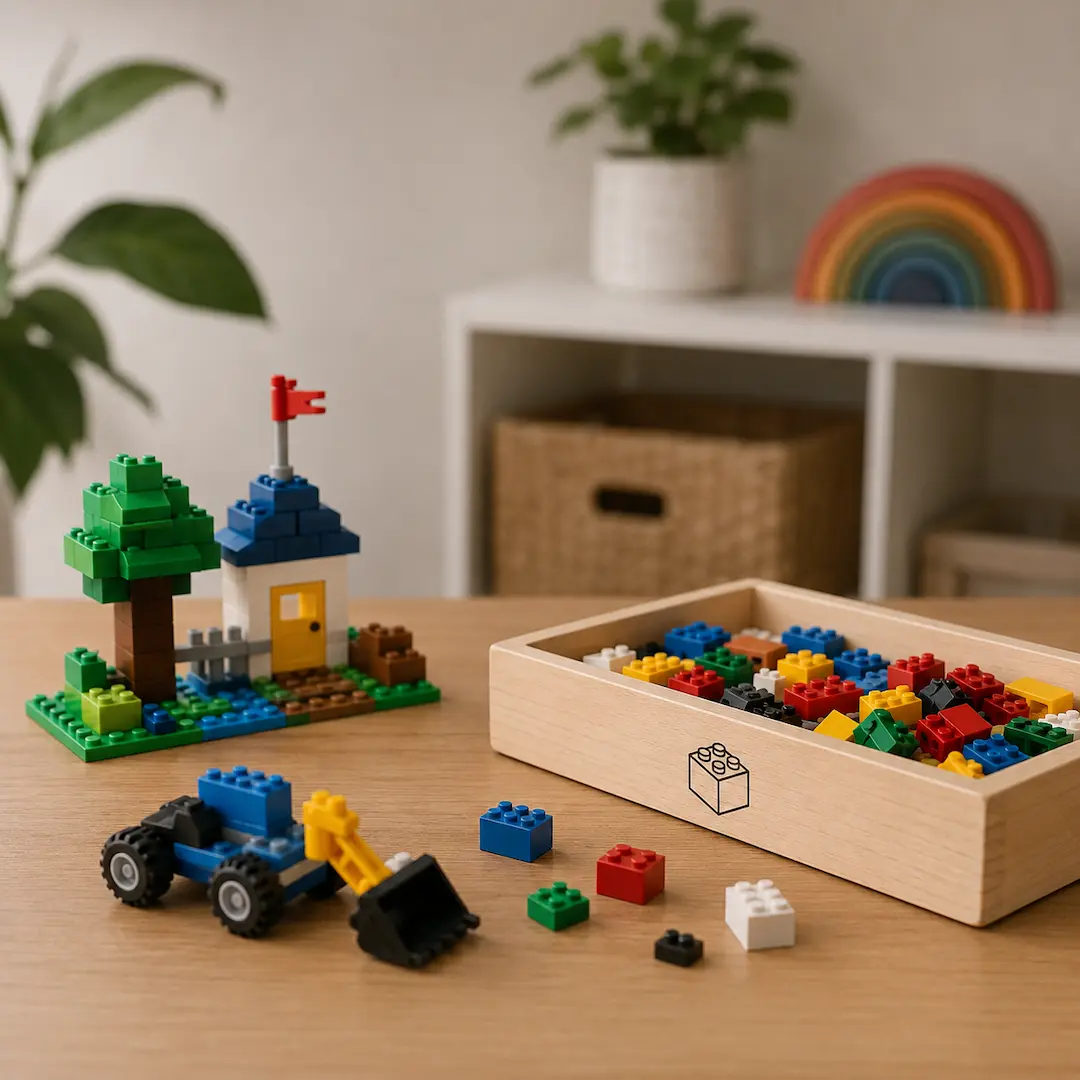
We all know the familiar click of plastic bricks coming together and the vibrant colors that scatter across the living room floor. Lego is a household name, loved by generations for its ability to turn simple blocks into castles, spaceships, and bustling cities. But beyond the fun and the creativity, there is something profound happening every time a child picks up a brick.
At Children’s Choice, we champion play-based learning because we know that play is the work of childhood. While it might look like just a toy, Lego is actually a powerful tool for development. It helps children build more than just structures; it helps them build essential life skills. From refining fine motor control to fostering emotional resilience, the benefits of this timeless activity go far deeper than many parents realize.
Unconventional Benefits of Lego
While most people associate Lego with creativity, the developmental advantages extend into cognitive, physical, and emotional growth. Here are eight unconventional benefits that might surprise you.
Enhancing Fine Motor Skills
Lego bricks come in various shapes and sizes, requiring precise movements to assemble. As children pick up, rotate, and press these small pieces together, they are engaging in a workout for their fingers and hands. This development of fine motor skills is crucial for everyday tasks like holding a pencil, buttoning a shirt, or using scissors. The dexterity gained through Lego play lays a strong foundation for writing and self-care independence.
Developing Spatial Reasoning
When a child looks at a pile of bricks and envisions a 3D structure, they are exercising spatial reasoning. This skill involves understanding how objects relate to one another in space. As they follow instructions or build from imagination, they learn about symmetry, balance, and perspective. Strong spatial awareness is often linked to future success in fields like science, technology, engineering, and mathematics (STEM).
Promoting Problem-Solving Skills
Building rarely goes exactly to plan. A tower might tip over, or a specific piece might be missing. These moments of friction are actually golden opportunities for learning. Children must analyze the problem, think of a solution, and test it out. Whether they are figuring out how to stabilize a roof or how to make a bridge span a gap, they are actively practicing critical thinking and problem-solving strategies.
Encouraging Creativity and Imagination
Lego provides an open-ended platform for expression. There is no “right” way to play, which empowers children to experiment. A blue brick can be water, the sky, or a futuristic car. This freedom nurtures creativity and imagination, allowing children to tell stories and build worlds that exist entirely in their minds. This imaginative play is vital for cognitive flexibility and emotional expression.
Building Persistence and Patience
Creating a masterpiece takes time. Finding the right piece in a sea of colors requires patience, and rebuilding a crumbled wall requires persistence. Through Lego play, children learn that mistakes are part of the process and that effort leads to results. This resilience,the ability to keep trying when things get tough,is a character trait that serves them well throughout their schooling and beyond.
Fostering Communication and Teamwork
When children build together, Lego becomes a social activity. They have to negotiate whose turn it is, explain their ideas, and collaborate to achieve a shared vision. They learn to listen, compromise, and articulate their thoughts. This collaborative play is excellent for developing social skills and understanding the value of teamwork.
Boosting Self-Confidence
There is a distinct sense of pride that comes with shouting, “Look what I made!” Completing a Lego build gives children a tangible sense of accomplishment. Seeing their effort translate into a physical object boosts self-esteem and confidence. It teaches them that they are capable creators who can set a goal and achieve it.
Reducing Anxiety and Promoting Relaxation
Interestingly, Lego can also be a mindfulness tool. The repetitive, rhythmic nature of clicking bricks together can be incredibly soothing. For children feeling overwhelmed or anxious, focusing on a building task can provide a mental break and a sense of calm. It allows them to channel their energy into a constructive, quiet activity that regulates their emotions.
Children’s Choice and Play-Based Learning
At Children’s Choice, we don’t just watch children play; we actively facilitate learning moments through play. We understand that resources like Lego are not just toys, but vehicles for education. Our educators observe how children interact with these materials and use those observations to guide their development.
In our programs, you might see a group of children working together to build a “community” out of blocks. Our educators use this opportunity to talk about community roles, practice counting bricks (math concepts), or discuss the colors and shapes being used (language development). By integrating high-quality resources like Lego into our curriculum, we ensure that every play session supports your child’s journey toward school readiness.
Why Choose Children’s Choice?
Selecting the right early learning environment is one of the biggest decisions a parent makes. When you enroll your child at Children’s Choice, you are choosing a partner in your child’s development. Our focus goes beyond supervision; we are dedicated to nurturing the whole child, socially, emotionally, physically, and cognitively.
Our programs are designed to ensure children are confident and prepared for the transition to school. Whether you are looking for the Best childcare centre Ipswich has to offer or a supportive environment in other local areas, our commitment remains the same: to provide safe, nurturing care. For families specifically seeking the Best childcare centre Raceview provides, our center stands out for its dedicated educators and enriching play-based programs.
Unlocking Potential Through Play with Children’s Choice
From boosting spatial reasoning to teaching the value of patience, the unconventional benefits of Lego are vast. It turns out that a simple bucket of bricks is actually a toolkit for life. By engaging in this type of constructive play, children build the confidence and skills they need to navigate the world.
At Children’s Choice, we are committed to unlocking every child’s potential. We believe that by providing the right resources and a nurturing environment, we can support your child’s growth every step of the way. If you are looking for a place where education and happiness go hand in hand, we are here to welcome you.
Frequently Asked Questions
What are the benefits of play-based learning at Children’s Choice?
Play-based learning allows children to explore, experiment, and discover the world at their own pace. At Children’s Choice, this approach helps develop social skills, emotional regulation, and cognitive abilities. It turns natural curiosity into a love for learning, ensuring children are engaged and happy while acquiring essential life skills.
How does Lego contribute to children’s development?
Lego contributes to development by engaging multiple senses and skills simultaneously. It refines fine motor coordination through handling small bricks and boosts cognitive skills through planning and problem-solving. Socially, it encourages collaboration when playing in groups, and emotionally, it builds resilience and patience as children work through building challenges.
What age is appropriate for Lego play?
Lego offers ranges for all ages. “Duplo” bricks are larger and designed for toddlers (ages 1.5 to 5), making them safe and easy to handle. Standard Lego bricks are generally recommended for children aged 4 and up, as they require more fine motor control. Always check the age recommendation on the box to ensure safety and developmental appropriateness.
Are Lego sets safe for young children?
Standard Lego bricks can be a choking hazard for children under three. However, the Lego Group produces the Duplo range specifically for younger children. These bricks are twice the size of standard bricks, making them safe for toddlers to handle and play with without the risk of swallowing.
How can I encourage my child to play with Lego?
To encourage Lego play, sit down and build with them. Ask open-ended questions like, “What are you building?” or “How high can we make this tower?” You can also provide challenges, such as building a house for a toy animal. Creating a dedicated, comfortable space for building can also make the activity more inviting.