You are halfway out the door, running late for work, when you realise the “bunny” is missing. A frantic search ensues because you know leaving the house without that tattered, soft-eared companion is simply not an option. If this scenario sounds familiar, you are certainly not alone.
For many families, a specific stuffed animal, blanket, or soft toy is an essential member of the family. These items are often the secret to a good night’s sleep and a tear-free drop-off. At Children’s Choice, we understand that these treasured items are far more than just toys. They are powerful tools that help children navigate their expanding world with confidence and security.
What are Comfort Objects?
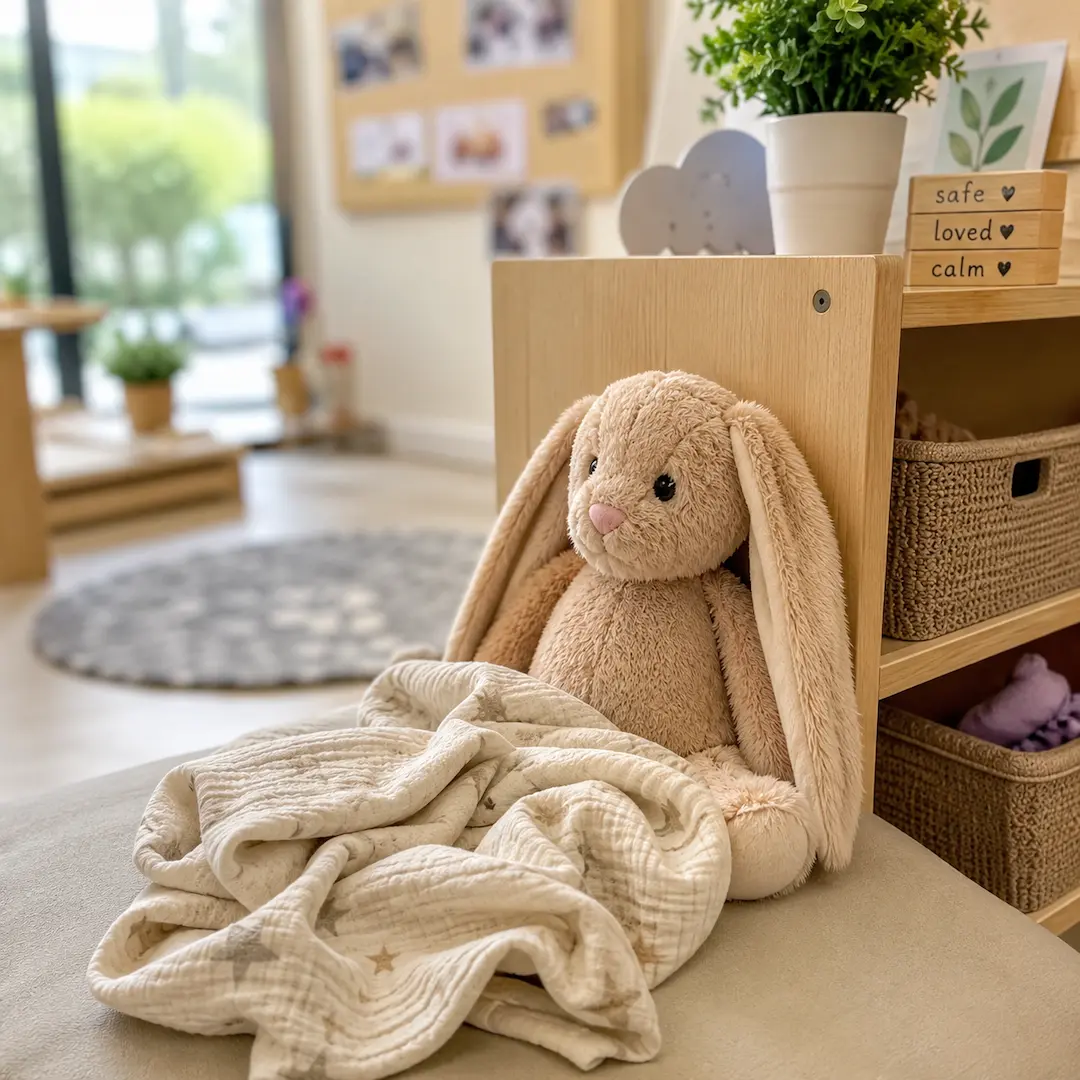
Comfort objects, often referred to by psychologists as “transitional objects” or more affectionately as “loveys,” are items that a child chooses to form a special attachment to. While soft toys like teddy bears and bunnies are the most common, comfort objects can come in many forms.
For some children, it might be a specific blanket with a satin trim. For others, it could be a muslin wrap, a soft pillow, or even a parent’s t-shirt that carries a familiar scent. Unlike standard toys which are used for play and entertainment, a comfort object is used primarily for soothing and reassurance.
The Science Behind the Snuggle
The deep bond between a child and their comfort object is a healthy part of development. The concept was first introduced by the renowned paediatrician and psychoanalyst Donald Winnicott. He described these items as “transitional objects” because they help children bridge the gap between their inner emotional world and the external reality.
When an infant is very young, they see themselves and their primary caregiver (usually the mother) as one unit. As they grow and begin to realise they are separate individuals, they can feel a sense of vulnerability. The comfort object stands in for the connection to the parent. It allows the child to hold onto a physical representation of safety and love, even when their parent is in another room or away at work.
Benefits of Comfort Objects
Parents sometimes worry that an attachment to a blanket or bear signals insecurity, but the opposite is often true. These objects provide essential developmental benefits.
Security and Stability
In a world that is big, loud, and constantly changing, a comfort object remains consistent. It smells familiar, feels the same, and provides a tangible anchor of stability during transitions, such as moving houses or starting childcare.
Emotional Regulation
One of the most valuable skills a child learns in their early years is how to manage big feelings. A comfort object is an incredible tool for self-soothing. When a child feels overwhelmed, tired, or sad, hugging their lovey releases oxytocin and helps lower their heart rate, allowing them to calm down independently.
Promoting Independence
Ironically, carrying a security blanket often makes a child more adventurous. Knowing they have their source of comfort tucked under their arm gives them the bravery to explore new environments, engage with new peers, and step away from their parents with confidence.
Choosing the Right Comfort Object
While a child will ultimately choose their own special item, parents can gently guide the process to ensure the object is practical for daily life.
- Safety First: Ensure the item has no small buttons, loose ribbons, or plastic eyes that could pose a choking hazard for children under three. Breathable fabrics like cotton or muslin are excellent choices.
- Durability and Hygiene: This item will be dragged through playgrounds, supermarkets, and car seats. It needs to be machine washable and durable enough to withstand frequent cleaning.
- Buy a Spare: If your child attaches to a specific plush toy, buy a duplicate (or two) immediately. Rotate them so they wear evenly. This prevents a crisis if the original is lost or needs a wash.
- Personalisation: Adding a name tag or embroidery can help ensure the item always finds its way back to you if it gets left behind.
Comfort Objects in Childcare settings
Navigating the transition to early learning can be emotional for families. Whether you are looking for the best childcare centre Raceview has to offer, or seeking a leading childcare centre Heritage Park families trust, you should look for educators who respect the importance of these items.
In a high-quality care environment, educators recognise that a comfort object is a bridge between home and the centre. It is not “just a toy” to be put away. Policies usually reflect this by allowing children to access their comfort items when they need reassurance, particularly during rest times or when they are feeling unsettled. Unlike other toys at the centre, children are generally not expected to share their comfort objects, respecting the personal nature of the attachment.
Children’s Choice and Comfort Objects
At Children’s Choice, we are dedicated to creating a nurturing environment that feels like a home away from home. We fully support the use of comfort objects as part of our commitment to your child’s emotional well-being.
We understand that a familiar bunny or blanket can make the difference between a tearful morning and a happy goodbye. Our educators work with families to ensure these special items are kept safe and are available to your child whenever they need a little extra courage or a cuddle. We treat these objects with the same respect your child does, acknowledging the vital role they play in their sense of security.
When to Seek Guidance
For the vast majority of children, attachment to a comfort object is entirely normal and healthy. There is no specific age where a child “must” give up their item. Most will naturally reduce their reliance on it as they grow and develop other coping strategies for stress.
However, if you notice that the need for the object is preventing your child from using their hands for play, engaging socially with other children, or if they seem inconsolable even with the object present, it may be worth discussing with your paediatrician. In rare cases, intense reliance can be a sign of underlying anxiety that requires different support.
Supporting Your Child’s Emotional Journey
Understanding the role of the humble comfort object helps us see early childhood through a lens of empathy. These worn-out blankets and toys are evidence of your child’s growing independence and their ability to find security in the world.
By respecting this bond, you are validating their feelings and providing them with the emotional tools they need to thrive. At Children’s Choice, we are honoured to be partners in this journey, ensuring your child feels safe, supported, and ready to learn,teddy bear included.
Frequently Asked Questions
What exactly is a comfort object?
A comfort object, or transitional object, is an item a child chooses to provide psychological security. Common examples include blankets, cloth nappies, soft toys, or stuffed animals. It serves as a calming substitute for the primary caregiver, helping the child feel safe in new situations.
Why do children need comfort objects?
Children use these objects to navigate independence. They fulfill crucial developmental needs by providing a sense of security, aiding in emotional regulation during stressful moments, and helping children self-soothe. They act as a consistent, safe anchor as the child explores the world.
How does Children’s Choice support my child’s attachment to their comfort object?
At Children’s Choice, we welcome comfort objects. We understand they are vital for settling in and rest times. We do not force children to share these personal items and ensure they are accessible when your child needs reassurance, supporting their emotional transition into our care.
At what age should a child stop using a comfort object?
There is no specific “normal” age to stop. Some children let go by age three or four, while others keep them for comfort during sleep well into primary school. It depends entirely on the child’s temperament and readiness. Pressuring a child to give it up early can cause unnecessary stress.
What should I do if my child is overly attached to their comfort object?
If the attachment interferes with daily activities like playing or eating, simply set gentle boundaries, such as keeping the item in a “safe place” (like a cubby) during active play. If you have concerns about anxiety, the educators at Children’s Choice or your GP can offer guidance.