There is something truly special about the first time a toddler dips a brush,or a finger,into a pot of bright paint. It is messy, chaotic, and wonderfully creative. For many parents, the thought of painting at home might bring up visions of stained carpets and scrubbing tables, but the developmental rewards are well worth a little bit of cleanup.
Painting is more than just a fun activity to pass the time on a rainy afternoon. It is a fundamental way for young children to explore their world, express their big emotions, and build the skills they will need for school later on. At Children’s Choice, we see firsthand how play-based learning, including creative arts like painting, supports a child’s confidence and growth. By understanding the benefits and setting up a safe space, you can unlock a world of creativity right in your own home.
The Benefits of Painting for Toddlers
When your little one is swirling blue and yellow together to make green, they are doing serious learning. Art provides a rich sensory experience that engages the brain and body simultaneously.
Sensory Development
Toddlers learn best through their senses. Painting invites them to explore texture, temperature, and visual fluidity. Whether it is the coolness of finger paint, the scratchy sound of a dry brush, or the visual delight of vibrant colours, painting helps build neural connections that support sensory processing.
Fine Motor Skills
Gripping a paintbrush, squeezing a paint bottle, or making precise strokes requires coordination. These actions help strengthen the small muscles in the hands, wrists, and fingers. This development is crucial because it lays the foundation for essential future skills, such as holding a pencil for writing, tying shoelaces, and using eating utensils independently.
Emotional Expression
Toddlers often have feelings that are too big for their limited vocabulary. Art gives them a non-verbal outlet to express happiness, frustration, or excitement. Splashing bold red paint might release energy, while carefully drawing soft circles can be soothing. It is a safe way for them to “speak” without saying a word.
Creativity and Imagination
In the world of a toddler, a blob of purple can be a dinosaur, a cloud, or a grape. Painting encourages open-ended thinking. Unlike toys that have a specific function, paint allows children to make their own choices and experiment with outcomes, fostering critical thinking and imaginative play.
Cognitive Development
Painting is also a lesson in cause and effect. They learn that mixing red and white makes pink, or that pushing harder on the brush makes a wider line. These little experiments are early science and math lessons, teaching problem-solving and spatial awareness as they figure out how to fit their ideas onto the paper.
Setting Up a Safe Painting Environment
Creating a stress-free painting zone is the key to enjoying the process. When you aren’t worried about the furniture, you can focus on connecting with your child.
Choosing Non-Toxic and Washable Paints
Safety comes first. Always opt for water-based, non-toxic paints specifically designed for toddlers. Since little ones often explore with their mouths as well as their hands, ensure everything on the table is safe if it accidentally ends up being tasted.
Protecting the Workspace
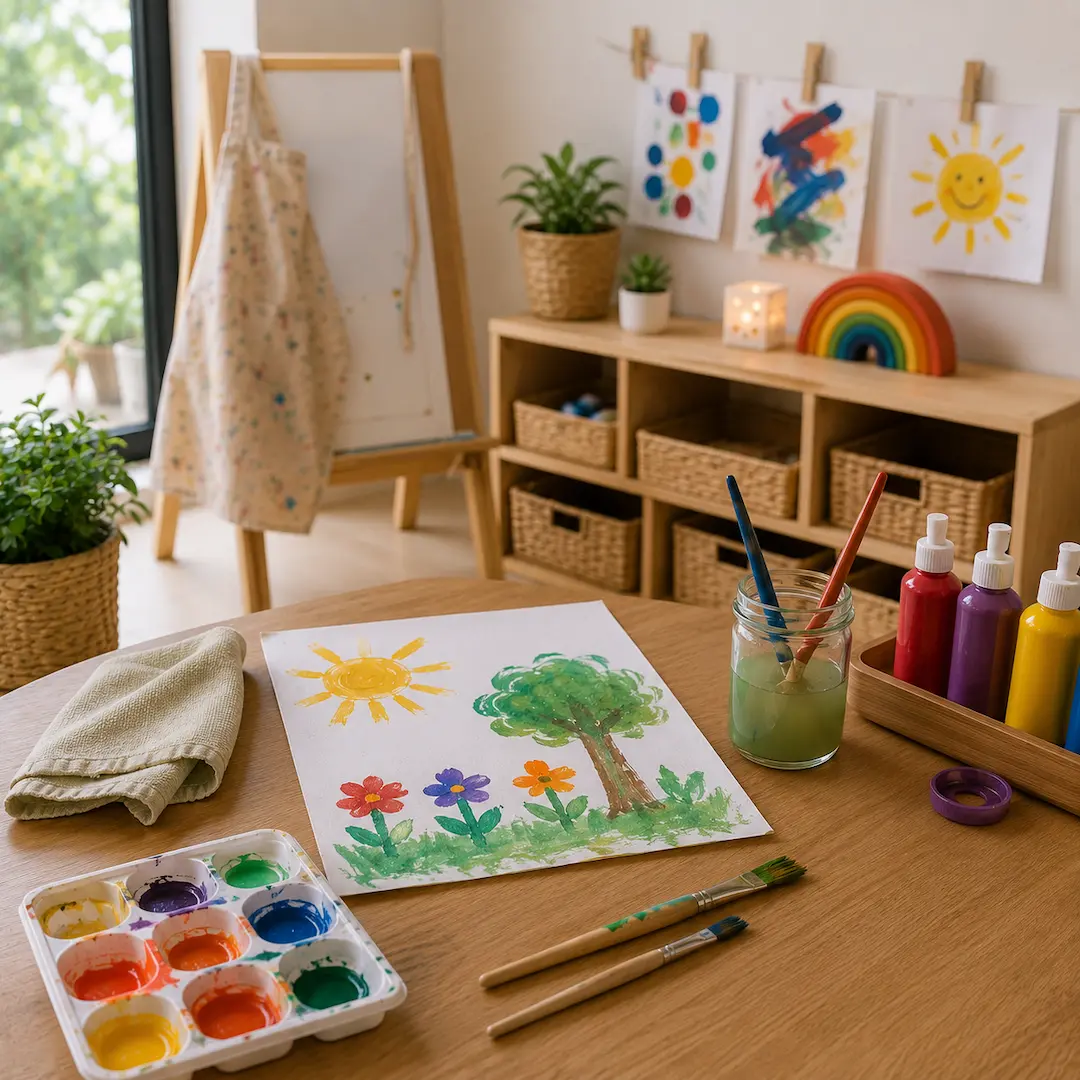
Preparation is your best friend. Cover your table with a plastic tablecloth, old newspapers, or a large piece of butcher’s paper. If the weather is nice, take the activity outside to the grass or patio. Dress your child in old clothes or a dedicated art smock,an old adult-sized t-shirt works perfectly for full coverage.
Selecting the Right Tools
Toddlers are still developing their grip, so look for chunky paintbrushes that are easy to hold. You don’t need expensive equipment; household items like sponges, cotton buds, and even cut-up potatoes can make fantastic painting tools.
Fun Painting Activities for Toddlers
You don’t need a complicated plan to get started. Here are a few simple ways to engage your toddler in art.
Finger Painting
This is the ultimate sensory experience. It allows children to feel the paint directly, removing the barrier of a tool. It is excellent for tactile learners and helps children feel grounded and connected to their creation.
Brush Painting
Using a brush helps refine hand-eye coordination. You can offer different sizes of brushes and encourage your child to see the different marks they make. It helps them practice the “pincer grip” they will eventually use for writing.
Sponge Painting
Cut kitchen sponges into fun shapes like circles, squares, or triangles. dipping them in paint and stamping them on paper teaches children about shapes and patterns while creating interesting textures.
Nature Painting
Combine outdoor play with art by collecting leaves, twigs, or rocks. Your toddler can paint directly onto rocks (creating “pet rocks”) or use leaves as stamps. This connects their appreciation for nature with their creative expression.
Children’s Choice: Nurturing Creativity Through Play
At Children’s Choice, we believe that early learning should be joyful and child-led. We integrate painting and creative arts into our daily programs because we know it supports holistic development.
Our approach focuses on creating a supportive and stimulating environment where children feel safe to take creative risks. We don’t worry about staying inside the lines. Instead, our educators encourage children to explore materials freely, asking open-ended questions that prompt thinking and conversation. This play-based learning philosophy ensures that children are developing social skills, resilience, and confidence, preparing them for the transition to school in a natural, pressure-free way.
Addressing Potential Concerns
It is normal for parents to hesitate before pulling out the paints. Here is how to handle common hurdles.
Managing Messes
Accept that mess is part of the learning process. By setting up the space beforehand and having a damp cloth or baby wipes nearby for quick cleanups, you can keep the chaos contained. Remind yourself that the mess is temporary, but the memories and skills are lasting.
Encouraging Focus
Toddlers have short attention spans. If they only want to paint for five minutes, that is perfectly okay. Follow their lead. As they grow and their fine motor skills improve, their ability to focus on the task will naturally extend.
Dealing with Frustration
Sometimes the paint doesn’t go where they want it to, or the colours turn muddy brown. If your child gets frustrated, validate their feelings. You might say, “It looks like you’re frustrated that the paint dripped. Let’s see if we can turn that drip into something else.” This teaches resilience and problem-solving.
Tips for Encouraging Creativity
To truly unlock your child’s creativity, the role of the parent is to be a supportive observer rather than a director.
Process-Focused vs. Product-Focused Art
This is the most important concept in toddler art. Focus on the process (the doing) rather than the product (the result). A toddler’s painting doesn’t need to look like a house or a cat. The value is in the movement of the brush and the mixing of colours.
Providing Open-Ended Prompts
Instead of saying “Draw a flower,” try offering materials and saying, “I wonder what colours you will use today?” or “How does that blue paint feel?” This encourages them to make their own decisions.
Celebrating the Process
When they show you their work, avoid simply saying “Good job.” Instead, describe what you see: “I see you used a lot of bright yellow here!” or “Look at those big, sweeping lines.” This shows you are paying attention to their effort, not just judging the outcome.
Fostering a Lifelong Love of Art
Art creates a bridge between a child’s inner world and the outside world. By engaging in painting, toddlers develop essential motor skills, learn to regulate their emotions, and build the confidence to express themselves. Whether at home or in a nurturing environment like Children’s Choice, providing these creative opportunities is one of the best gifts you can give your child’s development. So roll up your sleeves, put out the paper, and get ready to create something beautiful together.
Frequently Asked Questions
What if my child tries to eat the paint?
This is very common with toddlers who are still exploring the world orally. Always supervise painting sessions closely and use non-toxic, edible-safe paints (you can even make paint from yogurt and food colouring). If they try to eat it, gently redirect them by saying, “Paint is for the paper, not for eating,” and show them how to apply it to the page.
Why is Children’s Choice considered a leading childcare centre Raceview offers for creative arts?
At Children’s Choice, we prioritize process art over cookie-cutter crafts. We provide a resource-rich environment where children lead their own creative journey. This child-centered approach allows toddlers to build confidence and independence, which is why many families regard us as a leading childcare centre Raceview parents trust for holistic development.
How often should toddlers paint?
There is no set rule, but offering creative activities a few times a week is beneficial. It doesn’t always have to be paints; crayons, chalk, and water-play count as creative expression too. Follow your child’s interest,if they love it, they might want to do it daily!
Does Children’s Choice, the best childcare centre Raceview has, offer painting every day?
Yes, we incorporate art into our daily rhythm. As the best childcare centre Raceview families recommend, Children’s Choice ensures materials are accessible so children can choose to create whenever inspiration strikes. This autonomy is central to our play-based learning philosophy, supporting emotional regulation and fine motor growth.
My toddler won’t sit still to paint. What should I do?
Toddlers are active learners! Try standing at an easel or taping paper to a wall or fence outside. Vertical painting builds shoulder and core strength and allows them to wiggle and move while they create. Art doesn’t have to happen while sitting at a table.