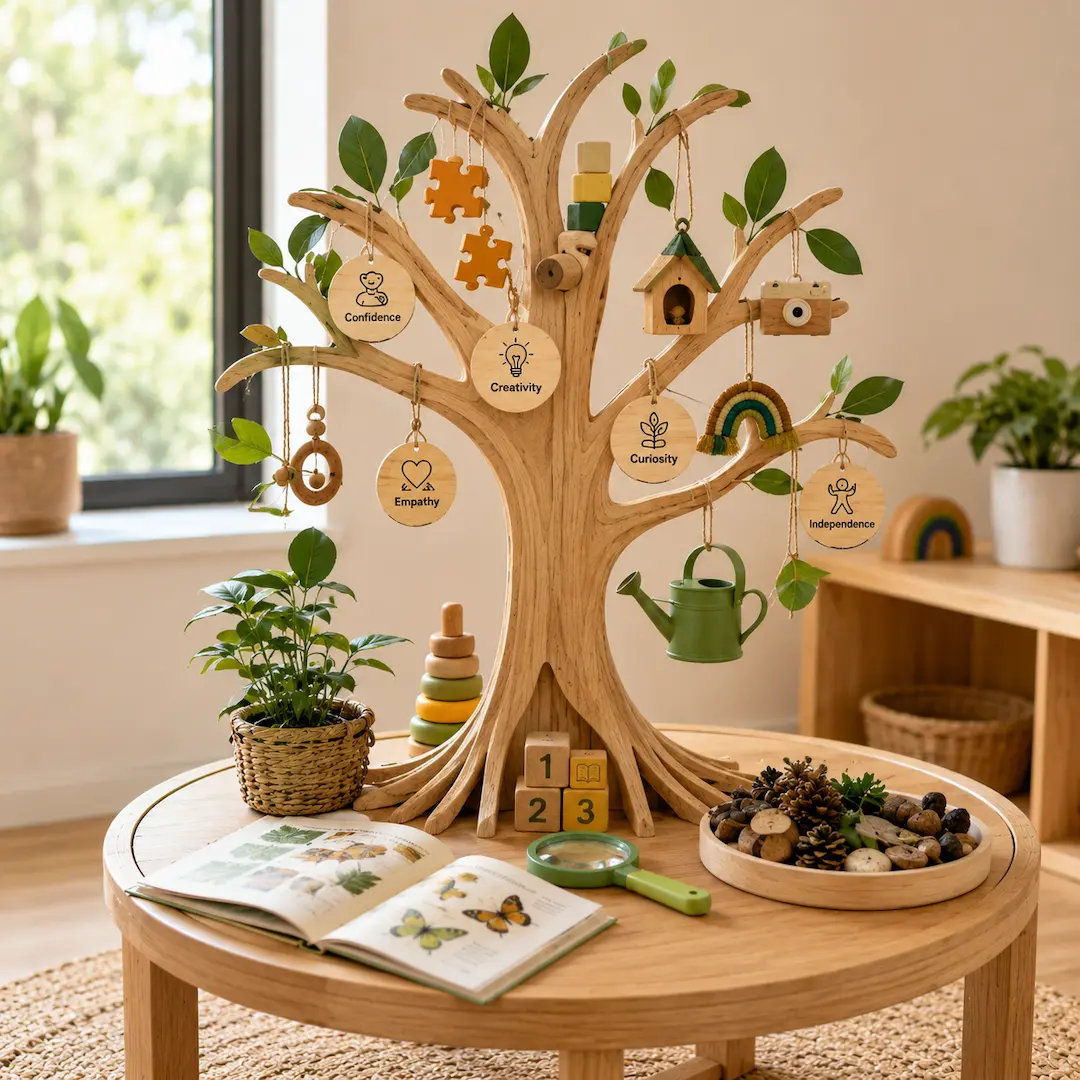
Dropping your child off at a childcare centre can bring a mix of pride, hope, and uncertainty. You may know they will sing songs, hear stories, and count blocks, but many parents still wonder what children are really learning during the day. The truth is that strong preschool programs teach much more than early reading and math.
Quality early learning helps children build the skills they use for life: confidence, self-control, communication, curiosity, and resilience. At Children’s Choice, educators see every day how play-based learning supports the whole child, not just academic milestones.
In this guide, you’ll learn what preschool programs teach beyond reading and numbers, why those lessons matter, and how they help children feel ready for school and everyday life.
Quick takeaways:
- Preschool helps children build independence through everyday routines and choices.
- Social and emotional growth is a core part of school readiness.
- Play, creativity, movement, and nature all support brain development.
- A strong early learning environment helps children grow into capable, curious learners.
Building Confidence Through Life Skills
Here’s the deciding factor: confidence often grows from doing small things independently, over and over again.
Many parents notice this stage at home. Their child wants to put on their own shoes, pour their own drink, or carry their own bag, even if it takes twice as long. While these moments can test your patience, they are also signs of healthy development.
In preschool programs, these daily routines are not treated as side tasks. They are part of the learning. When children practice washing hands, packing away toys, serving food, or asking for help, they build real-life problem-solving skills.
This matters because each small success teaches a child, “I can do this.”
At Children’s Choice, educators create safe, structured chances for children to try things for themselves. That might mean guiding a child through tidying up after an activity, encouraging them to choose between two tasks, or helping them work through a small disagreement with words instead of tears.
These moments build the brain’s pathways for decision-making, planning, and self-regulation. Over time, children become more willing to try, make mistakes, and try again.
What this looks like in practice
A child learns to:
- hang up their own bag
- open their lunch container
- ask a peer for a turn
- follow a simple routine
- solve a minor problem before seeking adult help
These may seem like small wins, but they have a big effect. When it is time to transition to school, children who have practiced independence often feel more secure in new settings. They are more likely to manage routines, cope with change, and trust in their own ability.
Fostering Social and Emotional Growth
If academics are one part of school readiness, social and emotional growth is the foundation underneath it.
For young children, learning how to share, wait, join a group, and handle frustration is hard work. Big feelings are normal in early childhood. Empathy, self-awareness, and emotional regulation are not automatic traits. They are learned through repeated practice, patient support, and strong relationships.
That is why quality preschool programs make space for children to learn how feelings work.
At Children’s Choice, group experiences help children notice emotions in themselves and others. During play, mealtimes, transitions, and group discussions, educators model calm language and respectful communication. Children begin to learn phrases like “Can I have a turn next?” or “I’m upset because I was using that.”
Over time, these repeated interactions help children:
- identify feelings
- cope with disappointment
- build friendships
- understand fairness
- respond to others with empathy
You might be thinking, “Isn’t this something children just pick up naturally?” Some parts do come with time, but strong early learning settings speed up and strengthen this growth because children get guided practice every day.
Australia’s early childhood quality standards also reflect the importance of emotional wellbeing. Parents can explore the broader framework through the Australian Children’s Education & Care Quality Authority, which outlines how quality services support children’s relationships, safety, and development.
When children feel emotionally safe, they are more open to learning in every area. They can listen better, recover from setbacks faster, and feel more confident in a group setting.
The Power of Creativity and Play-Based Learning
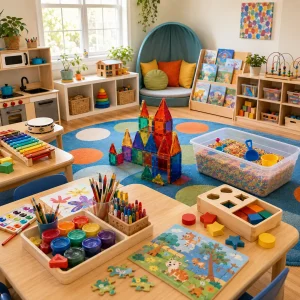
To an adult, a preschool room can sometimes look like pure fun. Children are painting, building towers, pretending to run a shop, or making a “rocket” out of cardboard. It can be easy to think they are “just playing.”
But play is serious learning.
Children learn best when they are actively involved and emotionally engaged. Play-based learning supports memory, language, attention, and flexible thinking because children are not only receiving information. They are testing ideas, expressing feelings, and solving problems in real time.
At Children’s Choice, creativity is not saved for a special craft table. It is built into the whole day. Art, music, storytelling, construction, role-play, and sensory exploration all give children ways to think and communicate beyond words.
Why creative play matters
Through creative experiences, children learn to:
- experiment without fear of getting it wrong
- express ideas in different ways
- adapt when things do not go to plan
- work with others on shared ideas
- stay engaged with a task for longer
That last point matters more than many parents realize. When children build focus and flexibility through play, they are preparing for future academic tasks too. A child who can imagine, persist, and adjust during play is also building the mindset needed for writing, reading comprehension, and problem-solving later on.
In other words, play is not separate from learning. It is one of the best ways young children learn.
Connecting with Sustainability and the Environment
Young children are naturally drawn to the outdoors. They notice bugs on the path, the shape of leaves, and the sound of rain in a way adults often miss. That natural curiosity creates a strong opening for meaningful learning.
When preschool programs connect children with nature, they do more than fill time outside. They help children build observation skills, care for living things, and understand that their actions affect the wider world.
At Children’s Choice, outdoor experiences can include gardening, sorting recycling, saving water, caring for plants, and noticing seasonal changes. These activities are simple, but they help children see themselves as part of a community and part of an environment worth protecting.
What children gain from nature-based learning
Children begin to:
- observe closely
- ask better questions
- understand cause and effect
- develop patience and responsibility
- respect living things
This kind of learning is supported in Australia’s national early learning framework. Parents can read more through the Department of Education’s Early Years Learning Framework resources, which explain how belonging, being, and becoming shape early childhood education.
These experiences also support emotional wellbeing. Time outdoors often gives children more room to move, reset, and engage their senses. For some children, that can mean better focus and calmer transitions during the rest of the day.
Celebrating Cultural Diversity and Community
A strong preschool program helps children learn not only who they are, but also how they fit into a wider community.
Children are naturally curious about people. They notice different languages, family structures, food, clothing, celebrations, and traditions. When early learning settings respond to that curiosity in a thoughtful way, children begin to build respect, empathy, and a sense of belonging.
At Children’s Choice, celebrating diversity is part of everyday learning. That can happen through books, songs, art, family input, cultural celebrations, and meaningful conversations. It also includes acknowledging Aboriginal and Torres Strait Islander perspectives in age-appropriate ways through stories, connection to Country, shared experiences, and respect for the world’s oldest continuing cultures.
Why this matters early
Early exposure to diversity helps children:
- feel proud of their own identity
- recognise and respect differences
- build inclusive habits
- form stronger community connections
- grow into thoughtful classmates and citizens
This is not about teaching children a scripted message. It is about helping them experience belonging while learning that others matter too.
When children see their home life reflected and respected in their preschool setting, they often feel safer and more confident. When they also learn about people whose lives differ from theirs, they widen their understanding of the world.
That broad sense of community becomes a powerful part of holistic development.
Supporting Physical Development and Health
Physical development is easy to overlook when parents focus on letters and numbers. But the ability to sit comfortably, hold a pencil, climb stairs safely, manage personal care, and take part in group activities all depends on physical growth.
Young children need daily opportunities to move, stretch, balance, climb, grip, run, and rest. Gross motor skills involve larger body movements like jumping and balancing. Fine motor skills involve smaller hand and finger movements, such as using scissors, turning pages, or drawing shapes.
Both matter in the preschool years.
At Children’s Choice, physical development is woven into the day through active play, outdoor exploration, movement games, creative tasks, hygiene routines, and body safety conversations. These experiences help children develop coordination and body awareness while also learning healthy habits.
What strong physical development supports
It helps children:
- sit with stability during group time
- hold tools like crayons and pencils
- manage self-care tasks
- build stamina for active days
- feel more confident in their bodies
Health learning also plays a role here. Preschool programs often teach children to wash hands properly, recognise hunger and thirst cues, rest when needed, and understand simple safety rules.
Parents looking for broader guidance can review the Department of Health and Aged Care’s physical activity recommendations, which outline healthy movement targets for young children.
The bottom line is simple: physical development supports classroom readiness just as much as cognitive development does.
Igniting Curiosity and Discovery
If your child is deep in the “why” stage, you already know curiosity does not switch off. It is one of the clearest signs that learning is happening.
When children ask why the moon changes shape, why leaves fall, or why some things float, they are doing the early work of scientific thinking. They are observing, predicting, testing, and drawing conclusions.
That is why strong preschool programs do not rush children past their questions. They build learning around them.
At Children’s Choice, educators create hands-on experiences that invite investigation. A simple water table can become a lesson in volume and cause and effect. A nature walk can spark questions about insects, weather, and habitats. Mixing colors, building ramps, or planting seeds all give children a chance to explore ideas through action.
What curiosity builds over time
Curiosity helps children:
- ask thoughtful questions
- stay engaged with learning
- test ideas without fear
- solve problems creatively
- become more confident thinkers
You might be thinking, “Do they need this before school?” Yes, because curiosity is not extra. It is the engine that drives learning.
Parents can also explore how Australian education systems support early childhood learning and development through the Australian Government Department of Education. Resources like these help show that discovery, inquiry, and active learning are essential parts of quality early education.
A child who feels safe to ask questions is a child who is more likely to keep learning for years to come.
Nurturing Your Child’s Next Steps
The best preschool programs do far more than prepare children to recognise letters or count to ten. They help children become confident, capable, caring, and curious people.
That broader foundation matters. Life skills, emotional growth, creativity, physical development, cultural awareness, and curiosity all shape how children enter school and how they move through the world beyond it.
If you are exploring early learning options, look for a setting that supports the whole child. At Children’s Choice, that means creating a nurturing environment where children can build skills for school, relationships, and life. If you’d like to see that approach in action, book a tour and explore what meaningful early learning can look like for your family.
FAQs
What life skills do children learn in preschool programs?
Preschool programs often emphasize essential life skills such as sharing, taking turns, listening, and basic problem-solving. These skills help children develop positive relationships and enhance their ability to work collaboratively with others.
How do preschools support emotional growth?
Preschools provide a safe and nurturing environment that encourages children to express their feelings, manage emotions, and develop empathy. Teachers use techniques like storytelling, role-playing, and group discussions to build emotional intelligence.
How is creativity nurtured in preschool?
Creativity is fostered through activities like art, music, imaginative play, and hands-on experiments. These opportunities allow children to explore their interests and express their unique ideas freely and confidently.
Can preschool programs improve social skills?
Yes, preschool programs are designed to enhance social skills by encouraging interaction with peers in group settings. Children learn to communicate effectively, resolve conflicts, and build friendships during these formative years.
Do preschool programs teach collaboration?
Collaboration is a key focus in preschool, as children are often engaged in team activities, such as building projects or group storytelling. These experiences teach the importance of working together to achieve shared goals.
How do preschools build self-confidence in children?
Self-confidence is developed through positive reinforcement, supportive interactions, and opportunities for children to succeed in small tasks. Preschools encourage independence, which helps children believe in their abilities.
Are problem-solving skills taught in preschool?
Yes, preschools introduce problem-solving by allowing children to approach challenges through play, exploration, and structured activities. These experiences help children think critically and develop practical solutions to everyday problems.