Few parenting moments are as familiar as hearing “why?” over and over before the day has even properly started. Why is the sky blue? Why do ants walk in lines? Why do I have to wear shoes? It can feel endless when you are trying to get out the door, but those questions matter. They are signs that your child is trying to make sense of the world.
That is exactly why curiosity is important for lifelong learning. Curiosity helps children pay attention, build memory, test ideas, and stay engaged with new experiences. It also lays the groundwork for critical thinking, problem-solving, and emotional resilience later in life. In this blog, we will look at how curiosity supports memory and engagement, how it helps children think creatively, and how parents and educators can nurture it through everyday routines, early learning experiences, and play-based learning.
Why Curiosity Is Important for Lifelong Learning From the Start
Curiosity is often the first step in learning. Before a child can master a new skill, they usually need a reason to care about it. That reason is often simple: they want to know more. They notice something interesting, ask a question, or test what happens when they try something new.
This matters because learning is not just about being told facts. Real learning happens when children connect new information to what they already know. A curious child is not just hearing information. They are exploring it, testing it, and giving it meaning.
In early learning, this process is especially powerful. Young children learn through relationships, repetition, play, and hands-on experiences. When curiosity is encouraged, children become active learners instead of passive listeners. That active role supports stronger learning habits that can continue well into adulthood.
Mini takeaway: Curiosity turns everyday moments into meaningful learning opportunities.
How Curiosity Strengthens Memory and Engagement
Many parents notice the same strange pattern: a child can remember every fact about dinosaurs, trucks, or butterflies, but somehow forget where their hat is. That is not random. Children tend to remember what captures their attention.
When curiosity is involved, the brain is more ready to learn. Interest creates focus, and focus helps with memory. When a child wants to know the answer to something, they are more likely to hold onto the information because it feels relevant and exciting. Curiosity gives learning emotional weight, and that makes it easier to remember.
This idea aligns with what Australian early childhood guidance often emphasizes: children learn best when they are engaged, secure, and actively involved in their environment. The Australian Children’s Education & Care Quality Authority highlights the importance of responsive, stimulating early learning settings that support children’s development and wellbeing.
What this looks like in real life
A curious child might:
- ask to read the same space book every night
- remember the names of planets after one visit to the library
- notice patterns in leaves, bugs, or clouds
- bring up a question from breakfast again at bedtime
These moments can seem small, but they show deep engagement. A child who is interested is doing more than absorbing facts. They are making connections.
How parents and educators can support memory through curiosity
You do not need to turn your home into a classroom. Often, the best approach is to follow your child’s lead and build on what already interests them.
Try these simple ideas:
- pause and listen when your child asks a question
- ask, “What do you think?” before giving the answer
- revisit topics they care about through books, walks, songs, or play
- connect new ideas to familiar experiences
For example, if your child is curious about rain, you can talk about the weather at breakfast, look at clouds on the way to childcare, and read a weather book before bed. That repetition, tied to interest, helps learning stick.
Mini takeaway: Children remember more when learning feels interesting, active, and connected to their world.
How Curiosity Builds Critical Thinking and Creativity
Curiosity does more than help children remember facts. It also helps them think. When children ask questions, test ideas, and look for patterns, they are building the foundations of critical thinking.
Critical thinking starts early. It shows up when a child wonders why one block tower falls and another stays up. It shows up when they try three different ways to fit a toy into a basket. It shows up when they use a shoe as a boat for a game because it “looks like one.” These are not random acts. They are early experiments.
Curiosity supports this process because it pushes children past what is obvious. Instead of accepting things as they are, they ask what else might happen. That habit is at the heart of creativity and problem-solving.
Why open-ended thinking matters
A child who is encouraged to explore possibilities learns that there can be more than one answer. That is important in school, in relationships, and later in work. It helps children become flexible thinkers instead of rigid ones.
Parents and educators can support this by shifting from quick answers to open-ended conversation.
Instead of saying:
- “That’s not how you do it.”
Try saying:
- “What are you trying to make?”
- “What do you think will happen next?”
- “Can you think of another way to solve that?”
These small changes invite children to think more deeply. They also show that their ideas matter.
Practical ways to encourage critical thinking
Here are a few easy ways to build critical thinking and creativity into daily life:
- Ask prediction questions during stories: “What do you think happens next?”
- Encourage building, sorting, and pretend play without strict rules.
- Let children solve small problems before stepping in.
- Accept unusual ideas when they are safe and thoughtful.
- Talk out loud about your own thinking: “I wonder which container will hold more water.”
At Children’s Choice, this kind of learning can grow naturally in an environment where children feel safe to ask questions, explore materials, and test ideas through play-based learning.
Mini takeaway: Curiosity helps children become thinkers, not just followers of instructions.
How Early Learning Environments Can Foster Curiosity
Children are more likely to explore when they feel safe, supported, and interested. That is why environment matters so much in early learning. A child who feels rushed, worried, or overly directed may stop asking questions. A child who feels secure and capable is more likely to investigate, experiment, and try again.
This is one reason play-based learning is so valuable. Through play, children explore cause and effect, language, movement, relationships, and imagination. They learn by doing. The Queensland Government Department of Education supports play-based approaches because they help children develop across many areas while staying engaged in the learning process.
What supports curiosity in early learning settings
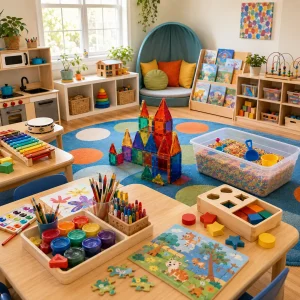
An early learning environment that encourages curiosity often includes:
- predictable routines that help children feel secure
- educators who listen and respond to children’s questions
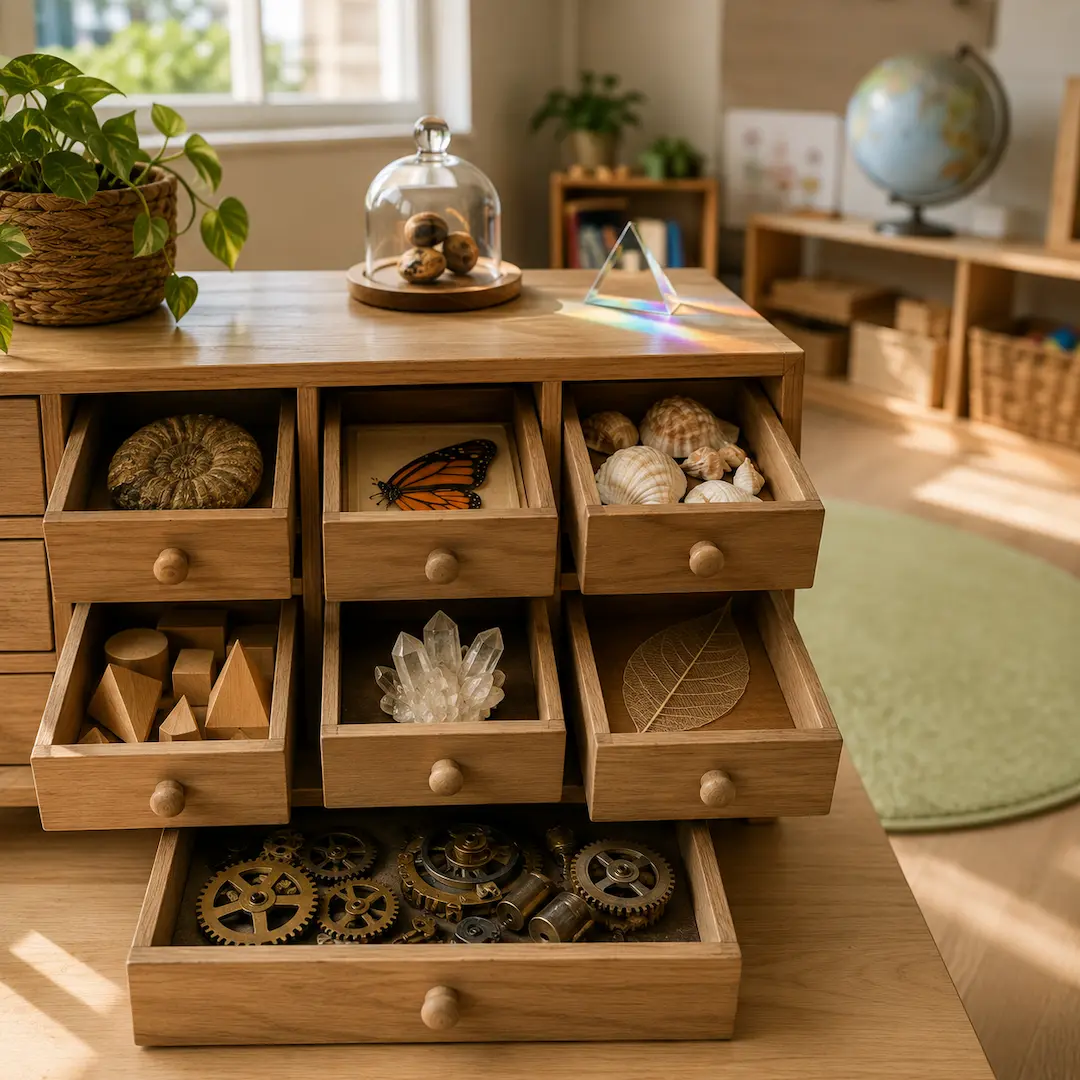
- open-ended materials such as blocks, loose parts, art supplies, and natural objects
- time for uninterrupted play and exploration
- opportunities for children to make choices
These features matter because curiosity does not grow well under constant pressure. Children need room to wonder, test, fail, and try again.
Strategies families can use at home
You do not need expensive materials to nurture curiosity. Some of the most effective experiences are simple and familiar.
Try:
- keeping a basket of loose items for imaginative play
- inviting your child to help cook, garden, or sort laundry
- going on short nature walks and noticing small details
- modelling your own questions, such as “I wonder why these leaves are different shapes”
- letting boredom lead to invention instead of filling every quiet moment
At Children’s Choice, educators support curiosity by balancing structure with exploration. Predictable routines help children feel confident, while thoughtful play experiences give them the freedom to investigate their interests. That combination supports both emotional wellbeing and strong early learning outcomes.
For families wanting to better understand national quality expectations in early childhood education, the Australian Government’s Starting Blocks resource offers practical information about what quality early learning looks like.
Mini takeaway: Curiosity grows best in environments that combine safety, choice, and play-based exploration.
How Curiosity Supports a Growth Mindset and Emotional Resilience
Children do not always enjoy being beginners. Many become frustrated when something is hard, messy, or does not work the first time. That is normal. Learning often feels uncomfortable before it feels rewarding.
This is where curiosity can make a big difference. A child with a curious mindset is more likely to ask, “What can I try next?” instead of deciding, “I can’t do this.” That shift is closely linked to growth mindset, the belief that skills can improve with effort, practice, and support.
When curiosity is stronger than fear of getting it wrong, children become more willing to take healthy risks. They try new tasks, ask for help, and recover more easily from mistakes. That is the start of resilience.
How to encourage a growth mindset through curiosity
Parents and educators can support this by praising the process, not just the result.
For example, instead of only saying:
- “Good job, you got it right.”
Try saying:
- “You kept trying even when it was tricky.”
- “That was a smart question.”
- “I noticed you changed your idea and tried a new way.”
- “You were really curious about how that worked.”
This kind of feedback helps children value effort, reflection, and persistence. It teaches them that learning is not about instant perfection. It is about staying engaged long enough to grow.
A simple example
Imagine a child trying to build a tall block tower that keeps falling. One response is frustration and quitting. Another response is curiosity: maybe the blocks need a wider base, a flatter surface, or slower hands. The second response opens the door to learning.
That is why curiosity is important for lifelong learning. It helps children see challenges as something to explore, not something to fear.
Mini takeaway: Curiosity helps children stay open, flexible, and resilient when learning feels hard.
Why Curiosity Matters for Adults Too
Curiosity is not only for children. Adults need it too. In fact, lifelong learning depends on it. When adults stay curious, they are more likely to adapt to change, build new skills, and stay mentally engaged over time.
That matters in real life. Parenting, work, technology, and relationships all ask us to learn continuously. A curious adult is more likely to explore new ideas, ask better questions, and stay open when things change.
This is especially important in a fast-moving world where many jobs and daily systems keep evolving. The Australian Government’s Your Career resource supports skills development, career planning, and ongoing learning across different life stages. It is a useful reminder that growth does not stop after school or university.
What adult curiosity can look like
Adult curiosity might mean:
- learning a new skill for work
- reading about child development to better support your family
- trying a different way to solve a recurring problem
- taking interest in your child’s questions instead of brushing them aside
- being willing to say, “I don’t know, let’s find out”
Children notice this. When they see adults learning, wondering, and adapting, they learn that growth is normal. They also see that learning is not something you finish. It is something you keep doing.
Why this matters for families
A home that values curiosity becomes a place where questions are welcome. That helps children and adults alike. Shared learning builds connection. It can turn ordinary routines into conversations, discoveries, and moments of confidence.
Mini takeaway: Curious adults model the mindset children need for true lifelong learning.
Practical Daily Ways to Cultivate Curiosity at Home
Curiosity does not need a special lesson plan. It can be built into the rhythm of family life. Small habits, repeated often, can make a big difference.
Here are practical ways to support a curious mindset every day.
1. Ask open-ended questions
Open-ended questions invite more than a yes or no answer. They help children think, describe, and imagine.
Examples include:
- “What do you notice?”
- “Why do you think that happened?”
- “How could we do this differently?”
- “What do you want to find out?”
2. Follow your child’s interests
When children show strong interest in a topic, stay with it for a while. Borrow books, do simple activities, or look for related experiences in your community. Interest is often the best guide for deep learning.
3. Make room for unstructured play
Not every moment needs a lesson or a planned activity. Free play gives children the chance to experiment, invent, and solve problems on their own. That independence is a key part of early learning.
4. Model curiosity yourself
Let your child hear you wonder about things. You might say:
- “I wonder why the moon looks bigger tonight.”
- “I’ve never cooked this before. Let’s see how it turns out.”
- “I’m not sure how that works. We can learn together.”
This shows that questions are valuable and not knowing is okay.
5. Treat mistakes as information
When something goes wrong, avoid rushing straight to correction. First, help your child reflect.
Ask:
- “What happened?”
- “What did you notice?”
- “What could we try next time?”
That keeps the focus on learning instead of blame.
6. Change small routines now and then
Novelty can spark attention. Try a different walking route, visit a new park, or use everyday objects in a new way. New experiences often lead to new questions.
7. Slow down enough to notice
Busy schedules can crowd out curiosity. Even a few extra minutes to watch ants on the footpath, compare leaf shapes, or talk about a rainbow can create rich learning moments.
Common Mistakes That Can Limit Curiosity
Even well-meaning adults can accidentally shut curiosity down. The good news is that small shifts can help.
Common mistakes include:
- answering too quickly without letting children think first
- over-scheduling children so they have little time to explore
- focusing only on correct answers instead of good questions
- treating mess, trial, or slow progress as a problem
- dismissing repeated questions when children are trying to understand something deeply
A more helpful approach is to pause, invite reflection, and allow space for exploration. Children do not need perfect responses. They need adults who are present, interested, and willing to wonder with them.
Mini takeaway: Protect curiosity by giving children time, space, and respect for their questions.
Conclusion
Curiosity is one of the strongest foundations for lifelong learning. It helps children build memory, develop critical thinking, strengthen resilience, and stay engaged with the world around them. It also matters well beyond childhood, shaping how adults grow, adapt, and continue learning over time.
By encouraging questions, supporting play-based learning, and creating space for exploration, families and educators can help curiosity thrive from the earliest years onward. If you would like to see how Children’s Choice supports confident, curious learners through nurturing relationships and meaningful early learning experiences, explore our programs and discover how our approach helps children grow with wonder.
FAQs
What is curiosity and why is it important?
Curiosity is the desire to learn or know more about something. It is important because it drives exploration, encourages innovative thinking, and fosters a love for continuous learning.
How does curiosity support lifelong learning?
Curiosity motivates individuals to ask questions, seek out new information, and adapt to changes, which are all fundamental for personal and professional growth throughout life.
Can curiosity be developed over time?
Yes, curiosity can be cultivated by engaging in new experiences, asking open-ended questions, and fostering a mindset that embraces challenges and learning opportunities.
How does curiosity benefit children in their education?
Curiosity encourages children to explore, ask questions, and develop problem-solving skills, making learning more engaging and impactful during their formative years.
Is curiosity linked to creativity?
Absolutely! Curiosity often leads to exploring uncharted ideas and concepts, paving the way for creative thinking and innovation by thinking outside the box.
How can adults reignite their curiosity?
Adults can reignite curiosity by pursuing hobbies, exploring new fields of interest, reading extensively, or simply approaching everyday situations with a mindset of discovery and wonder.
What are some barriers to curiosity?
Barriers to curiosity include fear of failure, rigid thinking, lack of encouragement, and an environment that does not value questioning or exploration. Overcoming these involves creating a supportive and open-minded atmosphere for learning.