Many parents notice the same thing: when children get outside, something shifts. Their mood lifts. Their bodies relax. They seem more focused, curious, and alive. A patch of grass, a muddy puddle, or a few sticks can hold their attention far longer than many indoor toys.
That pull toward the outdoors is not random. Outdoor play is a key part of healthy childhood development because it supports the whole child. It helps build strong bodies, active minds, emotional resilience, and social skills. Natural spaces offer movement, challenge, sensory input, and freedom in ways that indoor settings often cannot.
In this blog, we’ll look at why outdoor play matters so much for children’s growth. We’ll cover the physical, cognitive, emotional, and social benefits, then share simple ways parents and educators can make outdoor play part of everyday life. We’ll also show how Children’s Choice creates outdoor learning experiences that support children in meaningful, age-appropriate ways.
Physical Development: Outdoor Play Builds Strong, Capable Bodies
Outdoor play gives children the space they need to move in big, natural ways. Running, climbing, balancing, jumping, crawling, and lifting all help children develop core physical skills that support healthy growth.
Big movement supports gross motor development
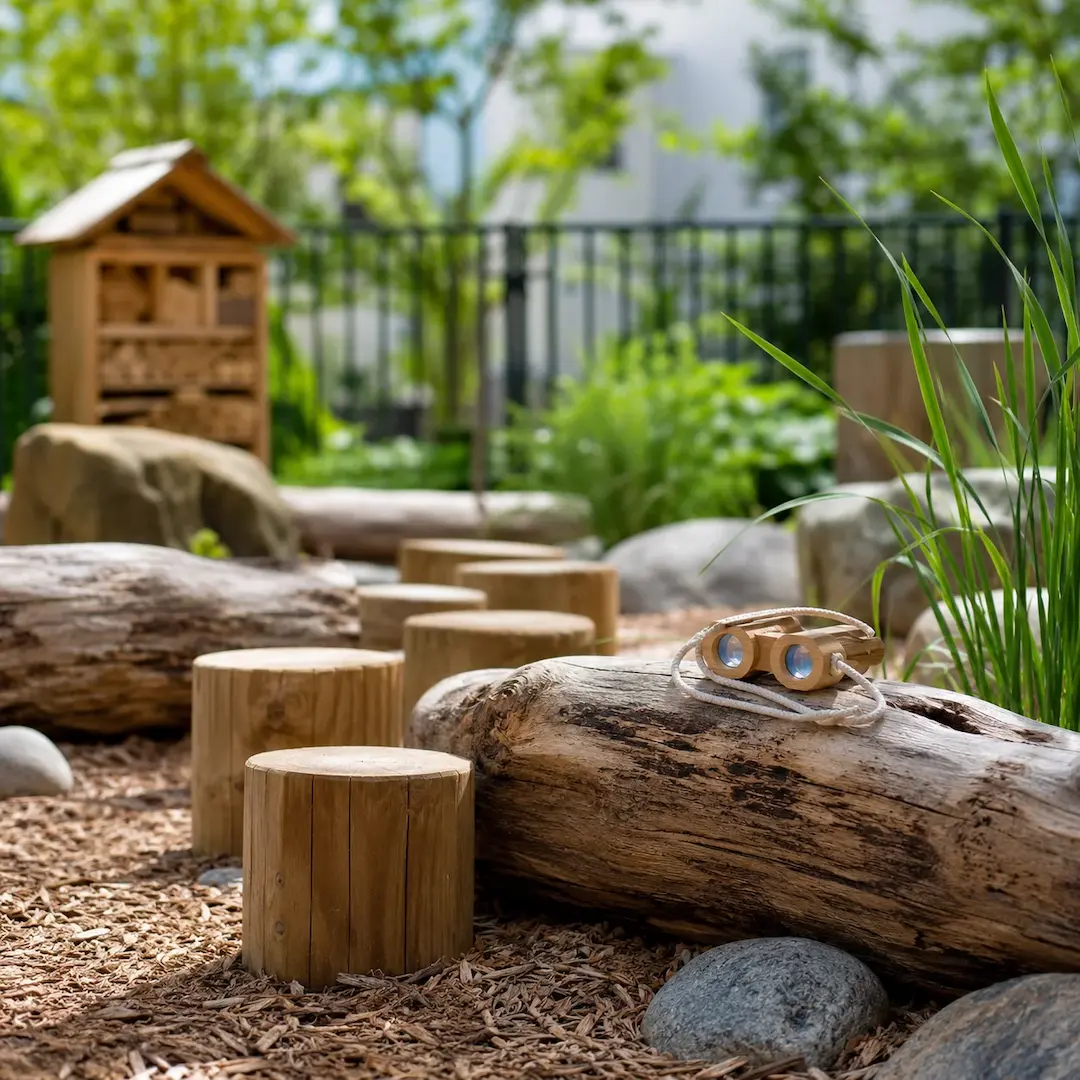
Gross motor skills are the large body movements children use every day. These include walking, climbing stairs, kicking a ball, and keeping balance. Outdoor environments invite these skills naturally. A hill encourages climbing. A log encourages balancing. Open space invites running.
These repeated movements help children build:
- strength
- coordination
- balance
- body awareness
- endurance
Unlike indoor play, outdoor play often changes from moment to moment. Surfaces are uneven. Weather changes. Obstacles appear. This variety helps children learn how to adjust their bodies and move with control.
Outdoor time can support overall health
Outdoor play also helps reduce long periods of sitting. That matters, especially in early childhood, when regular movement supports healthy bones, muscles, and heart health. Time outdoors may also help children meet daily physical activity needs.
Government early childhood guidance highlights the value of outdoor environments for movement and learning. Safe sunlight exposure can also support vitamin D levels, and time spent outside has been linked to better visual habits because children look at objects at different distances.
Safe challenge helps children grow stronger
Children do not build physical confidence by staying still. They build it by testing themselves. Climbing a little higher, stepping across stones, or learning how fast they can run all help them understand what their bodies can do.
For parents and educators, the goal is not to remove all challenge. It is to create safe opportunities for children to explore their limits with support nearby.
For more tips and resources about outdoor activities and their benefits for children, you can explore resources provided by government organizations like the Centers for Disease Control and Prevention (CDC) .
Cognitive Development: Nature Sparks Curiosity and Learning
Outdoor play does more than exercise the body. It also exercises the brain. Nature gives children endless chances to observe, question, experiment, and solve problems on their own.
Natural spaces invite discovery
Children are often fascinated by simple things outdoors. A leaf floating in water. Ants carrying food. A stick that becomes a fishing rod, wand, or bridge. These moments may look small, but they are rich learning experiences.
Outdoor play supports cognitive development by encouraging children to:
- notice patterns
- ask questions
- compare and classify objects
- test ideas
- imagine new uses for materials
This kind of hands-on exploration builds the foundation for later learning in science, math, language, and literacy.
Unstructured play supports problem-solving
Not all learning needs adult direction. In fact, some of the best learning happens when children lead. When a child tries to build a cubby from branches or figure out how to move water from one container to another, they are using planning, reasoning, and persistence.
These are important executive function skills. Executive function includes working memory, flexible thinking, and self-control. Outdoor play creates real situations where children practice these skills in ways that feel fun and meaningful.
The Australian Government’s early childhood resources also note the learning value of play-based environments.
Fresh air and open-ended play can support focus
Children often focus better when they have had time to move, explore, and reset outdoors. Natural environments can reduce overstimulation and create a calmer setting for sustained attention. Open-ended materials like sand, water, leaves, and stones do not tell children what to do. That freedom encourages creativity and independent thinking.
For parents and educators, this means outdoor time is not a break from learning. It is learning.
Emotional and Social Development: Confidence Grows Outside
Outdoor play helps children build more than muscles and thinking skills. It also supports emotional wellbeing and social growth. Outside, children often feel freer to take healthy risks, express themselves, and work with others.
Supported risk-taking builds resilience
Many adults feel nervous when children climb trees, step across logs, or move fast in open spaces. That reaction is understandable. But age-appropriate risk is an important part of development.
When children try something challenging and succeed, they build confidence. When they try, wobble, and try again, they build resilience. They learn that mistakes are part of growth.
Supported risk-taking helps children develop:
- self-trust
- emotional regulation
- persistence
- decision-making
- confidence in unfamiliar situations
The key word is supported. Adults stay present, set boundaries, and step in when needed, but they do not control every move.
Outdoor spaces often improve social play
Outdoor settings can make social interaction easier. There is more room to move, more materials to share, and more chances for cooperative games. Children may build a fort together, invent a game, or solve a shared problem like how to move a heavy branch.
These moments teach valuable social skills, including:
- communication
- turn-taking
- negotiation
- teamwork
- conflict resolution
Government guidance on children’s health and development also stresses the importance of movement, play, and supportive environments. For more, visit the CDC’s child development resources.
Nature can help children feel calmer
Outdoor environments often support a sense of calm. The sounds, textures, and open space of nature can help children regulate big emotions. A child who feels frustrated indoors may settle after digging in the sand, walking in the garden, or watching clouds move overhead.
This matters in both homes and early learning settings. Emotional regulation is not taught only through words. It is also supported by the environments we create.
Practical Encouragement for Parents and Educators
Outdoor play does not need to be complicated. You do not need a huge backyard, expensive equipment, or a full day free. Small, regular opportunities can make a real difference.
Keep it simple and consistent
Try to think of outdoor play as a daily habit, not a special event. Even 15 to 30 minutes outside can support healthy childhood development.
You might include:
- a short walk after school
- time at a local park
- watering plants together
- chalk drawing on the path
- puddle jumping after rain
- collecting leaves, sticks, or rocks
- ball games in the yard
Consistency matters more than perfection.
Balance structured and unstructured play
Children benefit from both guided and child-led experiences. A family bushwalk or a beginner sport can be valuable. So can free play with dirt, water, and loose parts. Structured activities build certain skills, while unstructured play gives children freedom to think, create, and lead.
A balanced routine often works best.
Dress for the weather and say yes more often
Many families spend less time outdoors because of small barriers. The fix is often practical. Keep hats by the door. Store gumboots where children can reach them. Pack spare clothes. Make sunscreen part of the routine.
When possible, say yes to safe mess. Mud washes off. Confidence lasts longer.
How Children’s Choice supports outdoor learning
At Children’s Choice, outdoor play is seen as an essential part of early learning, not an add-on. Well-designed outdoor environments give children space to move, explore, imagine, and connect with nature. Educators can use these spaces to support play-based learning, guided discovery, and age-appropriate challenge.
This approach helps children grow across all areas of development. It also reflects what many parents want most: a setting where children can learn actively, build confidence, and enjoy being outside.
For families and educators alike, the message is simple. Outdoor play does not have to be perfect to be powerful. It just needs to happen often.
Mini-summary: The best outdoor play routine is one you can keep. Short, simple, regular outdoor experiences can have a big impact, especially when supported by thoughtful environments like those at Children’s Choice.
Conclusion
Outdoor play is one of the most valuable parts of healthy childhood development. It helps children build strong bodies, curious minds, emotional resilience, and better social skills. It gives them room to move, think, test ideas, manage risk, and connect with the world around them.
Just as important, outdoor play brings joy. It gives children the freedom to follow their interests, use their senses, and learn through real experience. That is why it matters so much at home, in early learning settings, and in the everyday routines that shape childhood.
If you want to support your child’s growth in a natural, balanced way, start by making outdoor time a priority. And if you’d like to see how this looks in a thoughtfully designed early learning environment, explore Children’s Choice and discover how its outdoor spaces help children learn, play, and thrive.
FAQ’S
What age groups does Children’s Choice cater to?
Children’s Choice serves children from infancy through pre-kindergarten, ensuring each stage of development is supported.
Are the outdoor spaces safe for children?
Yes, all outdoor spaces are carefully designed with safety in mind, utilizing child-friendly materials and features to create a secure environment for exploration and play.
How does outdoor time benefit my child’s development?
Outdoor time promotes physical activity, enhances sensory experiences, supports emotional well-being, and provides opportunities for social interaction and problem-solving.
What activities are included in outdoor learning?
Outdoor learning includes activities such as nature walks, gardening, imaginative play, physical games, and exploration of natural elements like water and sand.
How can I enroll my child at Children’s Choice?
You can begin by visiting the Children’s Choice website or contacting their enrollment team to learn about availability and the enrollment process.
Can parents visit the outdoor spaces?
Yes, parents are welcome to visit and see the outdoor spaces firsthand during tours or events, as well as stay informed about how these areas support their child’s learning.
Is Children’s Choice open year-round?
Yes, Children’s Choice operates year-round, ensuring consistent care and learning opportunities for your child in all seasons.