Have you ever watched your child happily squishing mud between their fingers, splashing in puddles with pure delight, or staring intently at how light reflects off a bubble? While it might look like messy chaos to us adults (and perhaps a little extra laundry), these moments are actually some of the most significant learning experiences in your child’s early life.
This is sensory play, and it is the foundation upon which children build their understanding of the world. Through touch, sight, sound, smell, and taste, children collect the data their growing brains need to make connections and solve problems.
At Children’s Choice, we understand that play is the work of childhood. We champion safe, nurturing environments where gumboots are encouraged and messy hands are a sign of a day well spent. In this guide, we will explore why sensory play matters, how it supports development, and how you can encourage these vital experiences at home.
What is Sensory Play?
Simply put, sensory play includes any activity that stimulates your child’s senses: touch, smell, taste, movement, balance, sight, and hearing. While we often think of “sensory” as just messy tables with slime or sand, it is actually much broader.
Sensory play activities facilitate exploration and naturally encourage children to use scientific processes while they play, create, investigate, and explore. It helps the brain create stronger connections to process and respond to sensory information. For example, a child refusing to walk on grass or getting upset by loud noises may have trouble organizing sensory input. Regular, safe exposure through play helps them learn to filter and process these sensations effectively.
The Benefits of Sensory Play for Children
Research shows that sensory play builds nerve connections in the brain’s pathways, which leads to the child’s ability to complete more complex learning tasks. Here is how it supports specific areas of development:
Cognitive Development
When a child experiments with a tub of water, pouring it from a wide cup into a narrow bottle, they aren’t just making a splash,they are learning early maths and science concepts. They are observing cause and effect, understanding volume, and problem-solving when the water spills. Sensory play encourages children to investigate new textures and materials, fostering the critical thinking skills they will use in school.
Language Development
Sensory play is a language-rich activity. When you play alongside your child, you naturally use descriptive words. You might talk about the “slimy” jelly, the “crunchy” leaves, or the “loud” bang. This helps children build their vocabulary and learn to use adjectives to describe the world around them. It also provides a relaxed environment for conversation, which is crucial for building social communication skills.
Fine Motor Skills Enhancement
Many sensory activities involve small, precise movements. Squeezing playdough, pinching rice grains, threading beads, or scooping water all require hand-eye coordination and finger strength. These small muscle movements are the precursors to writing, tying shoelaces, and buttoning shirts. By strengthening these muscles through play now, children are better prepared for the physical demands of the classroom later.
Emotional Regulation
Have you ever noticed how a warm bath relaxes you after a long day? Sensory experiences have a similar effect on children. Activities like playing with kinetic sand, water, or playdough can be incredibly calming for an anxious or over-stimulated child. The repetitive motions and focus required for sensory play help regulate their internal discomfort, allowing them to reset and find a sense of calm.
Social Skills Development
Sensory tables are often communal spaces in childcare settings. When children gather around a sensory bin, they learn to share space and materials. They negotiate who gets the blue scoop, observe how others are playing, and often collaborate on shared goals (like building a sandcastle). This fosters empathy, turn-taking, and the ability to work as part of a team.
Types of Sensory Play Activities
You don’t need expensive equipment to create engaging sensory experiences. Here are three main categories you can try:
Water Play
Water is one of the easiest and most versatile sensory materials. It is accessible, easy to clean up, and endlessly fascinating for children.
- Ideas: Add sponges, funnels, cups, and whisk to a tub of water. You can change the temperature (warm vs. cold) or add a drop of food colouring to make it visually stimulating.
Foaming or Bubbling Activities
Textures that change or pop are exciting for young children.
- Ideas: Use tear-free soap and a little water to create a mountain of bubbles. For a “taste-safe” option for younger babies, you can use aquafaba (the liquid from a can of chickpeas) whipped into a foam. It provides a wonderful, light texture that is safe if it ends up in their mouth.
Dry Sensory Play
Dry textures offer a different tactile feedback that helps with desensitization.
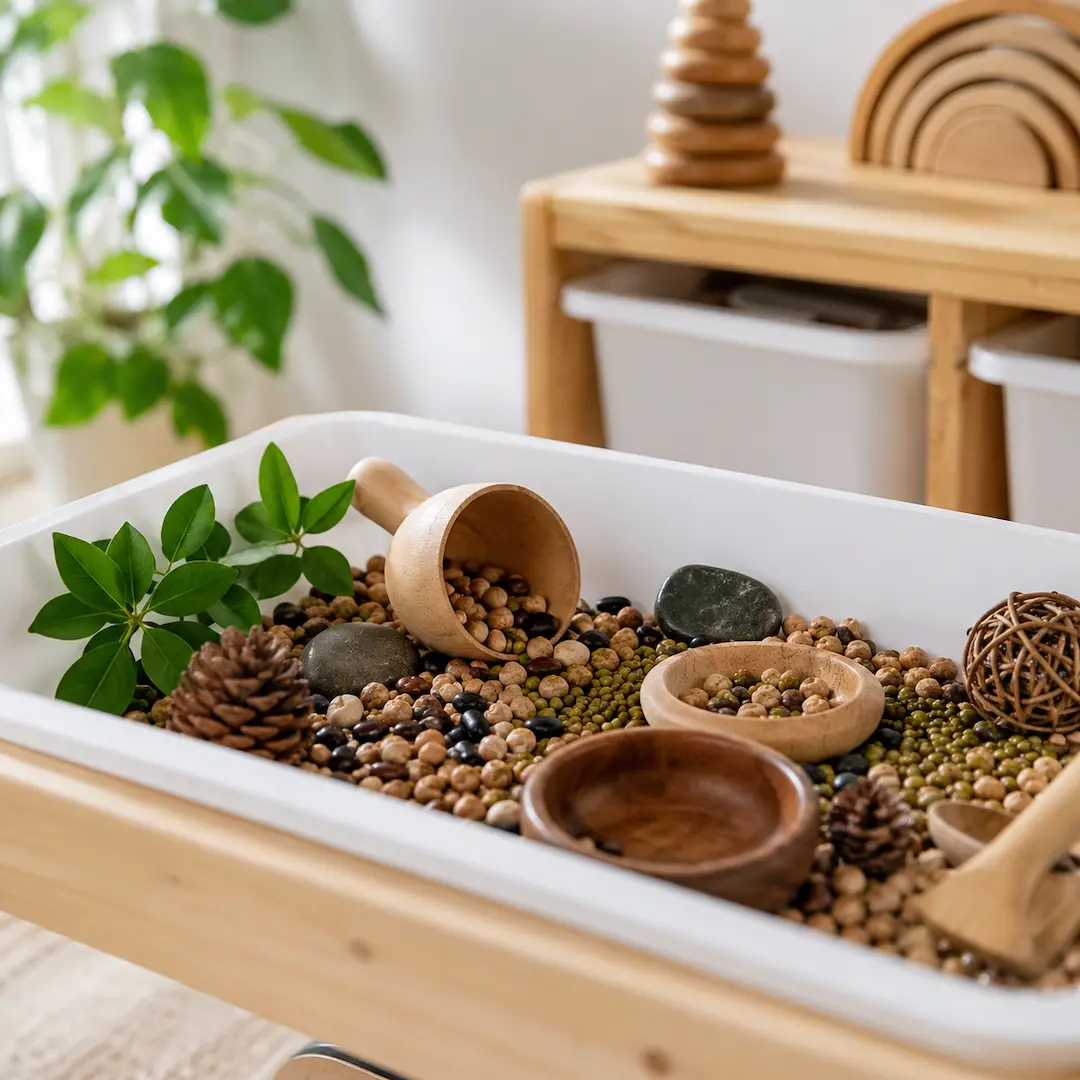
- Ideas: Uncooked rice, dried pasta, kinetic sand, dried beans, or even autumn leaves. Hiding small toys within a bin of dry rice turns the activity into a treasure hunt, engaging both their sense of touch and their problem-solving skills.
Safety Tips for Sensory Play
While exploration is encouraged, safety is always the priority. Here is how to keep playtime safe:
- Supervision is Key: Always supervise your child during sensory play, especially with water or small objects.
- Choking Hazards: Be mindful of the size of the items you use. For children under 3, avoid small items like dried beans or marbles. Stick to taste-safe options like crushed cereal or water.
- Check for Allergies: If you are using food items (like flour or pasta) or shaving cream, ensure your child does not have an allergy or skin sensitivity to the ingredients.
- Hygiene: Ensure hands are washed before and after play, and replace sensory materials like rice or playdough regularly to prevent bacteria growth.
Sensory Play Ideas for Different Ages
- Babies: Tummy time on a blanket with different textures (fuzzy, smooth, crinkly). Water play with a shallow tray (always supervised).
- Toddlers: “Rescue” missions where they have to peel tape off toys, or washing station activities where they scrub their plastic farm animals with soapy water.
- Preschoolers: Making slime or “oobleck” (cornflour and water), colour mixing experiments, or creating sensory gardens with fragrant herbs like mint and rosemary.
How Children’s Choice Champions Development
At Children’s Choice, we believe that every child deserves a start in life that is filled with wonder and discovery. Our curriculum is deeply rooted in play-based learning because we know this is how children learn best.
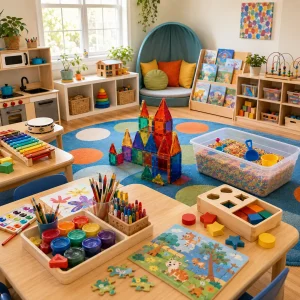
We carefully design our environments to offer rich sensory opportunities every day. From our sandpits and water play stations to our art corners filled with different textures and materials, we ensure your child is constantly engaging their senses. As a leading childcare centre Raceview families rely on, our educators are trained to guide these experiences, asking the right questions to extend your child’s thinking and ensure they are getting the most out of every messy moment. We focus on school readiness not through worksheets, but through building the resilience, social skills, and cognitive flexibility that sensory play provides.
Growing Through Exploration with Children’s Choice
Sensory play is far more than just a way to pass the time; it is a critical component of healthy brain development. By allowing children to explore the world with their hands, eyes, and ears, we are giving them the tools they need to become confident, capable learners.
Whether it is in your living room or at our centre, embracing the mess is a wonderful way to support your child’s growth. Children’s Choice is committed to partnering with Australian families to provide these enriching experiences, ensuring every child feels safe, nurtured, and ready to take on the world.
Frequently Asked Questions
What is sensory play and why is it important?
Sensory play includes any activity that stimulates a child’s senses: touch, smell, taste, movement, balance, sight, and hearing. It is vital because it builds nerve connections in the brain’s pathways, which supports the ability to complete complex learning tasks and supports language development, cognitive growth, and emotional regulation.
How does Children’s Choice incorporate sensory play?
At Children’s Choice, we integrate sensory experiences into our daily rhythm. Our educators set up invitation-to-play stations featuring water, sand, natural materials, and art supplies. We ensure these activities are age-appropriate and safe, allowing children to explore textures and materials that build fine motor skills and social cooperation in a supervised, nurturing environment.
What are some easy sensory play activities to do at home?
You don’t need fancy equipment! A tub of water with measuring cups is excellent for maths and motor skills. Uncooked rice or pasta in a plastic container makes for great auditory and tactile play. For a mess-free option, put hair gel and food colouring in a sealed ziplock bag and tape it to the floor for babies to squish and observe.
At what age should I introduce sensory play?
You can start immediately! For newborns, sensory play is as simple as skin-to-skin contact, listening to your voice, or looking at high-contrast images. As they grow, you can introduce textures during tummy time. Always ensure materials are age-appropriate,stick to large, taste-safe items for babies and introduce more complex materials as they stop mouthing objects.
Where can I find the best childcare centre in Raceview that incorporates sensory play?
When looking for the best childcare centre Ipswich or Raceview has to offer, look for a centre that prioritises play-based learning. Visit the centre and observe if they have accessible sensory stations like sandpits, mud kitchens, or art areas. A quality centre will have educators who can explain the educational value behind the “messy” play you see happening.