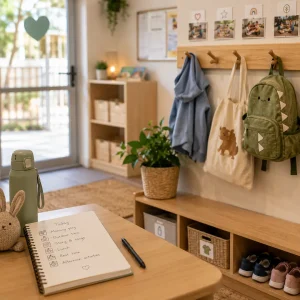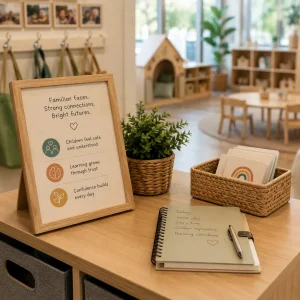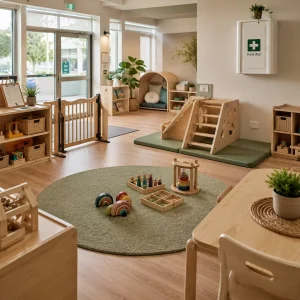
If you have a toddler or preschooler at home, you are likely very familiar with the word “why.” It might be “Why is the sky blue?”, “Why do dogs bark?”, or the classic “Why do I have to eat broccoli?” While this endless stream of questions can sometimes feel exhausting for busy parents, it is actually a sign of something wonderful happening inside your child’s brain.
Curiosity is the engine of intellectual achievement. It is the spark that drives children to explore, discover, and make sense of the world around them. When a child asks a question, they aren’t just looking for an answer; they are building neural pathways, developing critical thinking skills, and laying the groundwork for a lifetime of learning. It is much more than just gathering facts. It is about learning how to learn.
At Children’s Choice, we believe that nurturing this natural sense of wonder is one of the most important roles we play. Children’s Choice provides safe, nurturing childcare and play-based early learning that supports children’s development and school readiness. By understanding the science behind curiosity, we can work together, educators and parents alike, to help our little ones reach their full potential.
Why Curiosity Matters for Development
Research tells us that curiosity is foundational to learning. When a child is genuinely interested in a topic, their brain is primed to absorb information. It transforms learning from a passive activity into an active, exciting pursuit.
Deeper Learning and Retention
Think about the last time you learned something because you had to, versus when you learned something because you wanted to. The difference is immense. Children who are encouraged to follow their interests tend to learn faster and retain information longer. When curiosity is the driver, children engage in “deep learning,” where they connect new information to what they already know, creating a rich web of understanding.
Building Resilience and Problem-Solving
Curious children are natural problem-solvers. When they encounter a challenge, like a block tower that keeps falling over, their curiosity pushes them to ask, “What if I try it this way?” rather than giving up. This experimentation fosters resilience. They learn that “failure” is just a part of the discovery process. By navigating these small challenges, they build the emotional strength needed to tackle bigger hurdles later in schooling and life.
Creating a Curiosity-Rich Environment at Home
You don’t need expensive toys or a degree in education to foster curiosity at home. The most powerful tool you have is your own engagement and the environment you create.
Embrace Open-Ended Questions
When your child asks a question, it is tempting to give the correct answer immediately. However, flipping the script can be far more beneficial. Try asking, “What do you think?” or “How could we find out?” This encourages your child to formulate their own theories. It validates their thoughts and teaches them to look for solutions.
Follow Their Lead
Pay attention to what captures your child’s gaze. If they are fascinated by bugs in the garden, provide a magnifying glass or borrow a book about insects from the library. If they love building, give them different materials like cardboard boxes or safe kitchen items to construct with. When learning connects to their passions, their attention span increases significantly.
Model Wonder
Children learn by watching us. Let them see you being curious. If you see something interesting on a walk, stop and look at it. Say things like, “I wonder what bird made that nest?” showing them that you are a lifelong learner too. This shared enthusiasm signals that the world is an exciting place worth exploring.
The Role of Early Learning Centres
While home is the first classroom, a high-quality childcare environment plays a crucial role in expanding a child’s world. Interaction with peers and educators provides new perspectives that challenge and grow a child’s understanding.
In a group setting, children are exposed to different ideas and questions from their friends. Social interaction is a major driver of language development. Through storytelling, singing, and role-playing with others, children pick up new vocabulary and sentence structures. They learn to express their own curiosity and listen to the ideas of others, which is a vital skill for school readiness.
Furthermore, structured routines in childcare are designed to balance security with exploration. When children feel safe and their needs are met, they feel confident enough to take risks and explore new activities.
Children’s Choice: Nurturing Curiosity
At Children’s Choice, our curriculum is built around the philosophy that children learn best through play. We don’t just teach children what to think; we support them in learning how to think.
Our educators are trained to recognize the “spark” in every child. We create environments filled with open-ended resources,from sensory bins and art stations to nature play areas,that invite investigation. Whether it is a science experiment seeing which items float or sink, or a creative arts session where blue and yellow paint suddenly become green, we celebrate the process of discovery.
We also focus heavily on emotional support. We know that a child needs to feel secure to be curious. Our nurturing atmosphere ensures that every child feels safe to ask questions, make mistakes, and try again. By partnering with families, Children’s Choice ensures that the spark of curiosity ignited at home continues to burn brightly while in our care.
Partnering for Your Child’s Future
Fostering curiosity is one of the greatest gifts we can give our children. It equips them with the tools they need to navigate an ever-changing world with confidence and creativity. By encouraging their questions, providing rich environments for exploration, and choosing the right early learning partners, we set them up for a lifetime of success.
At Children’s Choice, we are honored to be part of that journey. We are committed to providing a space where your child feels loved, safe, and free to discover the wonders of the world. If you are looking for a community that values your child’s potential as much as you do, we would love to welcome you to our family.
Frequently Asked Questions
How does curiosity help with school readiness?
Curiosity is a key indicator of academic success. Curious children are eager to explore new concepts, pay better attention, and are more self-motivated. This “readiness to learn” helps them adapt to the classroom environment, follow instructions, and engage with the curriculum enthusiastically.
What makes Children’s Choice a leading childcare centre in Heritage Park?
Children’s Choice stands out because we blend safety with stimulating, play-based learning. As a leading childcare centre in Heritage Park, we prioritize individual attention, ensuring every child’s unique interests are supported by qualified educators who are passionate about early development.
How do I find the best childcare centre in Ipswich for inquiry-based learning?
To find the best childcare centre Ipswich has to offer, look for services that prioritize “play-based” or “inquiry-based” curriculums. meaningful interactions between staff and children. Visit the centre to see if children are actively engaged in asking questions and exploring, rather than just completing rote tasks.
How does Children’s Choice support shy children to be curious?
At Children’s Choice, we understand that every child explores differently. We use a gentle, patient approach to build trust. Our educators work in small groups or one-on-one to help shy children feel safe. Once they feel secure, they naturally begin to explore and ask questions at their own comfortable pace.
Can too much questioning be a bad thing?
Not at all! While it can be tiring for adults, frequent questioning shows a healthy, active brain. It indicates your child feels safe enough to seek information. If you don’t know an answer, it is a great opportunity to say, “I don’t know, let’s find out together,” turning it into a bonding moment.