Watching a child hang back at the edge of a group, refuse to try something new, or fall apart when a task feels hard can be tough for any parent or educator. It is easy to think confidence is something children either have or do not have. In reality, confidence grows over time through everyday experiences, steady support, and chances to try, fail, and try again.
When children feel safe, capable, and heard, they are more likely to explore, ask questions, solve problems, and connect with others. That is why building confidence in early childhood matters so much. It shapes not only how children feel about themselves now, but also how they approach learning, friendships, and challenges later on.
In this article, you will learn:
- why confidence matters in early childhood development
- simple daily ways to help children feel capable
- how praise, routines, and relationships shape self-belief
- what to avoid if you want confidence to grow in healthy ways
The Importance of Confidence in Early Childhood Development
Confidence plays a major role in how young children learn and engage with the world. A child who believes, “I can try,” is more likely to join an activity, ask for help, and keep going when something feels difficult. A child who doubts their abilities may pull back, avoid risks, or rely too heavily on adults.
In the early years, confidence is closely tied to emotional wellbeing. When children feel secure and supported, their energy can go toward exploring, learning, and building social skills. This helps them develop stronger problem-solving abilities, better communication, and a greater willingness to take part in group experiences.
Confidence also supports brain development. Young children learn best through active participation. They build skills by doing, not just by watching. According to the Australian Government’s Starting Blocks guide to child development, early experiences shape how children grow socially, emotionally, physically, and cognitively. This means small, everyday moments carry real weight.
For parents and educators, this is helpful news. You do not need to wait for major milestones to build confidence. The process begins in ordinary moments like getting dressed, choosing a toy, helping set the table, or trying to zip up a jacket without help.
So the goal is not to create a child who never struggles. The goal is to help children believe they can cope, learn, and grow through those struggles.
Everyday Strategies for Fostering Confidence
Many adults look for big breakthroughs, but confidence usually grows through repetition. Small, steady experiences teach children that their choices matter and their efforts have value.
Offer simple choices
Choice builds autonomy. When you let a child choose between two shirts, pick a fruit for snack, or decide which book to read first, you are sending a clear message: your voice matters.
The key is to keep choices manageable. Too many options can feel overwhelming. A few age-appropriate choices help children practice decision-making without pressure.
Let children do what they can do
It is often faster to step in. But when adults always take over, children can start to believe they are not capable on their own. Letting them pour water, put toys away, carry a small bag, or wash their hands independently helps build real confidence.
These tasks may not be done perfectly, and that is fine. Confidence grows from doing, not from doing everything well the first time.
Make room for self-expression
Art, music, pretend play, building, movement, and storytelling all help children express themselves without fear of a right or wrong answer. These activities let children explore ideas, take initiative, and feel proud of what they create.
This is one reason play-based learning matters so much. At Children’s Choice, everyday routines and play experiences are designed to give children regular opportunities to make choices, solve problems, and build independence in natural ways.
Involve children in family life
Children feel more capable when they know they contribute. Simple jobs like feeding a pet, matching socks, watering plants, or wiping the table help them feel trusted and included.
These moments may seem small to adults, but to a child they say, “I can help. I belong here. I matter.”
The Role of a Supportive Environment
Children build confidence best when they feel safe. That safety is emotional as much as physical. A child who knows a trusted adult is nearby is more likely to explore, ask questions, and recover after making a mistake.
Supportive relationships are the foundation. Warm, responsive adults help children regulate emotions, understand boundaries, and feel secure enough to take healthy risks. When a child knows they will be comforted, guided, and accepted, they are more willing to try.
Create emotional safety at home and in care settings
Children need spaces where mistakes are treated as part of learning, not as a reason for shame. If a child spills, forgets, or gets something wrong, the adult response matters. Calm guidance helps children stay open to learning. Harsh reactions often lead to fear and avoidance.
You can support emotional safety by:
- using a calm, predictable tone
- keeping routines consistent
- listening without rushing to correct
- naming feelings without judgment
- reassuring children that learning takes time
Create physical spaces that invite independence
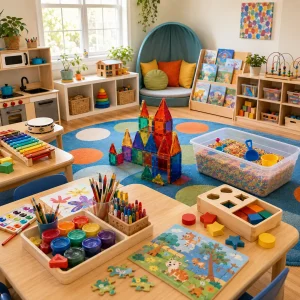
The setup of a room can also build confidence. When children can reach books, access toys, find their shoes, or put away their belongings, they are more likely to act independently.
Simple changes help:
- place toys and materials at child height
- use baskets or labels so children know where things go
- keep a small stool near sinks
- create tidy, predictable spaces for play and rest
The Australian Government’s Starting Blocks information on quality early childhood education highlights the value of environments that support children’s learning, development, and wellbeing. In practice, this means children thrive when spaces are designed for participation, not just supervision.
Effective Praise and Feedback
Praise can help build confidence, but only when it is used well. Constantly saying “You’re so smart” or “You’re perfect” may sound positive, yet it can create pressure. Children may begin to think they need to succeed all the time to earn approval.
A better approach is to focus on effort, persistence, strategies, and progress. This teaches children that growth comes from trying, practicing, and learning.
Praise the process, not just the outcome
Instead of saying:
- “You’re the best at this”
Try saying:
- “You kept trying even when it was hard”
- “You worked really carefully on that”
- “You found another way to solve the problem”
- “You should feel proud of how much effort you gave”
This kind of feedback is more useful because it shows children what they did well. It also helps them repeat those behaviors in the future.
Keep feedback specific and honest
Children can tell when praise is automatic. Specific feedback feels more real and more helpful. For example, “You put all the blocks away without being asked” is clearer than “Good job.”
If a child is struggling, avoid empty praise. Gentle, honest encouragement works better:
- “That was tricky, but you stayed with it”
- “You almost got it. Let’s look at it together”
- “It is okay to need more practice”
For more guidance on supporting children’s wellbeing and positive development, the Australian Government’s Parenting and Child Health resources through healthdirect offer practical information that families can use in everyday life.
Building Resilience Through Setbacks
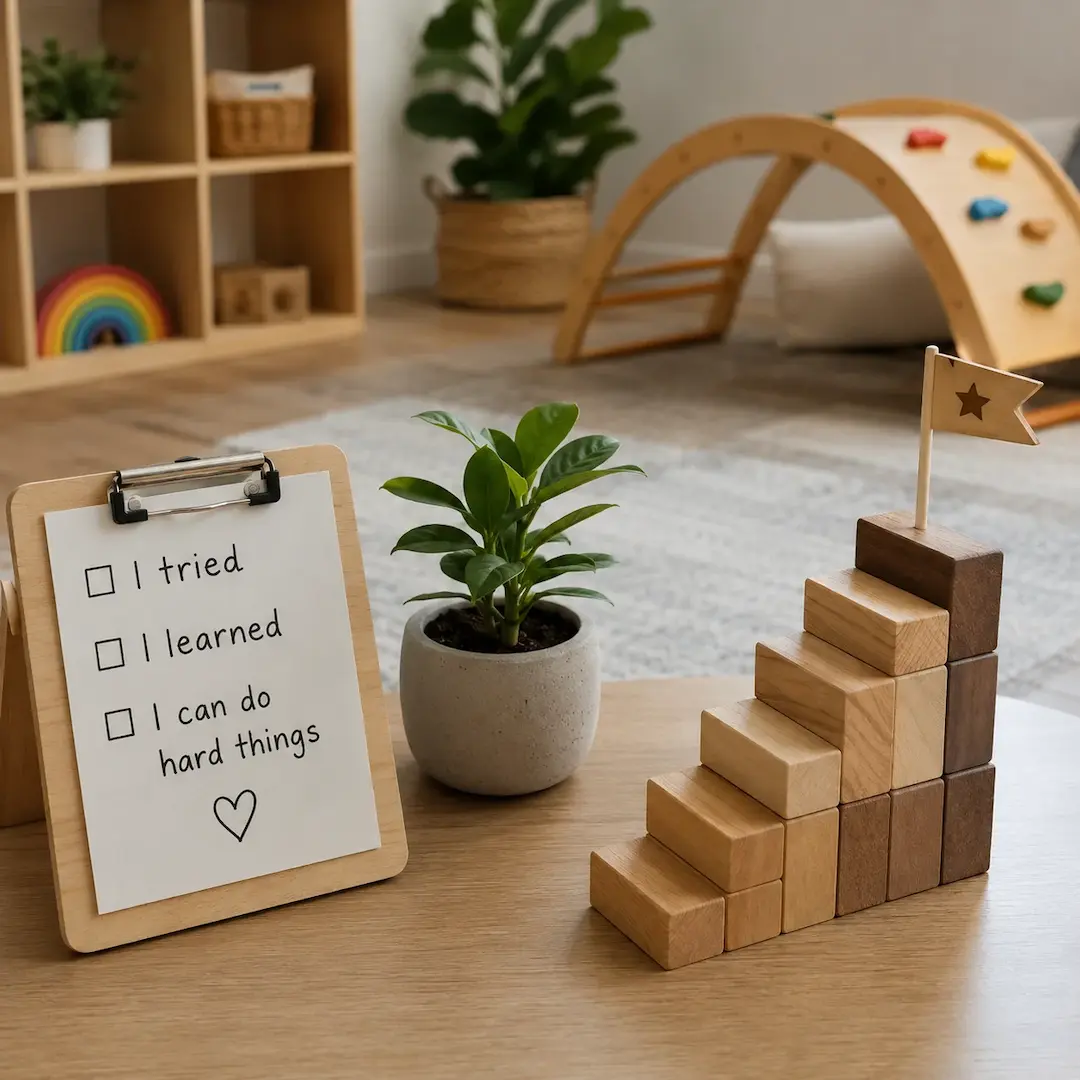
Confidence is not built by avoiding hard things. It grows when children learn they can handle hard things. That is why setbacks matter.
When a tower falls, a drawing does not go as planned, or a child cannot do up a button, frustration is normal. These moments can become powerful learning opportunities if adults respond with patience and trust.
Let frustration happen in manageable doses
It is natural to want to fix things quickly. But when adults step in too soon, children lose the chance to build persistence. Small, age-appropriate struggles teach children how to pause, adapt, and try again.
This does not mean leaving children alone when they are upset. It means staying close and offering support without taking over right away.
You might say:
- “That was disappointing”
- “You were working hard on that”
- “Do you want to try again or take a short break?”
- “What could we do differently this time?”
Teach coping, not perfection
Children need to learn that mistakes are not signs of failure. They are part of learning. When adults stay calm through setbacks, children begin to understand that problems can be managed.
Resilience grows when children:
- experience small challenges
- receive calm support
- learn words for their feelings
- practice trying again
- see that progress matters more than perfection
This kind of resilience becomes a core part of healthy confidence. A confident child is not a child who never falls apart. It is a child who slowly learns, “I can recover.”
What to Avoid: Traps That Undermine Confidence
Adults usually mean well, but some common habits can weaken confidence over time.
Comparing children
Comparisons with siblings, classmates, or friends can make children feel they are falling short. Even positive comparisons can create pressure. Children do better when they are measured against their own growth, not someone else’s pace.
Overpraising everything
If every action gets big praise, children may start to depend on outside approval. They can also struggle to tell the difference between routine effort and true achievement. Save praise for moments that reflect persistence, progress, kindness, responsibility, or courage.
Stepping in too quickly
Helping too much can send the message that adults do not trust the child to cope. Support is important, but so is giving children space to attempt tasks on their own.
Overscheduling childhood
Too many structured activities can leave little room for free play, rest, or self-directed exploration. Children need time to imagine, experiment, and be bored enough to create something on their own.
Reacting harshly to mistakes
Shame, criticism, or repeated correction can make children fearful of trying. If they start to believe mistakes are dangerous, they may avoid challenge altogether.
For families concerned about emotional wellbeing, the Australian Government’s Head to Health provides mental health support and information, including resources that can help adults respond early when children seem anxious, withdrawn, or overwhelmed.
Long-Term Benefits of Confident Children
The benefits of confidence reach far beyond the early years. Children who trust their ability to try, learn, and recover are often better prepared for school and social life.
They are more likely to:
- join in with peers
- speak up when they need help
- try unfamiliar tasks
- manage small disappointments
- build independence over time
Confidence also supports empathy and teamwork. Children who feel secure in themselves often have more space to notice others, cooperate in play, and handle group experiences with less distress.
Over time, these skills shape how children approach learning, friendships, and problem-solving. School readiness is not just about letters and numbers. It also includes emotional regulation, social confidence, curiosity, and the ability to keep going when something feels hard.
That is why early confidence matters so much. It becomes part of the foundation children carry into new rooms, new relationships, and new challenges.
Conclusion
Helping children build confidence does not require perfect parenting or dramatic changes. It happens in daily routines, warm relationships, thoughtful praise, and safe chances to try things for themselves.
When children are given choices, trusted with simple responsibilities, supported through mistakes, and encouraged for their effort, they begin to see themselves as capable. That belief can shape how they learn, connect, and grow for years to come.
If you are looking for an early learning environment that supports independence, resilience, and emotional wellbeing, Children’s Choice offers a nurturing, play-based setting where children can build confidence through everyday experiences.
FAQs
Why is building confidence important for young children?
Confidence helps children feel secure in their abilities and decisions, fosters independence, and encourages them to take on new challenges, which are essential for their growth and development.
What are some everyday activities that help build confidence?
Simple tasks like dressing themselves, helping with small household chores, trying a new hobby, or solving age-appropriate problems independently can boost a child’s confidence.
How can parents encourage confidence without pressuring their child?
Focus on praising the effort instead of just the outcome, allow room for mistakes, and provide guidance rather than doing tasks for them. Encouragement and patience go a long way.
What role does play have in building confidence?
Play allows children to explore, create, and take risks in a safe environment. It promotes problem-solving skills and gives them a sense of accomplishment when they master new activities.
How do you handle situations where a child is hesitant or fearful?
Offer gentle encouragement, break tasks into smaller, manageable steps, and celebrate even small achievements. Building trust and understanding their emotions are key.
What should I do if my child becomes frustrated or gives up easily?
Teach resilience by showing empathy, acknowledging their feelings, and guiding them to try again. Help them recognise that mistakes are opportunities to learn and grow.
How does a positive learning environment support confidence-building?
A supportive learning environment fosters independence, encourages curiosity, and builds a foundation of trust, where children feel safe to explore, experiment, and develop self-assuredness.