Children rarely learn best by sitting still and listening. They learn by touching, splashing, squeezing, smelling, shaking, stacking, and moving through the world around them. That is why sensory activities help children learn more effectively: they turn abstract ideas into real experiences a child can feel and understand.
For parents and educators, this matters because sensory learning supports far more than play. It helps build brain pathways, strengthens motor control, grows language, and supports emotional regulation. In this guide, we’ll look at how sensory play works, why it matters for development, and how you can make it part of everyday life at home or in early learning settings like Children’s Choice.
What Is Sensory Learning?
Sensory learning is a way of learning that uses the senses to help children explore and understand the world. This includes sight, sound, touch, taste, and smell, along with movement and body awareness.
Most parents see this from the earliest years. A baby mouths a toy. A toddler rubs sand through their fingers. A preschooler wants to stomp in puddles again and again. These actions can look messy or repetitive, but they are deeply purposeful.
Young children do not learn in the same way adults do. They are not usually ready to take in information through words alone. They need hands-on experiences that connect what they see and hear with what they feel and do. Sensory learning meets them where they are developmentally.
When a child hears rice shake in a container, feels its texture, and watches it pour, they are doing more than playing. They are comparing, predicting, observing, and storing those experiences in memory. Over time, that creates a strong base for later learning in reading, math, science, and social skills.
What to do next: Notice which sensory experiences naturally hold your child’s attention. That often gives you a clue about how they learn best.
How Sensory Play Shapes Brain Development
One reason children return to the same sensory activity over and over is that repetition helps the brain build stronger connections. Every time a child scoops water, presses clay, or sorts textured objects, the brain is practicing how to process information more smoothly.
This links closely to brain plasticity, which is the brain’s ability to change and grow through experience. In early childhood, brain development happens at a rapid pace. Rich sensory experiences help strengthen the neural pathways children use for attention, memory, coordination, and problem-solving. The Australian Government’s early childhood resources highlight how important these early years are for learning and development: Department of Education.
Sensory play also helps children understand cause and effect. If I pour water too fast, it spills. If I press harder into playdough, it flattens. If I shake a bell softly, it sounds different than when I shake it hard. These simple discoveries build the foundation for critical thinking.
Here’s a real-world example. A child playing with cups in the bath is not just passing time. They may be learning:
- which container holds more
- how fast water moves
- what happens when objects float or sink
- how to solve a small problem through trial and error
That kind of learning sticks because the child experienced it directly.
Mini-summary: Sensory play helps the brain organise information through active experience, not passive instruction.
Building Motor and Language Skills Through Sensory Activities
Sensory activities are especially powerful because they support physical and communication skills at the same time.
Fine and Gross Motor Development
Many sensory experiences strengthen fine motor skills, which are the small hand movements children need for tasks like holding a pencil, buttoning clothes, and using scissors. Picking up small objects, pinching dough, squeezing sponges, and pouring from one container to another all build hand strength and control.
Gross motor skills also grow through sensory play. Activities like climbing over cushions, jumping in leaves, digging in the garden, or carrying buckets of water help children develop balance, coordination, and body awareness.
These skills matter long before school starts. A child who has had many chances to move, grasp, press, pull, and balance often finds everyday tasks easier and less frustrating.
Language Growth and Communication
Sensory learning also supports language development. When children explore new textures, sounds, and smells, they gain new words to describe what they notice. They learn terms like smooth, sticky, cold, bumpy, soft, loud, sweet, and crunchy.
More importantly, sensory experiences give adults something concrete to talk about with children. Instead of asking general questions, you can say:
- “Does that feel rough or smooth?”
- “What happened when you added more water?”
- “Can you hear a soft sound and a loud sound?”
- “Which one smells stronger?”
These simple conversations build vocabulary, listening skills, and sentence formation. They also improve auditory processing, which is how the brain makes sense of what it hears.
The Australian Government’s school readiness guidance also supports the value of play-based experiences that build communication and confidence before formal schooling begins: Starting Blocks.
What to do next: During sensory play, narrate what your child is doing and introduce one or two new descriptive words. Keep it simple and natural.
Supporting Emotional Wellbeing and Diverse Needs
The world can feel intense for young children. Bright lights, loud sounds, busy rooms, and quick transitions can all be overwhelming. Sensory play offers a calmer, more controlled way for children to process what they feel and experience.
For many children, sensory activities are regulating. Water play can soothe. Repetitive scooping can calm the body. Soft textures can feel safe. Pushing, pulling, and carrying can provide deep physical input that helps children feel more organised and settled.
This is one reason sensory learning can be so helpful for emotional wellbeing. It gives children a safe outlet for stress, frustration, curiosity, and big feelings. A child who cannot yet explain “I feel overloaded” may still show you what they need through their response to sensory experiences.
Sensory activities can also be especially supportive for children with diverse needs, including those with autism spectrum disorder (ASD) or sensory processing differences. Some children seek out sensory input. Others avoid certain sounds, textures, or movements. A thoughtful sensory environment can help both groups feel more comfortable and able to participate.
For broader support around inclusion and child development, educators and families can explore government early childhood information through the Australian Children’s Education & Care Quality Authority and the NDIS if a child needs more tailored developmental support.
At Children’s Choice, this is one reason sensory-rich play matters so much. It helps create an environment where children can explore, regulate, and learn in ways that match their individual needs.
Mini-summary: Sensory play is not only educational. It can also help children feel calmer, safer, and more ready to engage.
What Makes a Sensory Environment Effective?
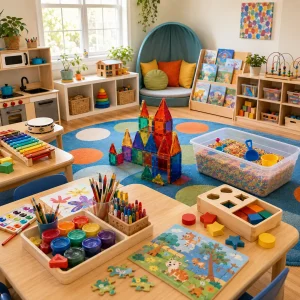
Not every colorful toy or messy activity creates meaningful sensory learning. The most effective sensory environments are thoughtful, flexible, and child-centered.
Here are some key attributes to look for.
Multisensory
Good sensory activities engage more than one sense at a time. For example, playdough involves touch, sight, smell, and movement. Music and dance combine sound, rhythm, and body awareness.
Hands-On and Experiential
Children learn more from doing than from watching. An effective sensory environment invites direct exploration. It allows children to test, repeat, and discover.
Open-Ended
The best materials do not have only one “right” use. Sand, water, fabric, blocks, leaves, cardboard tubes, and kitchen utensils can all spark rich learning because children can use them in many ways.
Emotionally Safe
Children need to feel secure enough to explore. That means predictable routines, patient adult support, and no pressure to interact with materials in a specific way.
Adaptable
A strong sensory environment can be adjusted to suit different ages, preferences, and sensitivities. One child may love finger painting. Another may prefer using a brush or sponge. Both are still learning.
Developmentally Appropriate
The activity should fit the child’s stage of growth. Babies need simple, safe sensory exploration. Toddlers may enjoy basic scooping and pouring. Preschoolers are ready for more complex sorting, comparing, and pretend play.
You do not need expensive resources to create this kind of environment. A tray of water, a bowl of oats, garden leaves, measuring cups, or homemade playdough can often offer more value than flashy toys.
What to do next: Start with one simple material and let your child lead. You do not need a perfect setup to create meaningful learning.
Simple Ways to Bring Sensory Learning Into Daily Routines
For busy families and educators, the good news is that sensory learning does not need to be elaborate. It works best when it becomes part of normal life.
Infants (0–1 year)
Try:
- tummy time on different textured blankets
- safe exploration of soft fabrics
- listening to gentle rattles or music
- water play with supervision during bath time
At this stage, the goal is simple exposure and gentle discovery.
Toddlers (1–3 years)
Try:
- scooping rice or oats with cups and spoons
- finger painting with washable paint
- outdoor digging in soil -like sand alternatives
- playdough squeezing and rolling
Toddlers love repetition, and that repetition is useful. It helps them refine movement and understanding.
Preschoolers (3–5 years)
Try:
- Sort natural objects by texture, size, or color.
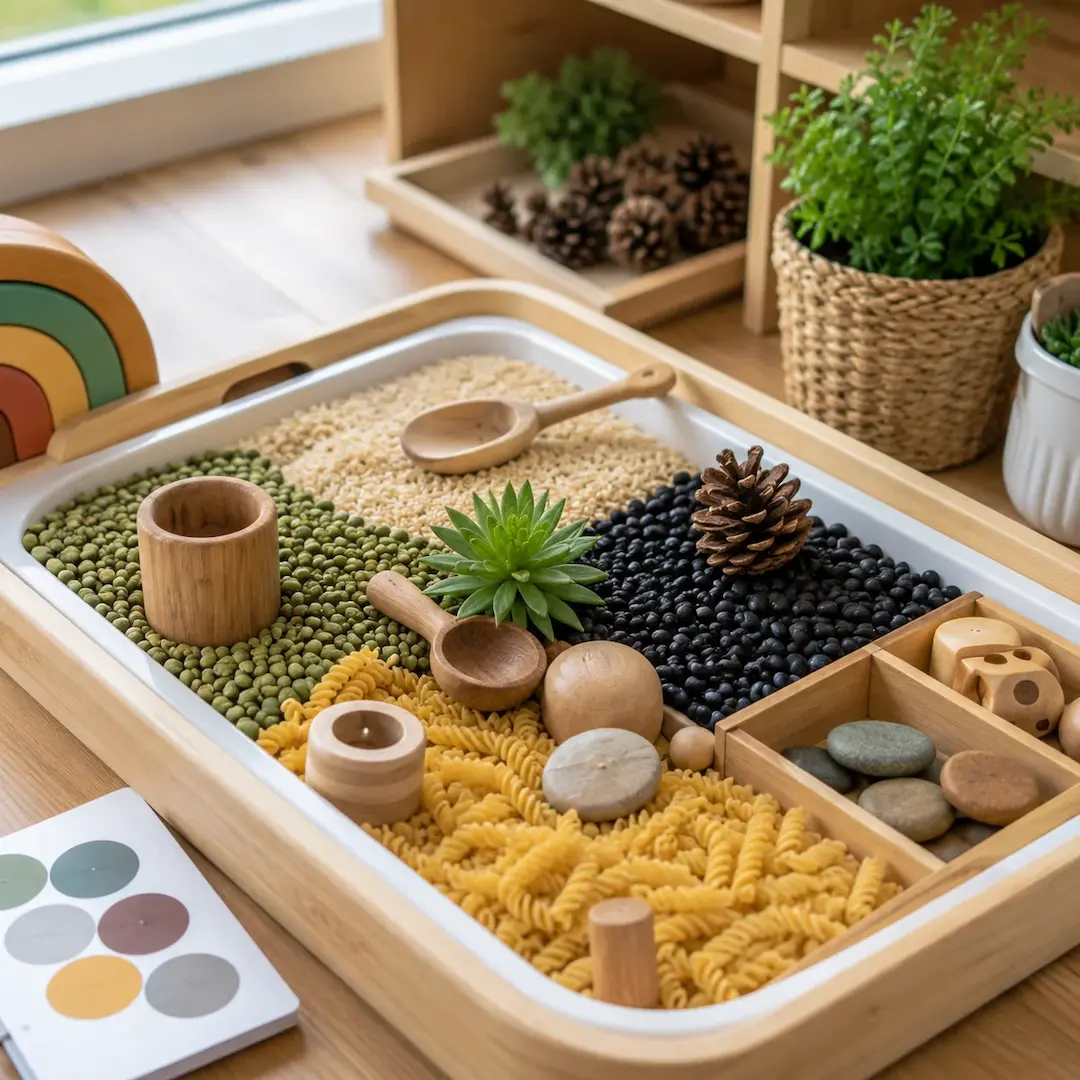
- Make simple sensory bins with rice, shells, pom-poms, or scoops.
- Use cooking as a sensory lesson by mixing, pouring, smelling, and tasting.
- Create obstacle courses with cushions, tunnels, and stepping points.
Preschoolers are ready for more language, comparison, and problem-solving during play.
Easy Ways to Make It Work at Home
If time is tight, use what is already in your day:
- let your child help wash vegetables
- offer different textures at snack time
- go barefoot on grass and talk about the feeling
- collect leaves, sticks, or stones on walks
- let bath time double as pouring and measuring play
These small moments add up.
At Children’s Choice, sensory learning is woven into daily play-based experiences rather than treated like an extra activity. That makes it easier for children to learn through movement, exploration, and curiosity every day.
Conclusion
Sensory play helps children learn more effectively because it matches how young brains grow. It supports brain development, strengthens motor and language skills, and gives children tools for emotional regulation and confidence.
The next step does not have to be complicated. Start with one simple sensory activity, observe how your child responds, and build from there. Over time, those messy, joyful, hands-on moments can become some of the most valuable parts of early learning.
FAQs
What are sensory activities?
Sensory activities are any activities that engage one or more of a child’s senses,touch, sight, hearing, taste, smell, or even movement and balance,to encourage exploration and learning.
How do sensory activities support brain development?
Sensory play stimulates neural pathways in the brain, helping children process and respond to the world around them. This lays the foundation for cognitive growth and problem-solving skills.
Are sensory activities messy?
While some sensory activities can be messy, many are not. Activities like playing with kinetic sand, water, or sorting textured objects can be easily managed with minimal cleanup.
At what age can children start sensory activities?
Children can engage in sensory play from infancy, with age-appropriate activities such as exploring textures or listening to soothing sounds, progressing to more complex activities as they grow.
Can sensory activities improve language skills?
Yes, sensory play often encourages communication as children describe their experiences, explain their actions, and learn new vocabulary related to their play.
Do sensory activities help with emotional regulation?
Yes, sensory activities can calm and center children by helping them manage feelings of stress or overstimulation, offering a sensory outlet for their emotions.
Do I need special equipment for sensory activities?
No, sensory play often uses everyday household items like rice, water, sponges, or safe kitchen tools, making it accessible and budget-friendly for all families.