For many parents, sleep can feel like the most unpredictable part of early childhood. One week, bedtime runs smoothly. The next, your toddler is wide awake at 9 p.m., asking for one more story, one more drink, and one more cuddle. It is exhausting. But beyond the nightly stress, sleep routines in early childhood development play a major role in how children grow, learn, and cope with the world around them.
Sleep is not just downtime. It is a core part of healthy development. During sleep, a child’s brain processes new experiences, supports memory, and prepares for the next day. A steady routine also helps children feel safe, calm, and ready to rest.
In this blog, we’ll look at:
- how sleep supports brain, body, and emotional growth
- how much sleep toddlers and preschoolers usually need
- how to build healthy sleep habits at home
- how to handle common sleep challenges with confidence
The Deep Connection Between Sleep and Brain Development
Parents often notice something surprising: a child struggles with a new skill during the day, then seems to “get it” by the next morning. That is not a coincidence. Sleep helps the brain sort, store, and strengthen what a child has learned.
In early childhood, the brain is developing at a rapid pace. Every day brings new words, movements, emotions, and social experiences. Sleep helps organise all of that input. It supports memory, learning, focus, and problem-solving. This is one reason sleep routines matter in early childhood development so much. A child who sleeps well is better prepared to take in new information and use it.
Sleep also supports emotional regulation. Young children feel things deeply, but they are still learning how to manage those feelings. When they are overtired, it is harder for them to stay calm, shift attention, or recover from frustration. A well-rested child is often more patient, more flexible, and more ready to engage with others.
This link between rest and learning is also reflected in early education guidance. The Australian Children’s Education & Care Quality Authority highlights the importance of rest, relaxation, and routines in supporting children’s wellbeing in care settings.
For families, the practical takeaway is simple: a predictable bedtime routine does more than help children fall asleep. It gives their brains the consistent rhythm they need to grow well.
Supporting Physical Health Through Rest
Toddlers and preschoolers are constantly in motion. They run, climb, jump, explore, and rarely seem to stop. All of that activity depends on quality sleep.
Deep sleep supports physical growth because this is when the body releases key growth hormones. These hormones help repair tissue, build muscle, and support healthy development. Good sleep also helps restore energy levels so children can stay active, alert, and engaged during the day.
Sleep supports immune health too. Children do not need perfect sleep every night to stay healthy, but ongoing lack of rest can make it harder for their bodies to recover from illness and stress. Poor sleep can also affect appetite, energy, and mood, which then impacts the whole family.
The broader health picture matters here. The Australian Government Department of Health and Aged Care includes sleep as part of healthy movement and wellbeing guidelines for young children. In other words, rest is not separate from health. It is one of the pillars of it, right alongside nutrition, active play, and outdoor time.
For parents and caregivers, this can be a helpful shift in mindset. We often focus on meals, exercise, and milestones, but sleep deserves the same attention. Prioritizing rest is not a luxury. It is part of caring for a child’s physical health.
Fostering Emotional and Social Wellbeing
Have you ever noticed that a child who skipped a nap finds it harder to share, listen, or cope with small changes? That pattern is common, and it makes sense. Sleep plays a major role in emotional and social development.
When children are rested, they are more likely to manage transitions well, communicate clearly, and respond calmly in group settings. They can focus better during play, follow directions more easily, and recover from disappointment with less distress. When they are overtired, even simple tasks can feel overwhelming.
This matters in both home and early learning environments. Social skills like turn-taking, empathy, cooperation, and listening are not just taught. They are practiced daily, and children do that practice best when they are physically and emotionally regulated.
Good sleep also supports school readiness. Children who get enough rest are more likely to maintain attention, remember instructions, and engage meaningfully in structured learning. These are foundational skills that help them feel capable and confident as they grow.
At Children’s Choice, we see this connection every day. Predictable routines, balanced activity, and appropriate rest help children feel secure. That sense of security builds confidence. It allows children to participate more fully, connect with peers, and enjoy learning in a steady and supported way.
Recommended Sleep Durations for Growing Minds
One of the most common concerns parents have is this: “Is my child actually getting enough sleep?” The answer depends on age, temperament, activity level, and the full 24-hour day, including naps.
In general:
- Toddlers (1–2 years): need about 11–14 hours of sleep in 24 hours, including naps
- Preschoolers (3–5 years): need about 10–13 hours of sleep in 24 hours
These ranges are supported by health guidance from the Centers for Disease Control and Prevention and other public health bodies.
It is important to remember that sleep needs can vary slightly from child to child. Some children thrive at the lower end of the range, while others need more. What matters most is not just the number on paper, but how your child functions during the day.
What signs suggest your child may need more sleep?
Look for patterns such as:
- frequent irritability or meltdowns
- trouble waking in the morning
- falling asleep during car rides at odd times
- difficulty focusing or settling into play
- increased clinginess late in the day
A missed nap or late bedtime once in a while is normal. The goal is not perfection. It is consistency across the week, so your child’s body clock has a steady rhythm to follow.
Establishing Healthy Sleep Routines
A good sleep routine does not need to be complicated. In fact, simple routines often work best. The key is to build habits your child can recognise and trust.
Consistency Is Key
Children respond well to patterns. Going to bed and waking up at roughly the same time each day helps regulate the body’s internal clock. This makes it easier for children to feel sleepy at bedtime and more refreshed in the morning.
Consistency also reduces bedtime resistance. When children know what comes next, they spend less energy pushing against the process. They feel safer when evenings follow a familiar sequence.
If your child attends early learning or childcare, it helps when home and care routines work together. At Children’s Choice, predictable rhythms across the day support calmer transitions, better rest, and more settled behavior.
Try this
Start with a simple order and keep it the same each night:
- bath or wash
- pajamas
- brush teeth
- quiet book
- cuddle and lights out
That routine does not need to be long. Even 20 to 30 minutes of calm, repeated steps can make a real difference.
Pre-Bedtime Activities That Help Children Wind Down
The hour before bed sets the tone for sleep. If children move straight from loud, stimulating activity into bed, it can be hard for their bodies and brains to shift gears.
Calm activities help signal that the day is ending. Good options include:
- reading together
- quiet play with blocks or puzzles
- listening to soft music
- having a warm bath or shower
- dimming lights around the home
These cues matter because they teach the body to expect sleep. Over time, the routine itself becomes calming.
What works best?
The best bedtime activity is one your child enjoys and can rely on. A short story, gentle back rub, or familiar lullaby can all be effective. The goal is not to create a perfect routine from a parenting book. It is to create one that your family can follow most nights.
Environmental Factors and Avoiding Disruptions
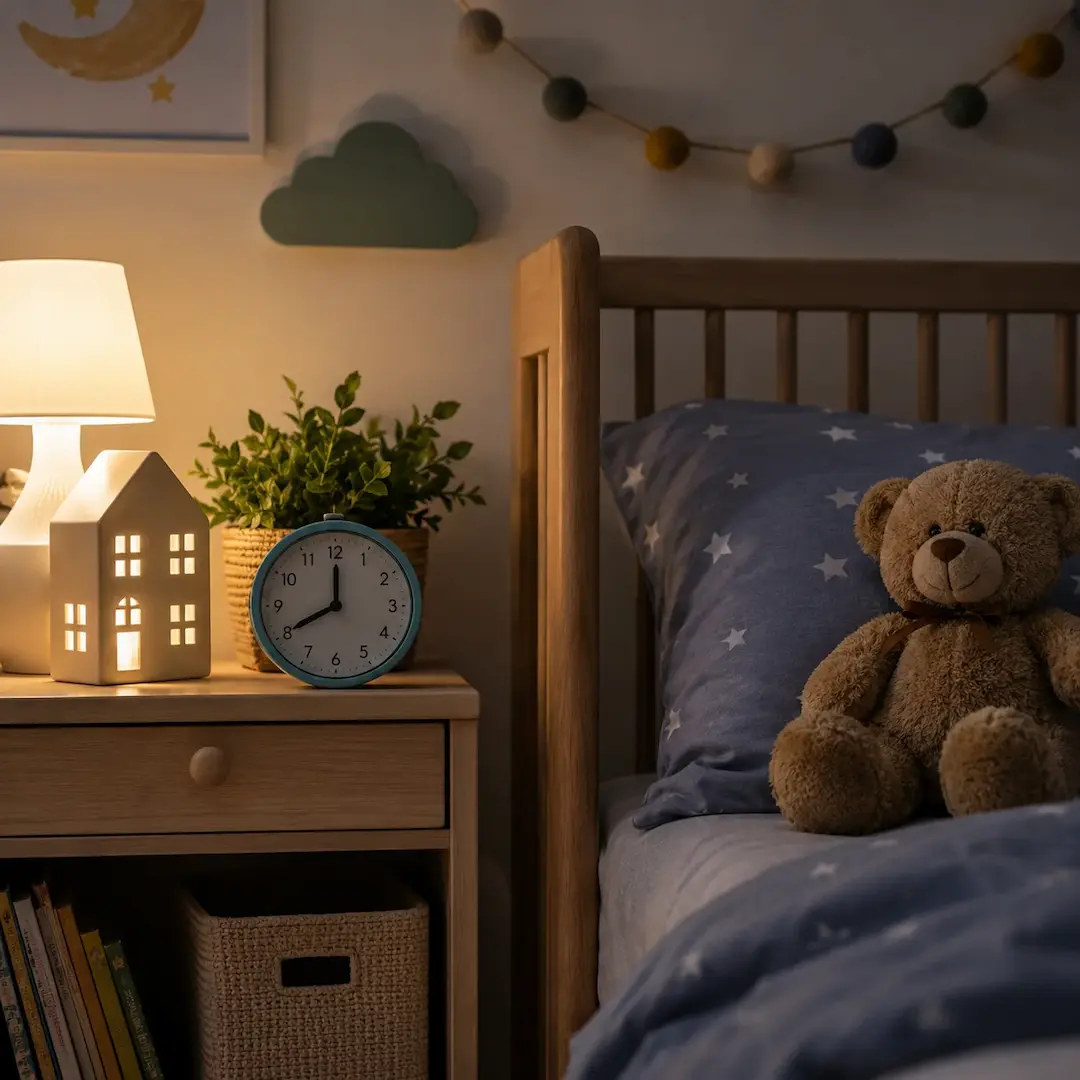
A child’s sleep environment can either support rest or make it harder to settle.
A helpful sleep space is:
- quiet
- dark or softly lit
- comfortably cool
- free from unnecessary stimulation
- set up with safe bedding and sleep arrangements
Screens are one of the biggest bedtime disruptors. Phones, tablets, TVs, and other devices emit blue light, which can interfere with the body’s sleep signals. The National Institutes of Health and other health organizations have published research and guidance showing how sleep and brain health are closely connected, especially during early development.
Try to avoid screens for at least an hour before bedtime. It also helps to limit sugary foods and drinks late in the evening. Active play, outdoor time, and sunlight exposure earlier in the day can support better sleep later on.
If you are making changes, start small. Remove one disruption at a time rather than changing everything in one night.
Addressing Common Sleep Challenges With Empathy
Just when a routine starts working, something changes. A growth spurt, teething, illness, travel, developmental leap, or shift in routine can throw sleep off. This is frustrating, but it is also normal.
Sleep regressions are often linked to periods of rapid development. A child may be learning new language, new movement, or new ways of understanding the world. Their brain is busy, and that can temporarily affect how they sleep.
This does not mean the routine has failed. It means your child still needs the routine, perhaps more than ever.
What is the biggest mistake parents make during sleep setbacks?
The biggest mistake is usually abandoning consistency altogether. When everyone is tired, it is tempting to change the bedtime every night or introduce new habits that are hard to maintain. A calmer approach works better.
Try to:
- keep the bedtime routine familiar
- respond with reassurance, but stay predictable
- avoid turning bedtime into a long negotiation
- return to normal patterns as soon as possible after disruptions
If a sleep challenge continues for an extended period or affects your child’s health, it may be worth speaking with a trusted healthcare professional.
Why Sleep Routines Matter for the Whole Family
Sleep routines do not only benefit children. They help parents too. When evenings are predictable, the whole household feels calmer. There is less guesswork, less stress, and more opportunity to connect in positive ways.
A steady sleep routine can improve family wellbeing by:
- reducing bedtime battles
- creating a calmer evening rhythm
- helping parents plan with more confidence
- supporting better rest for everyone in the home
That is one reason Children’s Choice values routines that support the whole child. Healthy sleep habits are part of a larger picture of care, learning, and emotional security.
Conclusion
Sleep routines matter in early childhood development because they support nearly every part of a child’s growth. From brain development and memory to physical health, emotional regulation, and social confidence, sleep gives children the foundation they need to thrive.
The good news is that healthy sleep habits do not have to be complicated. Start with a simple, calm, predictable routine and build from there. If you want to learn how Children’s Choice supports children through balanced routines, rest, and nurturing early learning experiences, book a tour and explore how our environment helps families feel supported every step of the way.
FAQs
Why are sleep routines important for young children?
Sleep routines help children establish consistent sleep patterns, which are critical for their physical growth, emotional regulation, and cognitive development. Predictable routines create a sense of security and help children wind down for restful sleep.
How many hours of sleep do young children need?
The recommended amount of sleep varies by age. Infants may need 12-16 hours of sleep (including naps), toddlers around 11-14 hours, and preschoolers typically require 10-13 hours in a 24-hour period.
What can disrupt a sleep routine?
Factors such as irregular bedtime schedules, overstimulation before sleep, inconsistent environments, or external noise can disrupt a child’s sleep routine. It’s important to create a calm and predictable bedtime environment.
How can I create an effective bedtime routine?
An effective bedtime routine might include calming activities like reading a book, taking a warm bath, or listening to soothing music. Keeping the routine consistent each night helps signal to the child that it’s time to settle down.
Can poor sleep routines impact my child’s behavior?
Yes, insufficient or irregular sleep can lead to irritability, difficulty concentrating, or behavioral challenges. Consistent sleep supports emotional well-being and better social interactions.
Is it normal for a child to resist bedtime?
It’s common for young children to occasionally resist bedtime, especially during times of developmental milestones or transitions. Gentle reassurance and a predictable routine can help address this resistance.
How can I support my child during sleep transitions?
Sleep transitions, such as moving from a crib to a bed, can be managed by maintaining a routine and involving the child in the process. Offering comfort and creating a positive sleep environment can ease the transition.