Raising a family is one of life’s greatest joys, but it also comes with practical considerations, budgeting being one of the biggest. For many Australian parents, navigating the world of childcare expenses can feel overwhelming. You want the absolute best for your little one, ensuring they are in an environment that fosters growth and happiness, but you also need to make decisions that make financial sense for your household.
It is important to remember that early learning is an investment in your child’s future. It provides the social, emotional, and cognitive foundations they need for school and beyond. At Children’s Choice, we understand the balancing act parents perform every day. This guide aims to demystify childcare costs in Australia, helping you understand where your money goes and how to access the support available to you. By breaking down the fees, subsidies, and options, we hope to give you the confidence to make the right choice for your family.

Understanding the Factors That Influence Childcare Costs
When you start researching childcare, you might notice that fees can vary significantly between different centres and even within the same service. This isn’t random: specific operational factors dictate these costs. Understanding these can help you see the value behind the fees.
Age of the Child & Staffing Ratios
The age of your child is the most significant factor influencing the daily fee. Generally, care for infants and toddlers (0–2 years) is more expensive than care for preschoolers (3–5 years). This comes down to the National Quality Framework (NQF) ratios, which are strictly enforced to ensure safety and quality care.
For babies, centres are required to have higher educator-to-child ratios, typically one educator for every four infants. This ensures that babies get the intensive, one-on-one attention they need for feeding, changing, and emotional bonding. As children grow older and become more independent, the ratio changes, allowing one educator to supervise a larger group of children. This reduction in staffing intensity often results in slightly lower fees for older age groups.
Location, Location, Location
Just like housing markets, childcare costs fluctuate depending on where you live. Centres located in metropolitan CBDs or high-demand inner suburbs often face higher rent and operational costs, which are reflected in their fee structure. Conversely, services in regional areas or outer suburbs might have lower overheads.
Types of Childcare Services & Their Costs
Australia offers a diverse range of childcare options to suit different family needs. Each type of care operates differently, which impacts the price you pay.
Long Day Care
This is the most common form of childcare in Australia. Long day care centres operate in purpose-built facilities and usually offer care for 10 to 12 hours a day, catering to working parents. These centres provide structured, play-based learning programs and meals. While fees can be higher due to the comprehensive service and facilities, they offer high reliability and socialisation opportunities.
Family Day Care
Family Day Care is provided in an approved educator’s home. The environment is often smaller and more intimate, with mixed age groups. Because the overheads of running a home-based service are generally lower than maintaining a commercial building, family day care can sometimes be a more affordable option, though this varies by educator.
In-Home Care
In-home care involves a nanny or au pair looking after your children in your own house. This offers the ultimate convenience and flexibility but is typically the most expensive option, as you are paying a salary for a dedicated employee rather than sharing the cost of care with other families.
After School Care
Outside School Hours Care (OSHC) is for school-aged children and operates before and after school, and during holidays. Because the ratio of educators to children is lower (1:15 in many states) and the hours are shorter, this is generally the most affordable type of formal care.
Government Subsidies and Financial Assistance
The Australian Government provides significant financial support to help families manage the cost of early learning. Navigating this system is the key to making childcare affordable.
The Child Care Subsidy (CCS)
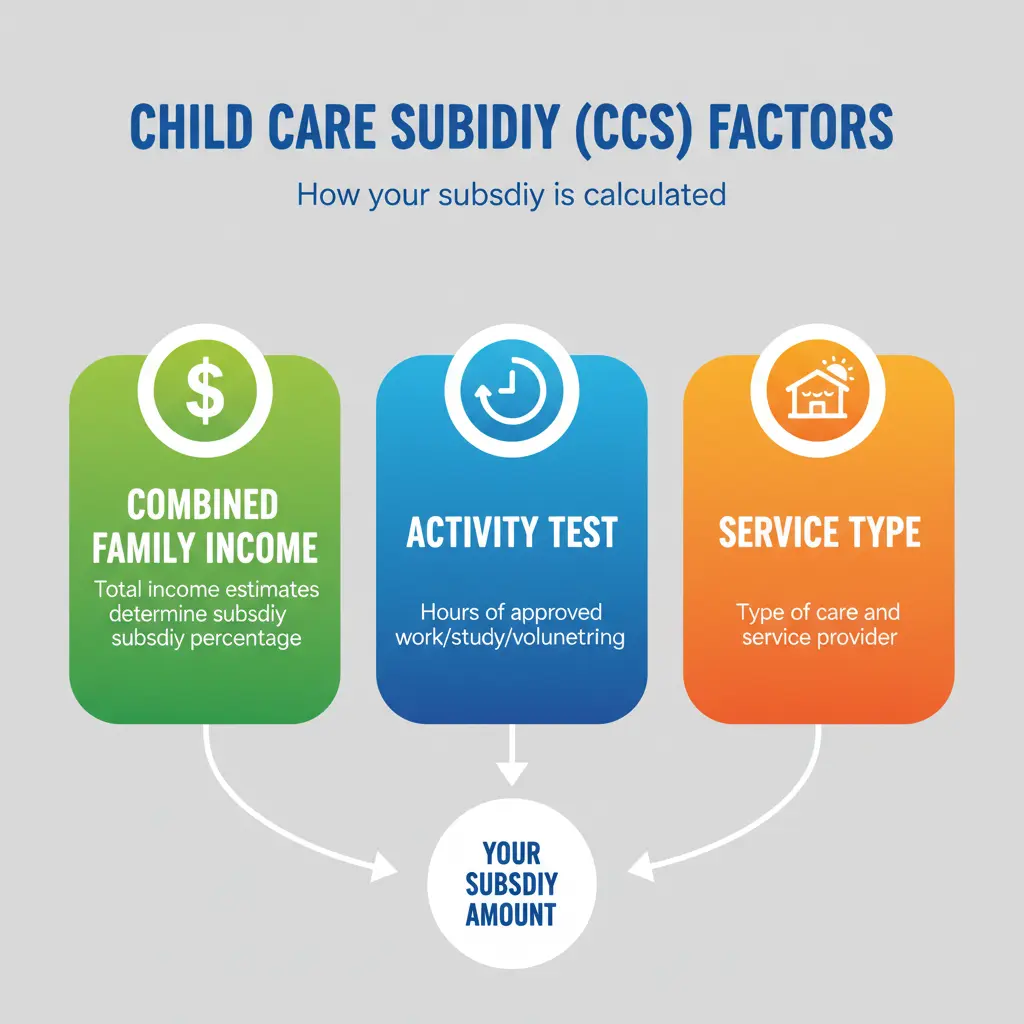
The Child Care Subsidy (CCS) is the main payment to help families with costs. It is paid directly to the childcare provider to reduce your daily fees. The amount you receive depends on three specific factors:
- Combined Family Income: Lower-income families receive a higher percentage of subsidy.
- Activity Test: The number of hours of subsidised care you can access depends on how many hours you and your partner work, study, or volunteer each fortnight.
- Service Type: There is an hourly rate cap based on the type of care (e.g., Centre Based Day Care vs. Family Day Care).
Other Potential Financial Assistance
Beyond the CCS, families should look into state-specific funding for kindergarten or preschool programs. Many states now offer “Free Kinder” or heavily subsidised preschool programs for 3 and 4-year-olds, even when delivered within a long day care setting. This can significantly reduce your out-of-pocket expenses for those specific years.
Saving Money on Childcare: Practical Tips
While quality care is a priority, there are practical ways to manage your budget without compromising on your child’s experience.
- Maximise Your Subsidy: Ensure your income and activity details are up to date in your Centrelink account. Even small changes in income estimates can adjust your withholding percentage.
- Flexible Hours: Some centres offer “session” rates (e.g., a 9-hour day or a 10-hour day) rather than a full 12-hour daily rate. If you don’t need the full day, ask if shorter sessions are available at a reduced price.
- Compare Inclusions: When looking at fees, check what is included. A centre with slightly higher fees might include nappies, formula, and all meals, which could actually work out cheaper than a lower-fee centre where you have to supply everything yourself.
Choosing the Right Childcare for Your Family
Selecting a childcare service is about finding a place where you feel connected and where your child will thrive. It is a decision that goes beyond a spreadsheet. You want a service that aligns with your values and supports your child’s unique developmental journey.
When researching, focus on the quality of relationships between educators and children. Look for environments that are calm, engaging, and rich in learning opportunities. Whether you are searching for the Best childcare centre raceview has to offer, or you are looking for a Leading childcare centre Raceview, the most important metric is how the centre makes you feel. Do the educators get down to the child’s level? Is the atmosphere warm and inviting? These are the indicators of high-quality care that justify the investment.
Children’s Choice: Safe, Nurturing Childcare
At Children’s Choice, we believe that every child deserves the best start in life. Our philosophy is centred on providing safe, nurturing childcare and play-based early learning that supports children’s development and school readiness. We know that the early years are critical for brain development, which is why our programs are designed to spark curiosity and build confidence.
We strive to be more than just a service; we are a partner in your parenting journey. Our educators are passionate about creating a “home away from home” where children feel secure enough to explore, take risks, and learn. We offer transparent fee structures and help families navigate the subsidy system so that high-quality early education is accessible. When you choose us, you are choosing a community that cares deeply about your child’s wellbeing and future success.
Children’s Choice: Making Informed Childcare Decisions
Navigating childcare expenses can be complex, but armed with the right information, you can make choices that work for your budget and your child’s happiness. Remember to look at the full picture: the subsidies available, the inclusions in the fees, and most importantly, the quality of care provided.
We hope this guide has provided some clarity and reassurance. Early learning is a wonderful journey, and finding the right environment is the first step. If you have any questions about fees, subsidies, or our learning programs, the team at Children’s Choice is always here to have a friendly chat and support you.

Frequently Asked Questions
How is the Child Care Subsidy (CCS) calculated for my family?
The CCS is calculated based on your combined family income, the hours of “recognised activity” (work, study, volunteering) you do, and the type of childcare service you use. Centrelink uses these figures to determine a percentage of the fee they will cover, up to an hourly rate cap.
Does Children’s Choice offer funded kindergarten programs?
Yes, many Children’s Choice centres offer government-funded kindergarten or preschool programs led by qualified Early Childhood Teachers. These programs are integrated into the long day care hours, providing the educational benefits of preschool with the convenience of extended care hours for working parents.
How do I find the Best childcare centre Ipswich has to offer?
Finding the Best childcare centre Ipswich has available involves visiting local services. Look beyond the reception area; watch how educators interact with the children. A great centre will have a calm, happy atmosphere where children are engaged in play. Ask about their educational programming and staff retention rates during your tour.
What should I look for in a Leading childcare centre Raceview?
A Leading childcare centre Raceview should prioritize safety, transparency, and communication. Look for a centre that uses an app or digital platform to share daily updates and photos of your child’s learning. High-quality centres in the Raceview area will also have strong connections with local schools to assist with transition.
How does Children’s Choice support school readiness?
Children’s Choice supports school readiness through a holistic, play-based curriculum. We focus not just on literacy and numeracy, but on emotional resilience, social skills, and self-help skills (like opening lunchboxes). Our goal is to ensure children are confident, independent, and eager learners when they start ‘big school’.