Busy days can feel big for little children. Preschoolers are learning how to handle noise, change, excitement, and strong feelings, often all at once. That is why simple mindfulness activities for preschoolers at home can be so helpful. They give children small, gentle ways to slow down, notice what they feel, and settle their bodies.
Mindfulness for young children does not mean asking them to sit still for long periods. It means helping them pay attention to the present moment in playful, age-appropriate ways. A few calm minutes with breathing, listening, or sensory play can support emotional growth and make daily routines feel smoother.
In this guide, you will learn what mindfulness means for preschoolers, why it matters for emotional wellbeing, and which easy activities you can try at home. You will also find simple ways to build these moments into your family routine. At Children’s Choice, we see every day how small, consistent moments of calm can support children as they grow, learn, and connect.
What Is Mindfulness for Preschoolers?
Mindfulness for preschoolers is simple. It is the practice of noticing what is happening right now, with curiosity and without pressure. For young children, that might mean feeling their breath, hearing birds outside, or noticing how cool water feels on their hands.
A playful approach works best
Preschoolers learn through movement, play, and repetition. So mindfulness should feel light and engaging, not formal or strict. A child is far more likely to join in if an activity feels like a game rather than a lesson.
That is why short activities work best. One or two minutes of focused breathing or careful listening is often enough. Over time, these small moments can help children learn how to pause before becoming overwhelmed.
How mindfulness supports the developing brain
Early childhood is a key time for brain development. Experiences during these years help shape how children respond to stress, relationships, and learning. Supportive, calm interactions can make a real difference in how children build emotional and self-regulation skills.
The Australian Government’s health information on early childhood development explains how early experiences affect learning, behavior, and wellbeing.
Mindfulness does not solve every tough moment, but it can give children simple tools to manage those moments better. That foundation leads naturally into why emotional wellbeing matters so much in the preschool years.
Why Early Emotional Wellbeing Matters
Emotional wellbeing helps children feel safe, understood, and ready to learn. When preschoolers begin to recognise their feelings, they are better able to ask for help, recover from frustration, and connect with others.
Emotional regulation builds resilience
Young children often feel emotions in big ways. A small disappointment can lead to tears, yelling, or shutting down. That is normal. They are still learning how to handle what is going on inside.
Mindfulness supports this learning by helping children notice feelings earlier. Instead of moving straight from frustration to meltdown, they can begin to recognise signs in their body, like tight shoulders, fast breathing, or a hot face. With practice, they learn that feelings come and go.
Focus, empathy, and school readiness
Children who can pause, listen, and notice are building skills that also help with learning. These include attention, turn-taking, following instructions, and coping with transitions. All of these are important for school readiness.
Mindfulness can also support empathy. When children learn to name their own emotions, they become more able to understand how someone else might feel too. That can improve play, sharing, and peer relationships.
The Australian Government Department of Education provides useful information about helping children build strong foundations for learning and development.
Gentle support for different needs
Some children find noise, transitions, or strong emotions harder to manage than others. For children with attention challenges, sensory differences, or developmental delays, calm, predictable mindfulness activities can be especially helpful.
Simple routines, clear steps, and sensory-based activities often work well because they meet children where they are. This matters when supporting diverse learners at home and in early learning settings.
When children feel more secure in themselves, it becomes easier to introduce practical mindfulness activities they can enjoy at home.
Simple Mindfulness Activities for Preschoolers at Home
The best mindfulness activities for preschoolers are easy, playful, and flexible. You do not need special equipment or long blocks of time. In most cases, a few minutes is enough.
Breathing Exercises for Calm and Focus
Breathing activities are one of the easiest ways to introduce mindfulness. They help children slow their bodies down and focus on something simple and steady.
Breathing buddies
This is a great starting activity because it gives children something they can see and feel.
Ask your child to lie on their back and place a soft toy on their tummy. Then invite them to watch the toy rise as they breathe in and fall as they breathe out. You can say, “Let’s help teddy go up and down slowly.”
This visual cue helps children understand breathing in a concrete way. It also turns stillness into something playful.
Try it for 30 seconds at first. If your child enjoys it, you can extend it to one or two minutes.
Finger breathing
Finger breathing is helpful for children who like movement. Hold one hand open like a star. Using the finger of the other hand, slowly trace up one finger and down the other side. Breathe in as you trace up, and breathe out as you trace down.
This combines touch, movement, and breath in one easy activity. It is especially useful when a child feels restless but still needs to calm down.
A common mistake is asking children to breathe too deeply or too slowly. Keep it natural. The goal is gentle awareness, not perfect technique.
Mindful Listening Activities
Listening games help preschoolers focus their attention outside themselves. They also encourage patience and curiosity.
Spider-Man listening game
Many preschoolers love imaginative play, so this activity works well. Tell your child they are turning on their “super hearing,” like Spider-Man. Then sit quietly together and listen for sounds nearby and far away.
You might ask:
- Can you hear a bird?
- Can you hear a car?
- Can you hear the wind?
- Can you hear someone talking in another room?
This turns mindfulness into an adventure. It feels fun, but it also strengthens concentration.
Sound guessing
You can also create simple sound games at home. Shake rice in a container, crinkle paper, tap a spoon, or ring a small bell. Ask your child to close their eyes and guess the sound.
This activity works well for children who struggle to stay still for long. They stay engaged because there is a clear task to complete.
Listening activities are a nice bridge into sensory play, where children use touch, sight, smell, and movement to stay present.
Sensory Play as Mindfulness
Sensory play is a natural fit for mindfulness because it invites children to notice what they feel. It can also be very calming, especially after a busy day.
Exploring textures
Set up a simple tray with sand, water, playdough, slime, rice, or fabric scraps. Encourage your child to explore slowly. You can model language like, “This feels soft,” “This feels bumpy,” or “The water feels cool.”
The aim is not to rush toward making something. It is to notice the experience itself.
If your child becomes overstimulated, reduce the number of materials. One texture at a time is often enough.
Sensory play with purpose
You can add mindfulness by guiding your child to focus on one sense at a time. Ask them what they can feel, see, or smell. This helps them stay in the moment and can reduce that scattered feeling some children get when they are overtired or upset.
The Australian Children’s Education and Care Quality Authority offers guidance connected to quality early learning and children’s development, including play-based approaches that support wellbeing.
At Children’s Choice, sensory experiences are often part of how children learn to regulate, explore, and build confidence in a calm, supportive setting.
Mindful Colouring and Quiet Creative Time
Not every mindfulness activity needs movement. Quiet creative activities can help children slow down and reset.
Focus on the process, not the picture
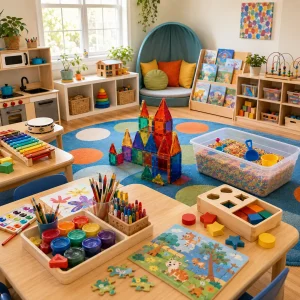
Offer crayons, pencils, or washable markers and invite your child to color slowly. Encourage them to notice the feel of the crayon on the paper, the sound it makes, and the colors they choose.
You do not need to correct the picture or guide the outcome. The value is in the calm attention, not the finished artwork.
This can work especially well after childcare, before dinner, or as part of a bedtime wind-down.
Try simple prompts
If your child needs help getting started, give a gentle prompt like:
- Let’s color only with cool colors today.
- Can you make slow circles?
- What happens if you use light pressure, then heavy pressure?
These small prompts help keep the activity mindful instead of rushed.
Creating a Nurturing Environment for Mindfulness at Home
Mindfulness works best when it feels like a natural part of family life. It does not need to be another task on your to-do list.
Keep it short and consistent
A minute or two is enough for preschoolers. You might try a breathing game before bed, a listening game after preschool, or sensory play during a quiet part of the afternoon.
Consistency matters more than length. A short daily habit often works better than one long session once a week.
Create a calm corner
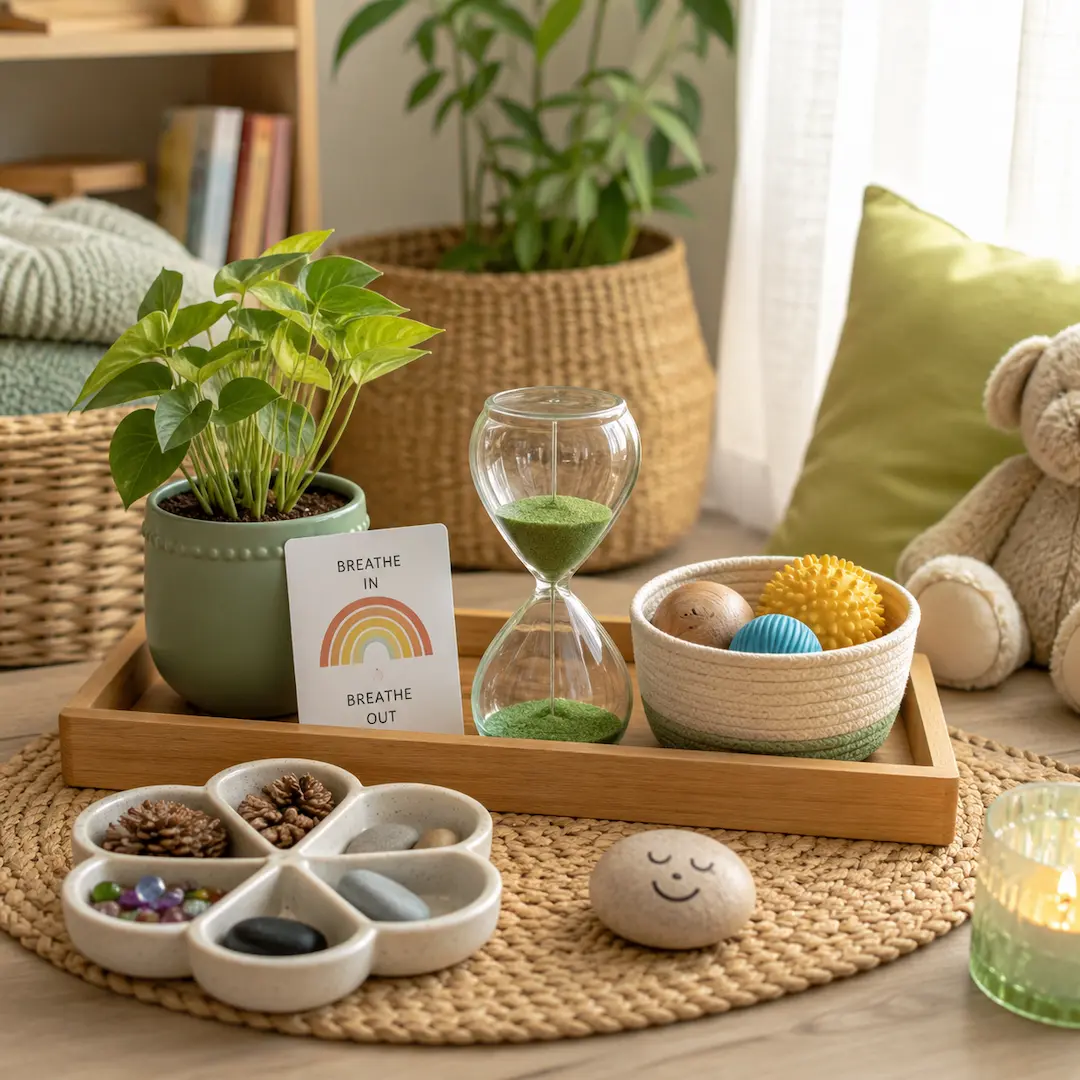
You do not need a whole room. A small corner with a cushion, a few books, a soft toy, and maybe a sensory item can be enough. The idea is to create a place that feels safe and predictable.
A calm corner is not a punishment space. It is a supportive place where your child can reset with your help.
Model calm behavior
Children learn by watching us. If you take a slow breath when you feel stressed, your child notices. If you name your feelings calmly, they hear that too.
You might say:
- “I feel frustrated, so I’m taking a big breath.”
- “Let’s sit quietly for a moment.”
- “I can hear the rain. Let’s listen together.”
These small moments show children what mindfulness looks like in real life.
Common Mistakes to Avoid
Mindfulness should reduce pressure, not add to it. A few simple adjustments can make it much more effective.
Expecting too much too soon
Preschoolers are not meant to meditate for long stretches. If your child manages 20 seconds of focused breathing, that is still a success.
Start small and keep expectations realistic.
Using mindfulness only during meltdowns
Mindfulness is useful in hard moments, but it is easier to learn when children are already calm. Practice during neutral times so the skills feel familiar when emotions run high.
Forcing participation
If a child resists one activity, try another. Some children love breathing games. Others connect more through coloring, water play, or listening games.
Flexibility helps children feel safe and engaged.
A Simple Way to Get Started This Week
If you are trying to make mindfulness part of your routine, keep it easy. Choose one activity and repeat it for a few days.
For example:
- Try breathing buddies before bed.
- Use a listening game after preschool.
- Set up five minutes of sensory play in the afternoon.
- End the day with quiet coloring.
That is enough. Small, repeated moments build trust and familiarity over time.
Conclusion
Simple mindfulness activities for preschoolers at home can help children feel calmer, more aware, and more confident with their emotions. Breathing games, listening exercises, sensory play, and mindful coloring all offer gentle ways to support emotional growth without making it feel like hard work.
You do not need a perfect routine or lots of time. Start with one short activity and keep it consistent. Over time, those small moments can have a lasting impact. At Children’s Choice, we believe emotional wellbeing grows through warm relationships, playful learning, and calm daily rhythms. If you would like to see how our nurturing environment supports the whole child, book a tour and connect with our team.
FAQs
What is mindfulness for preschoolers?
Mindfulness for preschoolers involves simple, age-appropriate activities that help them focus on the present moment, recognise their feelings, and develop self-awareness.
How do mindfulness activities benefit preschoolers?
Mindfulness activities can improve emotional resilience, reduce anxiety, enhance focus, and encourage better self-regulation in preschoolers.
What are some simple mindfulness activities I can try at home?
You can try activities such as deep belly breathing, storytelling with emotional themes, guided imagery, sensory play with natural materials, and mindful movement like yoga.
How long should mindfulness activities for preschoolers last?
Mindfulness activities for preschoolers should generally last between 2 to 5 minutes, depending on their age and attention span.
Do I need special tools or materials for mindfulness activities?
No, most activities like breathing exercises or storytelling don’t require tools. However, some sensory play or yoga might benefit from simple materials such as sensory bottles, yoga mats, or calming music.
Can mindfulness activities help with bedtime routines?
Yes, mindfulness activities like deep breathing or bedtime stories focused on calming themes can create a soothing routine and help preschoolers settle down for the night.
How often should I practice mindfulness activities with my preschooler?
Consistency is key. Practicing mindfulness for a few minutes daily, or incorporating it into routines like morning or bedtime, can help build a healthy habit over time.