Choosing the right educational path for your child is one of the most significant decisions you will make as a parent. With so many different philosophies and teaching methods available, from Montessori to Reggio Emilia, it can often feel overwhelming to navigate the options. You might find yourself asking which approach best supports your child’s natural curiosity while preparing them for the future. One philosophy that has captured the hearts of families worldwide for over a century is the Steiner approach (often called Waldorf education).
At its core, the Steiner approach is about more than just academic achievement; it focuses on the whole child. It values the importance of imagination, the rhythms of nature, and the developmental needs of children at different ages. For parents seeking an environment that prioritises emotional and physical wellbeing alongside intellectual growth, understanding this method can be incredibly clarifying.
We understand that every family wants to find a space where their child feels secure and valued. Children’s Choice provides safe, nurturing childcare and play-based early learning that supports children’s development and school readiness. By exploring principles like those found in Steiner education, we can better understand how to foster a love of learning that lasts a lifetime.

What is the Steiner Approach?
The Steiner approach to education was developed by Austrian philosopher Rudolf Steiner in the early 20th century. The first school opened in 1919, based on his insights into human development and spirituality, known as anthroposophy. While the word “anthroposophy” might sound complex, the educational application is quite grounded.
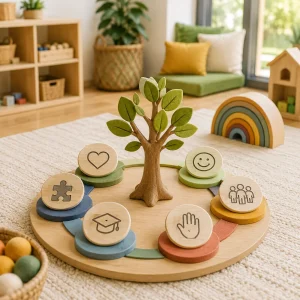
The fundamental goal of Steiner education is to raise free, morally responsible, and integrated individuals. It is a holistic method, meaning it does not separate the intellect from the rest of the child’s experience. Instead, it aims to nurture the “head, heart, and hands”, addressing the intellectual, emotional, and physical dimensions of the child simultaneously.
In a Steiner-inspired setting, you won’t typically see rushed academics or high-pressure testing in the early years. Instead, you will find a curriculum that moves at the child’s pace, respecting their unique developmental timeline.
Key Elements of the Steiner Philosophy
The Steiner method is distinct in its atmosphere and daily flow. If you walk into a learning environment influenced by this approach, several key elements usually stand out immediately.
Rhythm and Routine
One of the pillars of this approach is the use of rhythm. Just as we breathe in and out, a Steiner day is structured around a balance of active, energetic play and quieter, focused moments. This might look like free play followed by circle time, or outdoor exploration followed by storytelling. This predictable routine provides children with a deep sense of security and safety, allowing them to relax and engage fully with their environment.
A Nurturing Environment
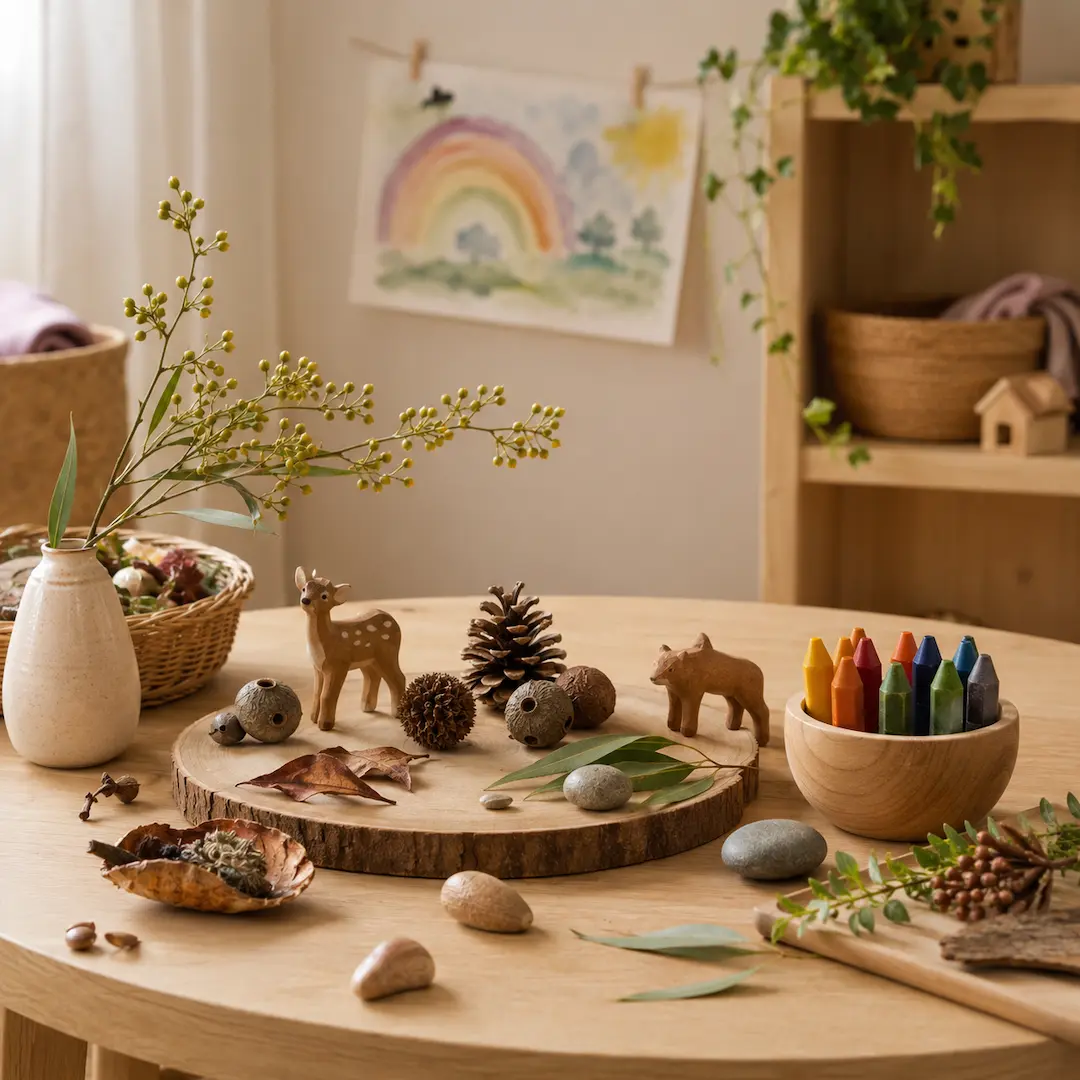
The physical environment is considered a “third teacher.” In Steiner settings, the room is often designed to feel like a home rather than a classroom. You will see warm colours, natural lighting, and an absence of clutter. Toys are usually made from natural materials, wood, silk, wool, and cotton, rather than plastic. These simple, open-ended toys encourage children to use their imagination rather than relying on a toy to entertain them.
Practical Activities and Imitation
Young children learn primarily through imitation. Therefore, educators in these settings engage in meaningful practical work that children can copy, such as baking bread, gardening, cleaning, or sewing. By watching and helping adults with these tasks, children develop fine motor skills, a sense of responsibility, and a connection to the real world.
The Three Developmental Stages
Rudolf Steiner identified three distinct seven-year cycles of child development, each requiring a different educational approach.
- The Physical (0–7 years): This is the stage of “will” and doing. Children learn through their bodies and senses.
- The Imaginative (7–14 years): The stage of “feeling.” Learning is brought to life through stories, art, and imagination.
- The Spiritual (14–21 years): The stage of “thinking.” Adolescents develop critical thinking and independent judgment.
For early childhood education, the focus is almost entirely on the first stage: The Physical.
During these first seven years, the child’s energy is focused on building their physical body. The Steiner approach suggests that diverting this energy into premature intellectual work (like abstract math or reading) can be detrimental. Instead, the focus is on physical movement, sensory integration, and creative play. This creates a robust foundation for the academic learning that follows in the later stages.
Steiner vs. Traditional Education
It is natural to wonder how this differs from the mainstream education system we might be used to. The differences are often found in the “how” and “when” of learning.
Timing of Academics: Traditional education often introduces reading and writing as early as possible. The Steiner approach delays formal academic instruction until the child is around seven years old (after the transition from early childhood). The belief is that a child must be physically and emotionally ready before tackling abstract concepts.
The Role of Technology: While modern traditional classrooms often integrate tablets and screens early on, Steiner education is generally low-tech or screen-free in the early years. The focus is on real-world interaction and tangible experiences.
Assessment: Traditional models frequently rely on testing and benchmarks. Steiner education focuses on qualitative assessment, observing the child’s growth, character, and capabilities over time without the pressure of grades.
Benefits of Holistic Education
Adopting a holistic approach, such as Steiner, offers numerous benefits for young children.
- Creativity and Imagination: Because children play with simple, open-ended materials, their imaginative “muscles” get a vigorous workout. A piece of silk can become a cape, a river, or a roof. This fosters creative problem-solving skills.
- Emotional Resilience: The strong emphasis on rhythm and routine helps children regulate their emotions. Knowing what comes next reduces anxiety and builds confidence.
- Connection to Nature: There is a heavy emphasis on outdoor play in all weather. This fosters a deep respect for the environment and supports physical health.
- Social Skills: Through communal activities like preparing food and eating together, children learn cooperation, empathy, and social grace.
Children’s Choice and the Steiner Principles
At Children’s Choice, we recognise that the best early learning environments are those that take a holistic view of the child. While every centre has its unique flavour, many of the principles found in the Steiner approach resonate deeply with our philosophy of care.
We believe in the power of play-based learning. Just as the Steiner method prioritises “doing” and physical exploration in the early years, Children’s Choice provides safe, nurturing childcare and play-based early learning that supports children’s development and school readiness. We understand that for a child to learn, they must first feel secure, loved, and engaged.
We strive to create environments that are warm and welcoming, encouraging children to explore their world at their own pace. Whether you are looking for the best childcare centre Raceview has to offer, or searching for a leading childcare centre Raceview families rely on, you will find that our commitment to nurturing the whole child remains consistent. We integrate the importance of routine, social connection, and creative expression into our daily programs to ensure your child thrives.
Nurturing Holistic Development at Children’s Choice
Understanding the different approaches to early education empowers you to make the best decision for your family. The Steiner approach reminds us that childhood is a unique phase of life that should not be rushed. It highlights the importance of protecting a child’s sense of wonder and providing them with a secure foundation for growth.
At Children’s Choice, we share the commitment to raising happy, confident, and capable children. By blending nurturing care with educational expertise, we ensure your little one gets the best start in life. If you are ready to explore a supportive environment for your child, we invite you to connect with us and see how our approach can support your family’s journey.

Frequently Asked Questions
What is the difference between Steiner and Montessori?
Both philosophies value the whole child but approach learning differently. Montessori focuses on independence and real-world skills using specific, corrective learning materials. Steiner emphasizes imagination, fantasy play, and group activities guided by the teacher. Steiner is more arts-based, while Montessori is more structured around individual tasks.
How does Children’s Choice support school readiness?
Children’s Choice provides safe, nurturing childcare and play-based early learning that supports children’s development and school readiness. We focus on social skills, emotional regulation, and independence, key traits for school success, while introducing pre-literacy and numeracy concepts through engaging, age-appropriate play rather than pressure.
Is the Steiner approach religious?
Steiner education is not a religious movement, though it is based on a spiritual philosophy called anthroposophy. It does not teach religious doctrine, but it does celebrate a general sense of reverence for life and often acknowledges seasonal festivals. It is designed to be inclusive of families from all cultural and religious backgrounds.
Why is there no technology in Steiner early learning?
The philosophy suggests that young children learn best through physical interaction with the real world and human connection. Screens are viewed as passive and abstract, which can disconnect a child from their sensory experiences. The goal is to encourage active creativity and movement during the crucial developmental years of 0 to 7.
Does Children’s Choice follow a specific rhythm?
Yes, routine is vital for children. At Children’s Choice, we utilise consistent daily rhythms similar to holistic approaches. Predictable routines for eating, playing, and resting help children feel safe and secure. This predictability reduces stress and allows children to focus their energy on learning, socialising, and exploring their environment.